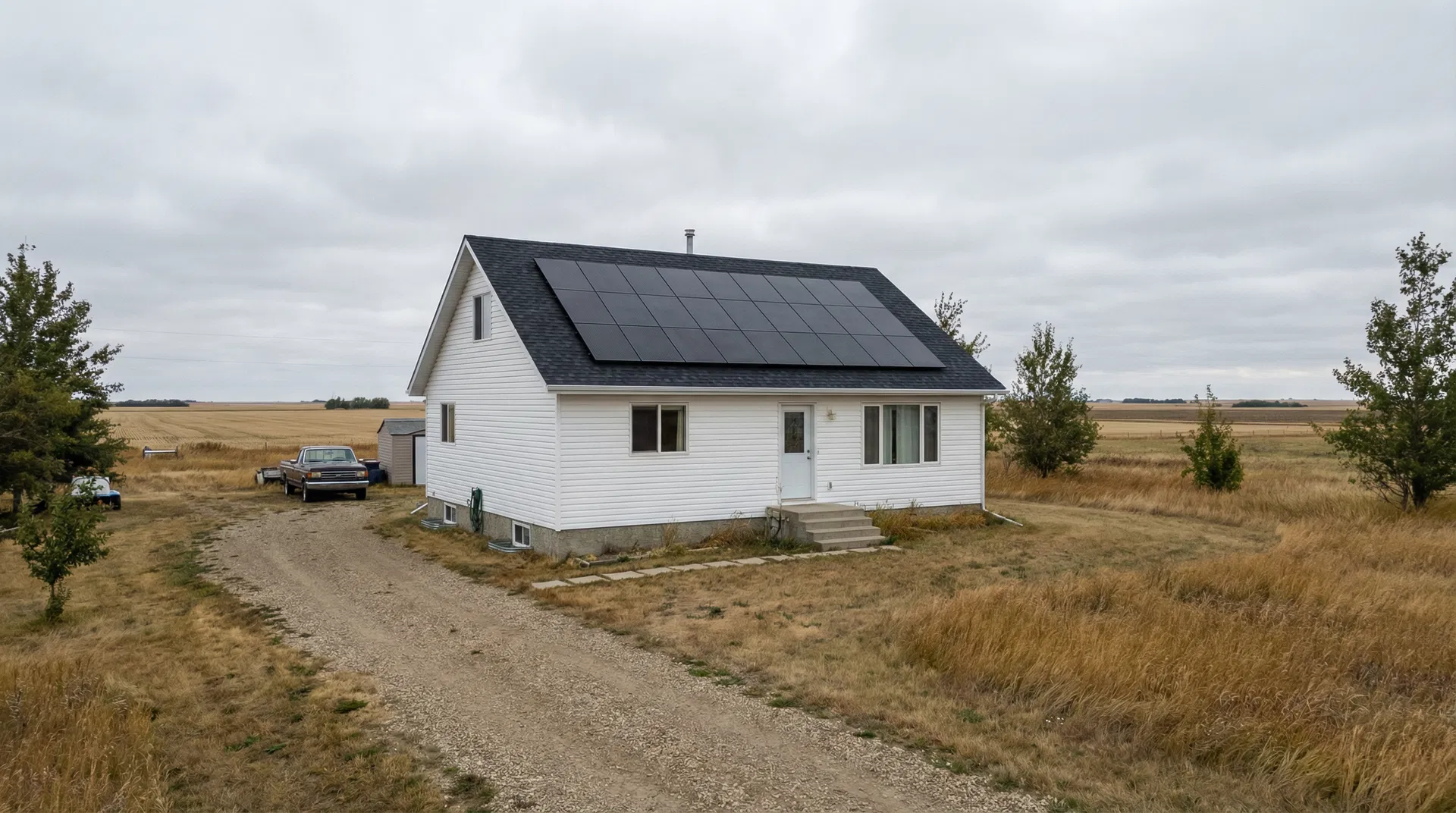
Off-grid solar in Bowden, Alberta means building a complete power system with no FortisAlberta connection at all, so every component has to carry its own weight. We use LONGi panels paired with a hybrid inverter and a lithium battery bank, sized so the batteries carry the property through low-light stretches without a generator running constantly in the background. Most of the off-grid work we do near here falls into two categories: full-time off-grid homes on acreages where running a line was never in the budget, and seasonal cabins or hunt camps where a grid connection doesn't make sense for how often the place gets used. Both need the same honest process. We start with a load list, not a spec sheet: what runs daily, what runs occasionally, and what needs backup during a stretch of low sun. From there we size the array and the battery bank for the range this service covers, typically 5 to 15 kW depending on the loads on site. The hybrid inverter is the piece that ties it together. It manages the panels, the battery, and any generator input as one system, and it's also what lets us add a generator later without a redesign if the property's needs grow. For properties with irrigation pumps, workshops, or livestock equipment on top of the house load, we build in that headroom from the start rather than sizing tight to today's usage. Every system we design gets confirmed against the site conditions and, where the property has one, the most recent power bill, not a generic off-grid package.
Solar Planning for Bowden Properties
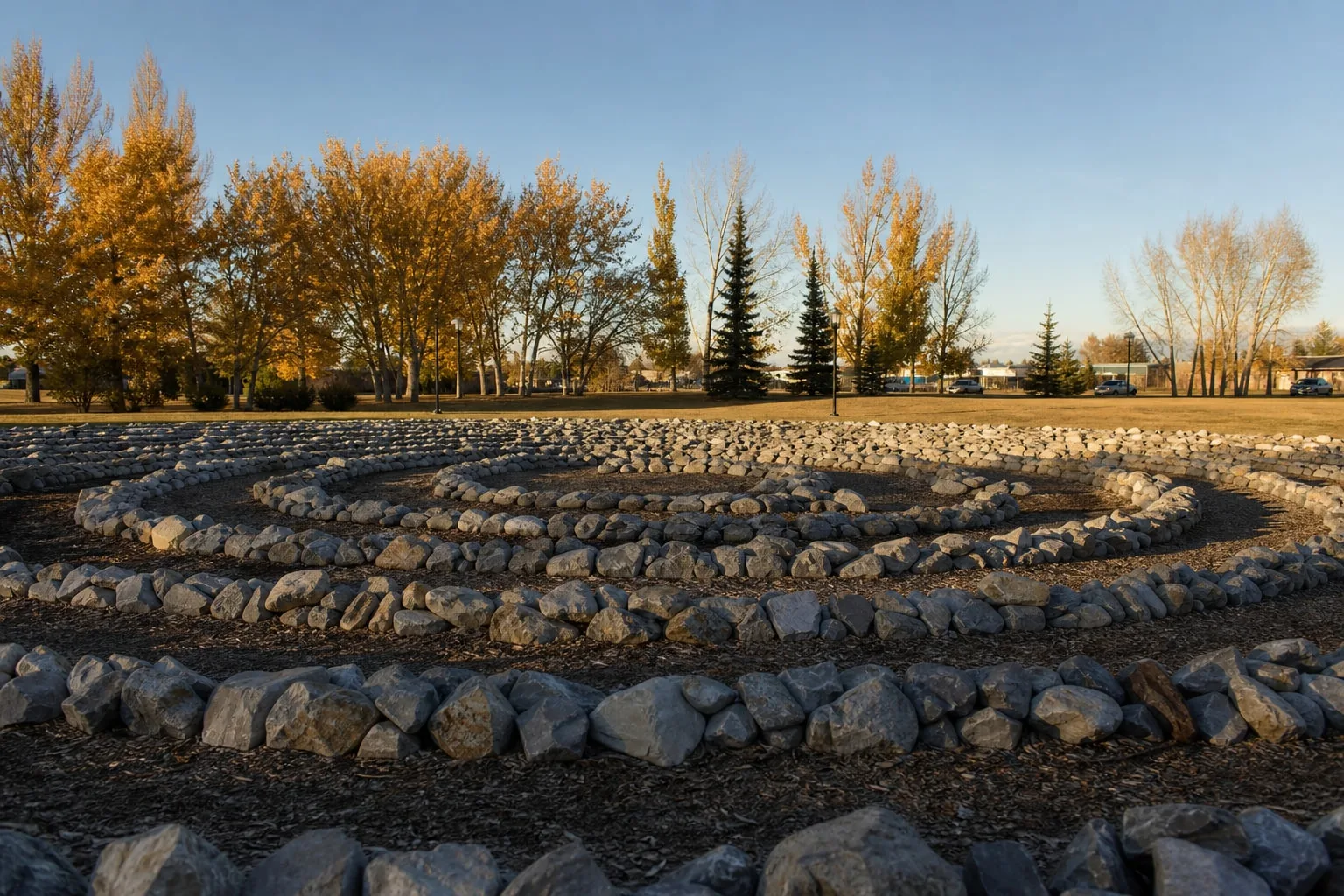
Incorporated as a village in 1904 and as a town in 1981, this area's economy is built around a few large, steady anchors rather than a single industry: the RCMP Police Dog Service Training Centre and Bowden Institution are two of the biggest employers around, and a good number of the properties we quote sit well outside the serviced core those anchors surround. That's the gap off-grid solar is built for. A cabin, acreage, or remote outbuilding where a FortisAlberta line extension would cost more than the site is worth is a straightforward case for a stand-alone system instead of a grid tie-in. Population sits at 1,280 in the most recent count, up from 1,240 the census before, and this stays a small, spread-out area where a fair number of parcels sit past the last utility pole. We don't guess at what a given property needs. Every off-grid design starts with a walk-through of the actual loads: a well pump, yard lights, a workshop, maybe a bunkhouse out past the Bowden Sun Maze grounds, and the battery bank and array get sized around that list, not a rule of thumb pulled from a brochure. If the property already has a grid connection and you're weighing off-grid against staying tied in, we'll tell you which one makes sense for your situation, not just sell you the bigger system.
Electrical Site Review for Bowden Properties
Voltage Rise
Voltage rise is the increase in voltage that happens along a distribution line the farther you get from the source, and rural feeders often run longer than in-town service. On a property near the end of a long line, that higher baseline voltage can push a hybrid inverter closer to its clipping threshold sooner, which affects how we size the array and set inverter limits during design.
Single-Phase vs Three-Phase
Properties around here can have either single-phase or three-phase electrical service, and which one a site has changes which inverters and equipment configurations are even an option. Three-phase service generally opens up more capacity for larger loads like grain handling or shop equipment, so we confirm the service type on site before we finalize equipment selection.
Panel Infrastructure
A lot of rural properties are still running an electrical panel that's decades old, and we check its age and breaker capacity before we design anything else, since an undersized or outdated panel can't safely carry a new solar and battery system. If the panel can't support the load, an upgrade to a modern panel with the right breaker capacity has to happen before or alongside the solar install.
Service Entrance Review
We inspect the service entrance and meter base condition on every site visit, because a worn or outdated meter base can hold up a micro-generation application to FortisAlberta even after the solar design itself is approved. If the meter base doesn't meet current standards, we flag the upgrade up front so it's built into the project timeline instead of surfacing as a surprise partway through.
Right-Sizing Solar for Bowden Properties
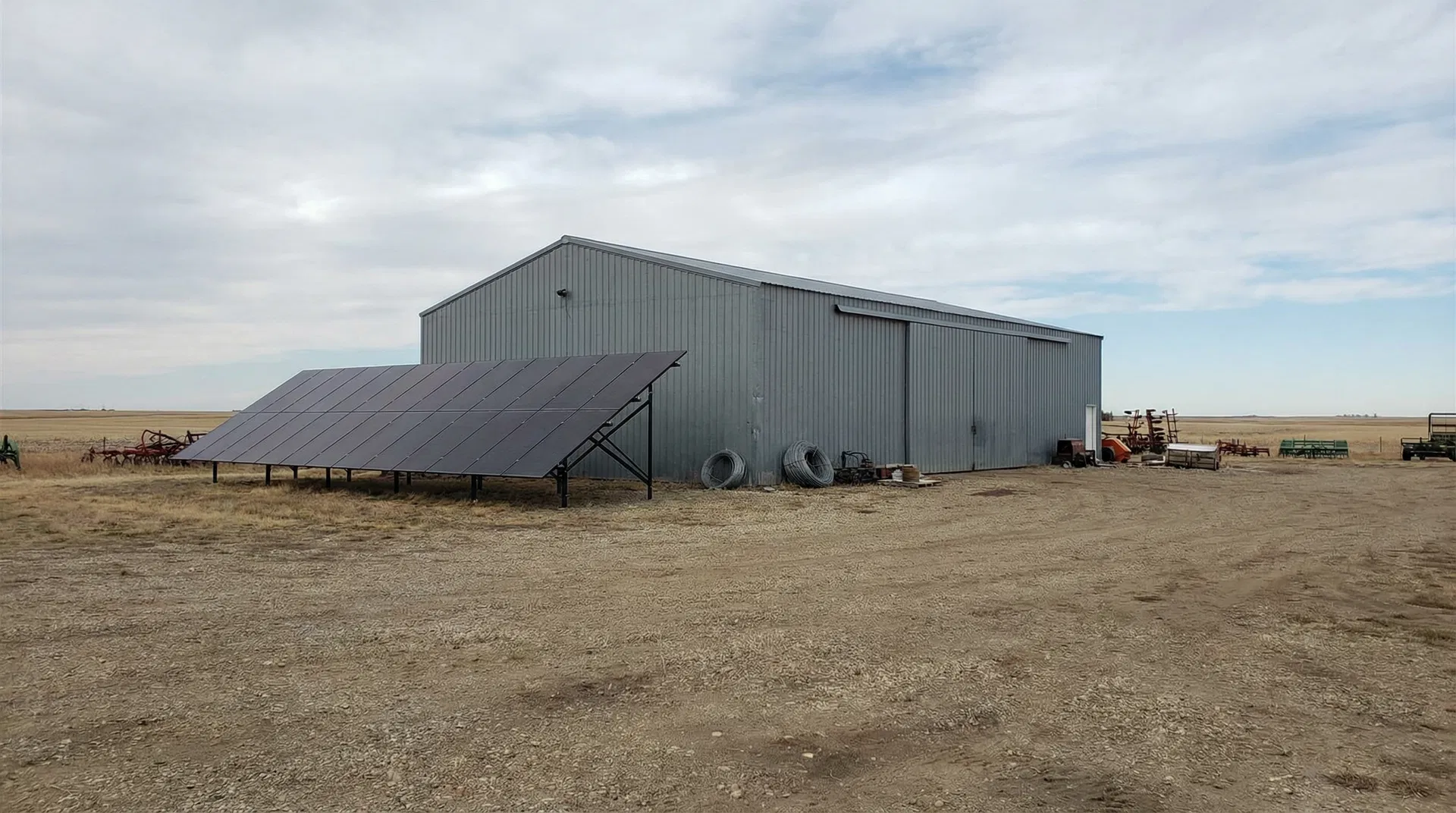
Rural systems almost always run bigger than a typical in-town install, and that's because there's usually more than one load to cover: the house, plus a shop, plus outbuildings, plus sometimes an irrigation pump or grain-handling equipment that pulls a serious draw on its own. Sizing for just the house and ignoring the rest is how a system ends up undersized within a year of install. Roof versus ground mount comes down to the specific layout of the property, not a default preference. A roof with heavy shading from mature trees or a shop building, a pitch that doesn't favor solar, or a yard with plenty of open, unshaded land are all reasons ground mount is the better call, and acreages and farm properties often have exactly that kind of space available where an in-town lot doesn't. We size every system from the 12-month usage graph on your most recent power bill, since that graph shows the actual seasonal swing in usage on the property, not a rule-of-thumb number pulled from square footage or a guess at what a similar-sized home uses. Pair that graph with a site visit covering shading, roof or ground conditions, and panel capacity, and that's what turns into an actual system size, not an estimate off a brochure.
Typical Load Profiles We Design For Near Bowden
Home + Heated Shop
This pairing shows up constantly on acreages: a house load plus a heated shop that runs block heaters, tools, and sometimes a compressor. The shop's draw often rivals or exceeds the house on its own, so we look at the usage graph on the most recent power bill to see how much of the load is shop versus home before sizing the array and battery bank.
Off-Grid Cabin or Seasonal Camp
Cabins and hunt camps used only part of the year need a different design than a full-time home: the battery bank has to carry the place through the stretches nobody's there to top it up manually, and load is usually simpler, lighting, a fridge, water pumping, maybe a small heater. We size these around actual use patterns on site rather than a full-time residential load.
Acreage with Irrigation or Grain Handling
Irrigation pumps and grain-handling equipment like augers or aeration fans pull hard, intermittent loads that a house-only system won't cover. We treat this equipment as its own line item in the load list, sized separately from the home's baseline draw, so the hybrid inverter and battery bank can carry the surge without the house circuits browning out.
FortisAlberta Interconnection in Bowden
FortisAlberta is the wire service here, and that matters even for a fully off-grid system if there's any chance the property could connect to the grid later or already has a service drop nearby. A true off-grid design has no interconnection to file, since there's no grid tie at all, but if a property is weighing a partial grid connection alongside battery backup, we handle that application with FortisAlberta directly as part of the design package. We don't guess at FortisAlberta's current process or promise a specific approval window. Interconnection rules and paperwork requirements shift, and we confirm the actual requirements for your property at the time of design rather than working off what applied last year. If your site is a candidate for a hybrid setup instead of pure off-grid, that's a conversation worth having before we finalize the system, not after equipment is ordered.
Project Economics and Design Review
| System Size | Annual Production | Year 1 Savings | Payback Period |
|---|---|---|---|
| 5-15 kW range, 8 kW typical |
Production, savings, and payback figures are only meaningful once we've done a property-specific design using your most recent power bill and an on-site assessment.
How We Work in Bowden
Bill and Load Review
We review your power bill to understand your energy use in Bowden and size the system to your actual consumption, not a generic estimate.
Site Assessment
We assess your roof or ground area, south-facing exposure, electrical service, and utility interconnection requirements specific to your property.
Design and Utility Application
We produce a system layout, production estimate, and cost summary, then submit your micro-generation application to your utility on your behalf.
Installation and Commissioning
Our crew installs racking, panels, inverter, and electrical connections. All work is performed by licensed electricians. We commission and test before handoff.
Current Program and Interconnection Review
Utility connection review
FortisAlberta reviews any grid-connection application tied to a property's electrical service, and for hybrid systems that keep a grid tie alongside battery storage, Range Road Solar handles that design package and application directly. We confirm what's required for your specific property rather than assuming last year's process still applies.
Current program review
Whether a project qualifies as residential, farm, or commercial use affects how it's designed and reviewed, and we check current eligibility rules against your specific property at design time rather than relying on general assumptions.
Frequently Asked Questions
Get a Solar Assessment for Bowden
Submit a recent power bill and we will review your consumption and provide an honest assessment for your Bowden property. No obligation.
(587) 330-7502 Book a CallMore Solar Services in Bowden