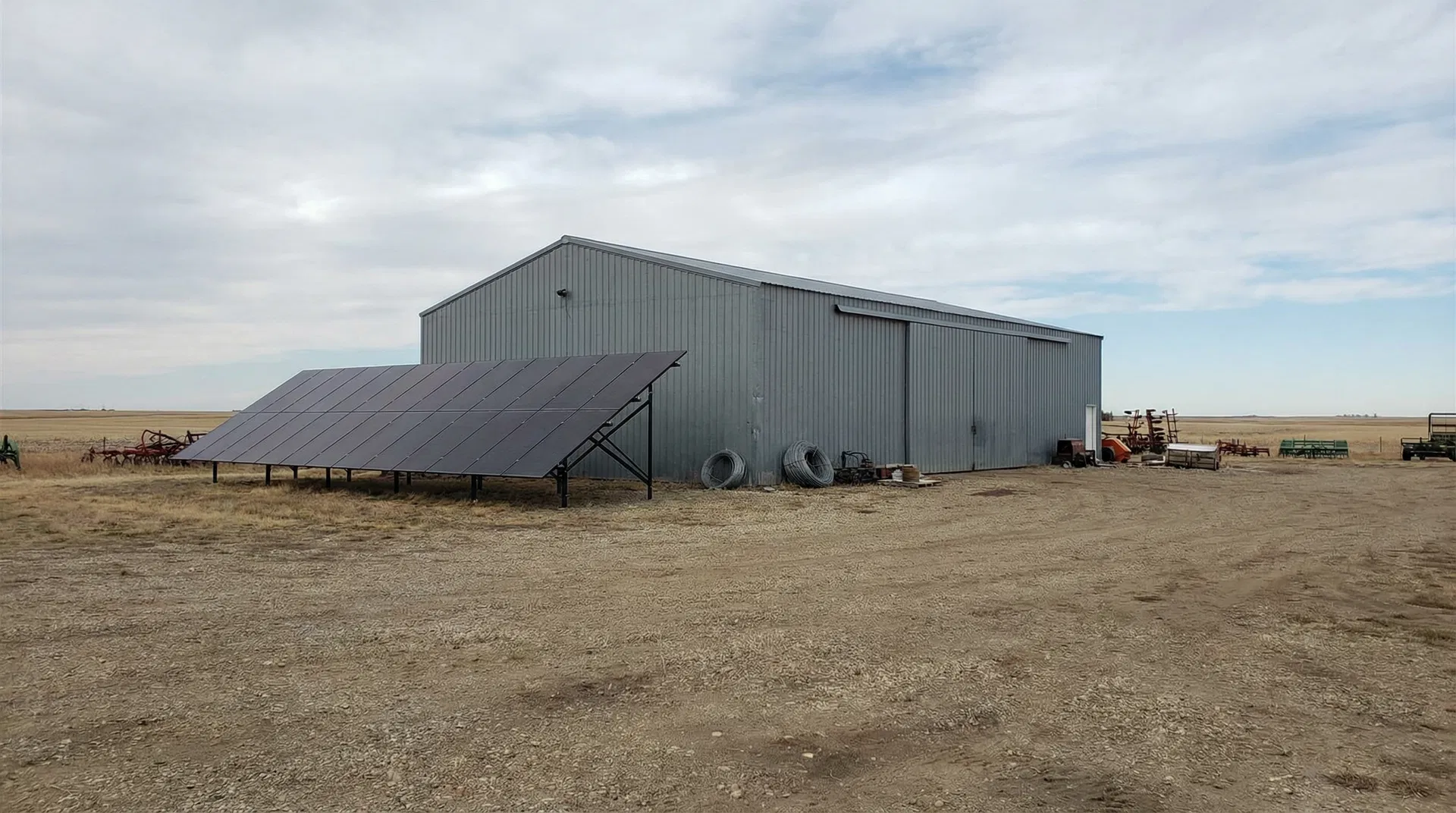
Farm solar in Bowden, AB means designing for the loads that come with a working operation, not just a house. We install LONGi panels paired with APsystems microinverters, and for most farm-scale systems in the 20 to 50 kW range, ground-mount racking is the better fit. A ground-mount array lets us place panels away from grain bins, machine sheds, and shelterbelts that would otherwise shade a roof, and it gives us room to expand the array later if a new bin or barn adds load down the road. Rooftop installs still make sense on some properties, especially a newer shop or house roof with clear southern exposure and no nearby trees. We size every system the same way regardless of mount type: from your most recent power bill's 12-month usage graph, not a rule-of-thumb number per acre or per bin. A grain operation running a dryer seasonally has a very different load shape than a dairy or cow-calf operation running a barn year-round, and the design has to reflect that. Every install here gets a site visit before we finalize a design. We check roof pitch and orientation if rooftop is on the table, walk the yard for ground-mount siting, and review your panel and service entrance for capacity. LONGi's panel warranty and APsystems' microinverter-level monitoring mean you can see individual panel performance instead of guessing at the array as a whole, useful on a large farm system where one shaded or underperforming panel is easy to miss otherwise.
Solar Planning for Bowden Properties
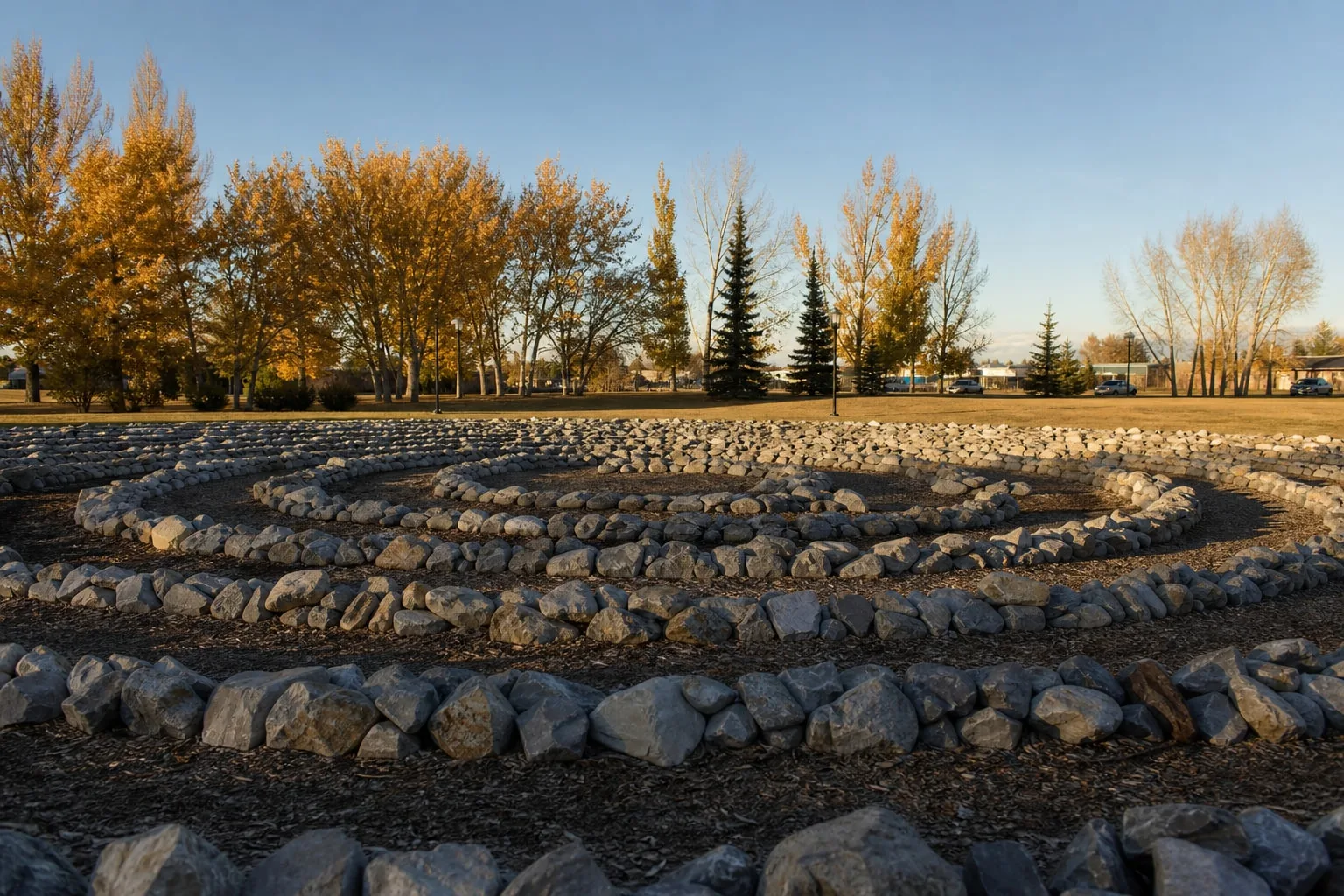
The area's recorded history runs long. Local records show the community was incorporated as a village in 1904 and as a town in 1981, and farms nearby have added grain bins, shops, and barns onto their electrical service ever since. That kind of layered growth is exactly why Range Road Solar treats every farm solar design here as its own project. We don't start with a generic system size. We start with your most recent power bill and a walk of the property. The area is also home to larger institutional operations, including the RCMP Police Dog Service Training Centre and the Bowden Institution, both of which run large electrical loads across spread-out sites. Working farms nearby deal with the same challenge: a house, a shop, maybe an irrigation pivot or grain dryer, all pulling from one service. Environment Canada's annual bright sunshine normals put the nearby Olds station at 1,998.4 hours a year, useful background for planning, but not a stand-in for a real production number. We confirm actual output through site design, not averages.
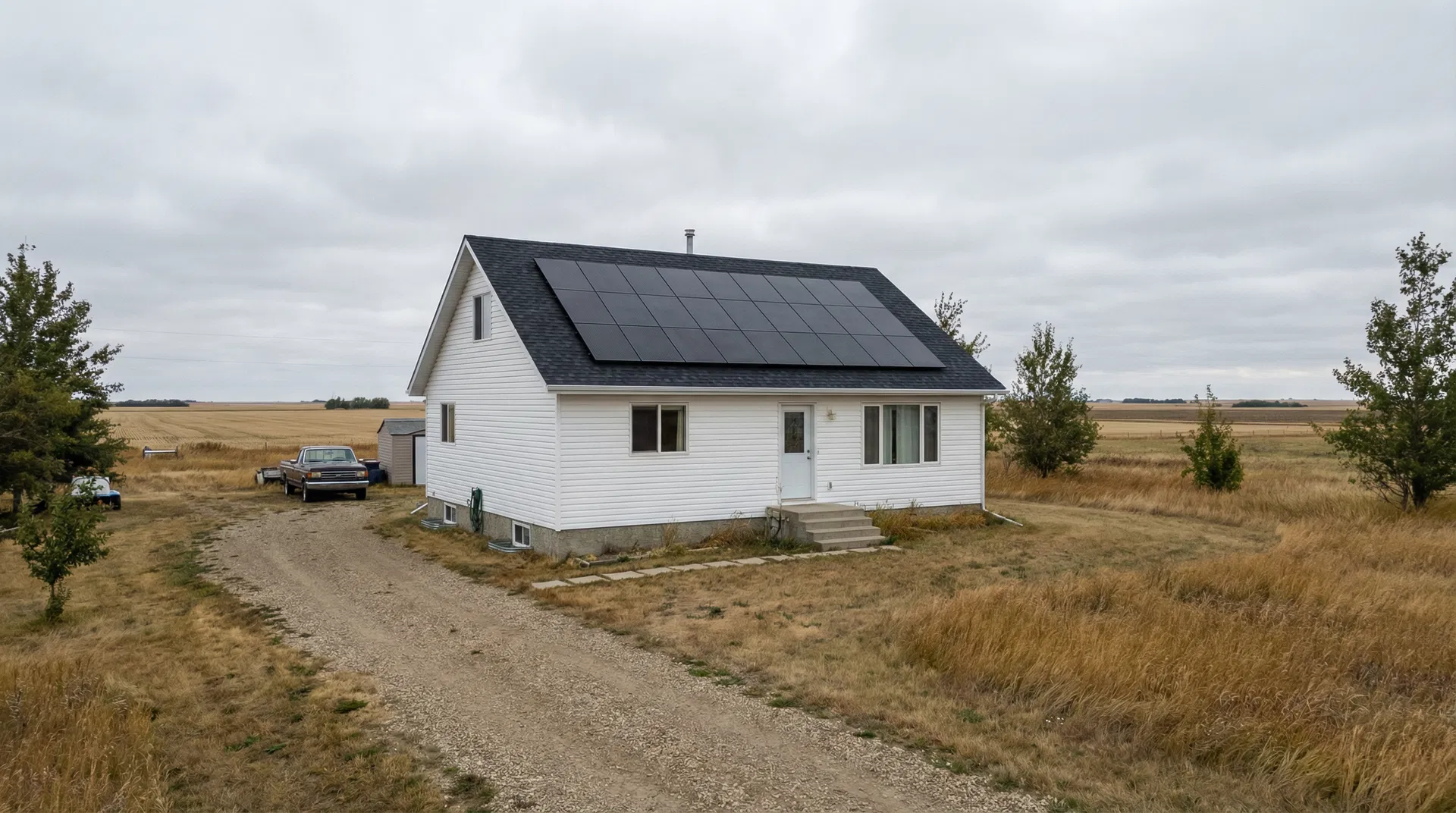
Electrical Site Review for Bowden Properties
Voltage Rise
Voltage rise happens when power pushes through a long stretch of distribution line before it reaches your property, and rural feeders like the ones serving farms in this area can run considerably longer than an in-town connection. Higher voltage rise on a feeder can push your inverter into clipping or shutdown protection sooner than expected. We check feeder conditions as part of system sizing so the inverter and array are matched to what your line can actually handle.
Single-Phase vs Three-Phase
Farm properties in this area run on either single-phase or three-phase service, depending on when the property was connected and what kind of equipment it runs. Three-phase service, common where there's a grain dryer, large shop motor, or irrigation pump, opens up different inverter and system capacity options than a single-phase connection. We confirm which service type you have early, since it shapes both equipment selection and how large a system FortisAlberta will allow.
Panel Infrastructure
Older farm properties often carry an electrical panel that was upgraded piecemeal as bins, shops, and barns got added over the years, and breaker capacity can lag behind what a modern solar interconnection needs. We check panel age, busbar rating, and available breaker space before finalizing a design. If the panel can't support the new solar breaker, an upgrade to the panel or a service entrance change happens before the system goes in, not after.
Service Entrance Review
We inspect the service entrance and meter base as part of every site visit, since their condition affects whether FortisAlberta's micro-generation application can move forward as submitted. A worn or undersized meter base can hold up the interconnection application even if the solar array itself is ready to go. When an upgrade is needed, we scope it into the project plan so it's handled in the same visit as the install, not as a surprise after the fact.
Right-Sizing Solar for Bowden Properties
Rural properties in this area almost always need a bigger system than a comparable house in town, and it's not complicated why: a farm typically runs a house, a heated shop, maybe a grain bin setup or an irrigation pivot, all pulling from one electrical service instead of just a kitchen and a furnace. That's why we design farm systems in the 20 to 50 kW range instead of the smaller systems common on an in-town residential lot. Roof or ground mount comes down to what your yard actually looks like. If your shop or house roof has clear, unshaded southern exposure and enough usable area, a rooftop array can make sense. But a lot of farm yards have shelterbelts, grain bins, or outbuildings that shade a roof for part of the day, and in that case ground mount is usually the better call, especially when there's open land available away from trees and buildings. Either way, we size the system from the 12-month usage graph on your most recent power bill, not a rule-of-thumb number based on acreage or square footage. That graph shows us your actual seasonal load pattern, whether that's a grain dryer spiking usage every fall or a livestock operation running steady year-round, and combined with a site visit, it's what determines the right system size for your property.
Typical Load Profiles We Design For Near Bowden
Home + Heated Shop
This is the most common setup we see on acreages in this area: a house plus a heated shop used for equipment storage and repair work through the winter. We size the system around both structures pulling from one service, using the seasonal pattern on your most recent power bill rather than treating the shop as an afterthought.
Grain Handling and Seasonal Drying
Grain operations often show a sharp seasonal spike when the dryer runs during harvest, sitting on top of otherwise steady year-round usage. We look at that spike specifically on your bill's usage graph so the system isn't undersized for the weeks that matter most, or oversized for the rest of the year.
Livestock and Barn Operations
A cow-calf or dairy operation tends to run a more consistent year-round load, with barn heating, water systems, and lighting running daily rather than spiking seasonally. We size these systems around that steady baseline, using your most recent power bill's usage graph to confirm the pattern before finalizing array size.
FortisAlberta Interconnection in Bowden
Properties here are served by FortisAlberta, the wire service that owns and maintains the distribution lines your farm connects to. Any grid-tied solar system connecting through FortisAlberta's network needs a micro-generation interconnection application before it can be energized, covering everything from a rooftop array on a shop to a larger ground-mount system feeding a grain operation. Range Road Solar handles that entire application package for you: the electrical drawings, the site plan, and the paperwork FortisAlberta requires to review your connection. We coordinate directly with FortisAlberta through the process so you're not the one chasing down forms or translating utility jargon. We don't quote a specific approval timeline or promise how credits get settled, because those specifics depend on current FortisAlberta rules and your particular connection. We confirm them for your property as part of the design review, not in advance on a webpage.
Project Economics and Design Review
| System Size | Annual Production | Year 1 Savings | Payback Period |
|---|---|---|---|
| 20-50 kW range, 25 kW typical |
Production, savings, and payback figures are calculated only after a property-specific design review using your most recent power bill and a site assessment.
How We Work in Bowden
Bill and Load Review
We review your power bill to understand your energy use in Bowden and size the system to your actual consumption, not a generic estimate.
Site Assessment
We assess your roof or ground area, south-facing exposure, electrical service, and utility interconnection requirements specific to your property.
Design and Utility Application
We produce a system layout, production estimate, and cost summary, then submit your micro-generation application to your utility on your behalf.
Installation and Commissioning
Our crew installs racking, panels, inverter, and electrical connections. All work is performed by licensed electricians. We commission and test before handoff.
Current Program and Interconnection Review
Utility connection review
FortisAlberta reviews every micro-generation interconnection application before a solar system can be energized here. Range Road Solar prepares and submits that full design package on your behalf, from the electrical drawings to the site plan FortisAlberta requires.
Current program review
Farm, commercial, and residential properties here can qualify for different treatment depending on system size and use, and those rules change over time. We review your property against whatever rules are current at the time of your design, rather than relying on what applied last year.
Frequently Asked Questions
Get a Solar Assessment for Bowden
Submit a recent power bill and we will review your consumption and provide an honest assessment for your Bowden property. No obligation.
(587) 330-7502 Book a CallRelated Resources
More Solar Services in Bowden