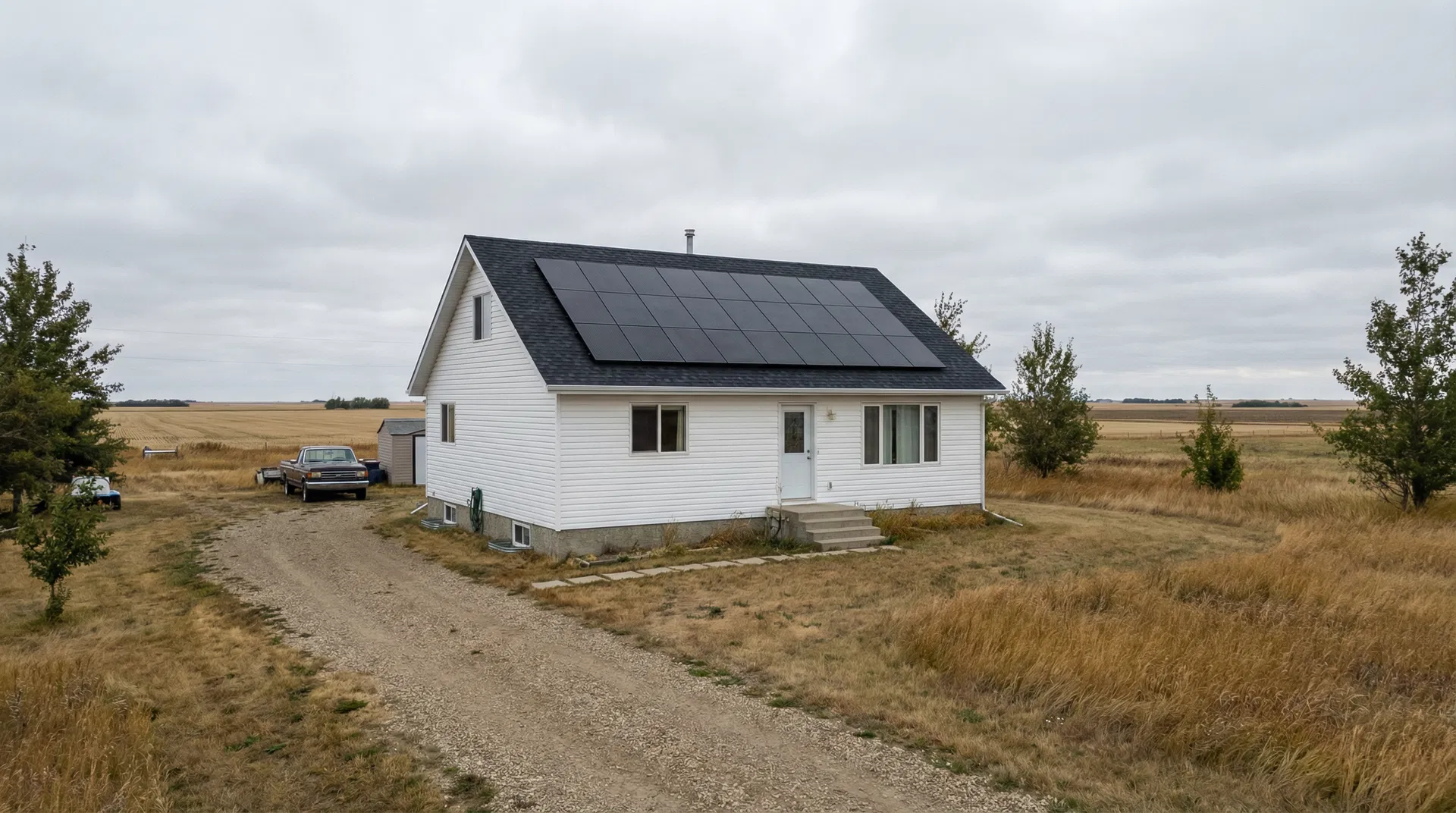
Solar financing in Bowden, Alberta means sizing monthly payments against the power bill the system replaces, not applying a generic consumer loan rate to a number that doesn't match the property. Residential systems we design and finance in this area typically run 8 to 15 kilowatts, with most homes landing around 10 kilowatts once we've looked at the site and the bill. Every system uses LONGi panels and APsystems microinverters, the same equipment whether it's going on a standing-seam metal roof on an acreage shop or a standard asphalt roof on an in-town lot. Financing terms depend on the system size, the mounting type (roof or ground), and any electrical upgrades the site needs before the array goes in. A straightforward roof-mount on a newer panel costs less to finance than a ground-mount system that also requires a service upgrade. We walk through both scenarios during the design review so the monthly payment reflects the actual job, not an estimate built before anyone has seen the property. We don't push financing as an add-on sale. If a cash purchase makes more sense for a given property, a shop with a tight budget this year versus next, we'll say so. The goal is a payment that tracks the bill it's replacing, built from equipment that's been field-proven on rural Alberta properties, not a rate pulled from a template.
Solar Planning for Bowden Properties
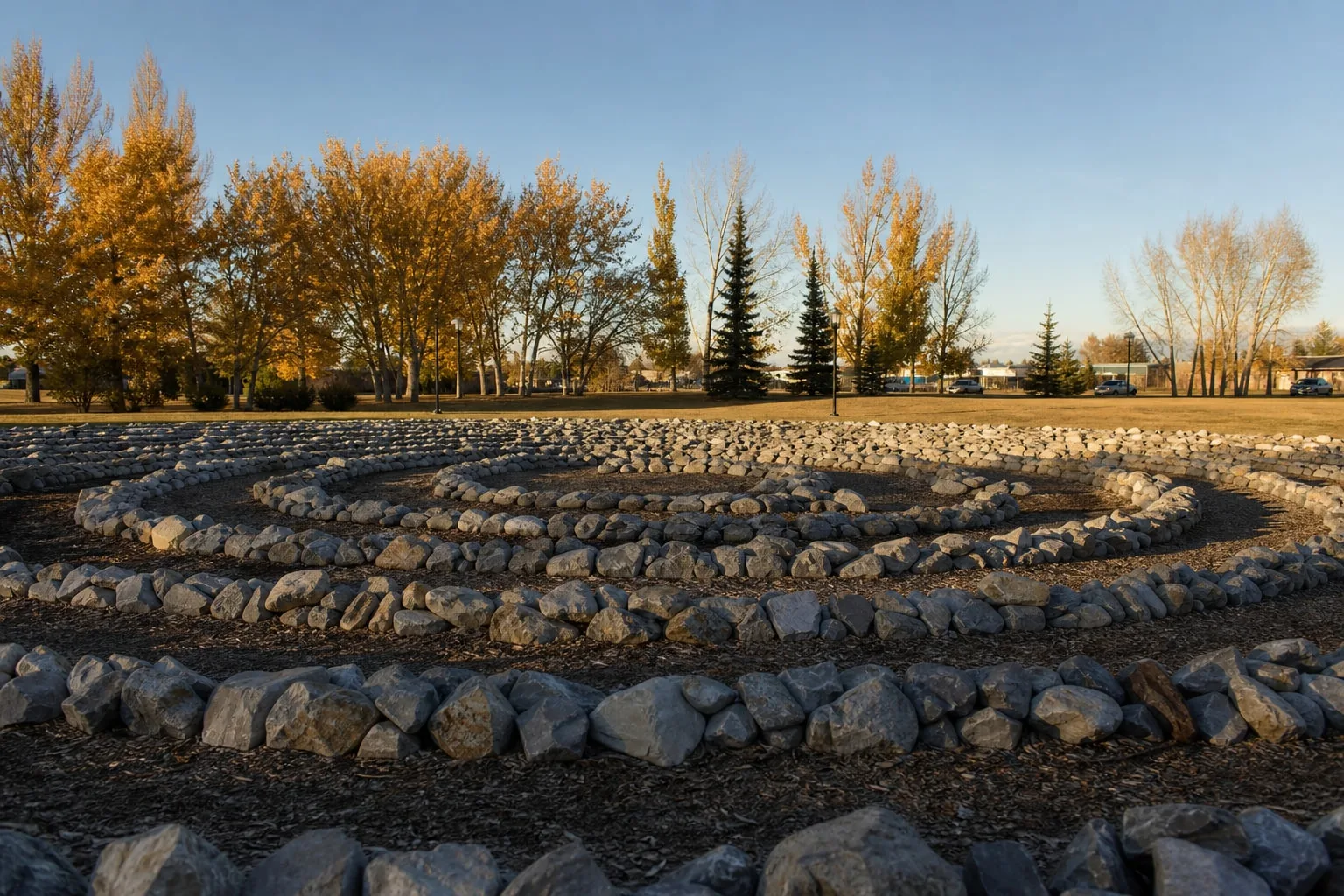
This part of Alberta sits within Red Deer County, and the property mix runs from in-town lots to acreages and farms on the edge of town. The area had a population of 1,280 as of the latest census, enough people that the solar systems we design here aren't cookie-cutter suburban rooftops. Some properties have a shop and outbuildings pulling their own load. Others sit closer to landmarks like the Bowden Sun Maze or the Bowden Institution, where lots are bigger and roof orientation isn't always the deciding factor. Range Road Solar doesn't guess at what a property here needs. We confirm system size through a site design and your most recent power bill, which carries a 12-month usage graph showing how the property actually draws power across the year. That's a more reliable starting point than a rule-of-thumb number pulled from a brochure. Whether the property sits on a standard in-town lot or further out where FortisAlberta runs the distribution lines, the same process applies: look at the bill, look at the site, and size the system to match. Financing follows the same logic. We size the payment against the bill the system is replacing, not a generic number.
Electrical Site Review for Bowden Properties
Voltage Rise
Voltage rise happens when the distance and wire gauge between a property and the nearest distribution transformer cause voltage to climb as solar power flows back toward the grid. On properties farther out on the distribution network, this can be more pronounced than on a tight in-town lot. We check for it during the site review because it affects how large an inverter can run before it starts clipping output, which shapes how we size the system.
Single-Phase vs Three-Phase
Rural properties may have single-phase or three-phase electrical service, depending on when the property was built and what kind of equipment it runs. A shop running three-phase motors needs different inverter selection than a house on single-phase service, and the available phase service caps how much solar capacity we can connect without additional equipment. We confirm which service type a property has before finalizing the system design.
Panel Infrastructure
Older electrical panels on rural properties don't always have the breaker capacity to add a solar backfeed without changes. We check the panel's age, its busbar rating, and how much open breaker space is left before we finalize a design. If the panel can't support the system as-is, an upgrade to a larger panel or a different breaker configuration happens before the solar equipment goes in.
Service Entrance Review
The service entrance and meter base are part of what we inspect before submitting a FortisAlberta micro-generation application, since the meter base has to be rated for the added equipment. A worn or undersized meter base can hold up the application or require correction before FortisAlberta will approve the connection. When an upgrade is needed, we scope it as part of the install so there's no separate surprise once the application is already in.
Right-Sizing Solar for Bowden Properties
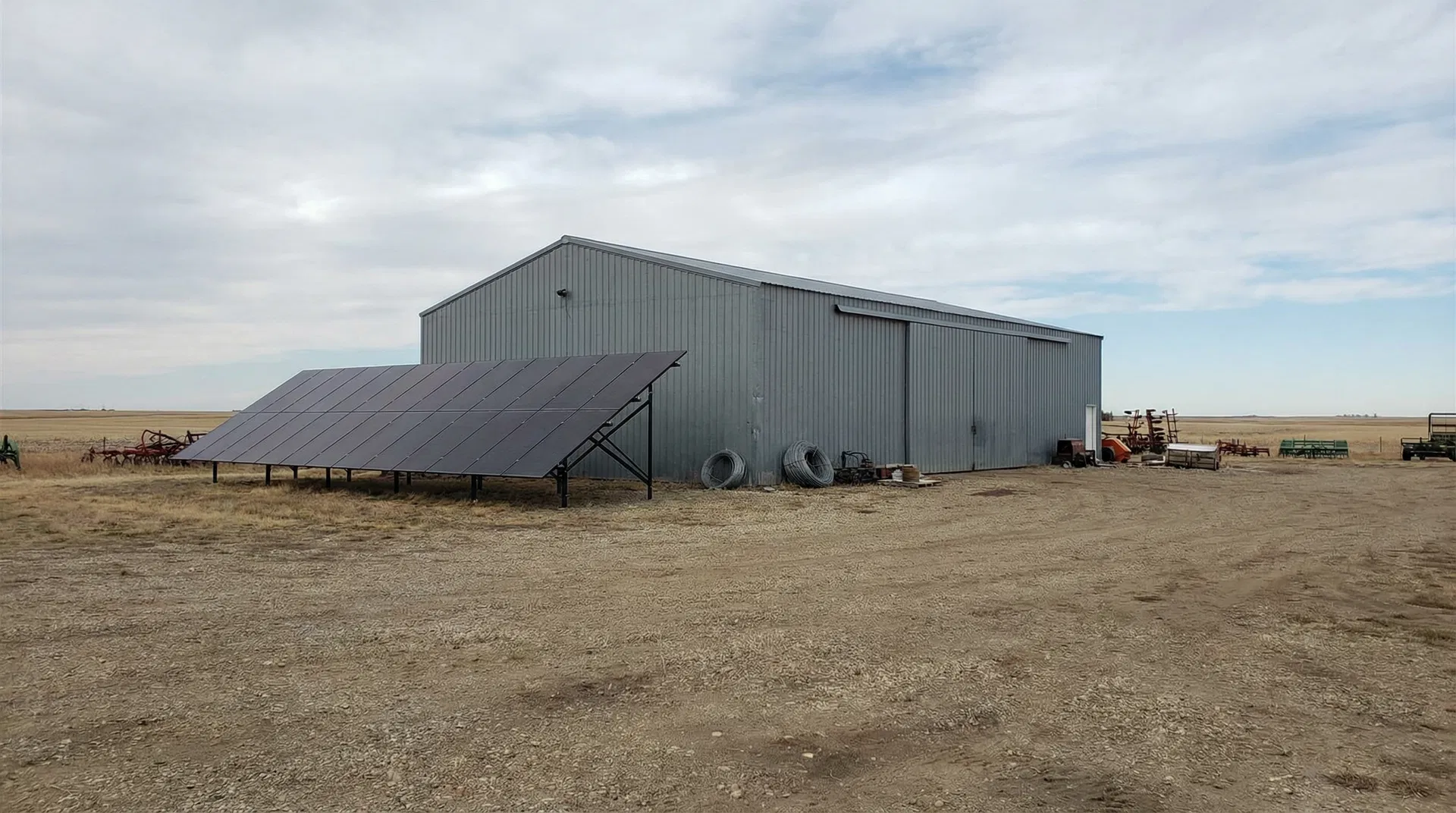
Rural properties in this area usually carry more electrical load than a standard suburban house, which is why the systems we design here tend to run larger. A property might have a home, a heated shop, a grain bin aeration setup, or an irrigation pump all drawing from the same service, and each of those loads factors into how big the array needs to be. Roof versus ground mount comes down to the specific property. A roof-mount makes sense when the roof has clear southern or western exposure and the structure can carry the array. Ground mount becomes the better call when trees or outbuildings shade the roof, when the roof pitch or orientation isn't workable, or when there's a spread-out yard with open land that doesn't need to compete with roof constraints. Either way, we don't size a system off a rule-of-thumb number. We size it from the 12-month usage graph printed on your most recent power bill, which shows how the property's draw actually moves across the year, winter heating load included. That graph, combined with a site visit to check shading, roof or ground conditions, and the electrical service, is what sets the system size. A current power bill and an on-site design review are the two inputs that matter; everything else is a guess.
Typical Load Profiles We Design For Near Bowden
Home + Heated Shop
A house paired with a heated shop is common on properties in this area, and the shop's heating and tool load usually rivals or exceeds the house's own draw. We size these systems from the combined usage shown on your most recent power bill rather than estimating the shop and house separately.
Acreage with Irrigation or Grain Handling
Acreages running irrigation pumps or grain handling equipment see load spikes tied to the season rather than a flat year-round pattern. The 12-month usage graph on the power bill shows those seasonal peaks, which is what lets us size a system that accounts for them instead of averaging the year into a flat number.
Standard In-Town Residential Lot
A standard house on an in-town lot has a more even draw across the year, mostly heating, appliances, and everyday use. These are usually straightforward roof-mount designs, and system size still comes from the usage graph on the most recent bill rather than square footage or a generic per-home estimate.
FortisAlberta Interconnection in Bowden
FortisAlberta is the wire service for properties in this area. Any grid-connected solar system here goes through FortisAlberta's micro-generation application process before it's allowed to operate alongside the existing service. Range Road Solar handles that application as part of the install, not as a separate task you have to manage. We prepare the electrical design package, the single-line diagram, and the equipment specifications FortisAlberta requires, and we submit it on your behalf. That includes confirming the service entrance and meter base can support the system before the application goes in, since FortisAlberta reviews that as part of the connection request. We don't quote an approval timeline because FortisAlberta's review schedule varies and isn't something we control. What we can control is making sure the application package is complete and accurate the first time, which is the single biggest factor in how smoothly the review goes. We'll walk you through what FortisAlberta requires for your specific property during the design review.
Project Economics and Design Review
| System Size | Annual Production | Year 1 Savings | Payback Period |
|---|---|---|---|
| 8-15 kW range, 10 kW typical |
Production, savings, and payback figures are provided after a property-specific design review using your most recent power bill, not estimated in advance.
How We Work in Bowden
Bill and Load Review
We review your power bill to understand your energy use in Bowden and size the system to your actual consumption, not a generic estimate.
Site Assessment
We assess your roof or ground area, south-facing exposure, electrical service, and utility interconnection requirements specific to your property.
Design and Utility Application
We produce a system layout, production estimate, and cost summary, then submit your micro-generation application to your utility on your behalf.
Installation and Commissioning
Our crew installs racking, panels, inverter, and electrical connections. All work is performed by licensed electricians. We commission and test before handoff.
Current Program and Interconnection Review
Utility connection review
FortisAlberta reviews the micro-generation connection application for any solar system we install in this service territory. Range Road Solar prepares the full design package, including the single-line diagram and equipment specs, and submits the application on your behalf.
Current program review
Commercial, farm, and residential eligibility for any current provincial or federal program is reviewed against the rules in place at the time of your design, since these programs change. We check what applies to your specific property during the design review rather than assuming last year's rules still hold.
Frequently Asked Questions
Get a Solar Assessment for Bowden
Submit a recent power bill and we will review your consumption and provide an honest assessment for your Bowden property. No obligation.
(587) 330-7502 Book a CallMore Solar Services in Bowden