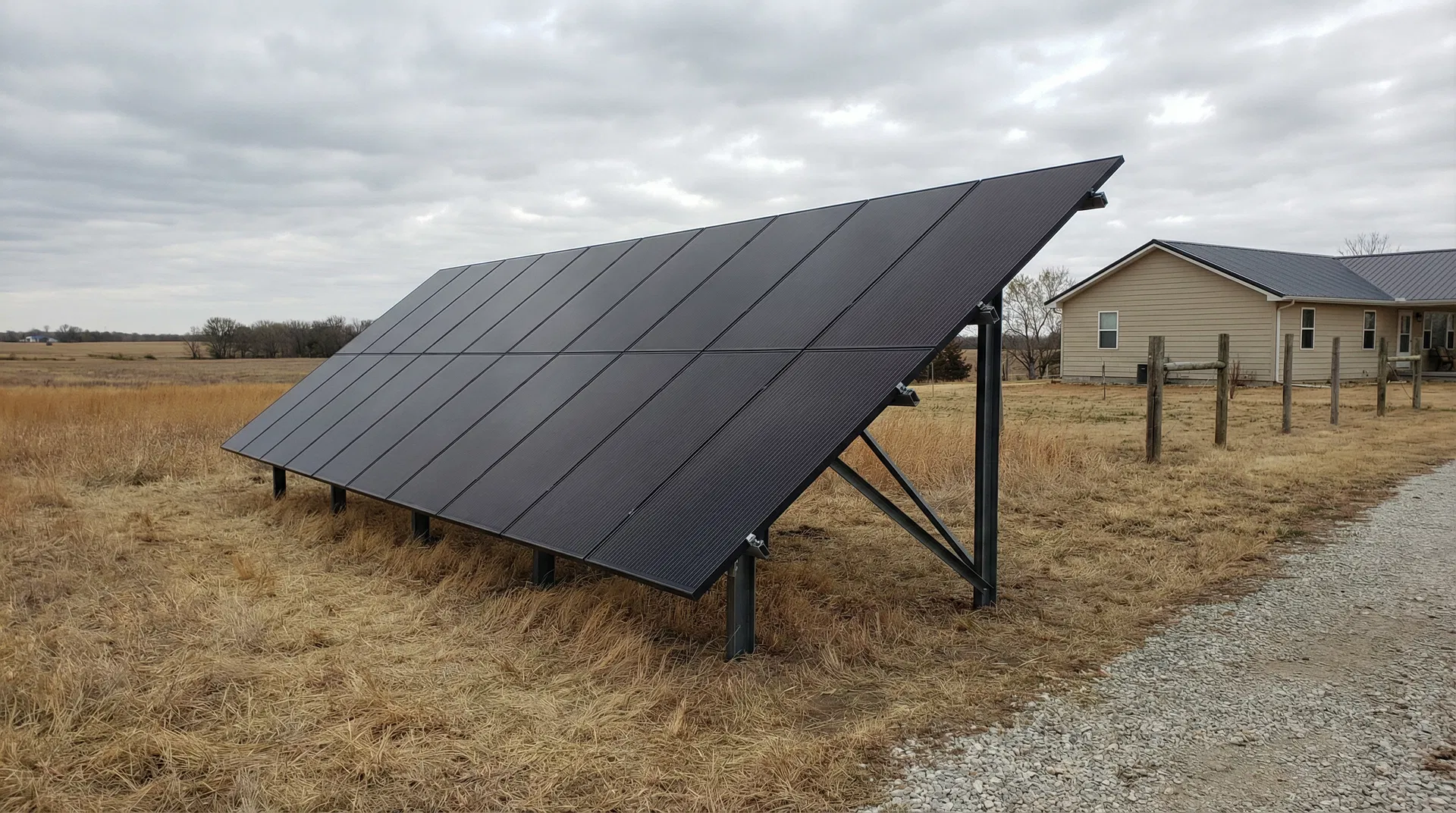
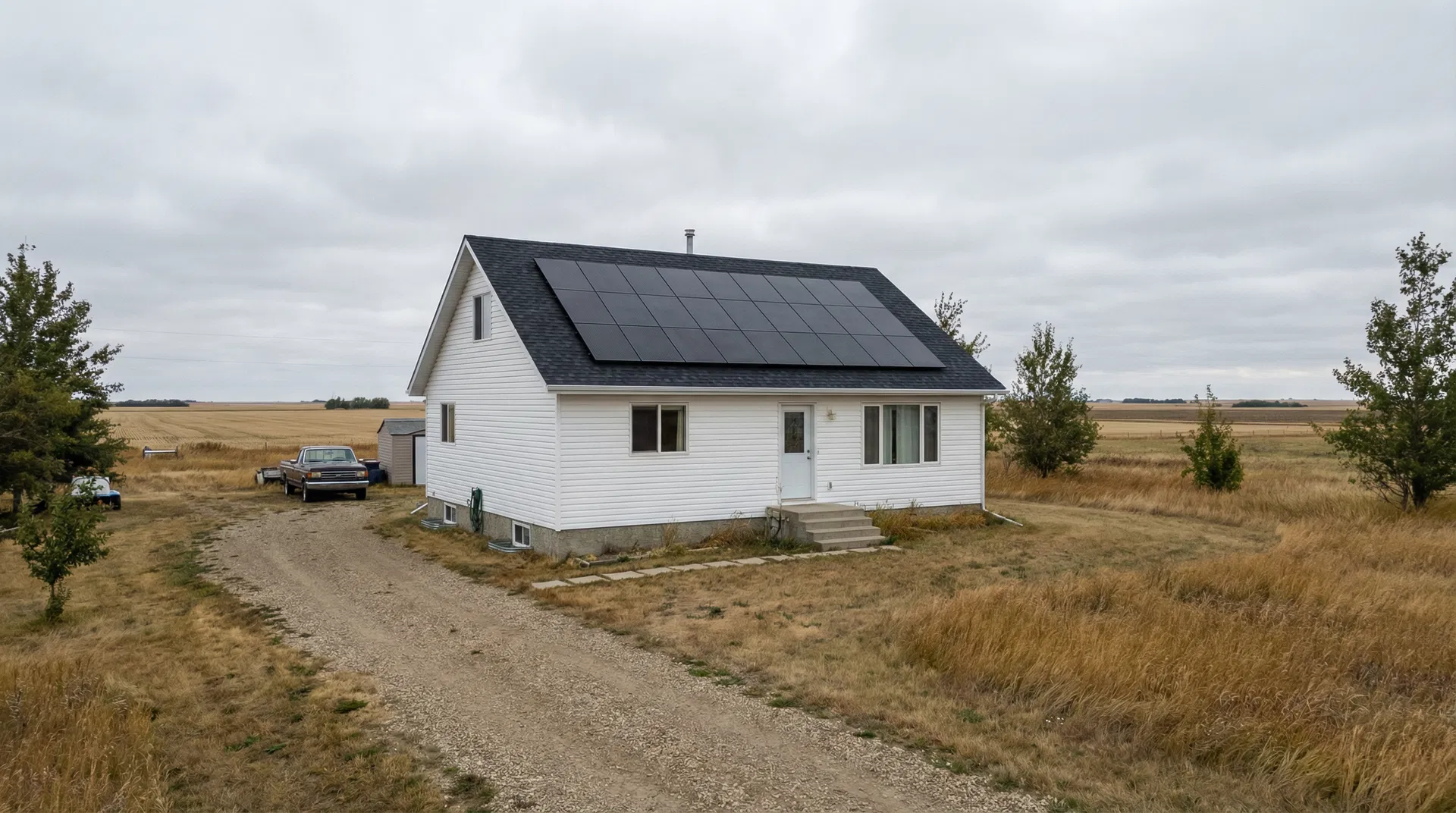
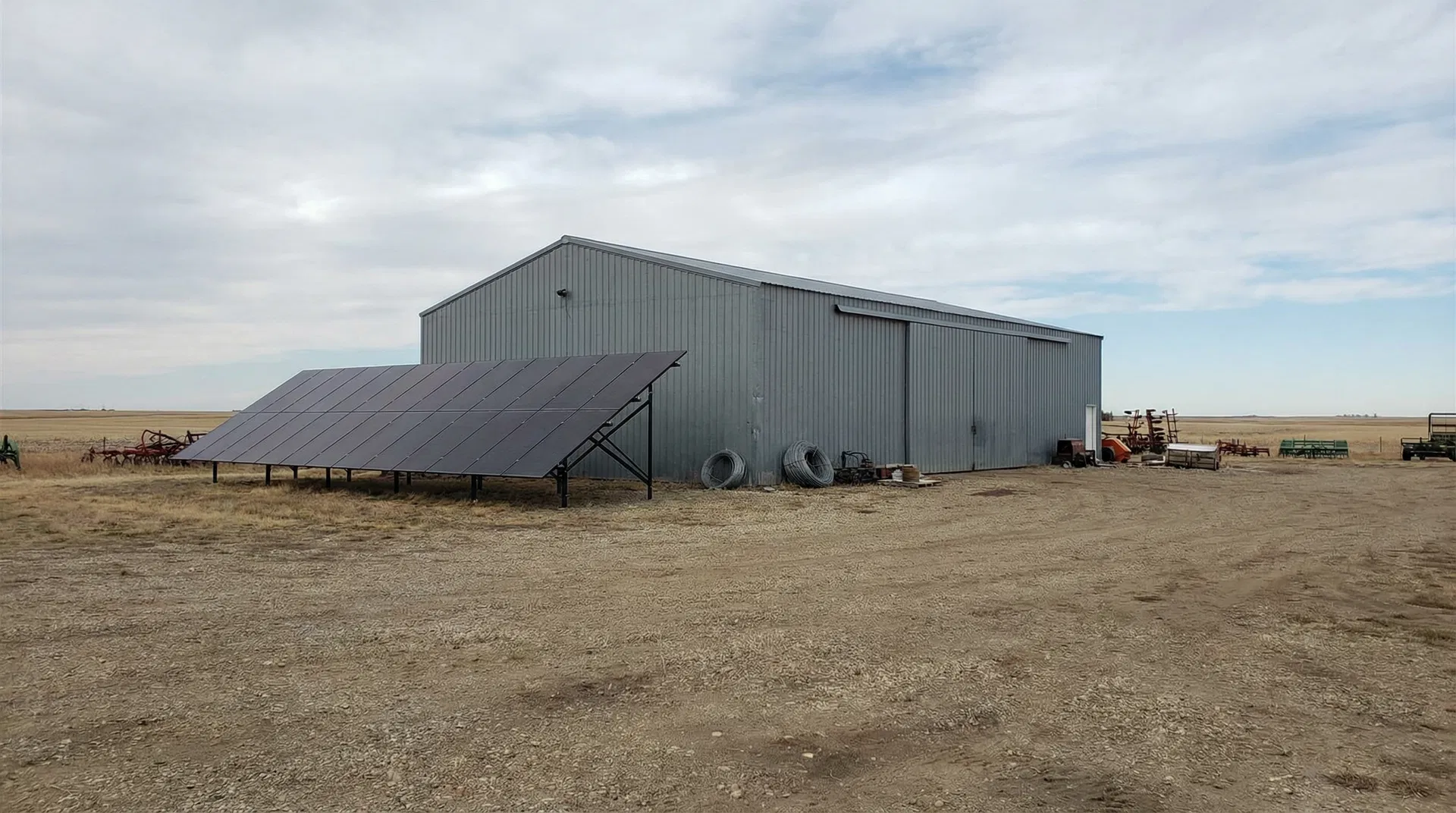
Acreage solar Bowden properties call for systems in the 12-18 kW range, with 15 kW being a common landing point once we've reviewed the load profile and site conditions. Some properties come in lower; others push past 18 kW once the shop, well pump, and in-floor heat are accounted for. The design starts from your bill, not from a brochure estimate. We install LONGi panels throughout our acreage builds. They're well-tested, widely used in rural Alberta conditions, and carry solid manufacturer backing. For inverters, we use APsystems microinverters on most installations. Microinverters convert power at each panel independently, so shading from a nearby tree line, a shop roofline, or an outbuilding doesn't drag down the whole system the way a string inverter can. Rooftop and ground-mount configurations are both common on acreage properties, and the right choice depends on your roof pitch, orientation, shading, and how your yard is laid out. Some Bowden-area properties have a south-facing house roof that works well. Others have a better ground-mount site in a clear part of the yard, or a shop roof that catches more sun than the house does. We look at both options during the design review and recommend what actually fits the property, not what's easier to install. The system connects to your existing service through FortisAlberta's micro-generation program. We handle the interconnection application and design package as part of the installation process.
Solar Planning for Bowden Properties
Acreage properties around Bowden don't follow the same electrical profile as a city lot. You've got a house, likely a heated shop, maybe outbuildings, water systems, or seasonal equipment running through a single meter. That stacks up fast, and it means the system has to be designed around your actual consumption, not a guess based on square footage. FortisAlberta is the wire service here, and Alberta's deregulated retail electricity market means what you pay per kilowatt-hour can shift depending on your retailer contract. A well-sized solar system reduces how much you draw from the grid, and that matters more when your load profile is higher than average. We don't use rule-of-thumb numbers to design acreage systems. The 12-month usage graph on your most recent power bill tells us your seasonal peaks, your base load, and whether a 12 kW or an 18 kW system makes sense for your property. Those are genuinely different outcomes, and getting it right at the design stage is what separates a system that performs from one that underdelivers. We provide honest production estimates based on your actual power bills and site conditions, not inflated projections.
Electrical Site Review for Bowden Properties
Voltage Rise
Voltage rise occurs when a solar system pushes power back toward the grid and the local line voltage climbs above acceptable limits. Rural distribution lines tend to be longer and can have higher impedance than urban feeders, which makes voltage rise more likely to affect system performance. When rise is a factor, inverters clip output to stay within limits, which affects how the system is sized and configured.
Single-Phase vs Three-Phase
Rural Alberta properties can be served by either single-phase or three-phase electrical service, and it's not always obvious from a walk-through which one you have. Three-phase service is more common on properties with larger motors, grain handling equipment, or commercial-scale irrigation. The phase configuration matters because it affects which inverter models are compatible and how total system capacity is distributed across the service.
Panel Infrastructure
Older panels on rural properties are common, and they don't always have the breaker capacity to support a 12-18 kW solar system without modification. We check the panel age, main breaker rating, and available space for the solar back-feed breaker during the site review. If the panel can't support the system safely, we'll include a panel upgrade in the project scope before installation begins.
Service Entrance Review
The meter base and service entrance are reviewed as part of every FortisAlberta micro-generation application. FortisAlberta requires the meter base to meet current standards before the interconnection is approved. If the existing meter base is older or non-compliant, an upgrade is required, and we flag that during the design review so it's built into the project plan from the start.
Right-Sizing Solar for Bowden Properties
Acreage systems in rural Alberta are almost always larger than what you'd install on a city house, and for good reason. A typical acreage property doesn't just have a home to power. It's got a heated shop, a well pump, outbuildings, yard lighting, and sometimes irrigation or grain-handling equipment all running off the same meter. When you add those loads together, the consumption profile looks very different from a suburban house with a gas furnace and no outbuildings. The 12-18 kW range we work in for acreage installations reflects that reality. A 12 kW system might be right for a property with a smaller shop and modest outbuilding loads. A property with in-floor heat in the shop, a large well, and year-round equipment running can push the design toward 18 kW or beyond. We don't pick a number before we've seen the data. Roof-mount and ground-mount are both common on acreage layouts, and the right call depends on what the site actually offers. If your house roof is well-oriented with good pitch and no shading issues, it's often the most cost-effective starting point. If the yard has a clear south-facing run of ground with better sun exposure than the rooflines, a ground-mount often makes more sense. Some properties split the install between the house roof and the shop roof. Sizing starts from the 12-month usage graph on your most recent power bill. That graph shows your seasonal consumption pattern, which is the most reliable input we have for building a system that fits your load, not just your roof.
Typical Load Profiles We Design For Near Bowden
Home Plus Heated Shop
This is one of the most common acreage configurations we see: a house with standard residential loads combined with a shop that runs electric heat, compressors, and welding equipment. The shop alone can add thousands of kilowatt-hours to the annual consumption, which shifts the system design considerably. We size from the combined load shown on the power bill, not from the house footprint alone.
Acreage With Well and Irrigation
Properties running a submersible well pump plus seasonal irrigation draw significant power during the spring and summer months, which shows up clearly in the 12-month usage graph. A 15-16 kW system is often a starting point for these profiles, but the final size depends on pump horsepower, run hours, and what else is on the meter. Ground-mount installations work well here when the yard has open south exposure away from the well house.
Hobby Farm With Multiple Outbuildings
Hobby farm setups often have a house, a barn or chicken coop, a small shop, and miscellaneous plug-in loads scattered across the property. The load is spread out but adds up, and the distribution of structures sometimes makes a split install across two roof sections or a combination of roof and ground-mount the most practical solution. We review the site layout as part of the design to find the configuration that captures the most generation with the least complexity.
FortisAlberta Interconnection in Bowden
Bowden properties are served by FortisAlberta on the distribution side. When you install a solar system here, the interconnection application goes through FortisAlberta's micro-generation process, which allows the system to connect to the grid and offset your consumption. We handle the full application package on your behalf. That includes the system design documentation, single-line diagrams, equipment specifications, and any coordination required through the approval process. You don't need to navigate FortisAlberta's technical requirements yourself. What we don't do is make promises about approval timelines, credit settlement terms, or how FortisAlberta handles excess generation credits. Those details are governed by current utility rules and your retailer contract, and they're worth reviewing at design time rather than after installation. We'll walk you through what the interconnection process looks like for your specific property during the design review, so there are no surprises once the system is in the ground.
Project Economics and Design Review
| System Size | Annual Production | Year 1 Savings | Payback Period |
|---|---|---|---|
| 12-18 kW range, 15 kW typical |
Production, savings, and payback estimates require a property-specific design and your most recent power bill.
How We Work in Bowden
Bill and Load Review
We review your power bill to understand your energy use in Bowden and size the system to your actual consumption, not a generic estimate.
Site Assessment
We assess your roof or ground area, south-facing exposure, electrical service, and utility interconnection requirements specific to your property.
Design and Utility Application
We produce a system layout, production estimate, and cost summary, then submit your micro-generation application to your utility on your behalf.
Installation and Commissioning
Our crew installs racking, panels, inverter, and electrical connections. All work is performed by licensed electricians. We commission and test before handoff.
Current Program and Interconnection Review
Utility connection review
FortisAlberta reviews grid connection applications for properties in their service territory, including Bowden. Range Road Solar prepares the full design package required for the micro-generation application. We handle the submission so you're not navigating technical utility requirements on your own.
Current program review
Eligibility for commercial, farm, and residential programs is reviewed against current rules at the time of your design. Program availability, terms, and qualifying criteria can change, so we confirm what applies to your property and ownership structure during the design process rather than working from outdated assumptions.
Frequently Asked Questions
Get a Solar Assessment for Bowden
Submit a recent power bill and we will review your consumption and provide an honest assessment for your Bowden property. No obligation.
(587) 330-7502 Book a CallMore Solar Services in Bowden