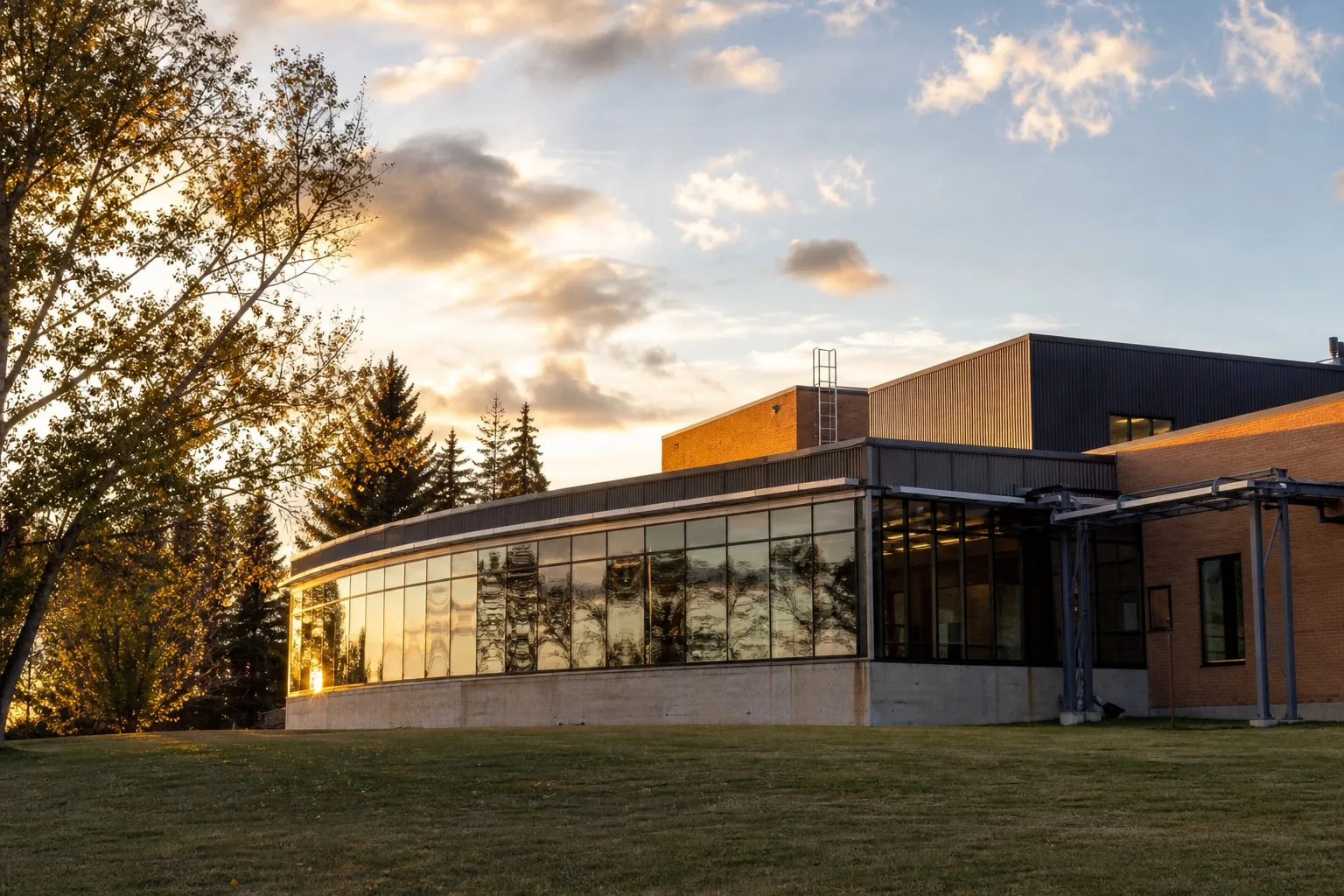
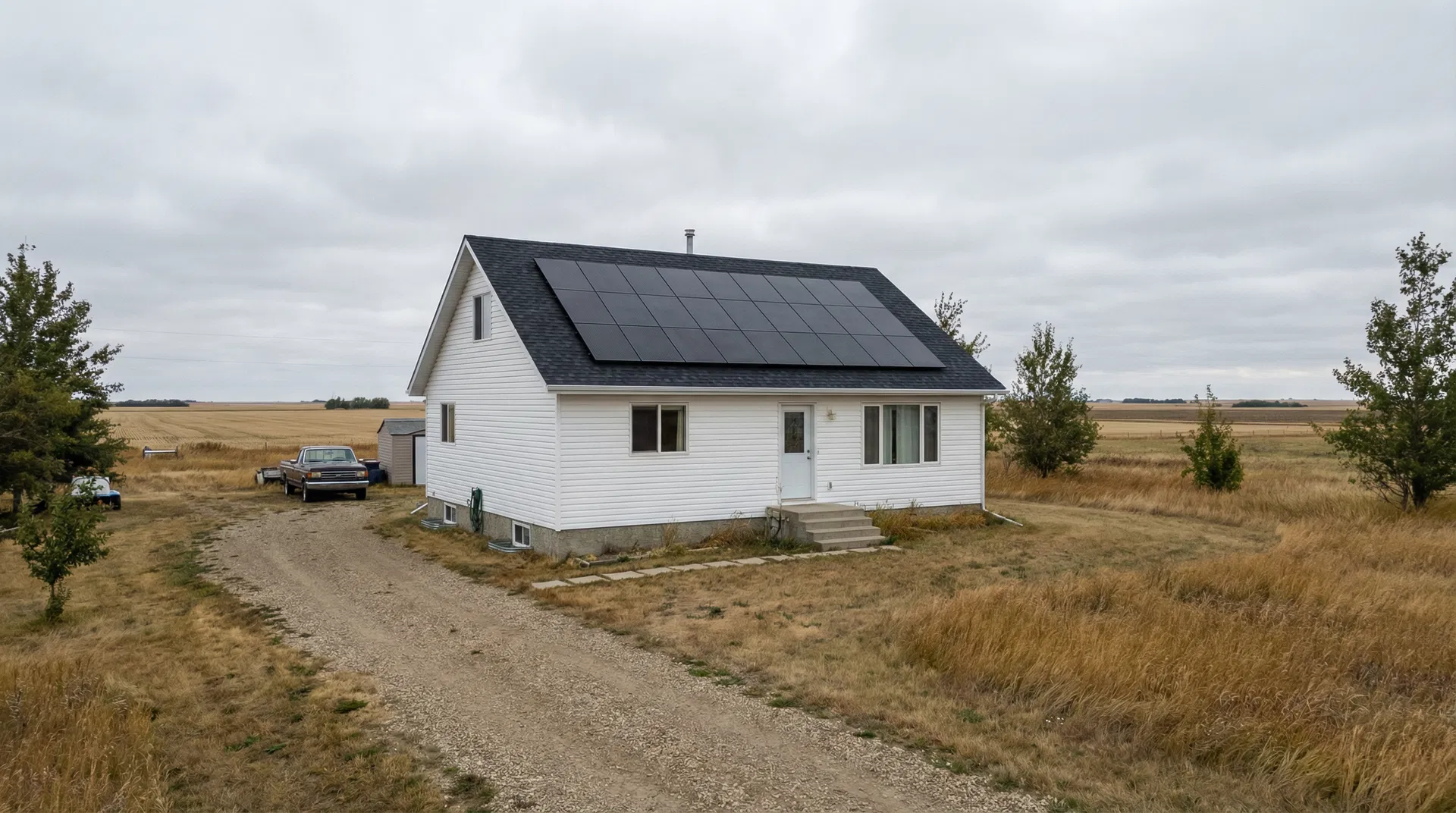
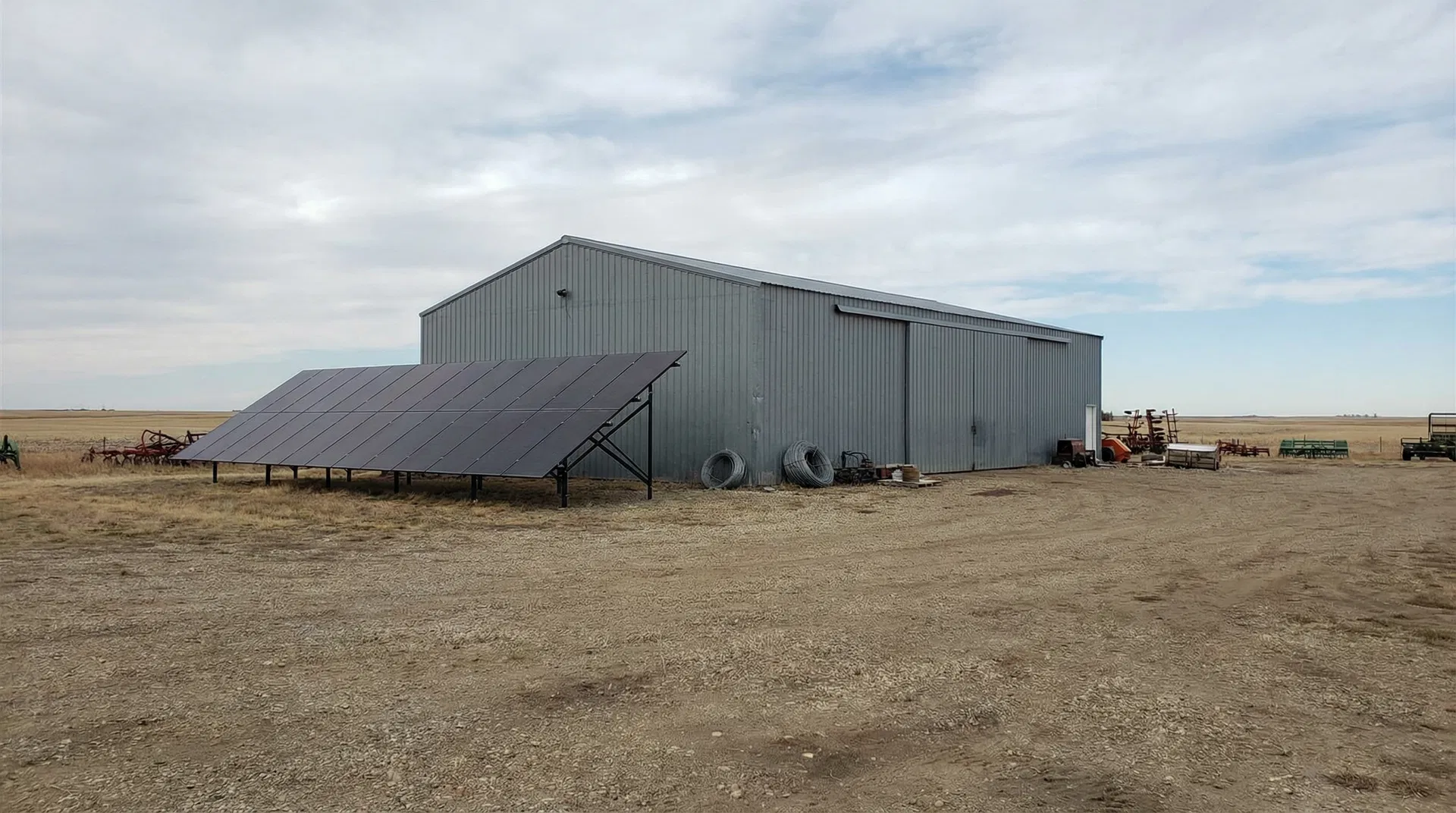
Acreage solar in Olds means designing around a property that's doing more than one job: a house, maybe a heated shop, maybe grain bins or an irrigation pump. Systems for this service typically land in the 12-18 kW range, with 15 kW as a common starting point once we've seen the load. We use LONGi panels for the array itself, mounted on the roof where the pitch and orientation cooperate, or on a ground-mount racking system where they don't. Ground mount comes up often out here, because acreage yards frequently have the open space that in-town lots don't, and a well-placed ground array can outperform a shaded or poorly-oriented roof by a wide margin. On the inverter side, we use APsystems microinverters, which let us manage panel-level output separately. That matters on properties with multiple roof faces, partial tree shading from a shelterbelt, or outbuildings that get added to the array over time. A microinverter setup also simplifies future expansion: if a shop gets added or a load grows, we're not stuck resizing a single central inverter. Every design accounts for the property's actual electrical service, not a standard suburban setup, because these acreages show up with single-phase and three-phase service, older panels, and meter bases that sometimes need attention before a system goes in. We walk that ground before we finalize a design, not after.
Solar Planning for Olds Properties
The town was incorporated on July 1, 1905, and the acreages that ring it today still carry that agricultural start. With a population of 9,209, the area is anchored by Olds College and by the agriculture around it, which means a lot of the properties we work with aren't simple single-family rooftops. They're a house plus a shop, a house plus grain handling, or a yard with enough open ground that a ground-mount array beats fighting a bad roof pitch. FortisAlberta is the wire service here, and every acreage system we design starts with the interconnection application to them, not a generic template pulled off a website. Because these properties vary so much, from lot layout to roof orientation to how many buildings are drawing power, we don't quote a size off a rule of thumb. We start with a site visit and your most recent power bill, then size the array around what the property actually uses. That's the difference between a system that offsets real load and one that's oversized, undersized, or shaded out by a bin or a shelterbelt nobody accounted for.
Electrical Site Review for Olds Properties
Voltage Rise
Voltage rise happens when a property sits at the far end of a long distribution run, and the line impedance between the transformer and the house pushes voltage higher than it would be closer in. On acreages, that distance can be significant. We check for it during the site review because it affects how an inverter clips output and how we size the string to stay within safe operating range.
Single-Phase vs Three-Phase
Rural properties in this area show up with either single-phase or three-phase electrical service, and it isn't always obvious which one a given acreage has until we look at the panel and service entrance. That distinction drives which inverters we can spec and how much capacity the system can carry, so it's one of the first things we confirm on site, not something we assume.
Panel Infrastructure
A lot of acreage properties are running electrical panels that predate the loads now on them, whether that's an added shop, a well pump, or grain handling equipment. We assess breaker capacity and panel age as part of every design, because an undersized or outdated panel can't safely carry a new solar circuit. If the existing panel can't support the system, an upgrade to a larger panel with adequate breaker space happens before or alongside the solar install.
Service Entrance Review
We check the condition of the service entrance and meter base, because FortisAlberta's micro-generation application requires that equipment to meet current standards before they'll approve a connection. Corroded, undersized, or outdated meter bases are common on older rural properties and can hold up an application. When we find one, we flag the upgrade early so it doesn't stall the interconnection later.
Right-Sizing Solar for Olds Properties
Acreage systems out here tend to run bigger than a standard in-town rooftop, and that's because the load isn't just a house. It's a house plus a shop, plus maybe irrigation or grain handling equipment, all pulling from the same service. Stack those loads together and a system sized like a typical suburban install comes up short fast. Roof versus ground-mount is a real decision, not a default. A roof with good south or west exposure and no shading is often the simpler build, but plenty of acreage roofs have the wrong pitch, get shaded by trees or an outbuilding, or just don't have enough usable area for what the property needs. When that's the case, and the yard has open ground to work with, a ground-mount array is usually the better call: it lets us orient the panels for output rather than working around whatever the roofline gives us. Either way, we don't size a system off a rule of thumb like watts per square foot of house. We size it from the 12-month usage graph on your most recent power bill, which shows exactly how much the property draws and when. Combined with a site visit to confirm roof or ground conditions, shading, and electrical service, that bill is what turns into an actual system size, not a guess.
Typical Load Profiles We Design For Near Olds
Home Plus Heated Shop
This is one of the most common setups we see: a house and a detached shop with heat, lighting, and often a welder or compressor on a separate circuit. The shop's draw can rival the house's, especially in winter, so we look at both loads together on the power bill rather than sizing for the house alone.
Home Plus Irrigation or Well Pump
Properties running an irrigation system or a well pump see load spikes that don't show up on a typical residential bill. We look at when those spikes happen on the 12-month usage graph and size the system to account for them, rather than just averaging the year.
Home Plus Grain Handling
Grain bins, augers, and dryers pull hard during a short seasonal window rather than steadily year-round. That kind of load profile changes how we think about system size and export, since the property might use very little power most months and a lot during harvest. The most recent bill's usage graph shows us that pattern directly.
FortisAlberta Interconnection in Olds
FortisAlberta is the wire service for the core Olds area, and any grid-tied acreage solar system here has to go through their micro-generation interconnection process. Range Road Solar handles that application as part of the project: the technical drawings, the equipment specifications for the LONGi panels and APsystems microinverters, and the paperwork FortisAlberta requires to review and approve the connection. We don't ask property owners to navigate that process themselves or chase down forms on their own time. What we won't do is promise how long FortisAlberta's review will take or how any billing credit gets settled, because that depends on their current rules at the time of application, not on us. What we can tell you is that we've built the interconnection package for acreage systems before, we know what FortisAlberta asks for on a rural service, and we get it in front of them correctly the first time instead of bouncing back and forth on revisions and resubmissions.
Project Economics and Design Review
| System Size | Annual Production | Year 1 Savings | Payback Period |
|---|---|---|---|
| 12-18 kW range, 15 kW typical |
Production, savings, and payback figures require a property-specific design review and your most recent power bill, we don't estimate them from a template.
How We Work in Olds
Bill and Load Review
We review your power bill to understand your energy use in Olds and size the system to your actual consumption, not a generic estimate.
Site Assessment
We assess your roof or ground area, south-facing exposure, electrical service, and utility interconnection requirements specific to your property.
Design and Utility Application
We produce a system layout, production estimate, and cost summary, then submit your micro-generation application to your utility on your behalf.
Installation and Commissioning
Our crew installs racking, panels, inverter, and electrical connections. All work is performed by licensed electricians. We commission and test before handoff.
Current Program and Interconnection Review
Utility connection review
FortisAlberta reviews every micro-generation grid connection application on its own merits, based on the equipment and design submitted. Range Road Solar handles that design package for these acreage systems, including the LONGi panel and APsystems microinverter specifications FortisAlberta needs to process the application.
Current program review
Residential, farm, and commercial acreage properties can qualify for different treatment depending on current provincial and utility rules at the time of design. We review eligibility against those current rules as part of the design process, rather than assuming a property qualifies for something it doesn't.
Frequently Asked Questions
Get a Solar Assessment for Olds
Submit a recent power bill and we will review your consumption and provide an honest assessment for your Olds property. No obligation.
(587) 330-7502 Book a CallMore Solar Services in Olds