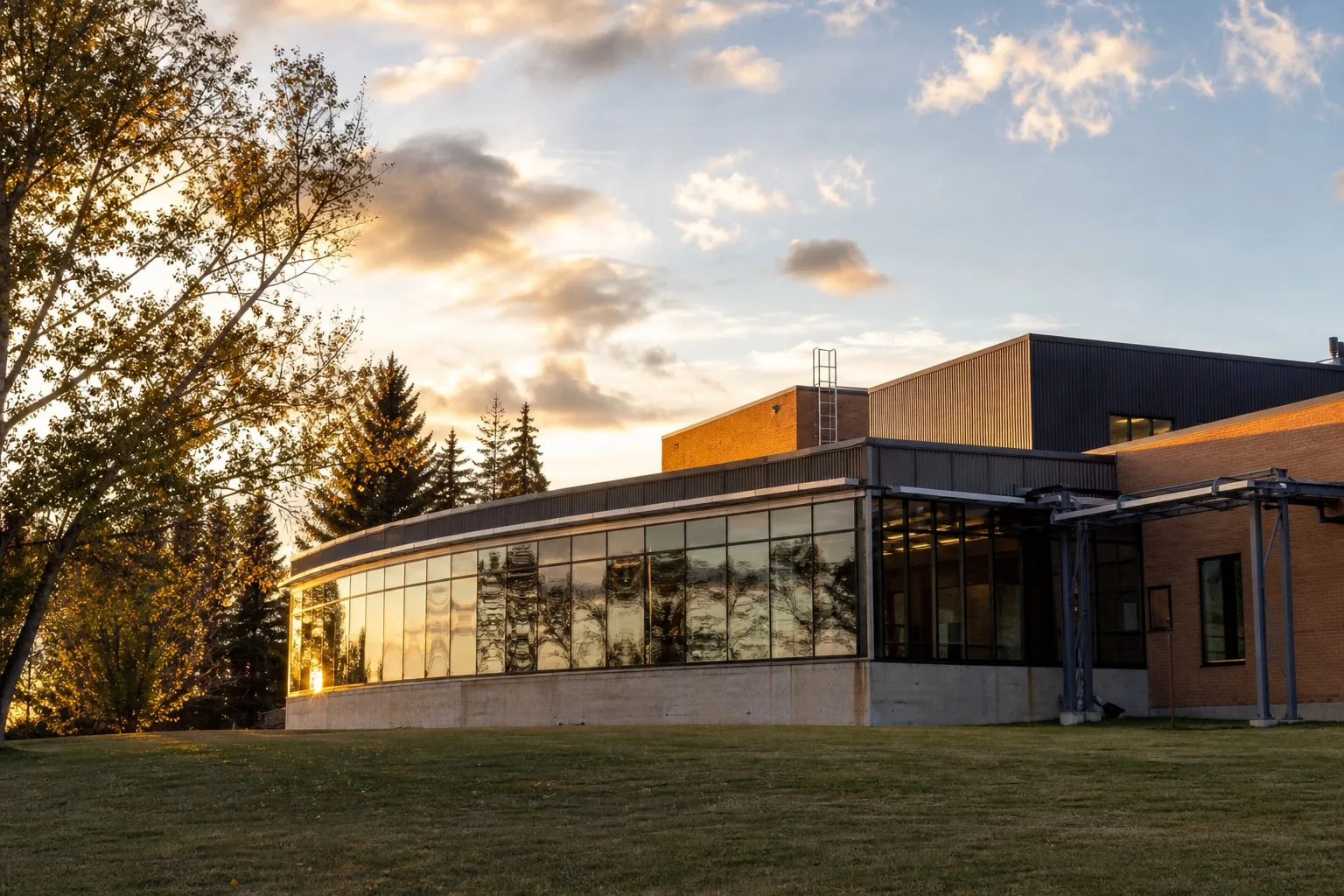
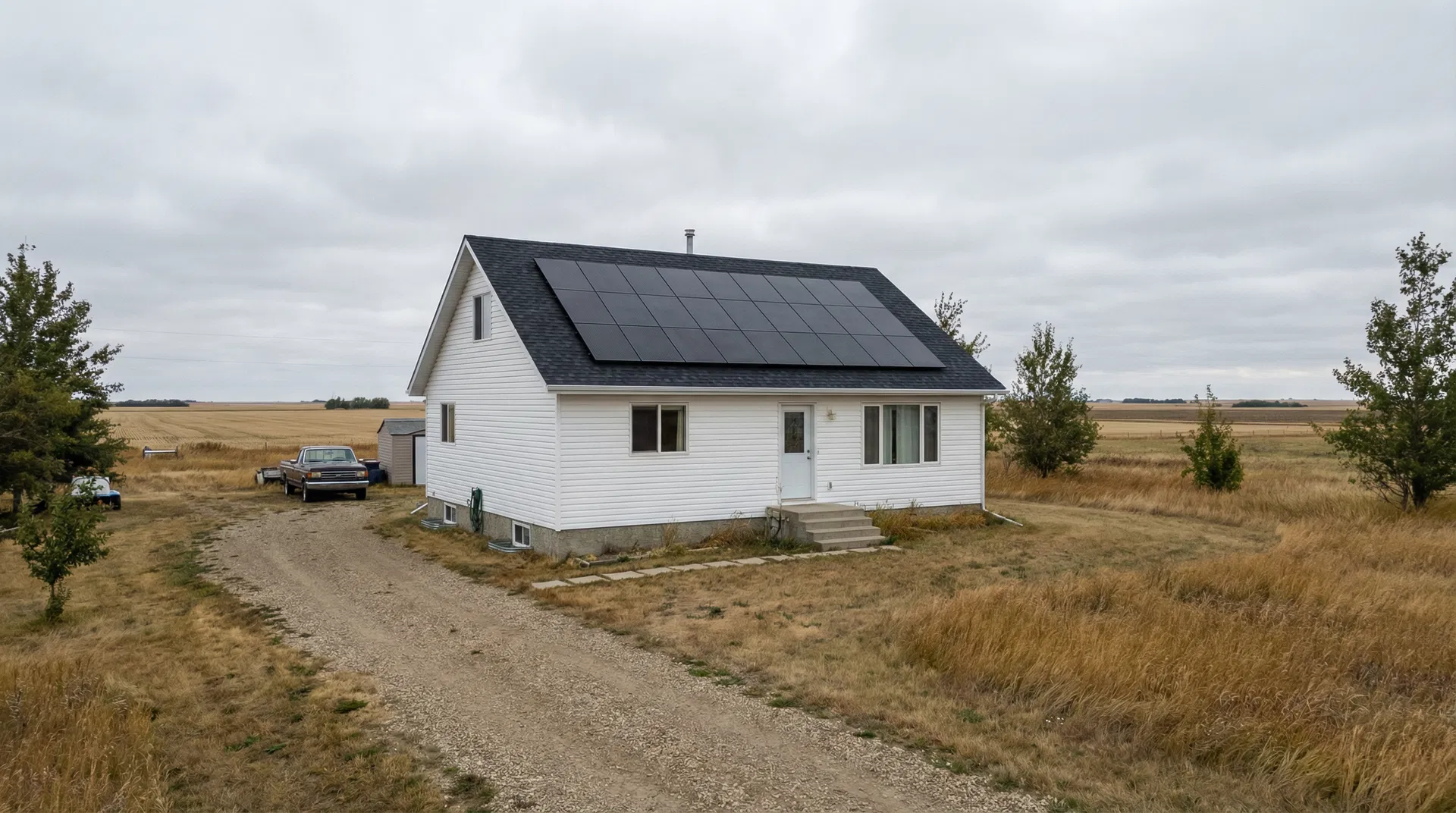
Solar installation in Olds, AB starts the same way every time: a site visit, a load review, and a system sized around your actual power bill, not a generic number pulled from the internet. Most residential projects we design for the area land in the 8 to 12 kW range, though the final number depends on roof space, shading, and how much power the home actually uses. We install LONGi panels on every residential project because they hold up well on both steep character-home roofs near downtown and the lower-pitch roofs common on newer builds at the edge of town. Pairing them with APsystems microinverters means each panel operates independently, so partial shading from a neighboring tree or a chimney doesn't drag down output from the whole array the way a single string inverter can. That module-level approach also makes it easier to add panels later if a homeowner's usage grows, without re-engineering the whole system. For homes with detached garages or small shops on the same lot, we look at whether one combined system or a split layout makes more sense once we've seen the panel and the roof lines. Every design we hand over includes the equipment layout, expected panel placement, and the paperwork needed for FortisAlberta's interconnection application. We build the system around the roof and the bill in front of us, not a template pulled from another town's project.
Solar Planning for Olds Properties
Olds has been an incorporated town since July 1, 1905, and it's grown into a community of 9,209 people built around Olds College and the agriculture economy around it. That mix shows up in the housing stock we see on site visits: older character homes close to downtown, newer subdivisions on the edges of town, and acreages out past the Town of Olds boundary in Mountain View County. Each of those roof types and electrical setups calls for a different design approach. A steep character-home roof with multiple dormers isn't laid out the same way as a simple-gable bungalow or a shop roof on a property with outbuildings. We don't hand out a generic system size over the phone. Instead, we walk the property, check roof pitch and orientation, confirm what the electrical panel can handle, and pull the usage graph off your most recent power bill before we size anything. Environment Canada's climate normals list the area's annual bright sunshine at 2,396 hours, which is general weather-station data, not a promise of what a specific roof will produce. For a service area that runs from in-town lots to farmyards at the edge of the county, that site-specific step matters more than any rule of thumb.
Electrical Site Review for Olds Properties
Voltage Rise
Voltage rise happens when power travels a longer distance along a distribution line before it reaches a property, and homes further out on a feeder can see more of it than a lot close to a substation. On a line with more voltage rise, the inverter has less headroom before it hits its upper voltage limit and starts clipping output. We check the service conditions at the property before finalizing inverter selection and system size, so the design accounts for what the line is actually doing, not just a panel count on paper.
Single-Phase vs Three-Phase
Properties in the area can have either single-phase or three-phase electrical service, depending on the age of the property and what's connected to it, like a shop with larger motors. Single-phase and three-phase services don't accept the same inverter hardware, so we confirm which one a property has before we spec equipment. Getting this wrong means ordering the wrong microinverters and losing time on a reorder, so it's one of the first things we check on a site visit.
Panel Infrastructure
Older homes and farmyards in the area sometimes still run on a 100 amp panel, or a panel that's simply aged out of easy expansion. Before we finalize a system, we check the panel's rated capacity, the age and condition of the breakers, and how much room is left for a new solar breaker. If the panel can't support the added circuit, an upgrade to a larger panel happens before installation, and we scope that cost into the design upfront rather than after the fact.
Service Entrance Review
We also look at the service entrance and the meter base, since a worn or outdated meter base can hold up a FortisAlberta micro-generation application even if the rest of the system is ready to go. We check the condition of the conductors, the meter base enclosure, and the grounding setup during the site visit. If FortisAlberta or our own review flags the service entrance as needing an upgrade, we handle that work as part of the project before the system goes live.
Right-Sizing Solar for Olds Properties
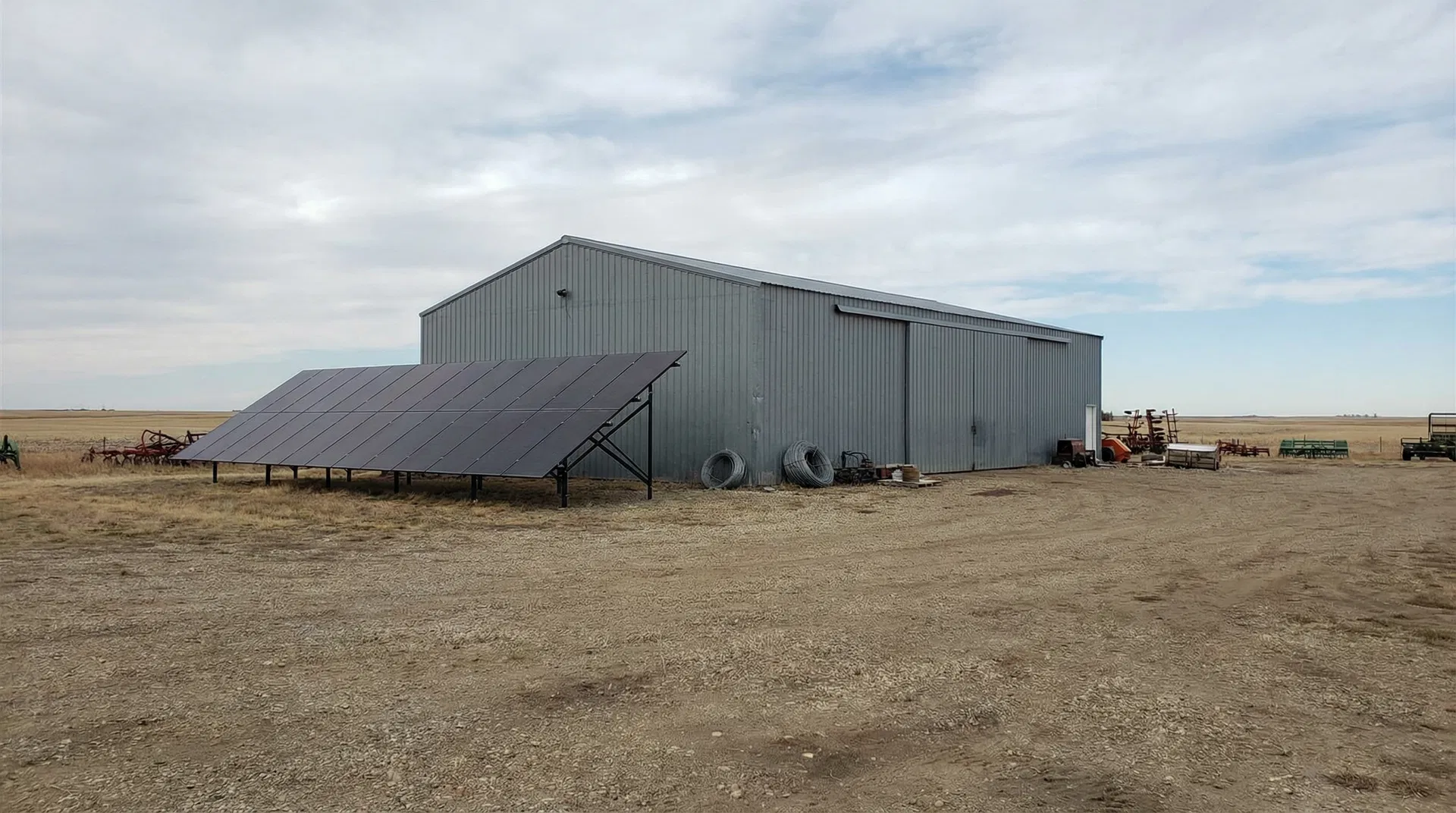
Systems in this area often run larger than what you'd see on a city lot, because the load isn't just the house. A property might need to cover a home plus a heated shop, or a home plus well pump and yard lighting, and each of those loads adds to the number we design around. That's one reason the 8 to 12 kW range we quote for residential work here is a range and not a single figure. We also weigh roof mount against ground mount early in the process. A roof with good south or west exposure and no shade problems is usually the simpler and more cost-effective option. Ground mount makes more sense when trees or outbuildings shade the roof, when the roof pitch or orientation works against solar, or when the yard has open, unshaded space that makes a ground array easier to access for maintenance. Rather than start from a rule of thumb, like a flat number per square foot of house, we start from the 12-month usage graph on your most recent power bill. That graph shows us the real monthly swings in a property's usage, including any seasonal jump from shop heating or irrigation. Combined with a site visit for shading, roof condition, and available ground space, that bill-driven approach is what actually determines the system size we propose, not a generic estimate.
Typical Load Profiles We Design For Near Olds
Home Plus Heated Shop
This profile covers a house and a detached shop that's heated through the colder months, often with its own electrical subpanel. We size the system around the combined draw of both buildings, not just the house, which is why these projects tend to land toward the higher end of the 8 to 12 kW range. The usage graph on your most recent power bill shows us how much the shop heating adds, and that's what drives the final design.
Home Plus Domestic Well
Acreage and edge-of-town properties on a domestic well add a pump load that cycles on and off throughout the day, separate from normal household use. We account for that cycling load when we size the inverters and confirm the panel has room for the circuit. It's a different profile than a straight in-town house, even if the square footage is similar.
Town Lot, Single-Family Home
A standard in-town lot with a single-family home and no outbuildings is usually the simplest profile to design for, since the load is just the house. These systems still get sized from the usage graph on the most recent power bill rather than a flat per-square-foot number, because two similar-looking homes can use power differently depending on heating type and household size.
FortisAlberta Interconnection in Olds
Homes in Olds are served by FortisAlberta, which means every grid-tied solar system we install here goes through FortisAlberta's micro-generation interconnection process. We put together the application package ourselves: single-line diagrams, equipment specifications for the LONGi panels and APsystems microinverters, and the site-specific details FortisAlberta asks for before a system can be connected to the grid. You don't have to figure out the forms or chase down the technical requirements yourself. We also handle the back-and-forth if FortisAlberta comes back with questions about the design, so the application keeps moving instead of sitting in an inbox. What we won't do is promise a specific approval timeline or tell you how credits will be settled on your account, because that depends on FortisAlberta's current process and your retailer, not on us. We'll walk you through where your project sits in the interconnection process at each stage, and we confirm current requirements with FortisAlberta before we finalize any design here.
Project Economics and Design Review
| System Size | Annual Production | Year 1 Savings | Payback Period |
|---|---|---|---|
| 8-12 kW range, 10 kW typical |
Production, savings, and payback figures are provided only after a property-specific design review that includes your most recent power bill.
How We Work in Olds
Bill and Load Review
We review your power bill to understand your energy use in Olds and size the system to your actual consumption, not a generic estimate.
Site Assessment
We assess your roof or ground area, south-facing exposure, electrical service, and utility interconnection requirements specific to your property.
Design and Utility Application
We produce a system layout, production estimate, and cost summary, then submit your micro-generation application to your utility on your behalf.
Installation and Commissioning
Our crew installs racking, panels, inverter, and electrical connections. All work is performed by licensed electricians. We commission and test before handoff.
Current Program and Interconnection Review
Utility connection review
FortisAlberta reviews every grid-tied solar application that goes through its micro-generation interconnection process, including the technical details of the system design. Range Road Solar puts together that full design package, from equipment specifications to single-line diagrams, so you're not filling out utility paperwork on your own. We track the application until FortisAlberta signs off on the connection.
Current program review
Eligibility for any current incentive or financing program, whether the property is residential, farm, or commercial, gets checked against the rules in place at the time of your design, since those rules can and do change. We review your specific situation rather than assume a program that applied last year still applies today. That review happens as part of the design process, not as an afterthought.
Frequently Asked Questions
Get a Solar Assessment for Olds
Submit a recent power bill and we will review your consumption and provide an honest assessment for your Olds property. No obligation.
(587) 330-7502 Book a CallRelated Resources
More Solar Services in Olds