Mountain View County · Shop and outbuilding solar
Shop and Outbuilding Solar in Olds, AB
From heated shops to barns and outbuildings, we design FortisAlberta grid-tied solar systems sized 8–20 kW for rural properties around Olds.
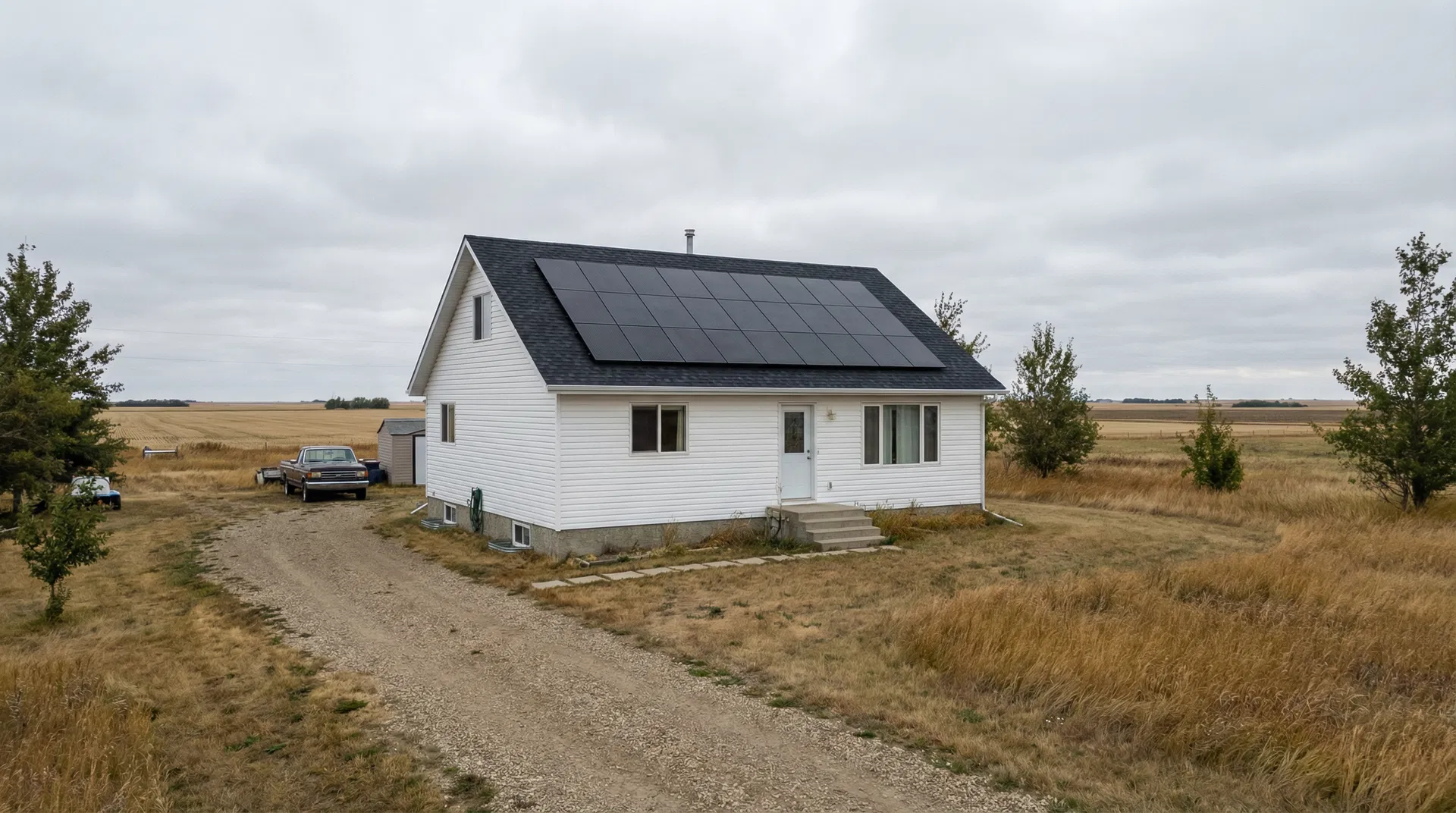
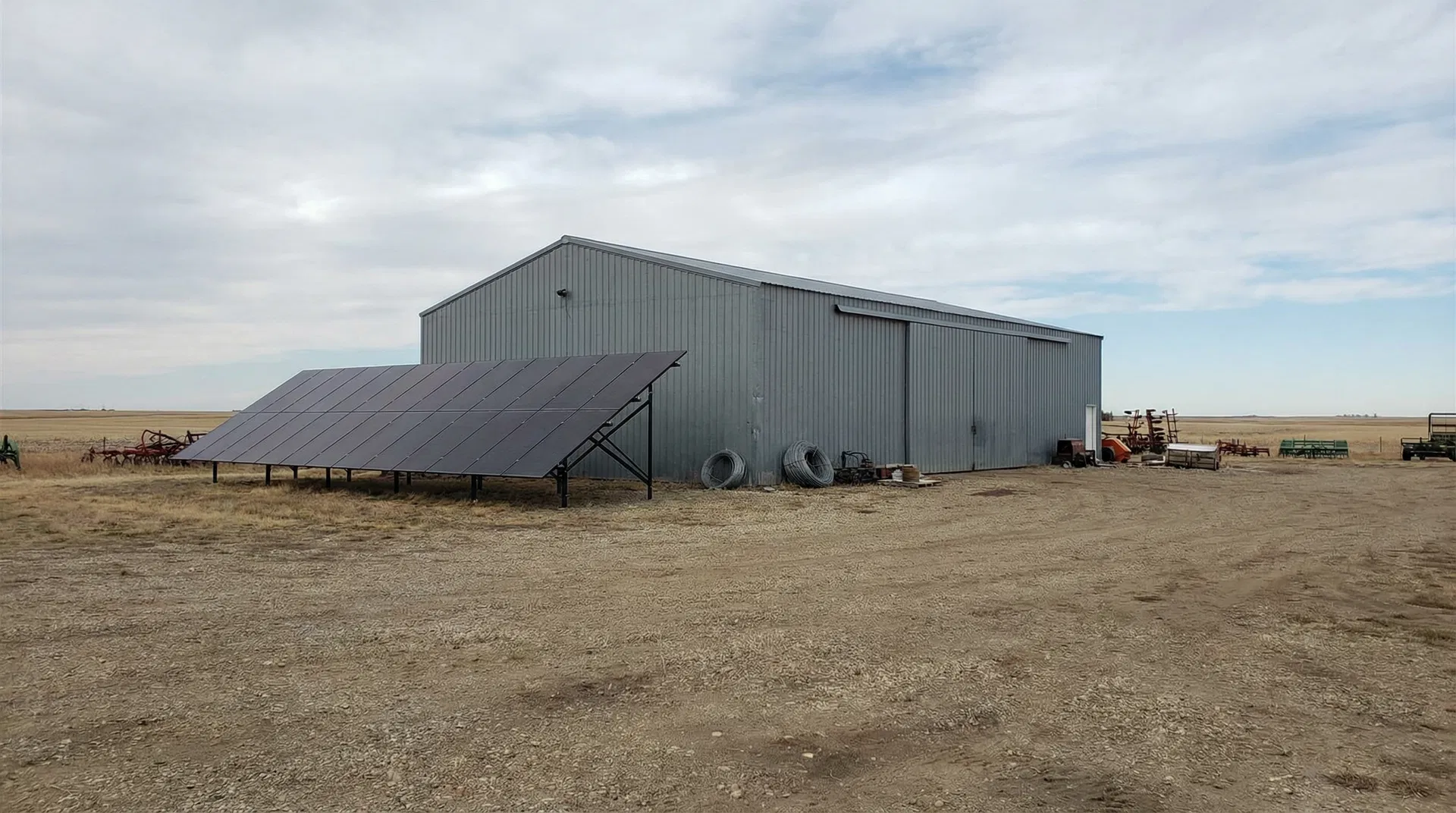
When people search solar Olds, a lot of them are looking at a shop or outbuilding first, not the house. That makes sense. A heated shop with a welder, air compressor, and lighting running most of the day is often the single biggest draw on a rural property's electrical account. We install LONGi panels on shop rooftops, barn roofs, and ground-mounted frames across the Olds area. LONGi's monocrystalline panels are well suited to Alberta's conditions: they're built to handle the temperature swings and physical loads that rural rooftops see over a 25-year span. For the inverter side, we use APsystems microinverters, which give each panel its own independent inverter. That matters on shop and barn roofs where a ridge cap, vent stack, or shade from a neighbouring structure can clip production on one section without dragging down the rest of the array. Systems for shops and outbuildings typically fall in the 8–20 kW range, with 12 kW being a common landing point for a property with a single heated shop and a home on the same account. Properties with larger barns, grain storage, or multiple outbuildings often push toward the higher end of that range. We configure rooftop and ground-mount systems depending on the site. If the shop roof faces the wrong direction, has too much pitch, or carries equipment that reduces available space, a ground mount in the yard is often the cleaner solution. The array size and configuration are confirmed through a site-specific design, not a generic estimate.
Solar Planning for Olds Properties
Rural properties around Olds tend to carry electrical loads that most urban homeowners never think about: heated shops, stock waterers, grain handling equipment, compressors, and lighting that runs through the night. Those loads pile up fast on a single power bill, and a well-designed solar system can offset a meaningful share of that consumption year-round. The right starting point isn't a rule-of-thumb estimate. It's your most recent power bill. Alberta utility bills include a 12-month usage graph that tells us exactly when your loads peak, which is the information we actually need to size a system correctly. Properties with shops or outbuildings often have different seasonal patterns than a home-only account, and that difference matters when we're configuring panel strings and inverter capacity. We serve Olds and the surrounding area with FortisAlberta grid-tied systems, handling the interconnection application as part of every project. Whether you're working off a shop roof, a barn, or a ground-mounted array in the yard, we'll tell you what the system can realistically do before you commit to anything. We provide honest production estimates based on your actual power bills and site conditions, not inflated projections.
Electrical Site Review for Olds Properties
Voltage Rise
Voltage rise happens when the solar system pushes current back through the service line and the local distribution voltage climbs above the acceptable range. On rural distribution lines, the distance from the substation and the condition of the line infrastructure can make voltage rise more pronounced than it would be on a dense urban grid. When voltage rise is a factor, the inverters clip output to stay within safe operating limits, which affects how the system is sized and configured to avoid that clipping.
Single-Phase vs Three-Phase
Rural properties around Olds can be served by either single-phase or three-phase electrical service, and the difference matters for how a solar system is designed. Three-phase service supports larger inverter configurations and balances the load across phases, which is often relevant when a shop runs heavy equipment. We confirm the service type during the site review and configure the APsystems microinverter layout accordingly to match the property's actual electrical infrastructure.
Panel Infrastructure
Older electrical panels on farms and rural acreages weren't built with solar back-feed in mind, and many of them are running close to their rated breaker capacity already. We assess the panel age, main breaker size, and available breaker slots as part of every site review. If the panel can't safely support the solar system's back-feed requirements, an upgrade is included in the project scope before the FortisAlberta application is submitted.
Service Entrance Review
The meter base and service entrance are reviewed as part of every interconnection application to FortisAlberta, because the utility needs to confirm that the metering infrastructure supports bi-directional measurement. If the existing meter base is too old or isn't rated for a grid-tied solar connection, FortisAlberta will require an upgrade before the system can be approved. We identify that condition during the design phase so it's budgeted into the project, not discovered at inspection.
Right-Sizing Solar for Olds Properties
Rural properties typically carry multiple electrical loads that stack on top of each other: the house, a heated shop, one or more outbuildings, possibly a grain dryer, stock waterers, or irrigation pumps that only run seasonally. That combination is why rural systems are almost always larger than what a comparable urban home would need. A city household might run fine on a 9 kW system. Add a heated shop, a grain auger, and a handful of outbuildings, and the right number looks very different. Roof versus ground mount isn't always obvious until you look at the site. Shop roofs with a good south-facing pitch and no major shading are often the most cost-effective starting point because the structure is already there. But if the roof faces east-west, has vents or equipment mounted on it, or sits too close to a treeline, a ground-mounted array in the yard frequently produces better output for the same number of panels. We make that call based on what's actually on the property, not a preference for one configuration over the other. We don't size systems using rule-of-thumb numbers. The right starting point is the 12-month usage graph on your most recent power bill. That graph shows us how your consumption moves through the seasons, which is the key input for matching panel count and inverter capacity to your actual load pattern. A property with heavy winter shop use has a very different profile from one that's load-heavy in summer for irrigation. The bill tells us which one you are. Your site design and that single document are what we need to build an accurate system recommendation.
Typical Load Profiles We Design For Near Olds
Home + Heated Shop
This is the most common profile we see on rural properties near Olds: a house and a shop on the same electrical account, with the shop running heat, lighting, and intermittent equipment like compressors and welders. The combined load usually pushes system size into the 12–16 kW range, though the right number comes from the 12-month usage graph on the most recent power bill. Roof orientation on the shop and available south-facing space are the main factors that determine whether we go rooftop or ground-mounted.
Barn + Livestock Operation
Properties running a barn with continuous lighting, ventilation fans, and stock waterers have a load profile that runs relatively flat across all seasons, with less of the dramatic summer-winter swing seen on heating-dominant accounts. That even load curve can make solar sizing more straightforward, though barn roofs often have pitch and orientation challenges that push the design toward a ground mount. We size these systems in the 10–20 kW range based on the actual account data.
Multiple Outbuildings + Acreage Home
Some properties around Olds have three or more buildings drawing from the same service: a house, a detached shop, a smaller storage building, and possibly a quonset or equipment shelter. The aggregate load across those structures often justifies a system at the higher end of the 8–20 kW range. We pull the load profile from the most recent power bill and design the array to offset as much of that combined consumption as the site can reasonably support.
FortisAlberta Interconnection in Olds
Olds is served by FortisAlberta for wire service. Any grid-tied solar system installed here connects through the FortisAlberta micro-generation process, which requires a formal application before the system can be energized. Range Road Solar handles that application as part of every installation we complete in the area. We prepare the technical documentation, submit it to FortisAlberta on your behalf, and coordinate the meter change or service upgrade if one is required. You don't have to manage the paperwork or figure out what FortisAlberta needs from you. The interconnection process exists because FortisAlberta needs to confirm that your system won't create safety or power quality issues on the local distribution line. The requirements cover inverter specs, system size, service entrance condition, and the meter base. We build all of that into the design package before we submit, which reduces the likelihood of back-and-forth during the review. If your service entrance or meter base needs an upgrade to meet interconnection requirements, we'll flag that before the project starts, not after.
Project Economics and Design Review
| System Size | Annual Production | Year 1 Savings | Payback Period |
|---|---|---|---|
| 8–20 kW range, 12 kW typical |
Production, savings, and payback figures require a property-specific design and your most recent power bill before any estimate can be confirmed.
How We Work in Olds
Bill and Load Review
We review your power bill to understand your energy use in Olds and size the system to your actual consumption — not a generic estimate.
Site Assessment
We assess your roof or ground area, south-facing exposure, electrical service, and utility interconnection requirements specific to your property.
Design and Utility Application
We produce a system layout, production estimate, and cost summary, then submit your micro-generation application to your utility on your behalf.
Installation and Commissioning
Our crew installs racking, panels, inverter, and electrical connections. All work is performed by licensed electricians. We commission and test before handoff.
Current Program and Interconnection Review
Utility connection review
FortisAlberta reviews all micro-generation interconnection applications for properties in the Olds service area. Range Road Solar prepares the full design package and submits it to FortisAlberta on your behalf, including all technical documentation required for the grid connection review. You don't need to manage the submission or follow up with the utility directly.
Current program review
Commercial, agricultural, and residential solar installations may be eligible for various programs depending on property type, system size, and current rules at the time of installation. We review applicable options against the rules in effect at design time as part of every project. We don't assume eligibility in advance, because program terms change and the specifics matter.
Frequently Asked Questions
Get a Solar Assessment for Olds
Submit a recent power bill and we will review your consumption and provide an honest assessment for your Olds property. No obligation.
(587) 330-7502 Book a CallRelated Resources
More Solar Services in Olds