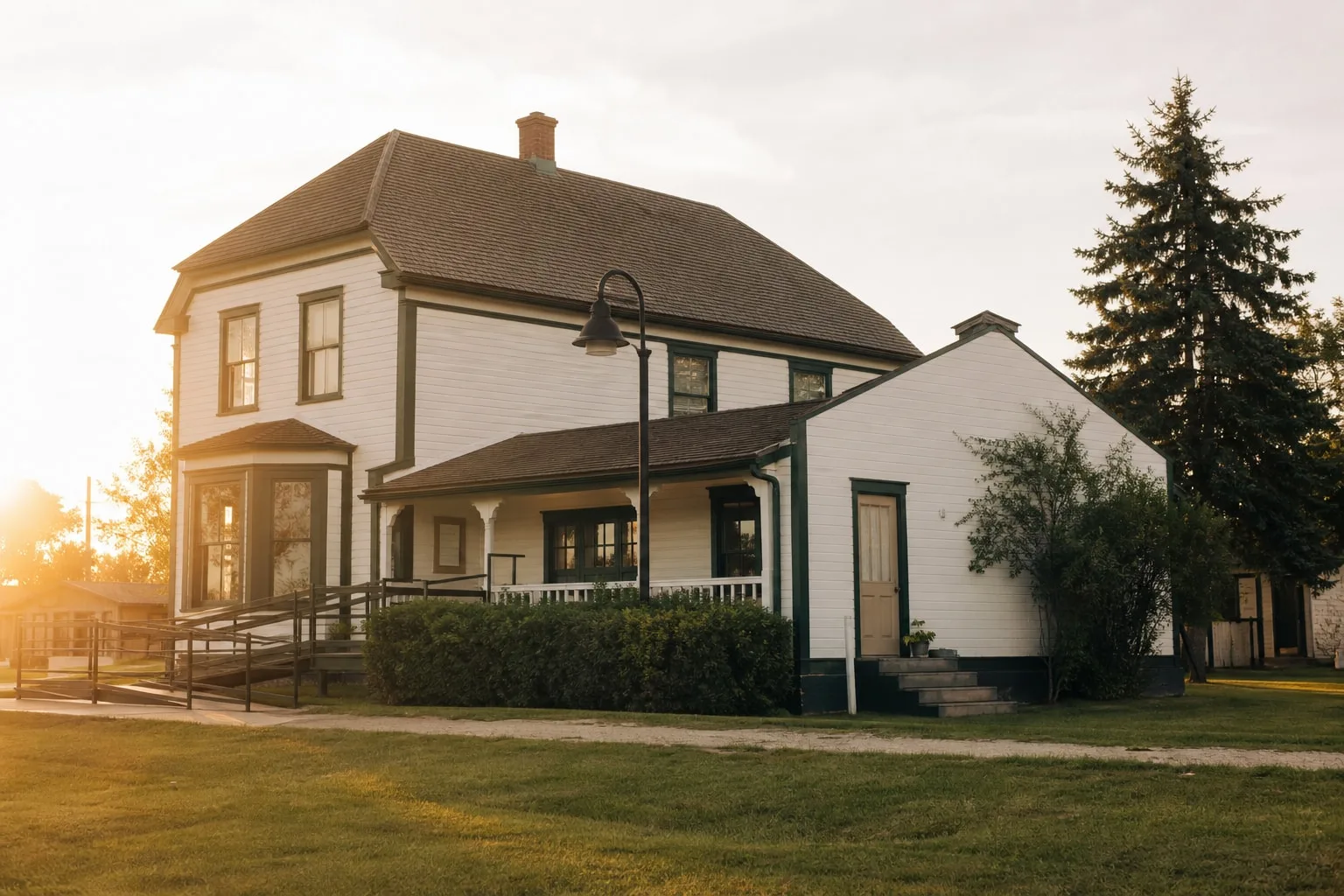
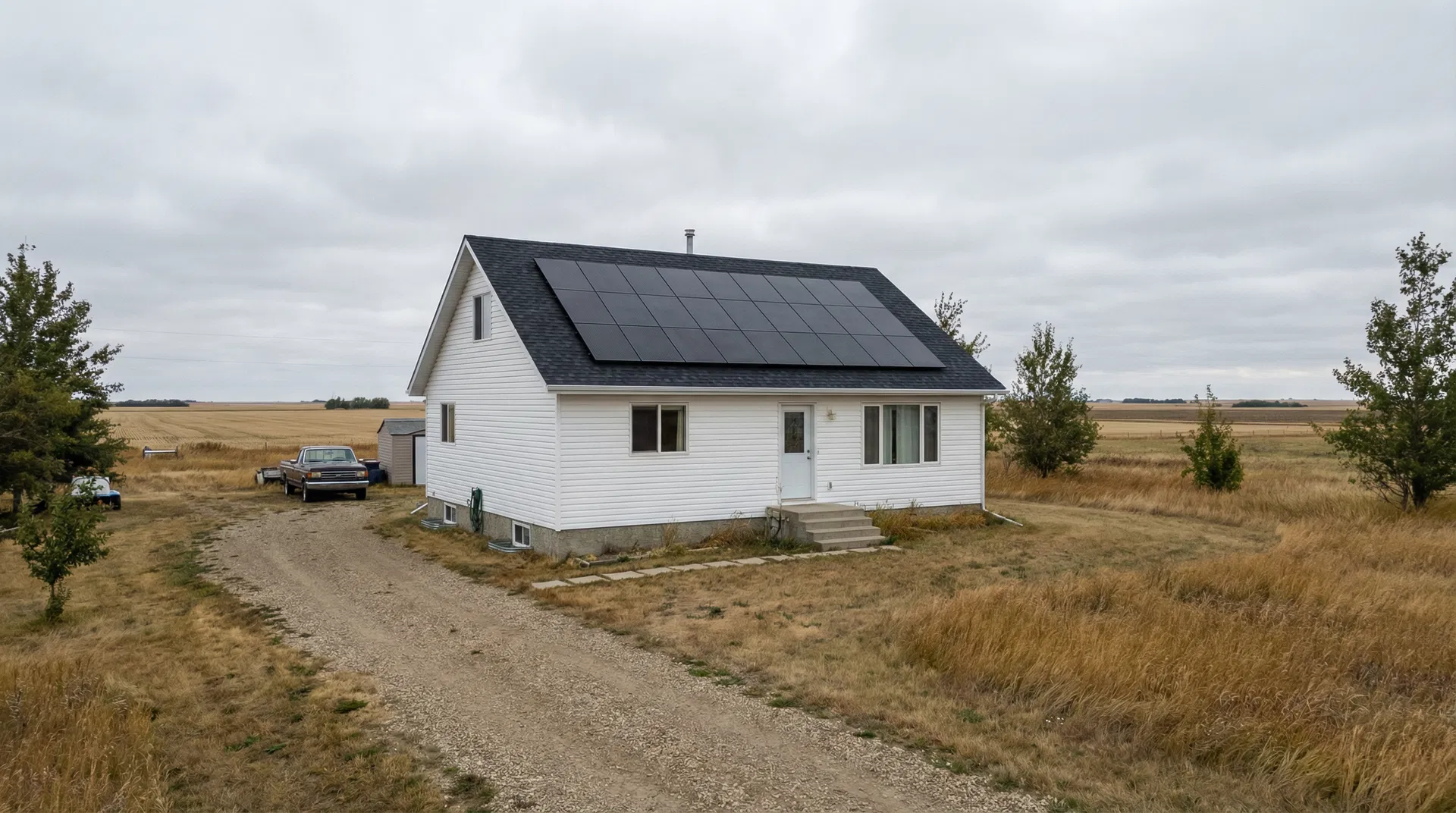
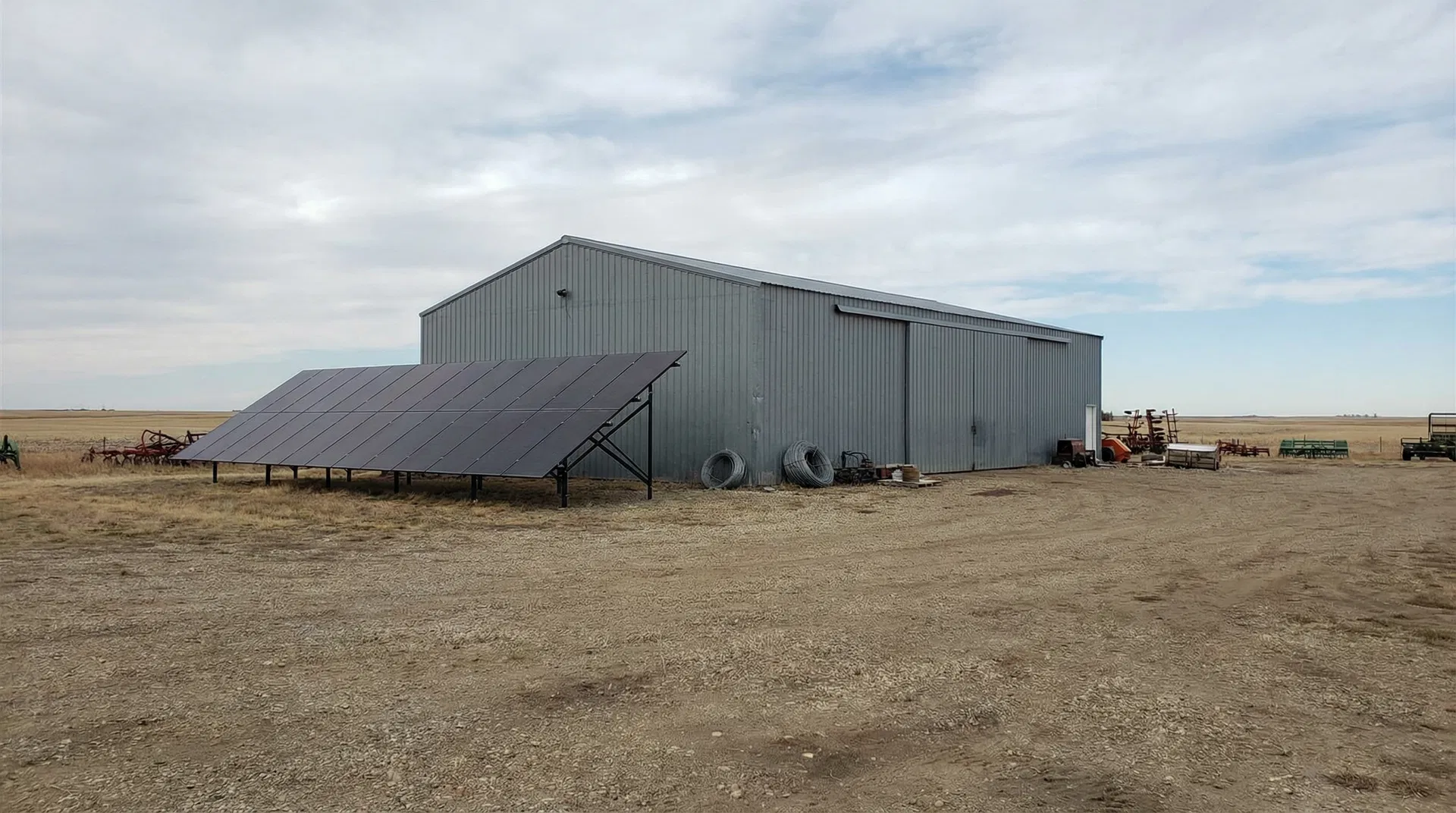
Solar Didsbury shop and outbuilding projects we build run from 8 to 20 kW, with most buildings landing around 12 kW once the array is matched to the equipment inside. These are standalone agricultural and rural commercial buildings: machine shops, heated shops, barns, grain bins with aeration fans, and cold storage. Some projects tie into the same meter as the house; others run as a separate service on the shop itself, which changes the interconnection paperwork but not the equipment we use. Every system uses LONGi panels paired with APsystems microinverters, mounted on the roof when the building's orientation and pitch support it, or on a ground-mount array when the roof is shaded, undersized, or simply the wrong angle. Ground mount works well on acreages and farmyards where there's open land next to the building and the roof isn't the best option. Microinverters make sense for shop roofs especially, since a single panel shaded by a nearby grain bin or tree line won't drag down the whole string, and each panel reports its own output so a problem spot is easy to find. We design around what the shop actually runs: compressors, welders, grain dryers, heaters, well pumps, or a mix of all of it. That means the system we propose for a heated mechanic's shop looks different from the one we'd build for an unheated hay barn, even if both buildings are the same size. We confirm final sizing against your most recent power bill and a site walk-through, not a flat per-square-foot estimate.
Solar Planning for Didsbury Properties
Didsbury sits within Mountain View County, home to roughly 5,070 people and a mix of agriculture and petroleum services that anchor the local economy. That combination shows up on the properties we design for here: working shops with welders and compressors, grain operations with augers and dryers, and outbuildings that run heaters or well pumps through the winter. Shop and outbuilding solar for this kind of property isn't a one-size-fits-all build. We start with the loads on-site, not a generic template, because a welding shop draws differently than a heated machine shed or a barn with stock waterers. FortisAlberta serves the wires here, and that affects how we size and apply for interconnection. Range Road Solar confirms system size and expected output through a site design and a review of your most recent power bill rather than a rule-of-thumb number pulled from a brochure. Environment Canada's annual bright sunshine normals, recorded at the Calgary International Airport station, put the region around 2,396 hours a year. That's useful general context, not a production estimate, since actual output depends on your roof or ground conditions, shading, and orientation. Whether the building sits on an acreage, a farmyard, or a commercial lot, the process is the same: walk the site, check the electrical service, pull the usage graph off your bill, and size the array to match what the building actually draws.
Electrical Site Review for Didsbury Properties
Voltage Rise
Voltage rise happens when the distance and wire gauge between a transformer and a building cause voltage to climb as solar output increases, which matters more on long rural distribution runs than it does in town. On some rural services around here, that rise can push inverter output close to its upper voltage limit, which is one reason we check line length and transformer sizing before finalizing a design. When voltage rise is a factor, it can affect inverter clipping and how large a system the service can support without upgrades.
Single-Phase vs Three-Phase
Rural properties may have single-phase or three-phase service, depending on when the property was built and what it was built to run. Three-phase service generally opens up a wider range of inverter and system capacity options, while single-phase service narrows which equipment fits and how the array gets split across phases. We confirm which service type is on-site early, since it shapes both equipment selection and overall system capacity.
Panel Infrastructure
Older panels on farmyards and acreages often predate the breaker capacity a solar system needs, so we check panel age and available breaker space as part of every site review. We're looking for things like outdated bus bar ratings, limited open slots, and signs of wear that a newer system would need to work around. If the panel can't support the added breaker, an upgrade to the panel itself is part of the project scope before solar goes in.
Service Entrance Review
We check the condition of the service entrance and meter base as part of every site visit, since a worn or outdated meter base can hold up the micro-generation application FortisAlberta needs to review. Corrosion, loose connections, or an undersized meter base are common finds on older rural services. If an upgrade is required, we fold it into the project plan so it doesn't become a surprise mid-install.
Right-Sizing Solar for Didsbury Properties
Rural properties typically need more solar than a house alone would, because the load isn't just the house. It's the house plus the shop, plus outbuildings, plus whatever runs seasonally like irrigation pumps or grain handling equipment. That stacking is why shop and outbuilding systems in the 8 to 20 kW range are common here, well above what a standalone urban home would need. One of the first decisions is roof versus ground mount. A shop roof with good south or west exposure and no shading is often the simplest option. But plenty of farmyards have trees, grain bins, or neighboring buildings that shade part of the roof, or a roof pitch that just doesn't work well for solar. When that's the case, and there's open yard space available, ground mount becomes the better call, since it lets us pick the exact orientation and tilt instead of working around what the roof gives us. Either way, we don't size a system off a rule-of-thumb number per square foot or per animal unit. We pull the 12-month usage graph off your most recent power bill and look at how your load moves through the year, then match the array to that pattern. A shop that spikes in harvest season needs a different design than one with steady year-round draw, and your current bill is what shows us the difference.
Typical Load Profiles We Design For Near Didsbury
Home + Heated Shop
This pairs the house with a heated mechanic's or hobby shop that runs a block heater, space heater, and the occasional welder or compressor. We size the combined system off the usage graph on your most recent power bill rather than guessing at shop hours, since heated shops can swing heavily by season. Most of these land in the 8 to 20 kW range depending on how much the shop runs through winter.
Grain Handling and Storage
Grain bins with aeration fans, augers, and a dryer draw hard for short bursts during harvest and much less the rest of the year. That seasonal spike shows up clearly on a power bill's usage graph, and it's a key input when we size the array and pick inverter capacity for this kind of load. Ground mount is common here when bins sit in open yard space away from the shop roof.
Standalone Outbuilding, No Grid Tie
Some outbuildings, like a remote calving barn or a detached workshop, aren't worth running grid power to and work better as a standalone solar system with battery storage. These don't go through a FortisAlberta interconnection application since they're not tied to the grid at all. Sizing here comes down to what the building needs to run day to day, not a bill at all, since there often isn't one yet.
FortisAlberta Interconnection in Didsbury
FortisAlberta owns and operates the distribution wires serving properties in and around Didsbury, including the shops and outbuildings we install solar on. Any grid-tied system, whether it's wired through the main house meter or a separate service to the shop, needs a micro-generation application submitted to and approved by FortisAlberta before it's energized. Range Road Solar handles that application as part of the project: we prepare the single-line diagrams, equipment specifications, and site information FortisAlberta requires, and we submit it on your behalf. If the shop runs on its own meter separate from the house, that's a separate application, and we account for that during the design review. Standalone, off-grid systems for outbuildings that aren't tied to the FortisAlberta grid at all follow a different path with no utility application involved. We'll tell you which category your project falls into once we've looked at your service entrance and your current meter setup, and we keep you updated as the paperwork moves through FortisAlberta's review process.
Project Economics and Design Review
| System Size | Annual Production | Year 1 Savings | Payback Period |
|---|---|---|---|
| 8-20 kW range, 12 kW typical |
Production, savings, and payback figures are provided only after a property-specific design review that includes your most recent power bill.
How We Work in Didsbury
Bill and Load Review
We review your power bill to understand your energy use in Didsbury and size the system to your actual consumption, not a generic estimate.
Site Assessment
We assess your roof or ground area, south-facing exposure, electrical service, and utility interconnection requirements specific to your property.
Design and Utility Application
We produce a system layout, production estimate, and cost summary, then submit your micro-generation application to your utility on your behalf.
Installation and Commissioning
Our crew installs racking, panels, inverter, and electrical connections. All work is performed by licensed electricians. We commission and test before handoff.
Current Program and Interconnection Review
Utility connection review
FortisAlberta reviews every grid-tied micro-generation application before a system is energized. Range Road Solar prepares the design package, equipment specifications, and single-line diagrams that application requires and submits it on your behalf.
Current program review
Commercial, farm, and residential eligibility for any current program is reviewed against the rules in place at the time of your design, since those rules can change. We check what applies to your specific property type and project as part of the design review, rather than assuming a blanket answer.
Frequently Asked Questions
Get a Solar Assessment for Didsbury
Submit a recent power bill and we will review your consumption and provide an honest assessment for your Didsbury property. No obligation.
(587) 330-7502 Book a CallRelated Resources
More Solar Services in Didsbury