Solar rebates and incentives in Didsbury, Alberta start with the equipment and the interconnection application, not a list of programs you may or may not qualify for. Range Road Solar installs LONGi panels and APsystems microinverters on every project in this area, sized to an 8 to 15 kW range depending on the property. A home with a detached garage draws differently than a farmyard with a heated shop and grain bins, so panel count and inverter configuration change property to property. We don't sell a fixed package: the design comes from your roof or ground-mount site, your electrical service, and your most recent power bill. The current landscape includes micro-generation credits through the local wire service, the federal Clean Technology Investment Tax Credit for farm and business properties, and municipal programs that come and go. We review all three against your property type, because a residential acreage, a working farm, and a commercial building on the main street qualify under different rules. None of that gets promised here as a fixed number: eligibility and current program details get confirmed during the design review, against whatever's in effect at the time, not against a figure from an old blog post. APsystems microinverters also make per-panel production data straightforward to pull if a program, lender, or accountant needs documentation. Whether the property sits on an acreage, a quarter section, or a lot close to downtown, the process is the same: equipment and system design first, FortisAlberta interconnection application second, and program eligibility reviewed last, against current rules.
Solar Planning for Didsbury Properties
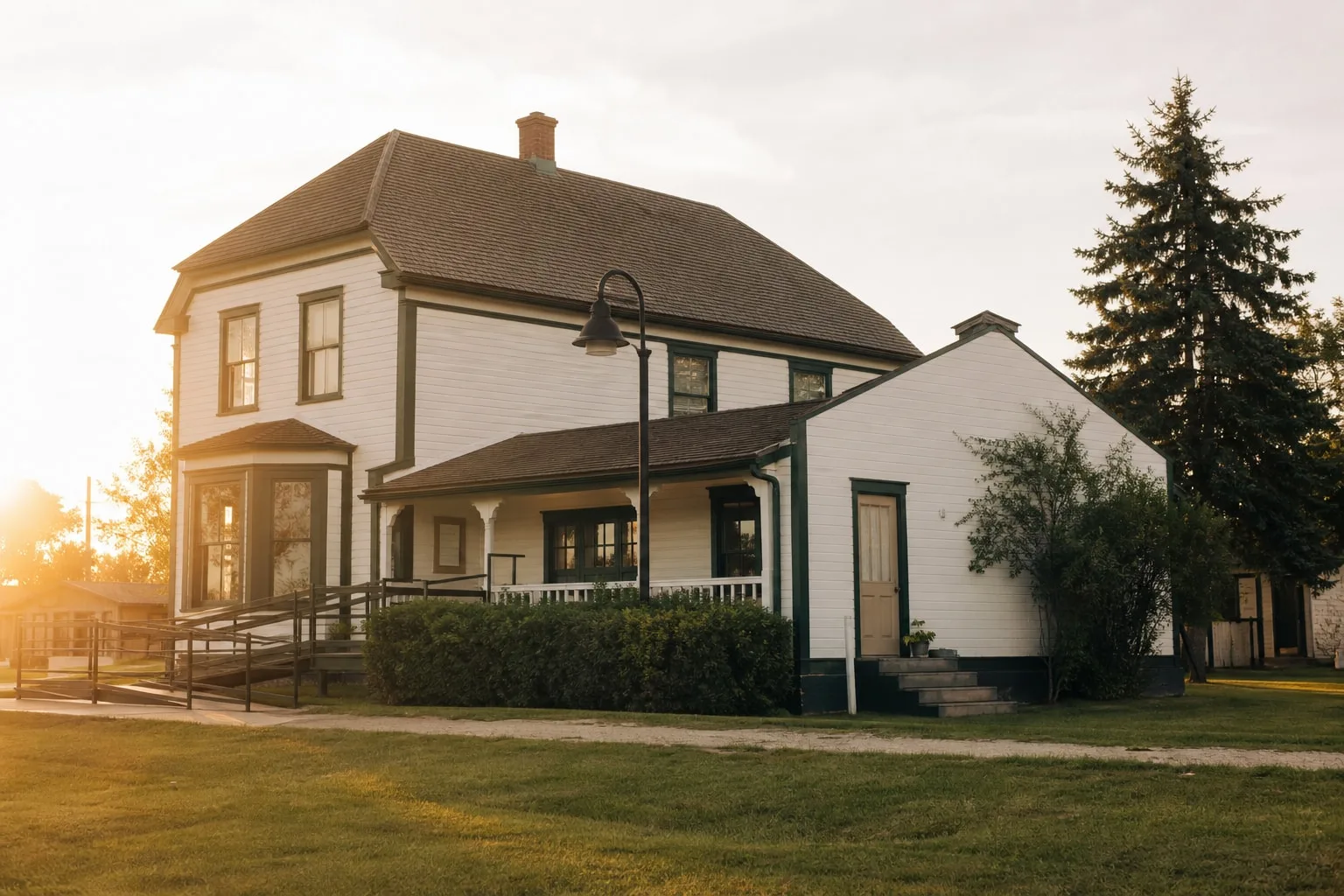
Didsbury, Alberta was incorporated on September 6, 1906, and the town now carries a population of 5,070. That history shows up in the property mix Range Road Solar sees on site visits here: century-old main street buildings sit a few blocks from newer acreages, and the local economy still leans on agriculture and petroleum services alongside retail and trades. Most properties run FortisAlberta service, and plenty were wired for shop heat, grain handling, or irrigation pumps decades before anyone thought about adding solar panels. That mix matters for planning. A downtown commercial roof, an acreage home, and a working farmyard each call for a different mounting approach and a different conversation about panel count and inverter sizing. We don't quote a system before walking the roof line or ground-mount options, checking the electrical panel, and reviewing your most recent power bill. Whether a property sits near the Didsbury Museum or out along the grid roads, the process stays the same: confirm what the site can carry, size the system to the loads actually running, and build the FortisAlberta interconnection paperwork around what the site review turns up.
Electrical Site Review for Didsbury Properties
Voltage Rise
Voltage rise happens when power runs down a long stretch of distribution line and the voltage at the far end drifts from where it should sit, which is common on rural feeders serving spread-out properties. Where line conditions push voltage higher than expected, inverters can respond by reducing output to stay within their operating range, a behavior called clipping. We check line conditions and inverter settings during the site review so the system is sized and configured to avoid that kind of unplanned output loss.
Single-Phase vs Three-Phase
Rural Alberta properties run on either single-phase or three-phase electrical service, and which one a property has depends on how the line was built out to it, not on property size. The service type determines which APsystems microinverter models and how much total system capacity we can connect, since the equipment is rated for one type of service or the other. We confirm phase type during the site visit rather than assuming it from the property type.
Panel Infrastructure
Older rural properties sometimes carry electrical panels that are decades old, with breaker capacity that was never meant to carry a solar interconnection on top of existing farm or home loads. We check panel age, brand, and available breaker space as part of every site review, since an undersized or obsolete panel changes the project scope. If the existing panel can't support the added breaker, the project includes a panel upgrade before the solar system gets tied in.
Service Entrance Review
The service entrance and meter base are what FortisAlberta reviews closely in a micro-generation application, so we check their condition, rating, and accessibility on every site visit. A meter base that's outdated, damaged, or not rated for a bidirectional meter can hold up the interconnection approval regardless of how well the solar system itself is designed. When an upgrade is needed, we scope it and include it as part of the project rather than leaving it as a surprise later.
Right-Sizing Solar for Didsbury Properties
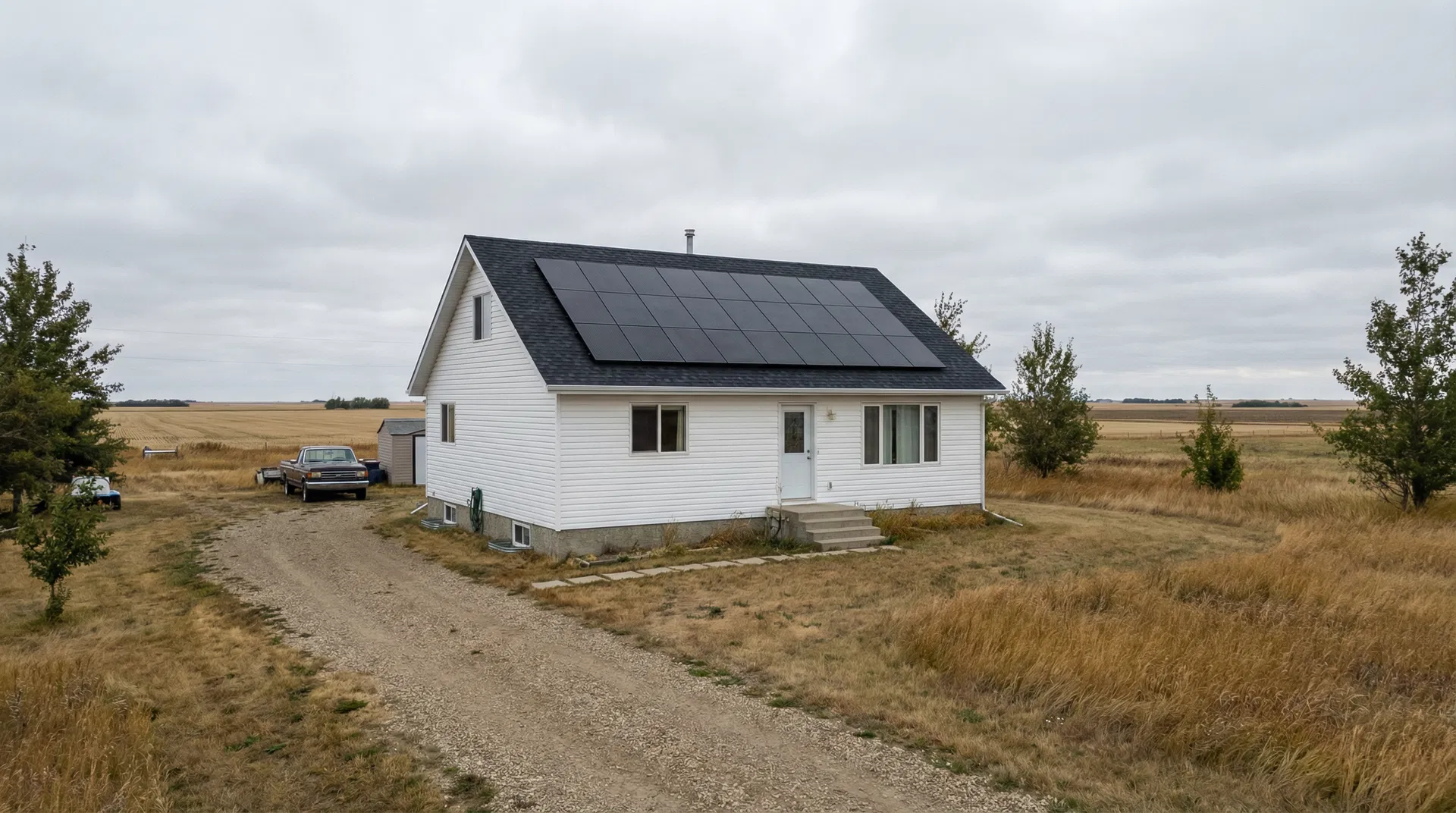
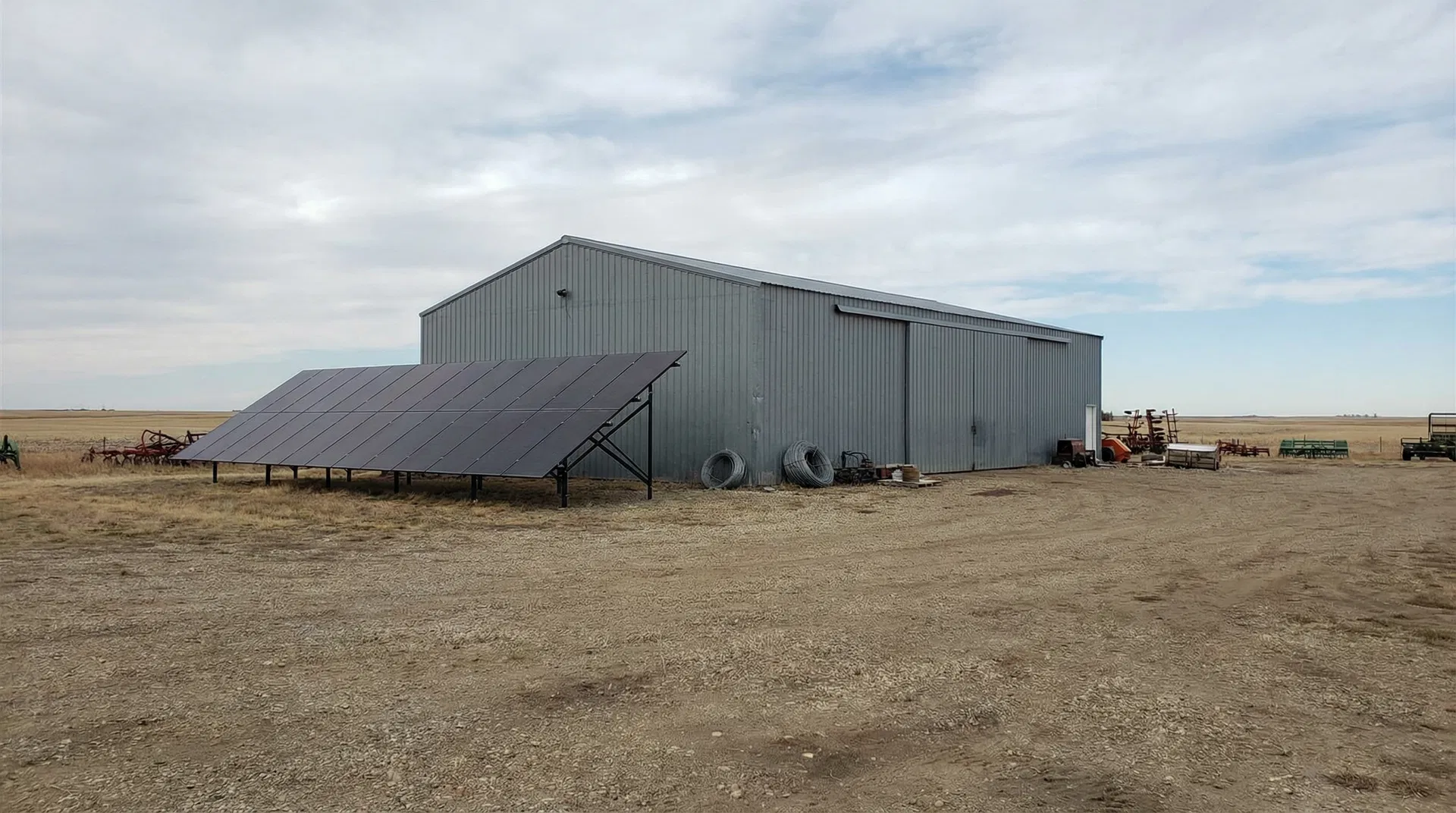
Rural properties typically need bigger systems than a comparable house in a city subdivision, because there's rarely just one load to offset. A home might share a meter with a heated shop, a well pump, a grain dryer, or irrigation equipment, and all of that gets counted when we size a system, not just the house itself. Roof or ground mount is a property-by-property call. A roof with good southern exposure and no shading issues is often the simpler and cheaper option. But on a lot of acreages and farms, trees, outbuildings, or a roof pitch that doesn't suit solar push the decision toward ground mount, especially when there's open yard space to work with. A spread-out farm layout can also make ground mount easier to tie into an existing shop or outbuilding service than running everything back to the house panel. Either way, we don't size off a rule of thumb like watts per square foot or a generic estimate. We size off the 12-month usage graph on your most recent power bill, which shows the actual pattern of what the property draws across the year, including seasonal loads like grain drying or shop heat. That usage graph, combined with the site design, including roof or ground conditions, shading, and the panel count that will physically fit, is what turns into a system size recommendation, not a number pulled from an online calculator.
Typical Load Profiles We Design For Near Didsbury
Home + Heated Shop
This is one of the most common setups in the area: a house plus a detached shop with heat, lighting, and often a compressor or welder running intermittently. The shop's load pattern looks different from the house's, with spikes rather than a steady draw, so we look at both separately on the usage graph. System sizing usually lands in the upper half of the 8 to 15 kW range here, confirmed against your most recent power bill rather than assumed.
Farm Operation with Seasonal Loads
Grain bins, augers, and irrigation pumps create sharp seasonal spikes in usage that a single annual average would completely miss. We read the 12-month usage graph month by month to see when those loads hit and how big they run, then size the system around that pattern rather than the yearly total. A ground-mount array is common here, since farmyards often have open land and roof space that's already spoken for by machine sheds.
Acreage or Main Street Commercial
Acreage homes without major secondary loads, and commercial buildings on the main street with set retail or office hours, tend to have steadier, more predictable draw than a farm operation. That steadier pattern often means a system sizes closer to the lower end of the 8 to 15 kW range, though a site review and the most recent power bill always confirm it. Roof mount is more common here, since these properties typically don't have the shading or layout issues that push a farm toward ground mount.
FortisAlberta Interconnection in Didsbury
FortisAlberta is the wire service for this area, and that's the utility Range Road Solar deals with directly on every interconnection application here. We handle the full micro-generation application package: the single-line diagram, equipment specifications for the LONGi panels and APsystems microinverters, and the paperwork FortisAlberta requires before a system gets permission to connect. That process looks a little different depending on whether the property is a single-phase farm service, a three-phase commercial connection, or a standard residential service, and we confirm which applies during the site visit rather than assuming. We don't quote an approval timeline or make claims about how FortisAlberta settles production credits, because those details come from FortisAlberta's own current tariff and process, not from us. What we commit to is managing the application correctly the first time: right equipment specs, right service classification, right paperwork, so the project isn't held up by an avoidable error on our end.
Project Economics and Design Review
| System Size | Annual Production | Year 1 Savings | Payback Period |
|---|---|---|---|
| 8-15 kW range, 10 kW typical |
Production, savings, and payback figures are specific to your property and get calculated from a design review and your most recent power bill, not estimated in advance.
How We Work in Didsbury
Bill and Load Review
We review your power bill to understand your energy use in Didsbury and size the system to your actual consumption, not a generic estimate.
Site Assessment
We assess your roof or ground area, south-facing exposure, electrical service, and utility interconnection requirements specific to your property.
Design and Utility Application
We produce a system layout, production estimate, and cost summary, then submit your micro-generation application to your utility on your behalf.
Installation and Commissioning
Our crew installs racking, panels, inverter, and electrical connections. All work is performed by licensed electricians. We commission and test before handoff.
Current Program and Interconnection Review
Utility connection review
FortisAlberta reviews every micro-generation application for grid connection, and Range Road Solar puts together the design package, single-line diagram, and equipment specifications that the application requires. We submit directly through FortisAlberta's process and stay the point of contact until the application clears.
Current program review
Residential, farm, and commercial properties get reviewed against whatever incentive and rebate rules are actually in effect at the time of design, including micro-generation credits and federal tax treatment for qualifying farm and business equipment. We don't quote eligibility from memory or from a program that's already changed.
Frequently Asked Questions
Get a Solar Assessment for Didsbury
Submit a recent power bill and we will review your consumption and provide an honest assessment for your Didsbury property. No obligation.
(587) 330-7502 Book a CallRelated Resources
More Solar Services in Didsbury