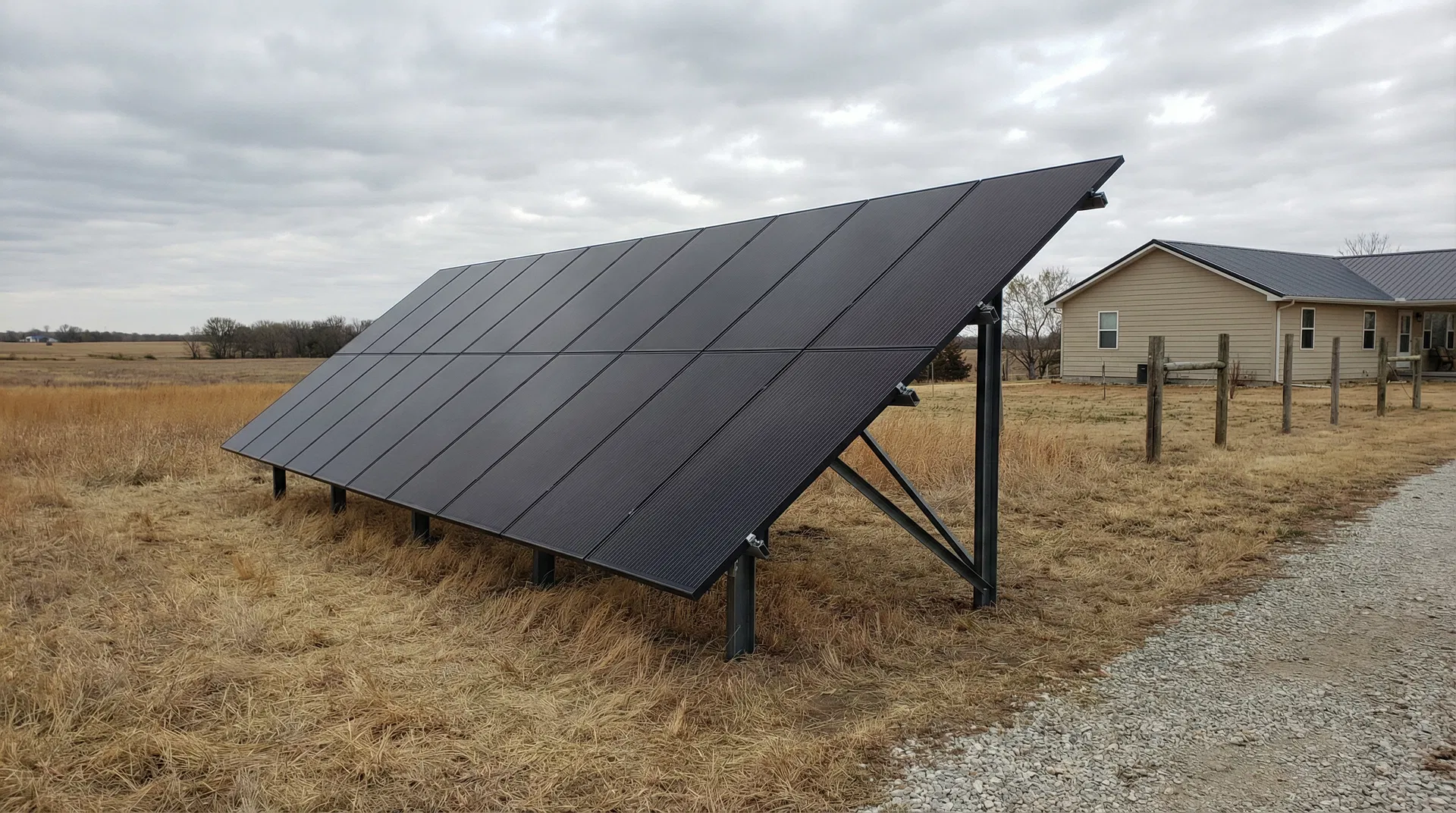
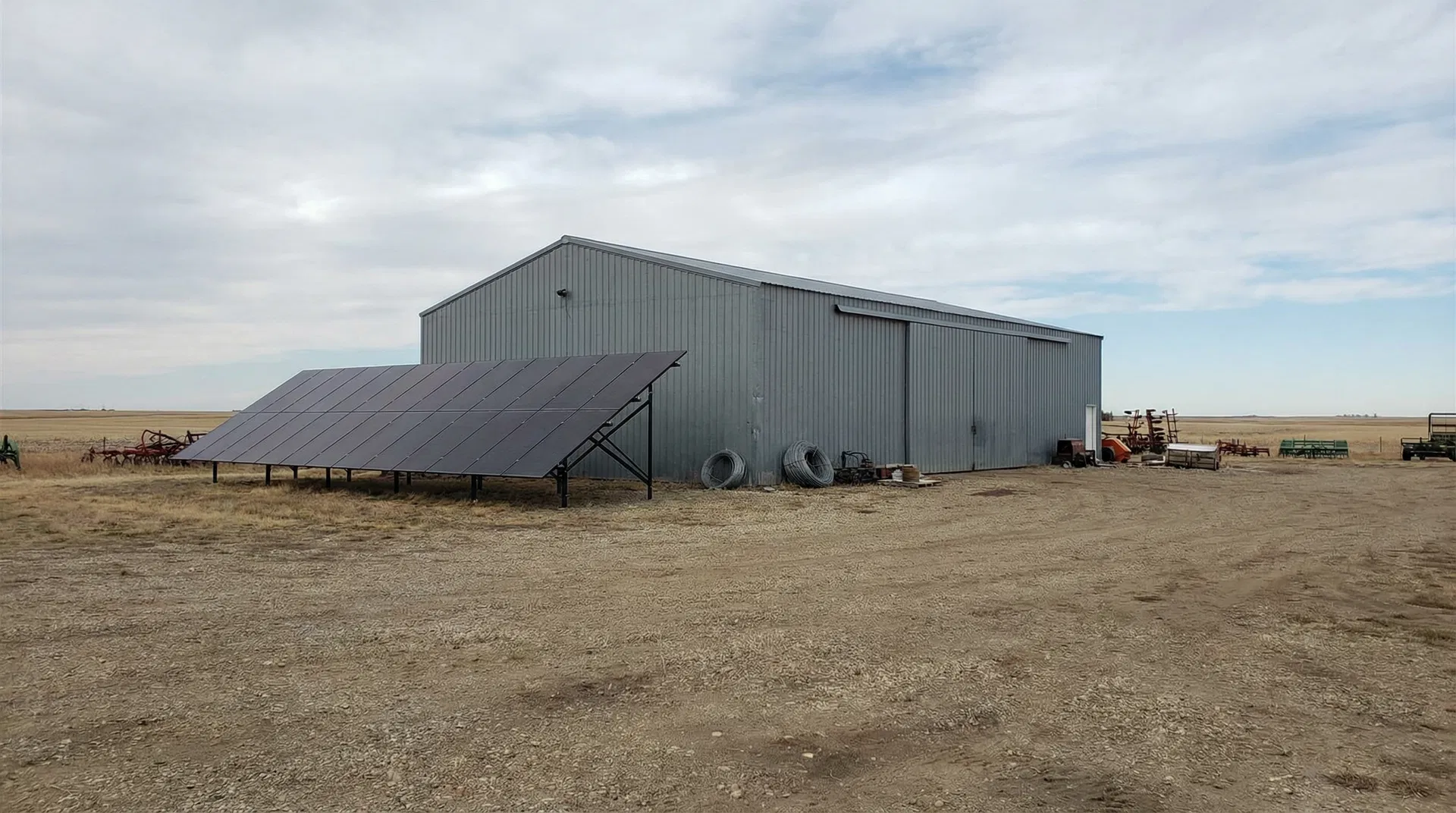
Farm solar Didsbury projects typically fall in the 20-50 kW range, with 25 kW being a common starting point for a mixed-load operation. The right size depends on your actual usage, your service type, and what loads you're targeting. We don't guess at that number. Every system we install uses LONGi solar panels. They're reliable, widely supported, and proven across a range of outdoor conditions. For farm systems, we pair them with APsystems microinverters when the design calls for it, though ground-mount arrays at this scale sometimes use string configurations depending on shading conditions and panel layout. We specify what fits the site, not what's easiest to install. Ground-mount is the preferred approach for most agricultural installations around Didsbury. Barn roofs and shop roofs can work, but they often come with constraints: older steel, orientation that doesn't favour good solar exposure, or structural concerns that require reinforcement before racking goes up. A ground-mount array gives us full control over tilt, orientation, and future panel access without being limited by the building underneath it. We also handle the FortisAlberta interconnection application as part of every farm install. That includes the single-line diagram, the equipment schedule, and the utility submission. Most customers never need to contact FortisAlberta directly. We stay in contact with you through each stage of the process and flag anything that comes up.
Solar Planning for Didsbury Properties
Agricultural electrical loads don't follow a residential pattern. A Didsbury farm property might run a heated shop, a grain dryer, irrigation pumps, and a home all on the same service. That kind of load profile is exactly what a properly sized farm solar system is built to offset. It also means the design work matters more than the equipment list. FortisAlberta serves properties in this area, and working within their micro-generation program is something we do on every farm install we complete. The paperwork, the utility application, and the design package are our responsibility. You hand us your most recent power bill, and we take it from there. We don't use rule-of-thumb sizing on farm systems. The 12-month usage graph on your most recent power bill tells us exactly what loads are running and when, and the site visit tells us where panels can go. Ground-mount is the preferred approach on most agricultural properties because it doesn't depend on an aging shop roof or a barn that isn't oriented for good production. We design the system around what's actually on your land, not a generic farm template.
Electrical Site Review for Didsbury Properties
Voltage Rise
Voltage rise happens when solar generation pushes voltage on the distribution line above acceptable limits. On rural distribution lines, which often serve fewer properties per kilometre than urban feeders, this can be a more pronounced issue. If voltage rise is a concern at your service point, it can cause inverter clipping or require system size adjustments to stay within FortisAlberta's grid connection requirements.
Single-Phase vs Three-Phase
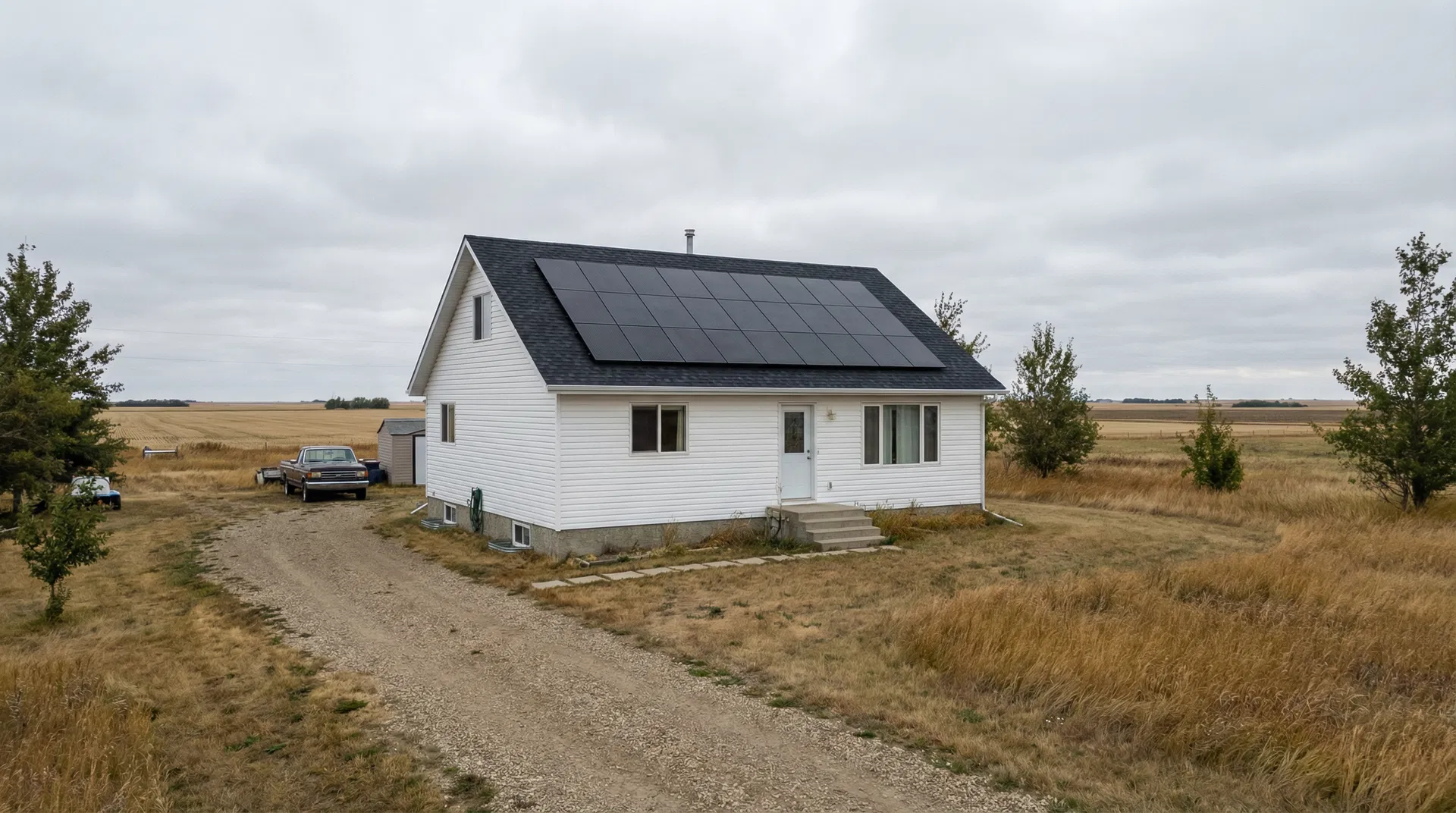
Rural properties in Alberta can be served by either single-phase or three-phase power depending on what the distribution line to the property delivers. This matters for solar because it affects which inverters can be used, how the system is wired, and the maximum capacity FortisAlberta will approve at that service point. We confirm your service type during the site review and design the system accordingly.
Panel Infrastructure
Older panels and breaker boxes on farm properties don't always have the capacity to support a 20-50 kW solar addition without upgrades. We assess the breaker panel's rated capacity, the age of the equipment, and whether there's room to backfeed a solar circuit safely. If an upgrade is required, we include that in the project scope upfront so there are no surprises on install day.
Service Entrance Review
The service entrance and meter base are the connection point between your farm's electrical system and the FortisAlberta grid. We inspect the meter base condition and service entrance rating as part of the design process because FortisAlberta's micro-generation application requires the utility connection hardware to meet current standards. If the meter base needs replacement before the application can proceed, we'll include that in the project plan.
Right-Sizing Solar for Didsbury Properties
Farm and agricultural properties carry a different electrical footprint than a residential home. It's not unusual for a Didsbury-area operation to combine a home load, a heated shop, a grain handling system, and seasonal irrigation all on one service. Each of those loads contributes to your monthly consumption, and each one needs to be accounted for when sizing a system. A solar design that only looks at the house misses most of what's actually running. Roof versus ground-mount comes down to what the site actually offers. Shop roofs and barn roofs can work well if the pitch is reasonable, the structure is sound, and the orientation gets adequate solar exposure. But on most farm properties, there's open land available that a rooftop doesn't have. Ground-mount gives us control over tilt angle, compass orientation, and row spacing in a way that a fixed roof can't match. When a building roof is shaded by a grain bin, a tree line, or an adjacent structure, ground-mount isn't just preferable. It's often the only option that makes the project worthwhile. We size every system from the 12-month usage graph on your most recent power bill. That graph shows us your peak usage months, your low-consumption months, and how your loads shift across the year. That's what we design to. We don't work from a rule-of-thumb number and we don't assume your loads match someone else's operation. Your bill and your site visit are the design inputs. Everything else follows from there.
Typical Load Profiles We Design For Near Didsbury
Home + Heated Shop
A residential home paired with an electric-heated shop is one of the most common load profiles we see on acreages and smaller farms in this area. The shop heating load often dominates winter consumption and pushes the total significantly higher than the home alone would. We size for the combined load using the 12-month usage graph, so the system isn't under-built for the months when both the house and the shop are running hard.
Grain Operation with Dryer Load
Grain drying draws a substantial amount of power in a short seasonal window, which changes how we think about system sizing. A 30-50 kW system may be appropriate for an operation where the dryer runs through harvest but electrical consumption is much lower the rest of the year. We look at the full 12-month picture on your most recent power bill and discuss whether sizing to the dryer peak or to the annual baseline makes more sense for your operation.
Mixed Farm with Irrigation Pump
Irrigation adds a summer peak that a lot of farm solar designs don't account for properly. When pump loads run hard during the growing season, that's also when solar production is at its highest, which can make the offset meaningful if the system is sized correctly. We map the irrigation load against the rest of the farm's usage profile to determine whether a single ground-mount array can address both the seasonal pump load and the year-round base load, or whether phased expansion makes more sense.
FortisAlberta Interconnection in Didsbury
FortisAlberta is the wire service for properties in and around Didsbury. If you're putting a solar system on your farm, the interconnection application goes through FortisAlberta. That process involves a formal micro-generation application, a design package, and utility review before your system can legally export to the grid. We handle that entire process on your behalf. We prepare the documentation, submit the application, and coordinate with FortisAlberta through their review. You don't need to navigate the utility process yourself. One thing worth knowing upfront: FortisAlberta has specific requirements for meter base condition, service entrance configuration, and equipment eligibility. We check all of that during the design phase so nothing surprises you partway through the install. If there's an infrastructure issue that needs to be addressed before the application can proceed, we'll tell you what it is and what it involves before any work starts.
Project Economics and Design Review
| System Size | Annual Production | Year 1 Savings | Payback Period |
|---|---|---|---|
| 20-50 kW range, 25 kW typical |
Production, savings, and payback estimates require a property-specific design and your most recent power bill.
How We Work in Didsbury
Bill and Load Review
We review your power bill to understand your energy use in Didsbury and size the system to your actual consumption, not a generic estimate.
Site Assessment
We assess your roof or ground area, south-facing exposure, electrical service, and utility interconnection requirements specific to your property.
Design and Utility Application
We produce a system layout, production estimate, and cost summary, then submit your micro-generation application to your utility on your behalf.
Installation and Commissioning
Our crew installs racking, panels, inverter, and electrical connections. All work is performed by licensed electricians. We commission and test before handoff.
Current Program and Interconnection Review
Utility connection review
FortisAlberta reviews all micro-generation connection applications for farm and agricultural systems in this service area. Range Road Solar prepares the complete design package, submits the application on your behalf, and manages communication with FortisAlberta through the review process. You don't need to handle the utility paperwork yourself.
Current program review
Commercial and agricultural solar installations may be eligible for programs or credits depending on current rules and ownership structure. We review eligibility against the programs in place at the time of your design, not against programs that may have changed or been discontinued. What applies to your operation is confirmed during the design review, not assumed in advance.
Frequently Asked Questions
Get a Solar Assessment for Didsbury
Submit a recent power bill and we will review your consumption and provide an honest assessment for your Didsbury property. No obligation.
(587) 330-7502 Book a CallRelated Resources
More Solar Services in Didsbury