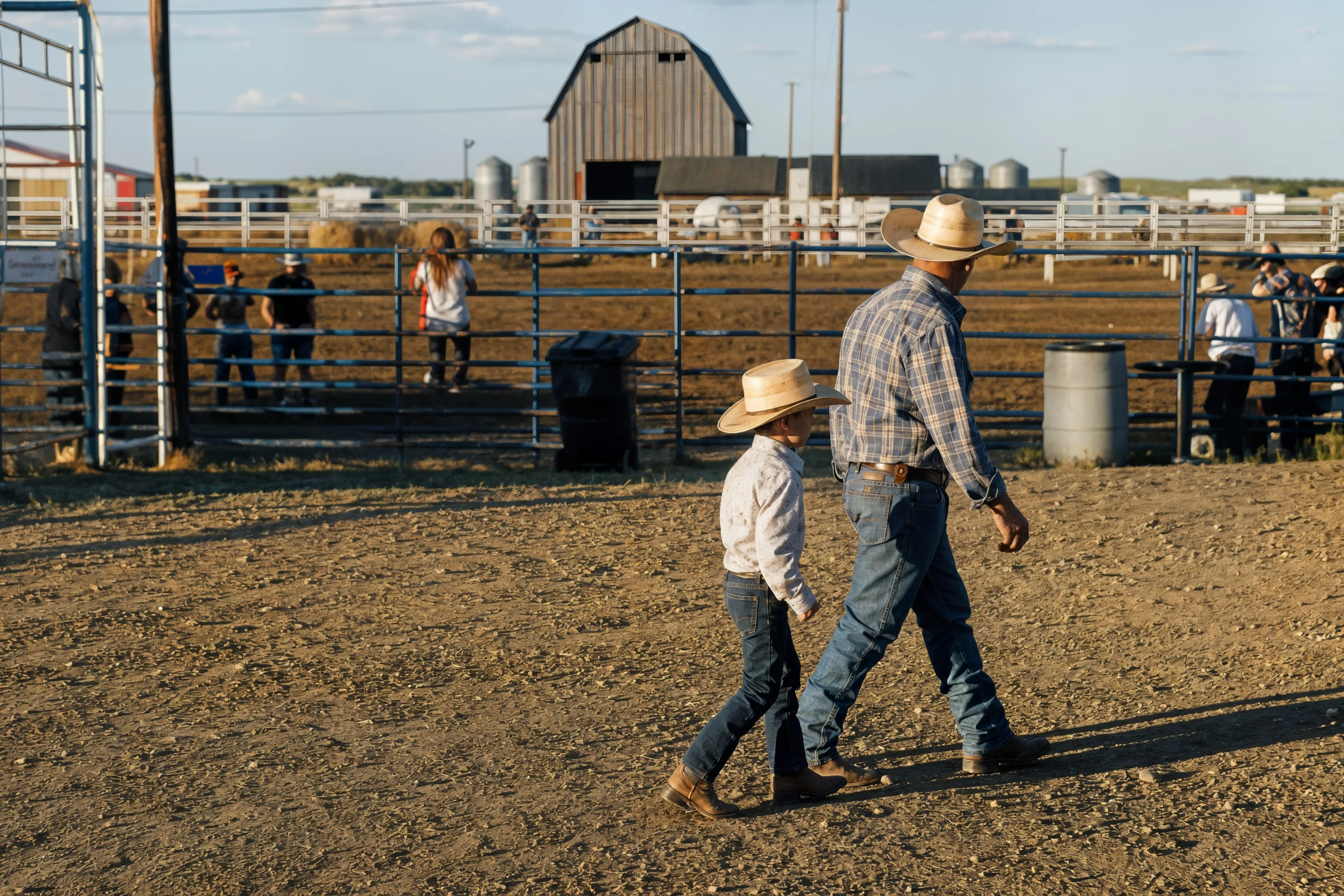
When we talk about farm solar in Carstairs, we're usually talking about more than one building. A grain operation might need to cover the house, a heated shop, and a grain dryer that only runs a few weeks a year but pulls hard when it does. We size for that whole picture, not just the house meter. For most farm and acreage properties in the 20 to 50 kW range, ground-mount arrays make the most sense: they go in on open land away from the yard site, they're easier to service, and they don't compete with an odd-pitched roof or a shop roof that's already carrying a Quonset-style curve. Where a roof genuinely works, rooftop is on the table too, but ground mount is our default recommendation for larger farm systems because it gives us full control over orientation and tilt. Every system we install uses LONGi panels and APsystems microinverters. The microinverter setup matters more on farm properties than it does on a standard house, because it lets us build a system across a shop roof, a Quonset, and a ground-mount array without one shaded panel or one failed unit taking down a whole string. If a grain leg motor kicks on and drags voltage for a second, the rest of the array keeps producing independently. We spec panel count and racking layout in the 20 to 50 kW range based on what your operation actually runs, not a generic farm package, and we walk the property with you before finalizing anything.
Solar Planning for Carstairs Properties
Carstairs sits in Mountain View County, where the economic anchor is agriculture (beef and barley), obvious every summer when Beef & Barley Days fills the town grounds. It's exactly the kind of agricultural base we design farm solar systems around the rest of the year. A working property here usually isn't one electrical load, it's several: the house, a heated shop, maybe a grain dryer or an irrigation pump running seasonally. FortisAlberta serves the wire side of things locally, and that distribution setup, along with your property's layout, shapes whether a system makes sense as a roof mount, a ground mount, or some combination of both. We don't guess at any of this. Every farm and acreage system we design starts with a site visit and your most recent power bill, because a shop with three-phase service and a grain leg pulls differently than a house with a well pump and not much else. Ground mount tends to make more sense on larger farm parcels in the area, where there's open land away from tree lines and outbuildings, and where a rooftop simply isn't big enough or well-oriented enough to carry a 20 to 50 kW system. We confirm the right approach for your property before you commit to anything.

Electrical Site Review for Carstairs Properties
Voltage Rise
Voltage rise happens when the distance and wire gauge between a rural transformer and your service point cause voltage to climb as solar production pushes power back toward the grid. On longer rural runs typical of this area, that rise can push an inverter into clipping or shut it down on a hot, high-production afternoon. We measure line conditions at your service point and size the inverter and string layout to stay inside safe operating range instead of guessing.
Single-Phase vs Three-Phase
Some farm properties in the area run single-phase service, others have three-phase service installed for a grain dryer, irrigation pump, or shop equipment. That distinction changes which APsystems microinverter configuration we specify and how much total system capacity the existing service can support. We confirm your service type on site before we finalize equipment, because designing for the wrong phase configuration means a system that can't actually deliver its rated output.
Panel Infrastructure
A lot of farm properties around here are still running an original panel that's 30 or more years old, sized for a much smaller electrical load than the house, shop, and yard now draw. We check the breaker capacity, panel age, and available space for a solar breaker before we finalize a design. If the panel can't support the added capacity, an upgrade means a new panel and breaker sized for both your current loads and the solar system, which we scope and quote as part of the design review.
Service Entrance Review
We check the condition of your service entrance and meter base as part of every farm site visit, because FortisAlberta's micro-generation application requires equipment that meets current standards before they'll approve an interconnection. An older or damaged meter base can hold up an application even when the rest of the system design is solid. If an upgrade is needed, we scope it alongside the solar installation so it's one project instead of two separate ones.
Right-Sizing Solar for Carstairs Farm Properties
Farm and acreage systems in this area almost always come out larger than a typical in-town house system, because there's rarely just one load to cover. A working property might run the house, a heated shop, a grain dryer, and an irrigation pump, sometimes all on the same service. We size for the combined picture, which is why farm systems here often land in the 20 to 50 kW range instead of the 6 to 10 kW range typical for a town house. Roof versus ground mount comes down to what your yard actually looks like. If mature trees or outbuildings shade the house or shop roof, if the roof pitch or orientation isn't right, or if the yard is spread out with open land available, ground mount is usually the better call: it lets us pick the best orientation and tilt instead of working around whatever the roof gives us. Where a shop or Quonset roof is clear and well-oriented, rooftop stays on the table. Either way, we don't size off a rule of thumb based on acreage or a flat dollar figure per kW. We pull the 12-month usage graph off your most recent power bill and size the system against your actual seasonal load pattern, including the spike when a grain dryer or dugout pump kicks on. That bill, combined with the site design, is what determines final system size, not a generic farm package.
Typical Load Profiles We Design For Near Carstairs
Home + Heated Shop
This is the most common setup on smaller acreages in the area: a house plus a detached shop with block heaters, a compressor, and shop lighting running through the cold months. We size the system against the combined load shown on your most recent power bill, weighting for the shop's heavier winter draw rather than treating it as a summer-only add-on.
Grain Handling Operation
Grain bins, an auger, and a dryer create a load that's mostly quiet for months and then spikes hard during harvest. We look at how that seasonal spike shows up on the 12-month usage graph on your bill and size the system, inverter configuration, and service capacity to handle it without oversizing for the rest of the year.
Livestock Operation with Water and Ventilation Loads
Cattle or hog operations often run water pumps, barn ventilation fans, and heat lamps continuously, which creates a steadier baseline load than a grain operation's seasonal spikes. We design around that baseline plus your peak periods, using your most recent power bill and a site walk to confirm what's actually running and when.
FortisAlberta Interconnection in Carstairs
FortisAlberta is the wire service for properties in Carstairs, which means any grid-tied solar system here goes through FortisAlberta's micro-generation interconnection process before it can be switched on. Range Road Solar handles that application on your behalf: the technical drawings, the equipment specifications for the LONGi panels and APsystems microinverters, and the paperwork FortisAlberta requires to review a farm-scale system in the 20 to 50 kW range. Farm properties often have existing three-phase or upgraded single-phase service from equipment like grain dryers or irrigation pumps, and we account for that existing configuration when we put the application together. We don't quote approval timelines or make claims about how FortisAlberta credits or settles production, because those specifics depend on current utility rules and your retailer contract, both of which we review with you at design time, not before. What we can tell you is that we've done this application before and we know what FortisAlberta wants to see on a farm-scale submission.
Project Economics and Design Review
| System Size | Annual Production | Year 1 Savings | Payback Period |
|---|---|---|---|
| 20-50 kW range, 25 kW typical |
Production, savings, and payback figures require a property-specific design and your most recent power bill; we don't quote them without both.
How We Work in Carstairs
Bill and Load Review
We review your power bill to understand your energy use in Carstairs and size the system to your actual consumption, not a generic estimate.
Site Assessment
We assess your roof or ground area, south-facing exposure, electrical service, and utility interconnection requirements specific to your property.
Design and Utility Application
We produce a system layout, production estimate, and cost summary, then submit your micro-generation application to your utility on your behalf.
Installation and Commissioning
Our crew installs racking, panels, inverter, and electrical connections. All work is performed by licensed electricians. We commission and test before handoff.
Current Program and Interconnection Review
Utility connection review
FortisAlberta reviews every grid-tied solar application in its service territory, including farm-scale systems in the 20 to 50 kW range, before a system can be switched on. Range Road Solar prepares and submits the full design package, technical drawings, and equipment specifications on your behalf so the application reflects what FortisAlberta actually needs to see.
Current program review
Eligibility for commercial, farm, and residential incentive programs changes over time, so we review what currently applies to your property against the rules in place when we design your system. We don't assume a program from a past project still applies; we check it fresh for every design review.

Frequently Asked Questions
Get a Solar Assessment for Carstairs
Submit a recent power bill and we will review your consumption and provide an honest assessment for your Carstairs property. No obligation.
(587) 330-7502 Book a CallRelated Resources
More Solar Services in Carstairs