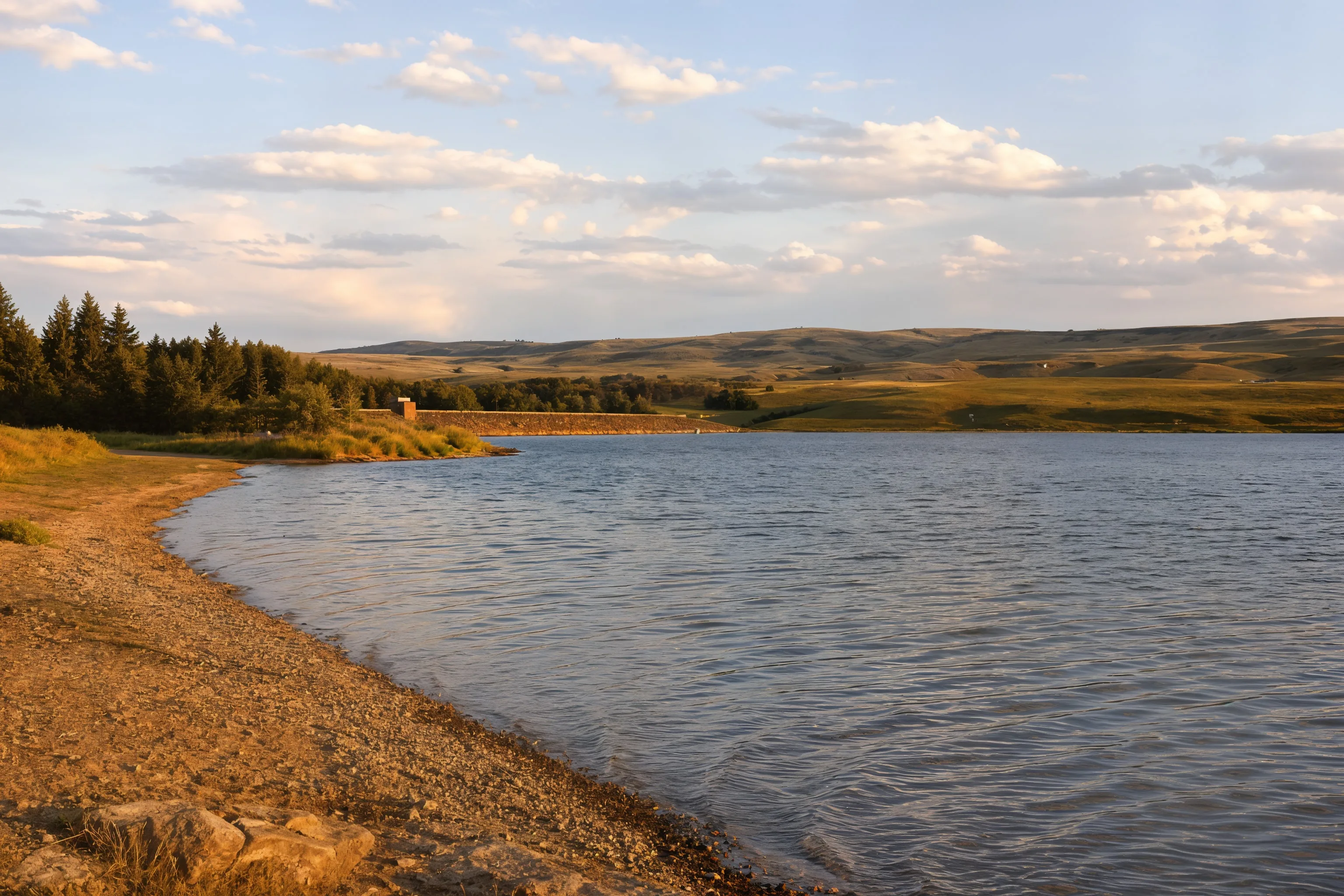
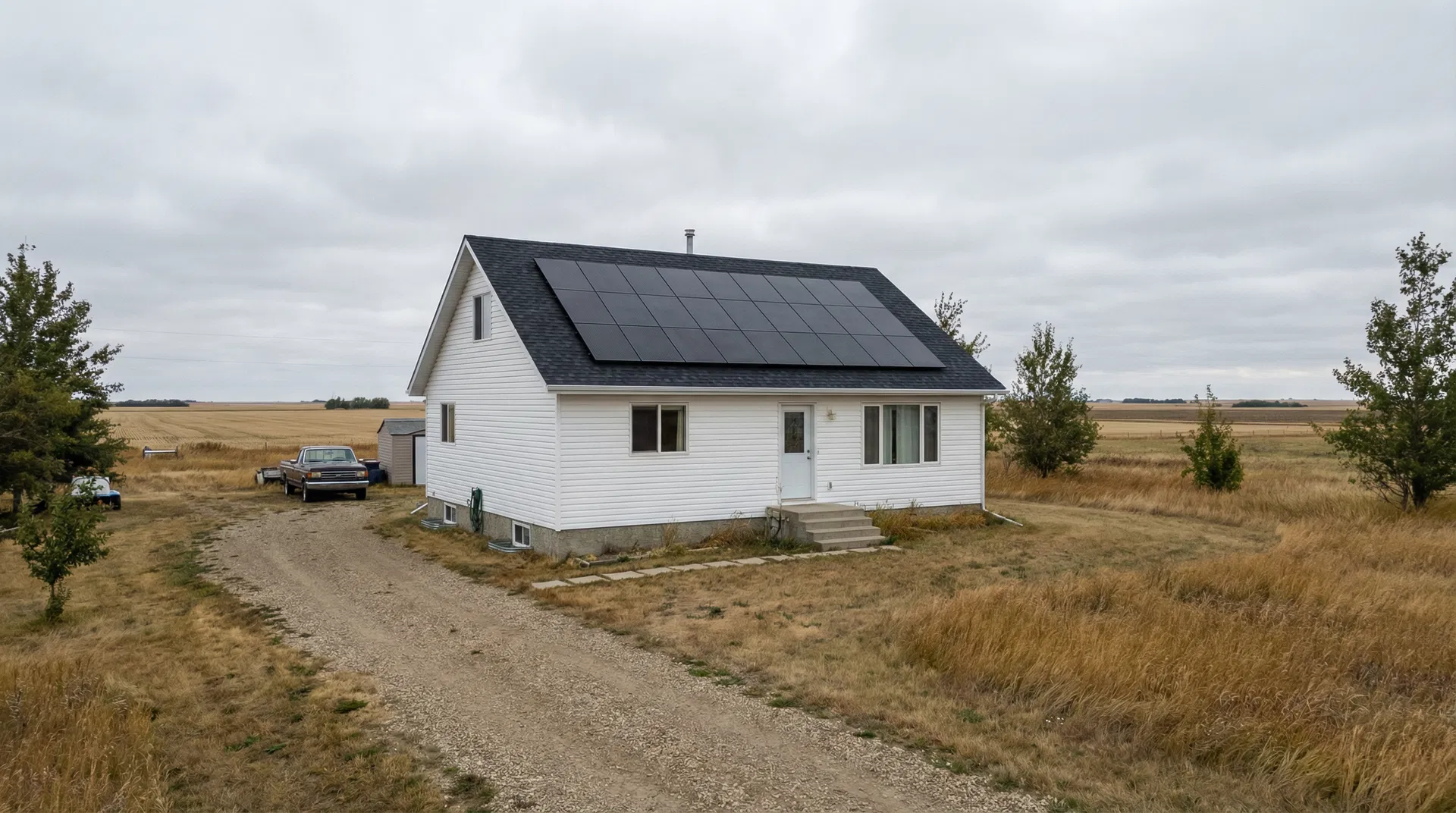
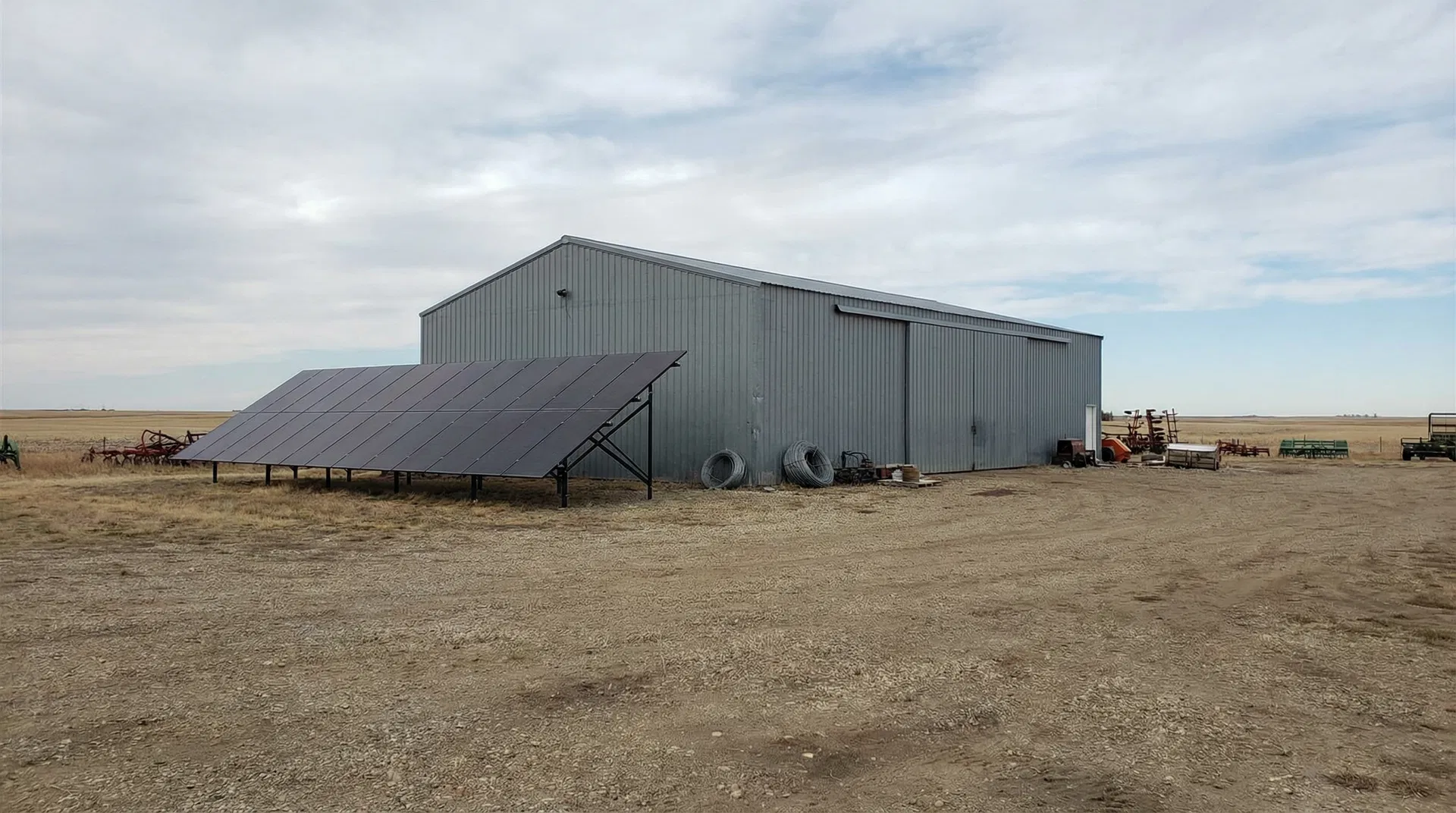
Farm solar in Mountain View County needs to handle grain bins, irrigation pumps, and heated shops, not just a house. We install LONGi panels paired with APsystems microinverters on both rooftop and ground-mount arrays, and for most farm-scale systems in this range, ground-mount is the better call. A quarter section usually has open yard space away from grain bins, shelterbelts, and machine sheds, so a ground-mount array can be angled and oriented without fighting a roofline that was built for shedding snow, not catching sun. Rooftop still makes sense on a shop or Quonset with a clean south-facing slope and no shading from bins or trees. APsystems microinverters let us build out a system in blocks, so a 20 kW array and a 50 kW array use the same underlying approach, just more of it, and a single module failure doesn't take down a whole string the way it can with a central inverter. LONGi panels give us a consistent, well-documented product to warranty and service, which matters on a property where the array might be sitting a good distance from the yard and out of daily sight. For grain operations, we size around the dryer and leg motors running in the fall, not just a hypothetical average day. For cattle and mixed operations, we look at waterers, yard lights, and any shop heat running through the winter. Every one of these systems starts with the same two inputs: a walk of the property and your most recent power bill.
Solar Planning for Mountain View County Properties
Mountain View County was incorporated January 1, 1961 (as County of Mountain View No. 17), and the area has been built around agriculture ever since. Prime agricultural land anchors the local economy here, and that shows up in how farms are wired: a house meter rarely tells the whole story once you add a shop, a well, and grain-handling equipment. The 2021 census put the population at 12,981, down slightly from 13,074 the census before, but the acreages and quarter sections haven't shrunk, and neither has the load those properties carry. The Olds-Didsbury Regional Airport sits in the area too, another piece of the same agricultural and transportation backbone that built this economy. Environment Canada's climate normals for the nearby Olds station log 1,998.4 annual hours of bright sunshine, a baseline we note during design, not a production number we promise. What we do promise is a site visit that looks at your panel, your service type, and your most recent power bill before we talk system size. A farm with a grain dryer and a heated shop needs a different design than a quarter section with a house and a well. We build the design around what's actually running on the property, not a template.
Electrical Site Review for Mountain View County Properties
Voltage Rise
Voltage rise happens when power pushes through a long run of distribution line, and rural feeders here can run considerable distances between the transformer and your meter. That rise affects the voltage window your inverters see at the point of connection, which factors into inverter clipping and how we size the array relative to your service. We check line conditions at your property before finalizing system size so the design accounts for it rather than running into it after installation.
Single-Phase vs Three-Phase
Properties in this area run a mix of single-phase and three-phase service, depending on when the yard was built out and what equipment it was built to run. Three-phase service, common where grain-handling motors or larger shop equipment are in use, opens up different inverter and system capacity options than a single-phase farmhouse hookup. We confirm which service type is on the property before we spec equipment, since that choice drives which APsystems microinverter configuration fits.
Panel Infrastructure
Older farm properties sometimes carry electrical panels that were sized decades ago for a house and maybe a well, not a house plus a shop plus a solar array. We check breaker capacity, panel age, and busbar rating as part of the site visit, since an undersized or outdated panel can limit how much solar capacity it can safely carry. If the panel can't support the system, an upgrade means a new panel sized for both current loads and the added solar circuit, which we scope and quote as part of the design.
Service Entrance Review
We also look at the service entrance and meter base, since its condition factors into the micro-generation application we submit to FortisAlberta. A meter base that's corroded, undersized, or doesn't match current code can hold up that application regardless of how the solar system itself is designed. If an upgrade is required, we fold it into the project scope upfront so it doesn't turn into a surprise mid-install.
Right-Sizing Solar for Mountain View County Properties
A farm here rarely runs on one load. There's the house, but there's also a shop, maybe a grain dryer, an irrigation pump, or yard lights running through calving season. That's why farm systems in this area tend to run larger than a typical in-town rooftop system, and why we size around the whole property instead of just the house meter. Roof versus ground-mount comes down to what the property actually offers: a clean south-facing roof on a shop or Quonset with no shading can work well, but a lot of acreages have shelterbelts, grain bins, or outbuildings that shade part of the roofline for a chunk of the day. When that's the case, or when the roof pitch isn't right, or when there's simply open yard space available, ground-mount usually wins out, since we can orient the array without working around a roof that wasn't built with solar in mind. Either way, we don't size off a rule of thumb like watts per square foot of roof or a flat multiplier. We size off the 12-month usage graph on your most recent power bill, which shows the real seasonal pattern of what the property draws, paired with a site walk to confirm shading, orientation, and service type. That combination, your bill and the site itself, is what turns into an actual system size.
Typical Load Profiles We Design For Near Mountain View County
Home + Heated Shop
This is the most common profile we see: a farmhouse plus a heated shop used for equipment storage and repair work through the winter. The shop heat and compressor loads typically push this combination toward the higher end of our 20 to 50 kW range, but we confirm that against the 12-month usage graph on your most recent power bill rather than assuming it.
Grain Operation (Dryer + Leg Motors)
Grain operations add dryer and leg motor loads that spike hard for a few weeks each fall and sit idle the rest of the year. We design for that seasonal swing using your most recent power bill's usage graph, so the system reflects the actual fall pattern instead of an average that would undersize it for harvest.
Acreage with Irrigation and Outbuildings
Acreages running irrigation pumps alongside a house and a few outbuildings have a different draw pattern again: steady background load plus pump cycling through the growing season. We walk the property to confirm which outbuildings are on the same service and size the array against that combined load, not just the house.
FortisAlberta Interconnection in Mountain View County
FortisAlberta is the wire service here, and any grid-tied farm solar system in the area goes through their micro-generation interconnection process. We prepare and submit that application package as part of your project: single-line diagrams, equipment specifications for the LONGi panels and APsystems microinverters, and the site-specific details FortisAlberta needs to review a farm-scale array in the 20 to 50 kW range. Because farm properties often carry single-phase or three-phase service, sometimes across more than one meter for a house, shop, and outbuildings, we confirm your service configuration early so the application matches what's actually on the pole and in your panel. We don't quote approval timelines or credit-settlement terms here, because those depend on FortisAlberta's current process and your specific service details at the time you apply. What we do handle is the paperwork and technical package start to finish, so you're not the one chasing down single-line diagrams or equipment spec sheets.
Project Economics and Design Review
| System Size | Annual Production | Year 1 Savings | Payback Period |
|---|---|---|---|
| 20-50 kW range, 25 kW typical |
Production, savings, and payback figures require a property-specific design and your most recent power bill before we can quote them.
How We Work in Mountain View County
Bill and Load Review
We review your power bill to understand your energy use in Mountain View County and size the system to your actual consumption, not a generic estimate.
Site Assessment
We assess your roof or ground area, south-facing exposure, electrical service, and utility interconnection requirements specific to your property.
Design and Utility Application
We produce a system layout, production estimate, and cost summary, then submit your micro-generation application to your utility on your behalf.
Installation and Commissioning
Our crew installs racking, panels, inverter, and electrical connections. All work is performed by licensed electricians. We commission and test before handoff.
Current Program and Interconnection Review
Utility connection review
FortisAlberta reviews every grid-tied micro-generation application here before a system can connect. Range Road Solar prepares and submits the full design package on your behalf, including single-line diagrams and equipment specifications for the LONGi panels and APsystems microinverters we're installing.
Current program review
Eligibility for any commercial, farm, or residential program changes over time, so we review current rules against your specific property and system at the design stage rather than assuming last year's terms still apply. That review happens before we finalize a quote, not after.
Frequently Asked Questions
Get a Solar Assessment for Mountain View County
Submit a recent power bill and we will review your consumption and provide an honest assessment for your Mountain View County property. No obligation.
(587) 330-7502 Book a CallRelated Resources
More Solar Services in Mountain View County