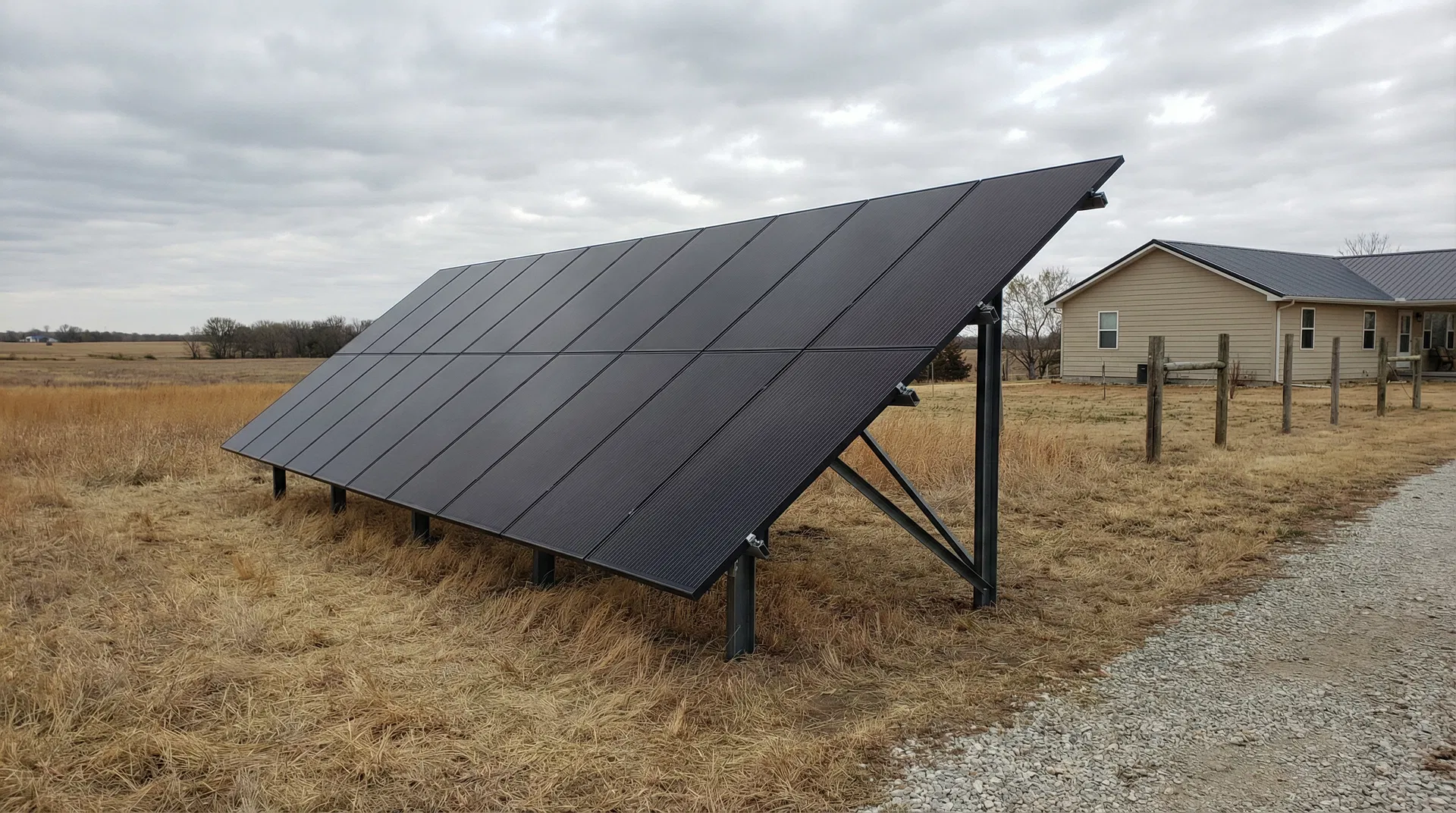
When we talk about acreage solar mountain view county properties, we're talking about systems that need to work harder than a suburban rooftop install. The 12-18 kW range we work in reflects that reality. A 15 kW system is common on a property with a house, a heated shop, and at least one additional outbuilding on the same meter. Larger footprints or higher-consumption operations push toward the top of that range. We install LONGi solar panels on every acreage system. They're a proven panel at a practical price point, with strong output-per-watt performance across a wide range of roof and ground orientations. For the inverter side, we use APsystems microinverters. On an acreage, where shading from trees, buildings, or a grain bin can hit individual panels at different times of day, microinverters matter. Each panel operates independently, so one shaded panel doesn't drag down the whole array. Rooftop installs work well when the main residence or shop has a suitable pitch and orientation, minimal shading, and enough roof area to carry the system size the property needs. Ground-mount systems make sense when the roof doesn't check all those boxes. Spread-out acreage layouts often have open land with a better solar window than the roof itself. We assess both options during the site review and recommend the configuration that fits the property, not the one that's easiest to install. Every system includes a production monitoring setup so you can track output from your phone. If something underperforms, you'll see it early.
Solar Planning for Mountain View County Properties
Acreage properties in this part of Alberta carry loads that most urban solar installers don't account for. A heated shop, a pump house, outbuildings, and a main residence on one meter can push monthly consumption well beyond what a standard residential system handles. That gap matters when you're sizing a system meant to offset real usage, not just the lights and the fridge. FortisAlberta serves the wire infrastructure here, and grid-tied solar feeds directly back through that connection. When your system produces more than the property uses at a given moment, that surplus goes back to the grid under Alberta's micro-generation rules. How credits are applied depends on your retailer and current tariff structure, so we review that as part of every design. We don't size systems off general rules of thumb. Your most recent power bill includes a 12-month usage graph, and that graph tells us what the property actually consumes across seasons. We build the design from that number. If the property has a shop on a separate meter, we factor that in too. The goal is a system that fits the property, not a generic package.
Electrical Site Review for Mountain View County Properties
Voltage Rise
Voltage rise happens when a solar system pushes power back onto the distribution line and raises the local voltage above acceptable limits. On rural distribution lines, where the grid infrastructure may serve fewer properties over longer spans, this effect can be more pronounced than on urban feeders. When voltage rise is a factor at a given connection point, it can constrain how much the inverters are permitted to export, which directly affects how we size the array and set inverter limits.
Single-Phase vs Three-Phase
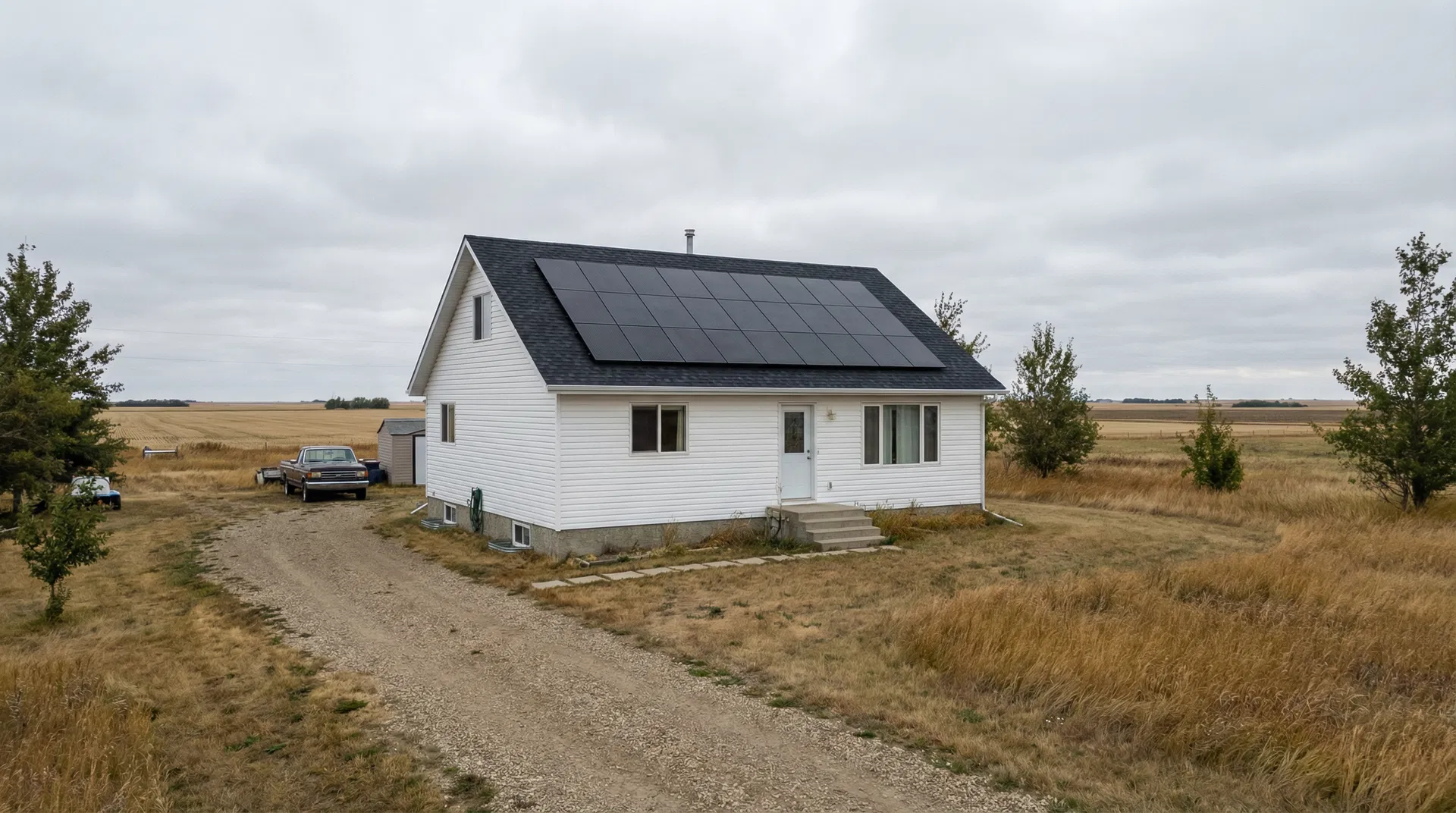
Rural Alberta acreages can have either single-phase or three-phase electrical service depending on what was installed at the time the property was connected. Three-phase service is common on properties with large motors, grain handling equipment, or commercial-scale shop loads. The phase configuration of the service affects which inverter models are compatible and what the maximum system capacity can be without a service upgrade, so we confirm this during the site review before finalizing any equipment selection.
Panel Infrastructure
Older electrical panels on acreage properties don't always have the breaker capacity to support a solar system in the 12-18 kW range. We assess the panel's rated amperage, the age and condition of the breakers, and whether the bus bar has room for a solar breaker sized to the system. If the existing panel can't safely support the connection, a panel upgrade is part of the project scope, and we include that in the quote rather than leaving it as a surprise after installation.
Service Entrance Review
The meter base and service entrance are part of every site review because their condition affects whether FortisAlberta will approve the micro-generation application. We check the meter base for compliance with current utility requirements, including socket type, sealing, and physical condition. If the meter base needs upgrading to meet FortisAlberta's interconnection standards, we identify that early so it's addressed as part of the project rather than discovered after the application is submitted.
Right-Sizing Solar for Mountain View County Properties
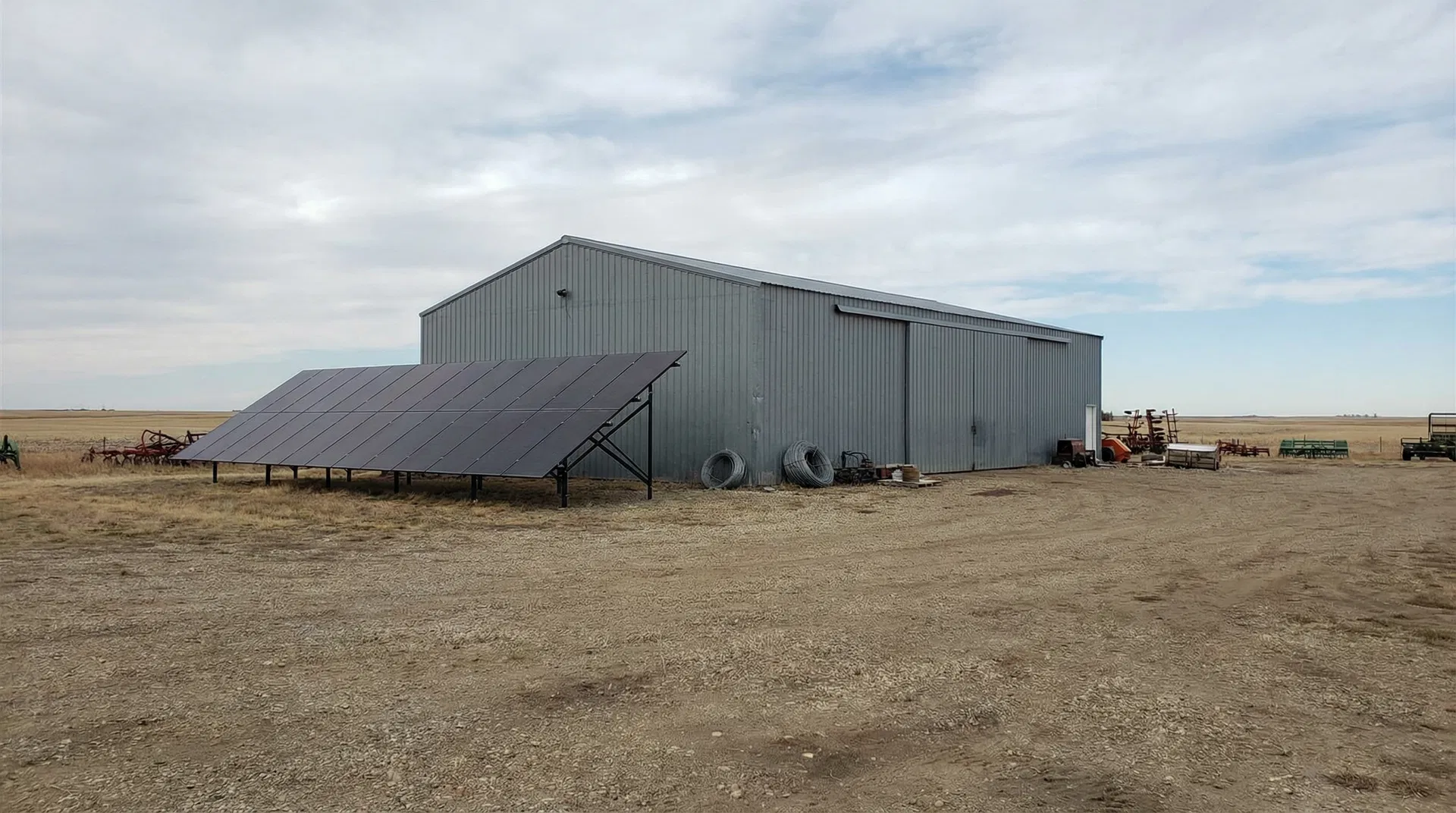
Rural acreages carry loads that stacking a few extra panels doesn't solve on its own. A property with a main residence, a heated shop, a pump house, and seasonal irrigation or grain handling equipment can consume two to three times what a comparable urban home uses. That's why systems in the 12-18 kW range are standard here, not oversized. The design has to account for every significant load on the meter, not just the house. Roof versus ground mount is a real decision, not a default. If the main residence or shop has a south-facing roof with a usable pitch, minimal shading, and enough square footage for the array size the property needs, rooftop is a straightforward choice. But many acreages have roof lines broken up by dormers, HVAC equipment, or nearby trees, and the available roof area doesn't always match the required system size. When that's the case, a ground-mount array placed in an open area of the yard often delivers better production and easier future maintenance access. We don't size systems from general rules of thumb. Your most recent power bill includes a 12-month usage graph that shows what the property actually consumed across all four seasons. That's the data we use to build a production model. We match the proposed system output to the actual usage pattern, not an assumed average, so the design reflects how the property operates, not how a similar property might operate somewhere else. We provide honest production estimates based on your actual power bills and site conditions, not inflated projections.
Typical Load Profiles We Design For Near Mountain View County
Home + Heated Shop
A main residence paired with a 40x60 heated shop is one of the most common acreage setups we size for in this area. The shop load, which includes radiant heat, lighting, compressors, and welding equipment, often rivals or exceeds the house load on its own. We pull the 12-month usage graph from your most recent power bill to see how that combined load varies across seasons, then size the array to offset as much of the annual consumption as the roof or ground-mount footprint allows.
Home + Outbuildings + Irrigation
Properties with a residence, multiple outbuildings, and a centre-pivot or surface irrigation pump have sharp seasonal load spikes that a flat production model doesn't capture well. A 16-18 kW system is often where these properties land, because summer pump loads add significant monthly consumption. We model production against the actual 12-month usage graph rather than an annual average, so the system is sized for the months that drive the bill, not just the shoulder season.
Acreage Residence with Electric Heat
All-electric acreage homes, particularly those heated with baseboard or an electric boiler rather than natural gas, carry winter loads that can push a standard residential system well beyond its offset capacity. A 12-15 kW system is typical for this profile, and orientation matters more than usual because winter production is lower and the heating load peaks at the same time. We assess roof pitch and shading carefully for these properties and discuss whether supplemental load management makes sense alongside the solar array.
FortisAlberta Interconnection in Mountain View County
FortisAlberta is the wire service provider for Mountain View County. Any grid-tied solar system installed here connects to that infrastructure, and the micro-generation application goes through FortisAlberta's interconnection process. We handle the application package on your behalf. That includes the system design documents, single-line diagrams, equipment specifications, and any site-specific information FortisAlberta requires to review the connection. You don't need to navigate that process yourself. FortisAlberta's review covers the technical side: voltage rise, grid capacity at the point of connection, and whether the proposed system meets their interconnection standards. The outcome of that review can affect system sizing, so we design with those constraints in mind from the start. Rural distribution lines in areas like this carry different characteristics than urban feeders, and we account for that in the design rather than treating it as an afterthought. We don't make promises about approval timelines or credit settlement terms, because both are determined by FortisAlberta's current process and your retailer's structure at the time of application. What we can tell you is that we've done this before, and we put together complete application packages that don't get sent back for missing information.
Project Economics and Design Review
| System Size | Annual Production | Year 1 Savings | Payback Period |
|---|---|---|---|
| 12-18 kW range, 15 kW typical |
Production, savings, and payback estimates require a property-specific design review and your most recent power bill, and will vary based on site conditions and current utility rules.
How We Work in Mountain View County
Bill and Load Review
We review your power bill to understand your energy use in Mountain View County and size the system to your actual consumption, not a generic estimate.
Site Assessment
We assess your roof or ground area, south-facing exposure, electrical service, and utility interconnection requirements specific to your property.
Design and Utility Application
We produce a system layout, production estimate, and cost summary, then submit your micro-generation application to your utility on your behalf.
Installation and Commissioning
Our crew installs racking, panels, inverter, and electrical connections. All work is performed by licensed electricians. We commission and test before handoff.
Current Program and Interconnection Review
Utility connection review
FortisAlberta reviews all micro-generation interconnection applications for properties in Mountain View County. Range Road Solar prepares and submits the full technical design package on your behalf, including system specifications and single-line diagrams. You don't need to deal directly with the utility to get connected.
Current program review
Commercial, farm, and residential solar installations may be eligible for various programs depending on ownership structure and current rules. We review what applies to your property type at the time of design. Eligibility criteria and program availability can change, so we confirm what's current during the design review rather than making assumptions upfront.
Frequently Asked Questions
Get a Solar Assessment for Mountain View County
Submit a recent power bill and we will review your consumption and provide an honest assessment for your Mountain View County property. No obligation.
(587) 330-7502 Book a CallRelated Resources
More Solar Services in Mountain View County