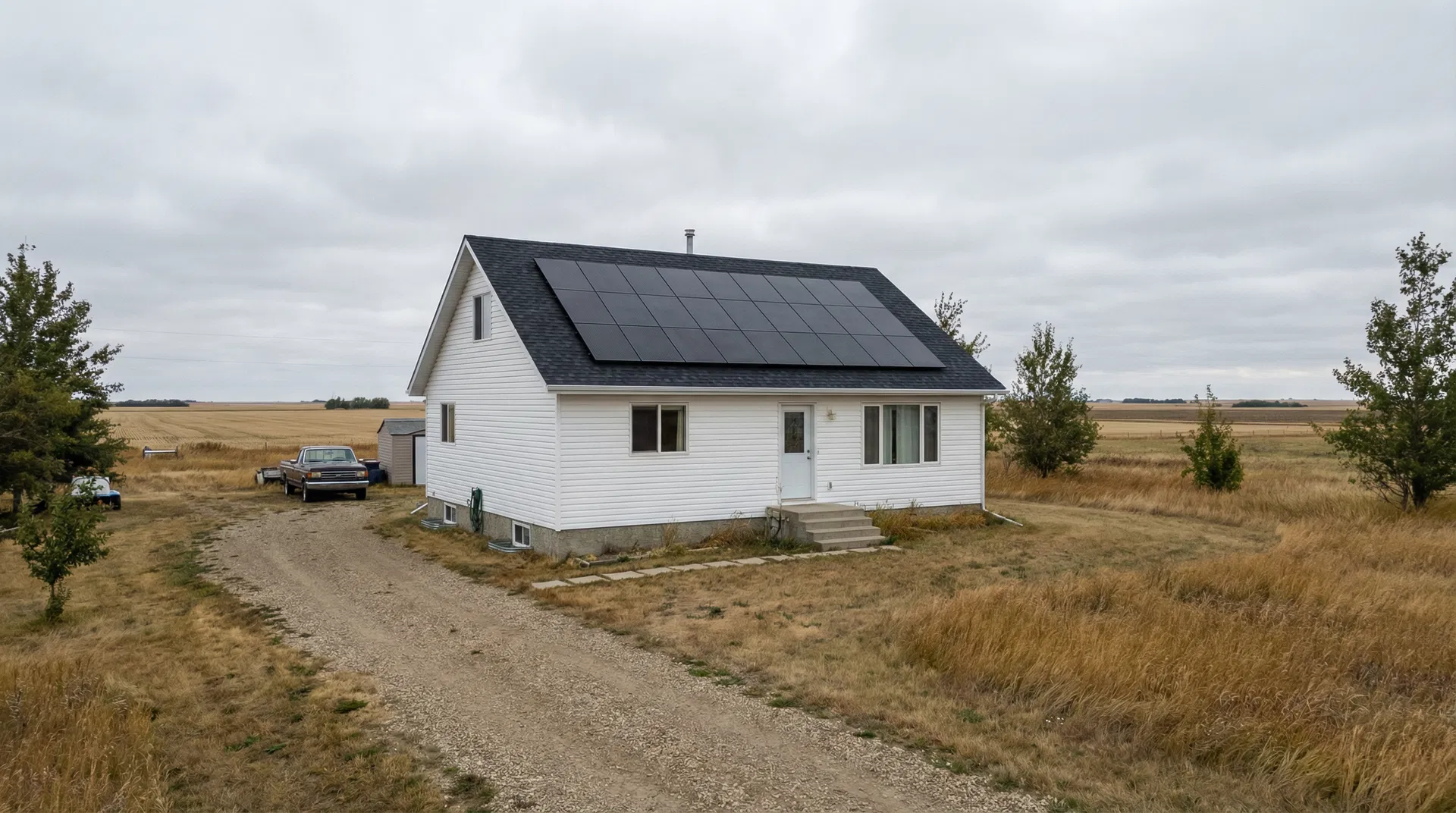
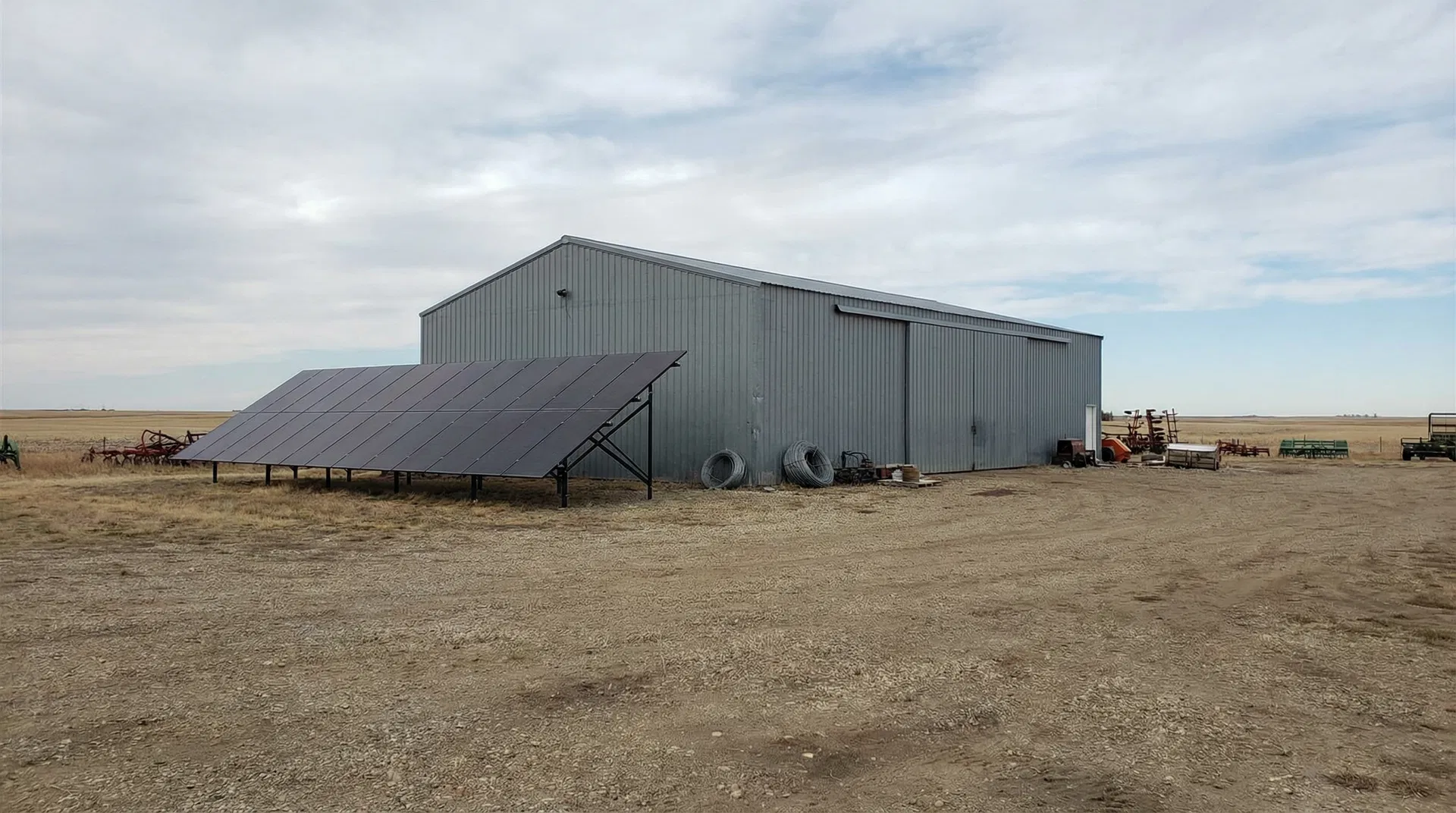
Solar installation in Mountain View County means designing around acreages, shelterbelts, and outbuildings, not a standard suburban roof. We install LONGi panels paired with APsystems microinverters on most residential projects, a combination that lets us configure strings around partial shading from trees, grain bins, or a detached shop without losing production on the rest of the array. Microinverters also make per-panel monitoring straightforward, which matters when the array is split across a house roof and a ground-mount section. Systems in this range typically run 8 to 12 kW, with 10 kW as the common starting point for a house with a shop or well pump attached to the same meter. On acreage and farm properties in the area, we see a roughly even split between roof-mount and ground-mount installations. Roof-mount works when there's a clean south or west-facing slope with minimal shading. Ground-mount comes into play when the roof pitch is wrong, trees or buildings throw shade across most of the day, or there's simply open land available and the owner would rather keep the roof clear. Every design starts with your most recent power bill, which includes a 12-month usage graph FortisAlberta prints right on the statement. That graph, combined with a site visit to check roof condition, shading, and panel capacity, is what actually determines system size, not a flat per-square-foot estimate.
Solar Planning for Mountain View County Properties
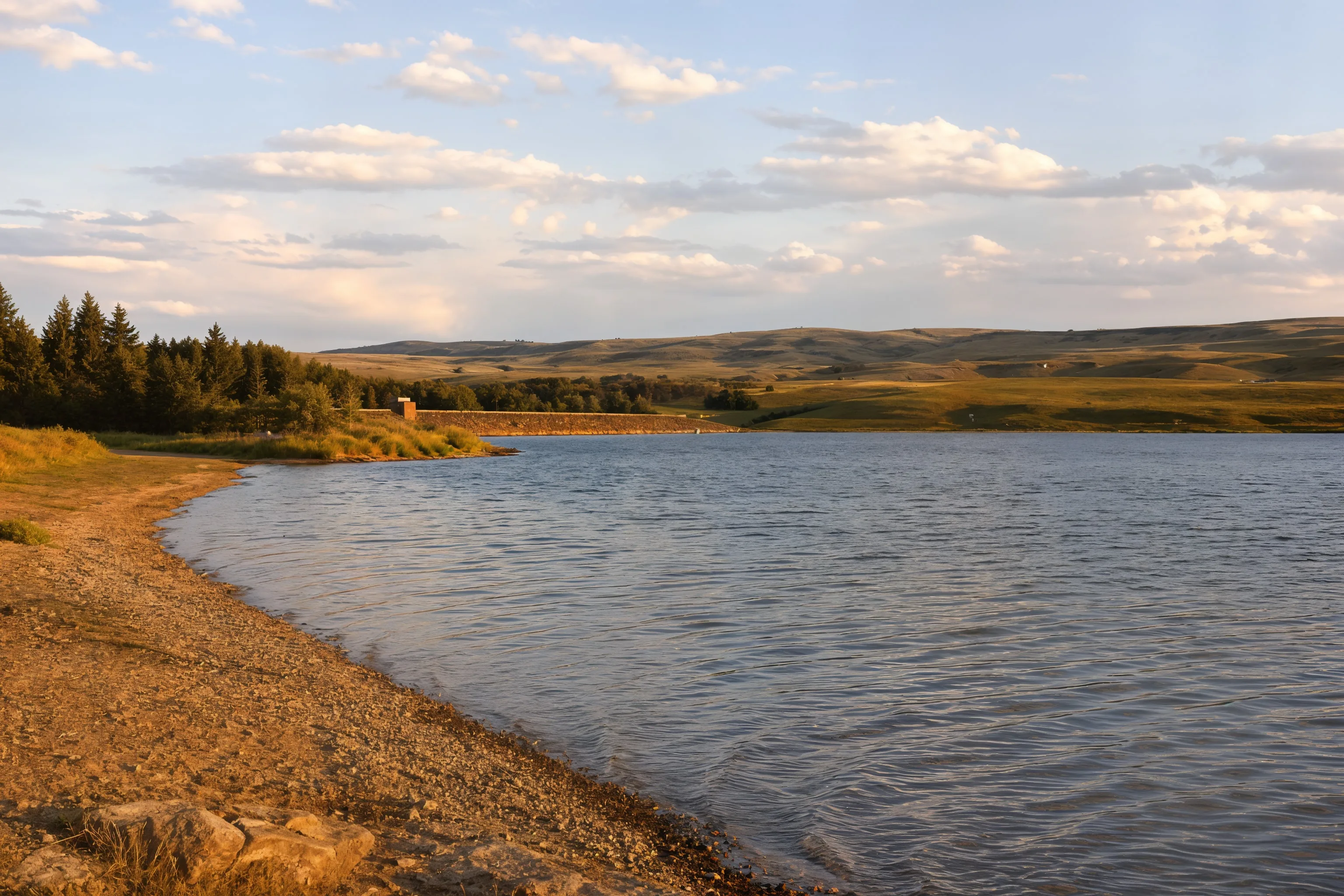
The area stretches across prime agricultural land between Olds, Didsbury, and Carstairs, and most of the properties we design for here are acreages, farms, and rural homes rather than tight subdivision lots. It was incorporated January 1, 1961, as the County of Mountain View No. 17, and it's held onto that working-land character ever since: agriculture remains the backbone of the local economy, alongside the Olds-Didsbury Regional Airport, which anchors a fair amount of commercial and industrial activity nearby. With a population of 12,981, this isn't a dense grid. Properties are spread out, lot sizes vary widely, and a lot of homes share the yard with a shop, a barn, or irrigation equipment that pulls its own load. That mix of uses is exactly why we don't quote a system size off a postal code. Every property we look at here gets a site visit and a review of the most recent power bill before we talk numbers. Roof pitch, shading from shelterbelts or outbuildings, available ground for a ground-mount array, and what FortisAlberta's service drop actually looks like at the pole all factor into the design. We size systems to the loads you've actually got, not a generic rule of thumb.
Electrical Site Review for Mountain View County Properties
Voltage Rise
Voltage rise happens when a solar inverter pushes power back through a long or lightly loaded distribution line, raising the voltage at the point of connection. Rural feeders out here can run longer distances between the transformer and the meter than a tight town grid, which affects how much headroom an inverter has before it starts clipping output. We check this during the site review so the system is sized and configured to stay within a safe operating range rather than tripping on voltage limits.
Single-Phase vs Three-Phase
Rural properties in this area can have either single-phase or three-phase electrical service, depending on when the property was connected and what kind of equipment it runs. A shop with large motors or grain-handling equipment is more likely to have three-phase service, while a standalone home is often single-phase. We confirm which one you have early, because it determines which inverters we can use and how much total system capacity the service can support.
Panel Infrastructure
A lot of rural properties around here are running electrical panels installed decades before anyone was adding solar to the mix. We check the panel's age, its busbar rating, and how much spare breaker capacity it has before finalizing a design. If the panel can't support the added breakers for a solar system, the upgrade usually means a new panel sized to handle both the existing loads and the new solar connection.
Service Entrance Review
We review the service entrance and meter base condition on every project, since FortisAlberta's micro-generation application requires equipment that meets their current standards. An older or corroded meter base can hold up an interconnection application even if the rest of the electrical system is fine. When an upgrade is needed, we fold it into the project scope so it's handled before the FortisAlberta inspection, not discovered partway through.
Right-Sizing Solar for Mountain View County Properties
Rural systems out here tend to run larger than a typical in-town installation, and that's a function of what's actually drawing power. A house alone might need one thing, but add a heated shop, a well pump, grain-handling equipment, or irrigation, and the combined load looks a lot different. We size for the property as a whole, not just the house. Roof versus ground mount comes down to what the site actually offers. If there's a clean south or west-facing roof slope without shade from shelterbelts, grain bins, or outbuildings, roof-mount usually makes sense. When the roof pitch is wrong for solar, trees or buildings shade most of the usable roof area through the day, or the yard has open land the owner is fine dedicating to an array, ground-mount is often the better call. It also gives us more flexibility on orientation and tilt than a fixed roofline does. Either way, we size the system from the 12-month usage graph printed on your most recent power bill, not a flat rule-of-thumb number like watts per square foot. That graph shows seasonal swings, which matters for a property running irrigation part of the year or heating a shop through the winter. Combined with a site visit to confirm roof or ground conditions, that's what determines the system size we actually propose.
Typical Load Profiles We Design For Near Mountain View County
Home + Heated Shop
A lot of our projects around here pair a house with a heated shop used for equipment storage or a small workshop. The shop's heating and any power tools run alongside normal household loads, and we size the system off the combined usage shown on your most recent power bill rather than treating the shop as an afterthought. Depending on roof space and shading, these projects often end up split between a house roof and a small ground-mount or shop-roof section.
Acreage with Well Pump and Irrigation
Acreages with a well pump and seasonal irrigation see usage spikes that don't show up on a house-only system. We look at the 12-month usage graph on your power bill to understand when those spikes happen and how big they are, then size the array and microinverter configuration to cover the combined load rather than just the baseline household draw.
Grain Handling or Farm Equipment
Properties running grain dryers, augers, or other farm equipment on the same meter as the house have a load profile that's heavily seasonal, with sharp jumps at harvest. We size these systems around that full picture, factoring in whether the service is single-phase or three-phase and what the panel can support, so the array is matched to actual demand rather than the quietest month of the year.
FortisAlberta Interconnection in Mountain View County
FortisAlberta is the wire service here, and any grid-tied solar system in this area has to go through their micro-generation interconnection process before it's turned on. That means submitting an application with system specifications, single-line electrical diagrams, and equipment data sheets for the LONGi panels and APsystems microinverters we're installing. Range Road Solar prepares and submits this paperwork on your behalf. We've gone through FortisAlberta's process enough times to know what their reviewers look for, and we build the application package to match their current requirements rather than guessing. What we won't do here is promise a specific approval timeline, a credit structure, or a payout rate. Those details depend on FortisAlberta's current tariff rules and your retailer's current policies, and they change. We confirm whatever applies to your property at the time of your design review, so you're working from current information instead of something that might be a year out of date.
Project Economics and Design Review
| System Size | Annual Production | Year 1 Savings | Payback Period |
|---|---|---|---|
| 8-12 kW range, 10 kW typical |
Production, savings, and payback figures require a property-specific design review using your most recent power bill, not a generic estimate.
How We Work in Mountain View County
Bill and Load Review
We review your power bill to understand your energy use in Mountain View County and size the system to your actual consumption, not a generic estimate.
Site Assessment
We assess your roof or ground area, south-facing exposure, electrical service, and utility interconnection requirements specific to your property.
Design and Utility Application
We produce a system layout, production estimate, and cost summary, then submit your micro-generation application to your utility on your behalf.
Installation and Commissioning
Our crew installs racking, panels, inverter, and electrical connections. All work is performed by licensed electricians. We commission and test before handoff.
Current Program and Interconnection Review
Utility connection review
FortisAlberta reviews every micro-generation interconnection application against their current technical standards before a system is connected. Range Road Solar prepares the full design package, including electrical diagrams and equipment specifications for the LONGi panels and APsystems microinverters, and submits it on your behalf.
Current program review
Eligibility for residential, farm, and commercial solar varies by property type and changes as rules get updated. We review your property against whatever current requirements apply at the time of your design, rather than relying on rules that may no longer be in effect.
Frequently Asked Questions
Get a Solar Assessment for Mountain View County
Submit a recent power bill and we will review your consumption and provide an honest assessment for your Mountain View County property. No obligation.
(587) 330-7502 Book a CallRelated Resources
More Solar Services in Mountain View County