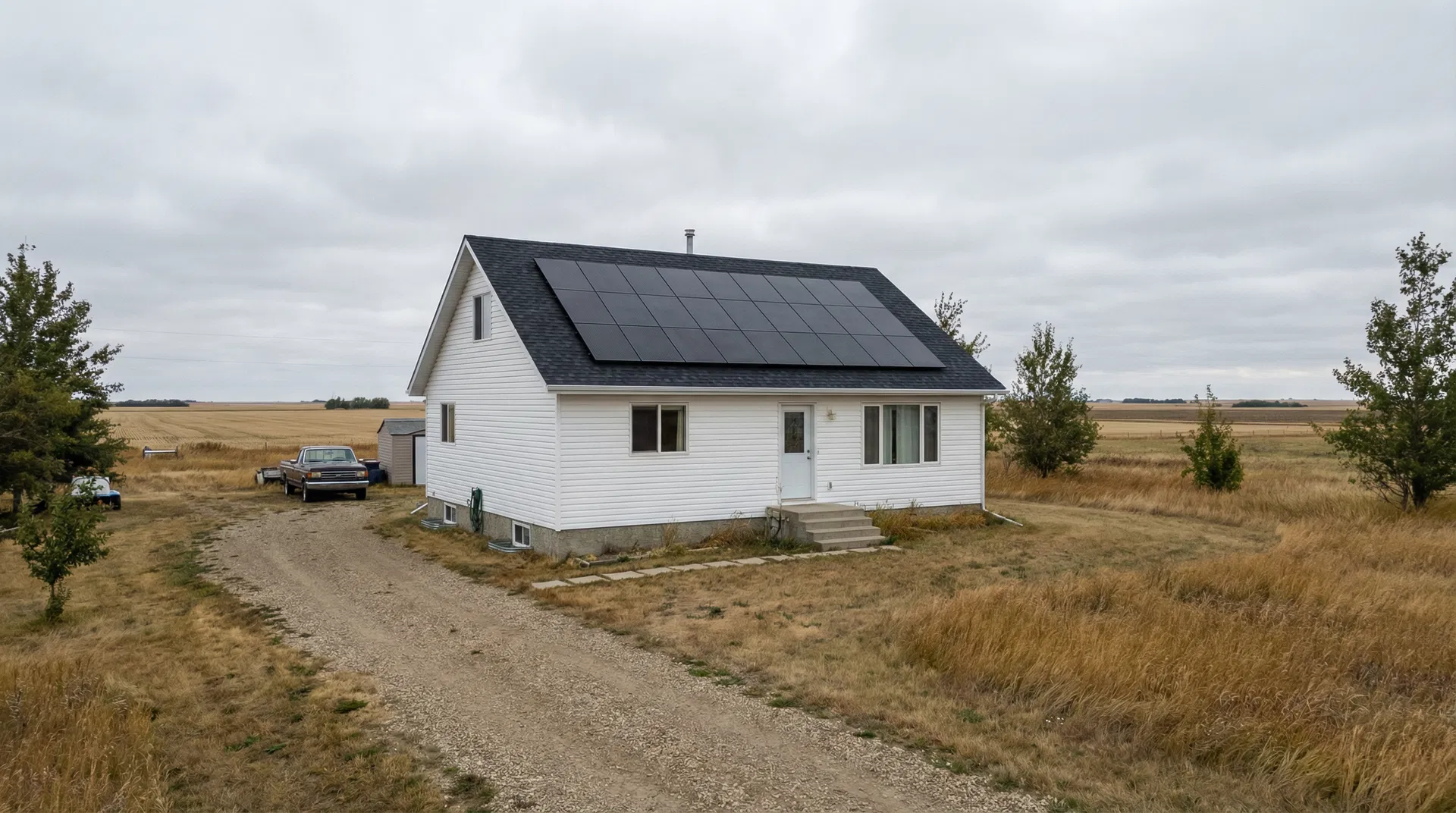
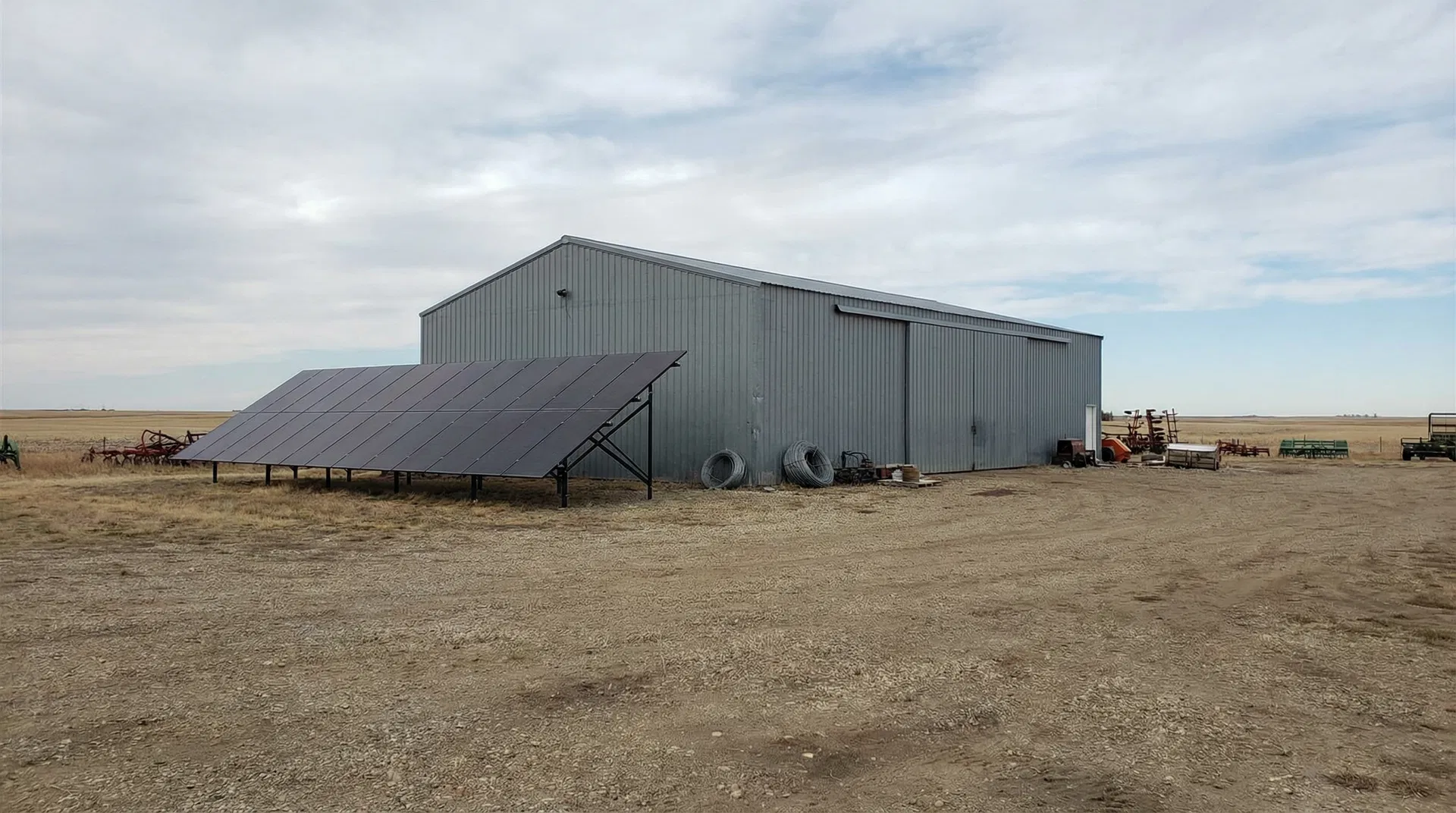
Solar for Mountain View County shops and outbuildings from Range Road Solar runs 8 to 20 kW depending on the building and the loads it carries, with 12 kW the typical size we land on after a site review. Every system uses LONGi panels paired with APsystems microinverters, which let us mix roof sections facing different directions or add ground-mount arrays without the whole system depending on one string. That flexibility matters on a property where the shop roof might face the wrong way, or where there's no roof at all and the array has to sit in a corner of the yard instead. We install both grid-tied and standalone configurations. A grid-tied shop system ties into the same FortisAlberta service as the rest of the property and offsets what the building draws. A standalone system makes sense for an outbuilding that's off the main service entirely, running its own loads without a grid connection. Rooftop mounts work well on newer pole-barn style shops with a clean, unshaded south or west-facing slope. Ground-mount racking is often the better call for older outbuildings, machine sheds with multiple roof penetrations already, or buildings surrounded by trees or other structures that shade the roof for part of the day. Before we quote anything, we walk the property, look at the electrical panel feeding the building, and pull the usage graph off your most recent power bill. That tells us whether the building's draw justifies 8 kW or 20 kW, and whether the panel or service entrance needs work before a system gets added.
Solar Planning for Shop and Outbuilding Properties in the County
Mountain View County was incorporated as the County of Mountain View No. 17 on January 1, 1961, and it's grown into one of the larger rural municipalities in the region. The 2021 census counted 12,981 residents, down slightly from 13,074 the previous count, spread across a landscape of farms, acreages, and working shops rather than one town centre. That spread-out pattern matters for solar: a property here might run a house, a heated shop, and a grain-handling outbuilding all on one meter, and all three add up fast on a power bill. Agriculture remains the backbone of the local economy, and a lot of that work happens in metal buildings with three-phase or single-phase service that was never built with solar in mind. Range Road Solar treats every shop and outbuilding system in the area as its own design problem. We look at the building's electrical service, the roof or yard layout, and your most recent power bill before we talk numbers. FortisAlberta handles the wire side of the interconnection application, and we handle the paperwork and the design package that goes with it. Nothing about system size or production gets guessed here. It gets measured against what the property actually uses, which is the only way a shop solar system in this county earns its keep.
Electrical Site Review for Shop and Outbuilding Properties
Voltage Rise
Voltage rise happens when a property sits a long way down a rural distribution line, and the voltage at the end of that line runs a bit different than at the transformer. On a shop or outbuilding system, that can affect how hard an inverter works and where it starts clipping output. We check the distribution conditions feeding the building as part of sizing the system, so the inverter and panel count match what the line can actually support.
Single-Phase vs Three-Phase
Shops and outbuildings in this area show up with both single-phase and three-phase service, depending on when the building was wired and what equipment it runs. Three-phase shops, especially ones running welders or bigger motors, call for different inverter selection than a single-phase setup. We confirm which service type feeds the building before we size the system, because the wrong assumption here means the wrong equipment order.
Panel Infrastructure
A lot of outbuildings on rural properties are running older panels that were sized for lights and a few outlets, not a solar system on top of existing loads. We check the breaker capacity and the age of the panel before we finalize a design, looking for whether it can take an added solar breaker safely. If it can't, the design includes a panel upgrade, and we tell you that cost before the project moves forward, not after.
Service Entrance Review
The service entrance and meter base are part of what we walk through on every site visit, because their condition affects what FortisAlberta needs to see on the micro-generation application. An older or undersized meter base can hold up the paperwork or need replacement before a system gets added. We flag that during the site review so it's priced and planned for upfront instead of showing up as a surprise mid-install.
Right-Sizing Solar for Shop and Outbuilding Properties
A shop or outbuilding system in Mountain View County almost never gets sized like a city rooftop. A house alone is one load. A property out here is usually a house plus a heated shop, plus maybe a grain dryer, an irrigation pump, or a second outbuilding, all pulling from the same service or feeding into one design. That's why systems in this range run from 8 kW up through 20 kW instead of sitting at one number. Roof versus ground mount comes down to what the building and the yard actually offer. If the shop roof is clean, unshaded, and faces a reasonable direction, rooftop racking is usually the simpler and cheaper call. If the roof is shaded by trees or a neighbouring building, pitched wrong, already covered in vents and penetrations, or if the yard has open land and the roof doesn't have the room, ground mount becomes the better option. Some properties end up with a mix of both. We don't size off a rule of thumb or a square-footage guess. We pull the 12-month usage graph off your most recent power bill and read how the load moves across the year, then match that against the building's electrical service and the space available for panels. That combination, your bill and the site itself, is what tells us whether 8 kW covers it or whether the property needs something closer to 20.
Typical Load Profiles We Design For on Rural Shops and Outbuildings
Home + Heated Shop
This is the most common setup we see: a house and a separate heated shop sharing one service, with the shop's heater and lighting running through the colder months. We size the system around how that combined load shows up on the usage graph from your most recent power bill, not around the house alone. A heated shop often changes the sizing conversation more than the house does.
Working Farm Shop with Shop Tools
Properties running welders, compressors, or bigger motor loads out of a working shop need an inverter and system sized around short, heavy draws, not just steady background use. Three-phase service is common on these properties, which changes which APsystems microinverter configuration makes sense. We look at what equipment actually runs in the shop before we finalize the design.
Standalone Outbuilding, Off the Main Service
Some outbuildings on acreages and farms sit far enough from the house that running grid power to them doesn't make sense, so the solar system runs standalone instead of tying into FortisAlberta's grid. These systems get sized around exactly what that building needs to run on its own, independent of the rest of the property's usage. It's a different design conversation than a grid-tied shop system.
FortisAlberta Interconnection in Mountain View County
FortisAlberta is the wire service for properties in Mountain View County, and any shop or outbuilding system that ties into the grid goes through FortisAlberta's micro-generation interconnection process. Range Road Solar prepares and submits that application as part of the install, including the single-line diagram, equipment specifications for the LONGi panels and APsystems microinverters, and the site information FortisAlberta asks for. Because a lot of properties here run shops and outbuildings on a separate service or a shared meter with the house, we confirm exactly how the building is metered before the application goes in. That's part of the site review, not an afterthought. A standalone system that never connects to the grid doesn't need this step at all, and we'll tell you upfront which category your project falls into. We don't guess at FortisAlberta's current rules or timelines, and we won't quote you numbers we can't back up. What the application requires and how it's processed is confirmed against FortisAlberta's current process at the time we design your system, and we walk you through what that means for your specific property before you sign anything.
Project Economics and Design Review
| System Size | Annual Production | Year 1 Savings | Payback Period |
|---|---|---|---|
| 8-20 kW range, 12 kW typical |
Production, savings, and payback figures require a property-specific design review and your most recent power bill, and we won't quote them before that review is done.
How We Work in Mountain View County
Bill and Load Review
We review your power bill to understand your energy use in Mountain View County and size the system to your actual consumption, not a generic estimate.
Site Assessment
We assess your roof or ground area, south-facing exposure, electrical service, and utility interconnection requirements specific to your property.
Design and Utility Application
We produce a system layout, production estimate, and cost summary, then submit your micro-generation application to your utility on your behalf.
Installation and Commissioning
Our crew installs racking, panels, inverter, and electrical connections. All work is performed by licensed electricians. We commission and test before handoff.
Current Program and Interconnection Review
Utility connection review
FortisAlberta reviews the grid connection application for any shop or outbuilding system that ties into the grid, and Range Road Solar prepares the full design package that goes with it. We handle the single-line diagram, equipment specs, and site details FortisAlberta requires as part of the application.
Current program review
Eligibility for any current commercial, farm, or residential program is reviewed against the rules in place at the time we design your system, not assumed from what applied last year. We check this for every property individually as part of the design review.
Frequently Asked Questions
Get a Solar Assessment for Mountain View County
Submit a recent power bill and we will review your consumption and provide an honest assessment for your Mountain View County property. No obligation.
(587) 330-7502 Book a CallRelated Resources
More Solar Services in Mountain View County