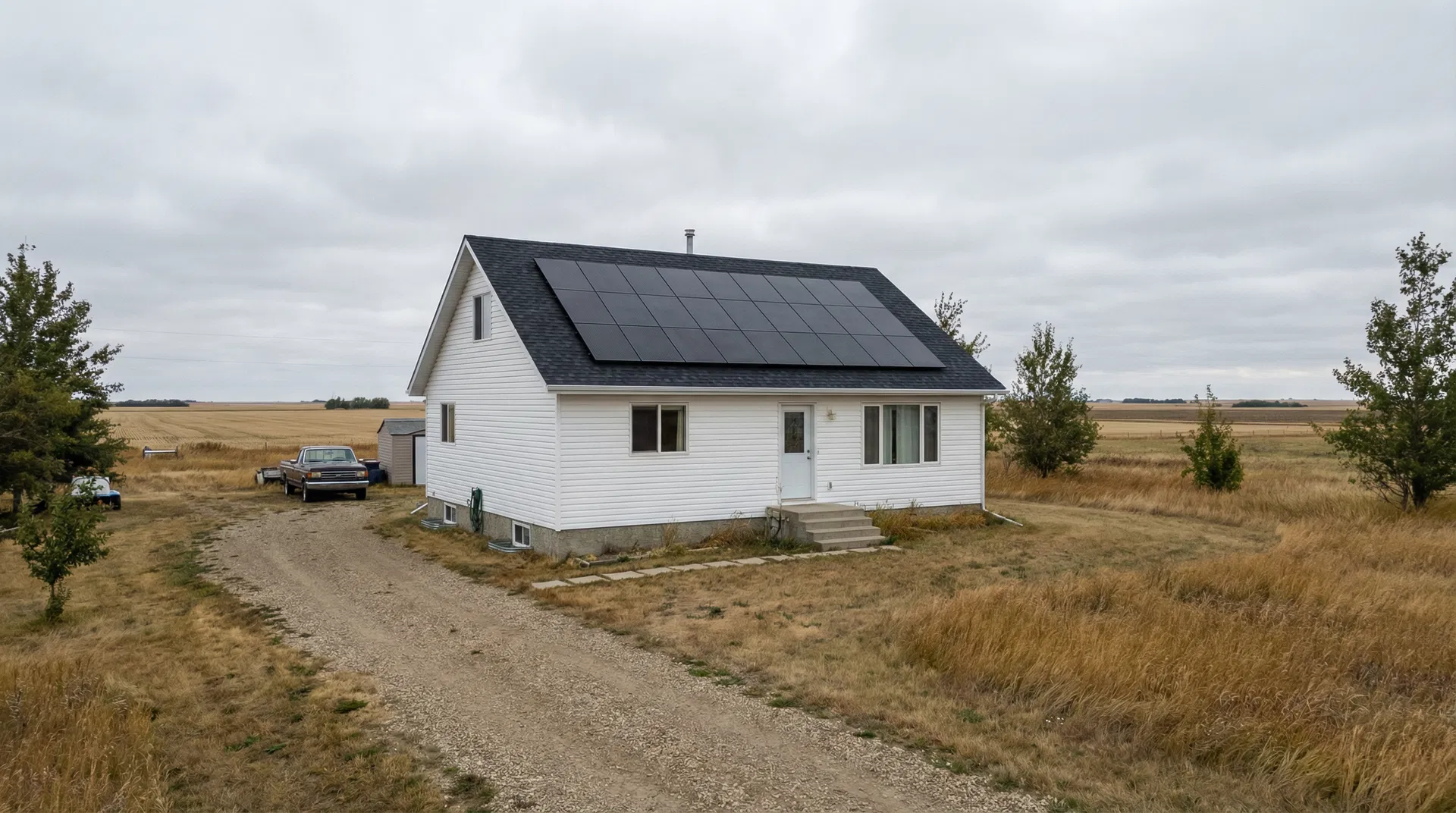
Solar Mountain View County installs from Range Road Solar follow the same process whether you're on a quarter section outside Didsbury or a shop lot outside Carstairs: a site visit, a system design built around LONGi panels and APsystems microinverters, the permit package, and the FortisAlberta interconnection application that gets your system energized. LONGi panels hold up well on the exposed roof lines and ground-mount racking we see on farm shops and outbuildings, and APsystems microinverters let us build a system in smaller strings, which matters on properties where part of a roof gets shaded by a grain bin, a shelterbelt, or a second building. On acreages with a home, a heated shop, and maybe a barn, that flexibility means we can put panels where the sun actually lands instead of forcing everything onto one roof face. We install on asphalt shingle, metal roofing, and ground-mount racking, and we size every array to the loads you actually run: well pumps, heated shops, grain dryers, and whatever else is on the property. Range Road Solar handles the whole job, from the first site visit through the final FortisAlberta sign-off, so you're not coordinating between three different contractors to get one system turned on.
Solar Planning for Mountain View County Properties
This part of rural Alberta is still a working agricultural landscape: grain farms, cattle operations, acreages, and rural homes spread across a wide area that FortisAlberta runs power to. That mix matters when we design a solar system, because a home with a detached shop, a grain bin yard, or a calving barn draws power very differently than a bungalow on a quarter-acre lot in town. Agriculture built this area, and it's still described as prime agricultural land that supports grain and livestock operations alongside the acreages and shops we size systems for. We also see a fair number of properties near the Olds-Didsbury Regional Airport, where open, flat land often makes a ground-mount array more practical than squeezing panels onto an outbuilding roof with a bad pitch or a shade problem. No two properties here look the same, so we don't size a system off a rule of thumb. We walk the site, check whether your service is single-phase or three-phase, and go through your most recent power bill before we recommend a system size or layout.
Electrical Site Review for Mountain View County Properties
Voltage Rise
Voltage rise happens when power pushes back onto a long rural distribution line, and it tends to show up more on properties farther from a transformer. If voltage climbs too high at your inverter, the inverter can clip output to protect itself, which is one of the things we check for when sizing a system. We measure voltage on site rather than assume it, because it directly affects how big a system your service can handle without nuisance tripping.
Single-Phase vs Three-Phase
Rural Alberta properties run on single-phase or three-phase service depending on what's hooked up to the yard, and that split changes which inverters we can use and how much capacity we can put on the line. A shop with three-phase motors needs a different equipment lineup than a house on single-phase service. We confirm your service type on site before we finalize equipment, not after.
Panel Infrastructure
A lot of rural properties are still running electrical panels that are decades old, so we check breaker capacity and panel age before we size anything. We're looking for available breaker space, the panel's rated capacity, and whether the existing wiring can handle another source feeding in. If the panel can't support the system, an upgrade means a new panel sized for both your existing loads and the solar addition.
Service Entrance Review
We check the condition of your service entrance and meter base as part of every site visit, because FortisAlberta's micro-generation application requires that equipment to meet current standards. An older or damaged meter base can hold up the application even if the solar system itself is ready to go. If an upgrade is needed, we scope it as part of the project so it doesn't become a surprise after the application's already in.
Right-Sizing Solar for Mountain View County Properties
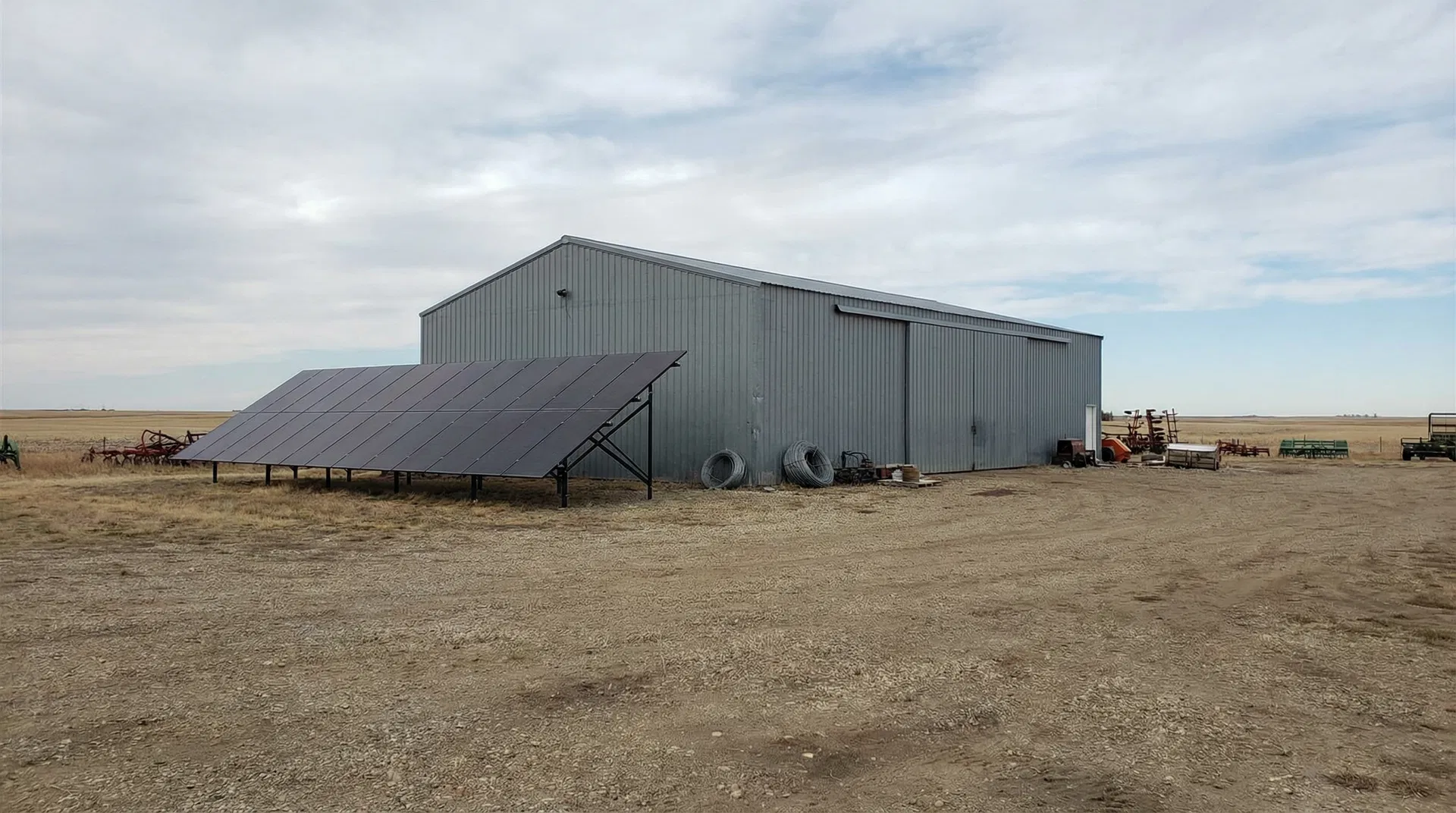
Rural properties almost always carry more electrical load than a house in town, because there's usually more than one building drawing power: the home, a heated shop, maybe a barn or a grain-handling setup, sometimes an irrigation pump. That's a big part of why systems out here tend to land at the larger end of the 8 to 15 kW range we install, rather than the smaller systems common on an in-town bungalow. Roof versus ground mount comes down to the specific property. If trees or buildings shade the roof, if the pitch or orientation isn't great, or if the yard has open space to spare, a ground-mount array is often the better call even though it costs more to install than a roof system. We look at all of that on site, not from a satellite photo. We size every system from the 12-month usage graph on your most recent power bill, because that graph shows your actual load pattern across the whole year, including seasonal spikes from grain drying or irrigation. That's a far better starting point than a rule-of-thumb number based on square footage or occupant count. Bring us that bill and we'll build the design around what your property actually uses, not an average.
Typical Load Profiles We Design For Near Mountain View County
Home Plus Heated Shop
This is the most common setup we see: a house and a detached shop with in-floor heat or a forced-air unit, both running off the same service. We look at your most recent power bill to see how much of your winter load comes from the shop versus the house, since that split changes how we size the array and where we put production priority.
Farmyard with Grain Handling
Grain dryers, augers, and bin aeration fans create short, heavy load spikes that show up clearly on the 12-month usage graph on your power bill. We design around those spikes rather than your average monthly draw, because sizing off an average would undersize the system for harvest season.
Acreage with Irrigation or Livestock
A yard with an irrigation pump, a water system for livestock, and outbuilding lighting has a steadier, more spread-out load than a grain operation. We size these systems based on the pattern in your most recent power bill and the panel capacity you've actually got, since livestock and irrigation loads often run in different seasons than a home's heating load.
FortisAlberta Interconnection in Mountain View County
FortisAlberta is the wire service across the county, and every grid-tied solar system we install here goes through FortisAlberta's micro-generation connection process. That means a technical application tied to your specific service, a look at your existing meter base and service entrance, and sign-off before the system is allowed to operate in parallel with the grid. Range Road Solar prepares and submits that application for you. We handle the single-line diagram, the equipment specifications for the LONGi panels and APsystems microinverters, and the back-and-forth with FortisAlberta so you're not the one on hold trying to figure out what form you need. What we won't do is promise you a specific approval timeline or tell you how credits get settled on your account. Those are FortisAlberta's rules, and we point you to your retailer and FortisAlberta directly for the current details rather than guess.
Project Economics and Design Review
| System Size | Annual Production | Year 1 Savings | Payback Period |
|---|---|---|---|
| 8-15 kW range, 10 kW typical |
Production, savings, and payback figures are only meaningful once we've run a design specific to your property and reviewed your most recent power bill.
How We Work in Mountain View County
Bill and Load Review
We review your power bill to understand your energy use in Mountain View County and size the system to your actual consumption, not a generic estimate.
Site Assessment
We assess your roof or ground area, south-facing exposure, electrical service, and utility interconnection requirements specific to your property.
Design and Utility Application
We produce a system layout, production estimate, and cost summary, then submit your micro-generation application to your utility on your behalf.
Installation and Commissioning
Our crew installs racking, panels, inverter, and electrical connections. All work is performed by licensed electricians. We commission and test before handoff.
Current Program and Interconnection Review
Utility connection review
FortisAlberta reviews every micro-generation connection application on a case-by-case basis, looking at your service, your equipment, and your meter base. Range Road Solar prepares the full design package, including the single-line diagram and equipment specs, and submits it on your behalf.
Current program review
Residential, farm, and commercial properties can qualify for different treatment under current provincial and utility rules, and those rules change. We check your property against whatever's current at the time we design your system, rather than relying on what applied last year.
Frequently Asked Questions
Get a Solar Assessment for Mountain View County
Submit a recent power bill and we will review your consumption and provide an honest assessment for your Mountain View County property. No obligation.
(587) 330-7502 Book a CallRelated Resources
More Solar Services in Mountain View County