Mountain View County · Acreage solar systems
Acreage Solar Didsbury: Systems Built for Rural Loads
Acreage properties around Didsbury run bigger loads than a standard city home. We design 12-18 kW systems around your actual usage, roof conditions, and FortisAlberta interconnection rules.
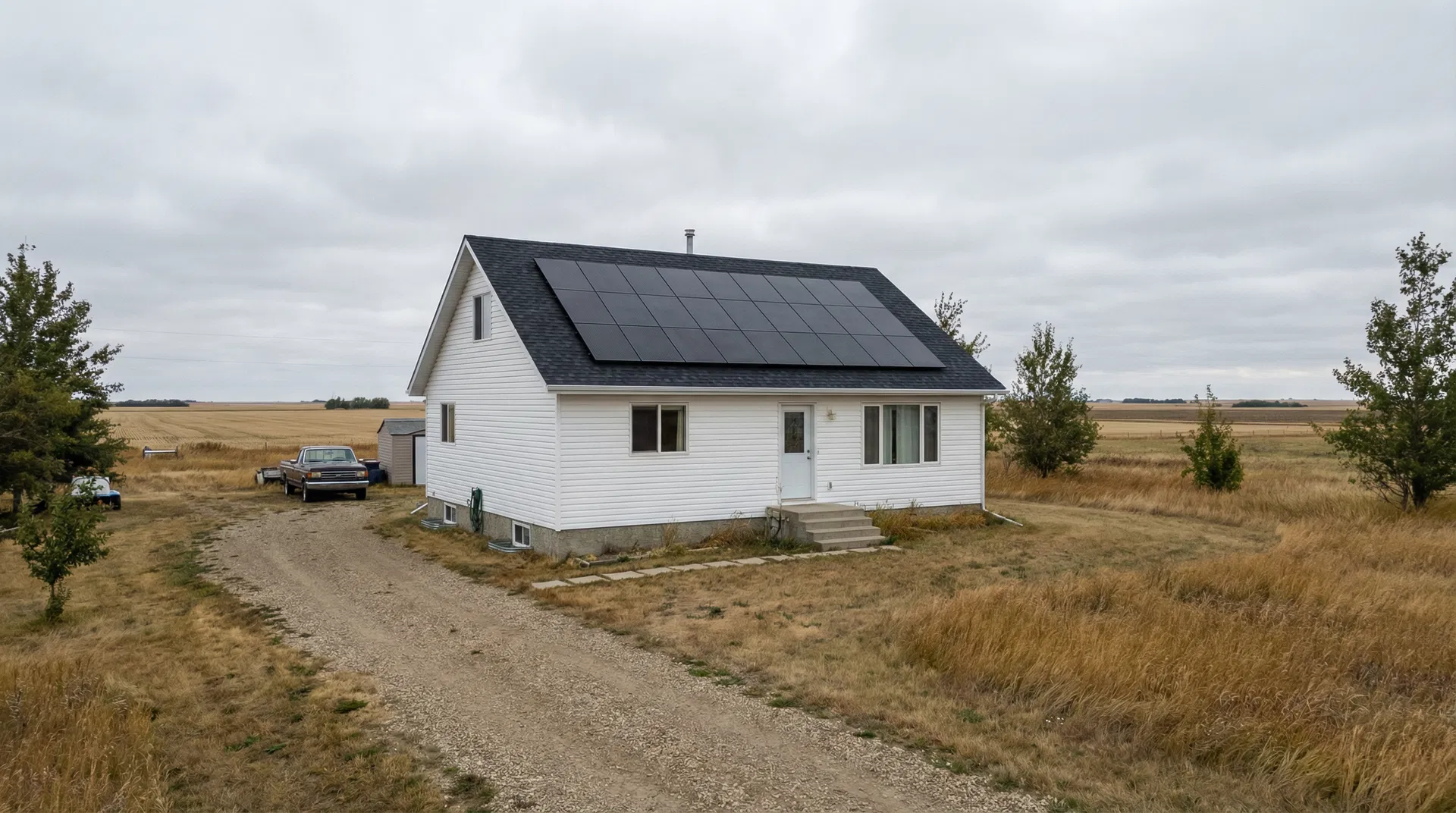
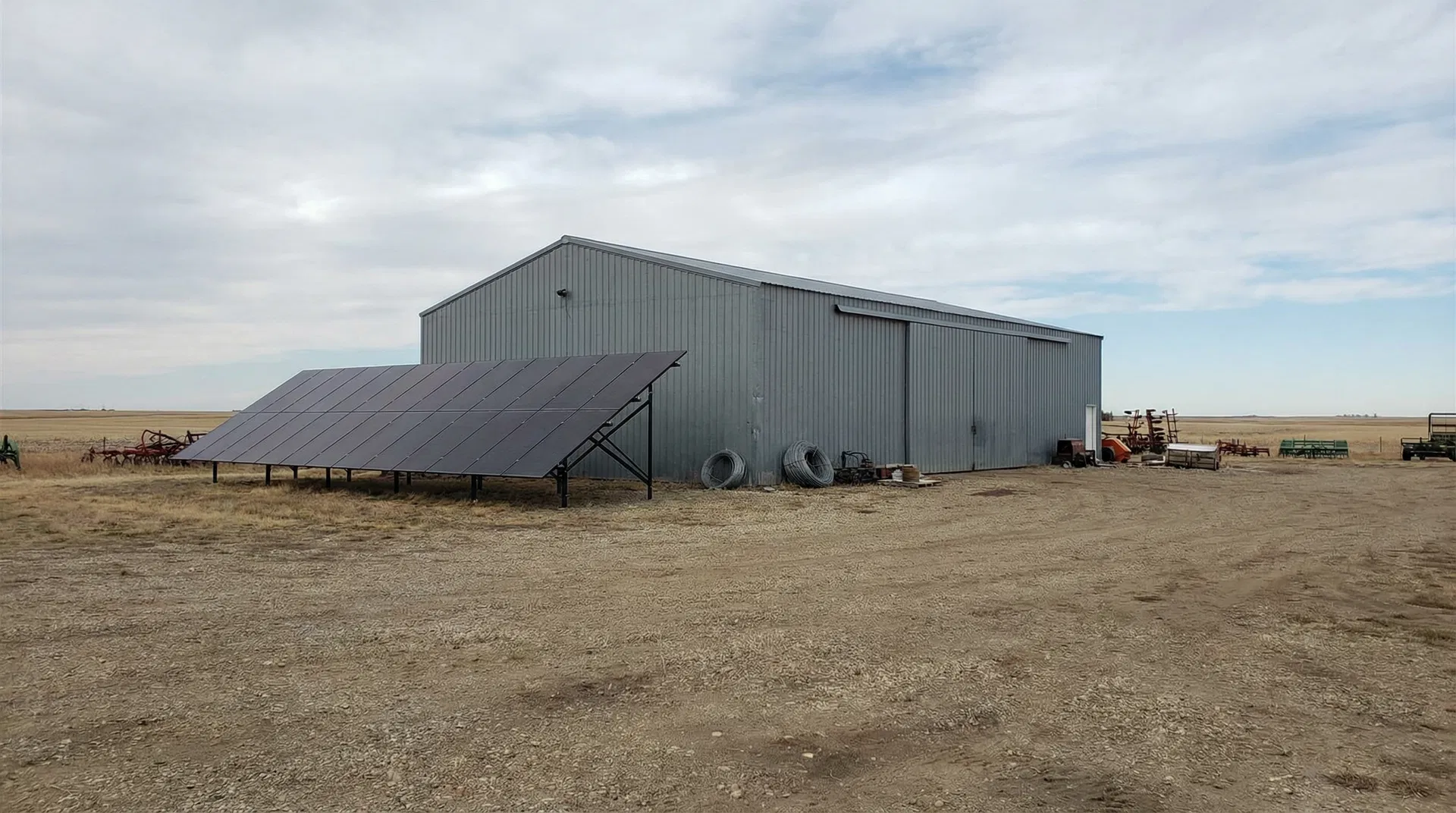
Acreage solar Didsbury projects typically land in the 12-18 kW range, with 15 kW being a common starting point once we've accounted for the full load picture on a rural residential property. That said, the right size depends entirely on what's running on your meter, not on a number we hand you before we've seen your bill. We install LONGi solar panels on every project. They hold up well on rural properties where roof access is less convenient, and their output consistency over time matters when you're designing around a higher-load acreage rather than a simple residential system. APsystems microinverters are our standard inverter choice. Because each panel runs its own microinverter, shading from a roofline, a nearby tree, or a shop overhang on one part of the array won't pull down the output of panels that are fully exposed. On acreage roofs with complex pitches or multiple faces, that panel-level independence makes a real difference. For properties where the roof isn't the right fit, whether that's due to pitch, orientation, shading from shelter belts, or simply a spread-out yard with available south-facing ground, we design ground-mount systems to the same standard. Ground mounts let us set the exact angle and orientation without being constrained by roof geometry, and they're easier to access for snow clearing in a heavy winter. Every install includes the FortisAlberta micro-generation application, system commissioning, and a walkthrough of what you're looking at on the monitoring app.
Solar Planning for Didsbury Properties
Acreage properties in this part of Alberta don't run on the same load profile as a subdivision house. You've likely got a heated shop, a well pump, outdoor lighting across a larger yard, and maybe livestock equipment or a grain auger on a seasonal circuit. That adds up. A system sized for a 1,500-square-foot bungalow won't cut it here. FortisAlberta is the wire service for properties in and around Didsbury, and micro-generation interconnection runs through their application process. We handle that application from the design package forward. You don't need to navigate the utility paperwork yourself. What we need from you is straightforward: your most recent power bill. Alberta utility bills include a 12-month usage graph, and that graph tells us more about your property's real consumption than any rule-of-thumb estimate. From there, we build a system design around your roof or yard layout, your orientation, any shading from trees or outbuildings, and your current service entrance. Nothing gets assumed. Everything gets confirmed on site.
Electrical Site Review for Didsbury Properties
Voltage Rise
Voltage rise happens when a solar system pushes current back through distribution lines that weren't designed for two-way flow. On rural lines where the transformer serving a property may be shared with few other customers, voltage rise can be more pronounced than in dense urban grids. If rise is high enough, the inverters will clip output or disconnect entirely to stay within allowable voltage limits, which directly affects how much of your system's rated capacity you can actually use.
Single-Phase vs Three-Phase
Rural properties in Alberta can be served by either single-phase or three-phase power at the meter, and the distinction matters for solar design. Single-phase service is standard for most rural residential properties, while three-phase is more common where significant motor loads like irrigation pumps or grain handling equipment are present. The service type affects which inverters are compatible and what the system's maximum export capacity can be under FortisAlberta's interconnection rules.
Panel Infrastructure
Older electrical panels on acreage properties are common, and they don't always have the breaker capacity to support a solar system without modifications. We assess the panel's rated amperage, the age and condition of the breaker bus, and whether the existing main breaker can accommodate the back-fed solar breaker without exceeding the panel's total capacity. If the panel can't support the system as designed, we'll specify an upgrade as part of the project scope before installation begins.
Service Entrance Review
The service entrance and meter base are reviewed as part of every design package we submit to FortisAlberta. The meter base condition matters because FortisAlberta requires that the meter socket meet their current standards before a bi-directional meter can be installed for a micro-generation customer. If the existing meter base is older or non-compliant, an upgrade is required before interconnection approval can be issued, and we identify that during the design review so there are no surprises at the end of the project.
Right-Sizing Solar for Didsbury Properties
Acreage properties carry a different electrical load than a house in town, and sizing a solar system without accounting for all of it leads to an undersized array that doesn't do what you expected. A rural residential property might be running a heated shop with a 240-volt welder circuit, a submersible well pump, yard lighting on a large perimeter, a stock water heater, and a house with electric baseboards or a heat pump. Each of those loads contributes to a monthly usage number that looks nothing like a subdivision home. We size systems from the 12-month usage graph on your most recent power bill. That graph shows us your seasonal consumption pattern: how much you pull in January when the shop heater runs hardest, and how much you pull in July when daylight is long. Rule-of-thumb sizing, like multiplying a daily kilowatt-hour estimate by a panel count, misses the seasonal spread entirely. The usage graph doesn't. Roof mount is the default where the roof geometry works. For acreage layouts where the house roof is shaded by a shelter belt, faces the wrong direction, or is simply too small for the required array size, a ground mount is often the better call. Ground mounts let us set precise angle and orientation, they're independent of roof age, and on a property with available open ground, they're often easier to expand later. We make that recommendation based on what we see at the site, not a preference for one mount type over another.
Typical Load Profiles We Design For Near Didsbury
Home Plus Heated Shop
This is the most common profile we see on acreage properties in this area: a house with standard residential loads combined with a heated detached shop running 240-volt equipment and in-floor or forced-air heat. The shop's heating load in winter can rival the house itself, which is why we pull the full 12-month usage graph from your power bill rather than estimating from square footage. System size in this scenario often lands at the upper end of the 12-18 kW range once both structures are accounted for.
Home Plus Outbuildings and Well
Properties with a submersible well pump, one or more unheated outbuildings, and a larger house footprint with electric heat represent a different load shape than a shop-heavy property. The well pump draws hard on startup but doesn't run continuously, and unheated outbuildings may carry lighting and receptacle loads year-round. At 12-15 kW, a system designed around this profile can offset a meaningful portion of the usage, but the exact size comes from your bill and site review, not an estimate.
Acreage With Seasonal Equipment Loads
Some properties near Didsbury run seasonal loads that spike consumption at specific times of year: grain augers, irrigation pumps, or livestock equipment that runs hard in spring and fall. These seasonal spikes show up clearly on the 12-month usage graph and they influence both system size and how we model offset across the year. A 15-18 kW array may be warranted where seasonal loads push annual consumption well above a standard residential baseline, and the design reflects the actual seasonal pattern rather than an annual average.
FortisAlberta Interconnection in Didsbury
FortisAlberta is the distribution wire owner for Didsbury and the surrounding area. Any grid-tied solar system installed here goes through FortisAlberta's micro-generation interconnection process before it can export to the grid. We handle the application on your behalf. That means we prepare the technical design package, submit it to FortisAlberta, and coordinate any follow-up they require. You don't need to manage that process or interpret utility documents. What the application includes is a complete system design: panel count and layout, inverter specifications, single-line electrical diagram, and site details. FortisAlberta reviews the package and issues interconnection approval before we commission the system for export. We don't turn on export until that approval is in hand. If your meter base or service entrance requires an upgrade to meet FortisAlberta's interconnection requirements, we identify that during the design review, not after installation. It's better to know upfront than to hit a delay at commissioning.
Project Economics and Design Review
| System Size | Annual Production | Year 1 Savings | Payback Period |
|---|---|---|---|
| 12-18 kW range, 15 kW typical |
Production, savings, and payback figures require a property-specific design and your most recent power bill before any estimate can be made.
How We Work in Didsbury
Bill and Load Review
We review your power bill to understand your energy use in Didsbury and size the system to your actual consumption — not a generic estimate.
Site Assessment
We assess your roof or ground area, south-facing exposure, electrical service, and utility interconnection requirements specific to your property.
Design and Utility Application
We produce a system layout, production estimate, and cost summary, then submit your micro-generation application to your utility on your behalf.
Installation and Commissioning
Our crew installs racking, panels, inverter, and electrical connections. All work is performed by licensed electricians. We commission and test before handoff.
Current Program and Interconnection Review
Utility connection review
FortisAlberta reviews all micro-generation interconnection applications for grid-tied solar systems in this service territory. Range Road Solar prepares the full design package required for submission, including the single-line diagram, equipment specifications, and site details. We manage the application process so you're not navigating utility requirements on your own.
Current program review
Residential, farm, and commercial solar properties may be eligible for programs or incentives depending on the rules in effect at the time of your application. We review current eligibility against your property type, system size, and installation timeline during the design process. We don't recommend programs that have ended or that don't apply to your situation.
Frequently Asked Questions
Get a Solar Assessment for Didsbury
Submit a recent power bill and we will review your consumption and provide an honest assessment for your Didsbury property. No obligation.
(587) 330-7502 Book a CallRelated Resources
More Solar Services in Didsbury