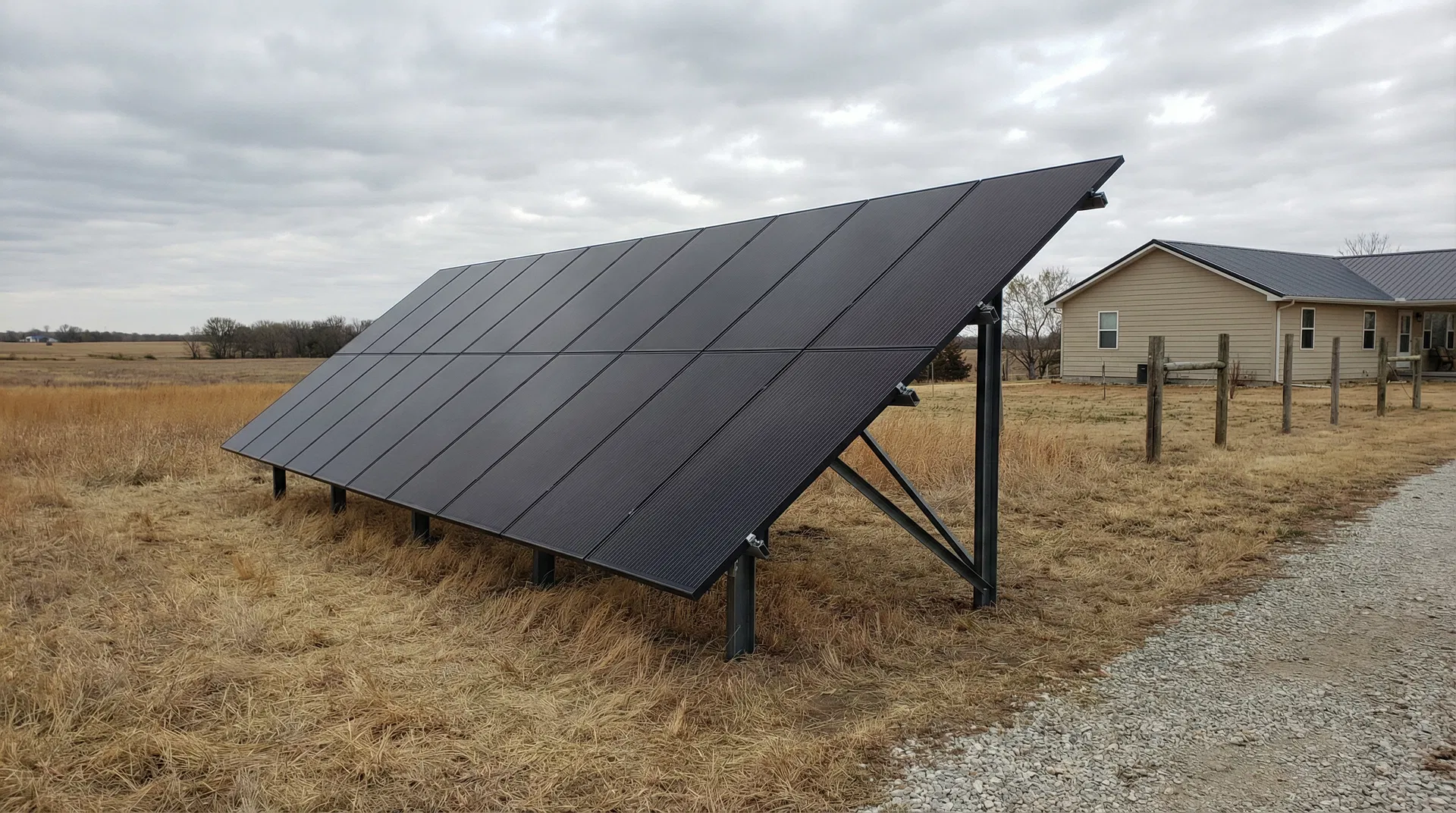
Off-grid solar in Didsbury, Alberta starts with the same foundation as any well-built system: quality panels, reliable inverters, and storage that's sized for real-world use. We install LONGi panels, which hold up well on rural properties where panel access isn't always easy and replacements aren't a quick trip away. For off-grid work, we pair them with hybrid inverters and lithium battery storage rather than the microinverters we use on grid-tied systems. Hybrid inverters are built for the charge-and-discharge cycle that defines off-grid operation, and lithium chemistry handles the deep cycling that comes with a property that isn't pulling from the grid at night. System sizes for off-grid applications typically run in the 5 to 15 kW range, with 8 kW being a common starting point for a house-plus-shop setup. But that range shifts quickly depending on what the site actually draws. A seasonal cabin sits at the low end. A full acreage with irrigation, grain handling, or livestock waterers can push toward the top of that range or beyond. Battery bank sizing is just as important as panel capacity. The goal is enough storage to carry you through low-production periods without running a generator every second day. We size storage based on your load profile and how many days of autonomy make sense for the property. Backup generation is part of the design conversation too. Most off-grid setups benefit from a propane or diesel generator as a fallback, and we build that into the system design so it charges the battery bank properly rather than just running loads directly.
Solar Planning for Didsbury Properties
Properties around Didsbury range from quarter-section acreages to remote parcels that never had a practical path to the grid. For those sites, the question isn't whether solar makes sense. It's whether the system is sized and built to handle the actual load year-round. Off-grid solar here means designing for the full property: the house, the shop, any outbuildings, and whatever seasonal loads show up. A cabin that only draws power on weekends has a very different design than a working acreage running heat tape, well pumps, and a heated shop through January. FortisAlberta serves the grid in this area, but grid extension isn't always the right answer. For remote parcels, the cost of running a new line can exceed the cost of an off-grid system by a wide margin. We work through that calculation honestly with every customer before anything gets drawn up. Range Road Solar designs each system from your actual site conditions and usage requirements. We don't apply a standard template and call it done. If the numbers don't support a particular configuration, we'll say so.
Electrical Site Review for Didsbury Properties
Voltage Rise
Voltage rise occurs when solar generation pushes voltage higher on the local distribution line than the inverter is configured to tolerate. On rural distribution runs, where lines are longer and conductor sizing may be older, voltage conditions can vary more than they do in town. Excessive voltage rise causes inverters to clip or shut down, which reduces actual system output and needs to be accounted for in the design.
Single-Phase vs Three-Phase
Rural properties around Didsbury may be served by single-phase or three-phase electrical service depending on what was installed when the property was built or what loads it's historically run. Phase configuration affects which inverters can be used and how system capacity is balanced across the service. We confirm the existing service type during the site review so inverter selection reflects what's actually on the property.
Panel Infrastructure
Older electrical panels on rural acreages sometimes don't have the breaker capacity to support a solar system without an upgrade. We assess the panel age, available breaker slots, and bus bar rating during the site review to determine whether the existing panel can support the design. If an upgrade is needed, we include it in the project scope so there are no surprises after installation starts.
Service Entrance Review
The service entrance and meter base condition matters for any system that will eventually tie into the FortisAlberta grid, and we check it regardless of whether the initial install is off-grid. A deteriorated or undersized meter base needs to be addressed before a micro-generation application can proceed. If an upgrade is required, we identify it during the design phase so it's priced into the project before work begins.
Right-Sizing Solar for Didsbury Properties
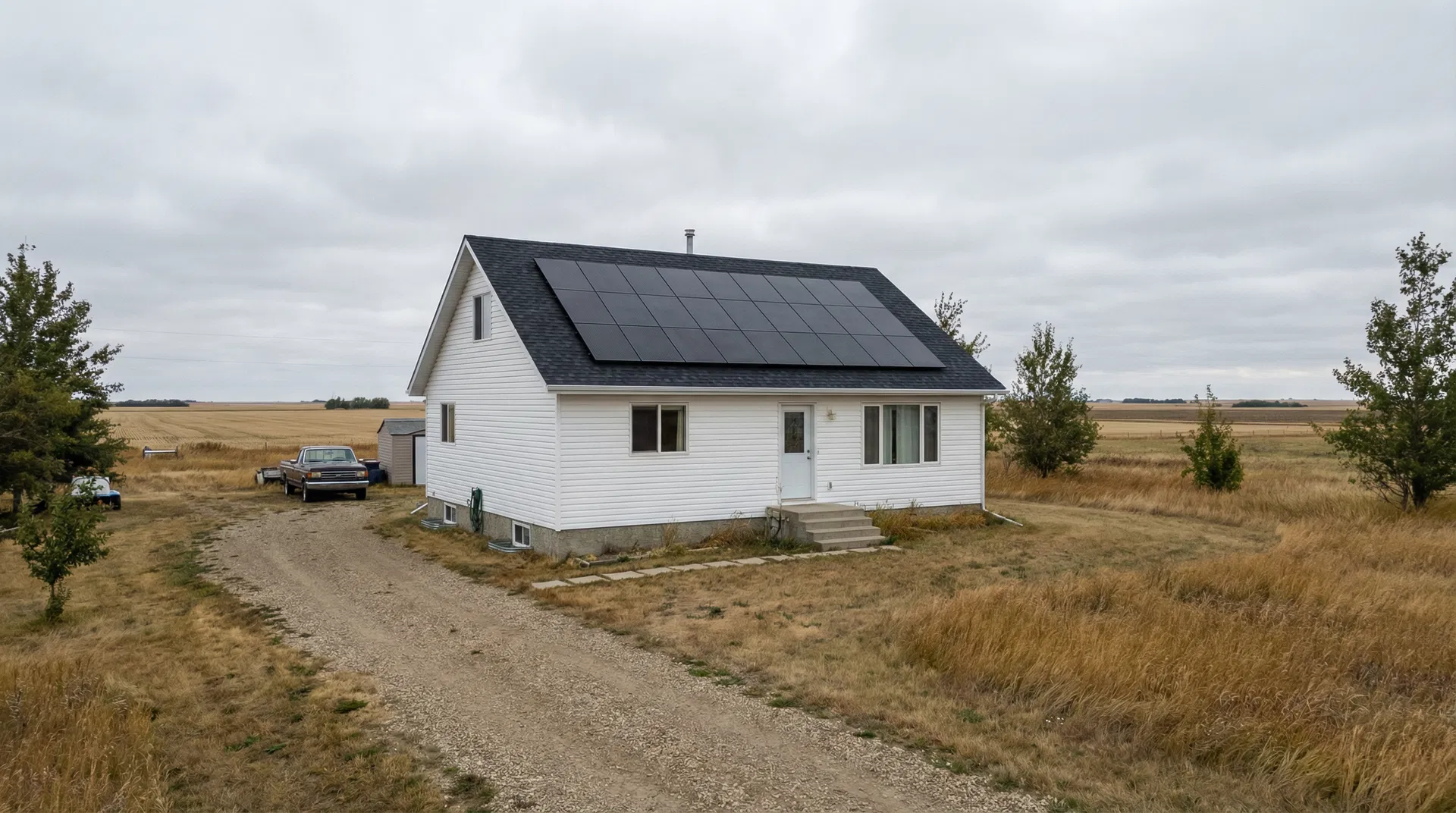
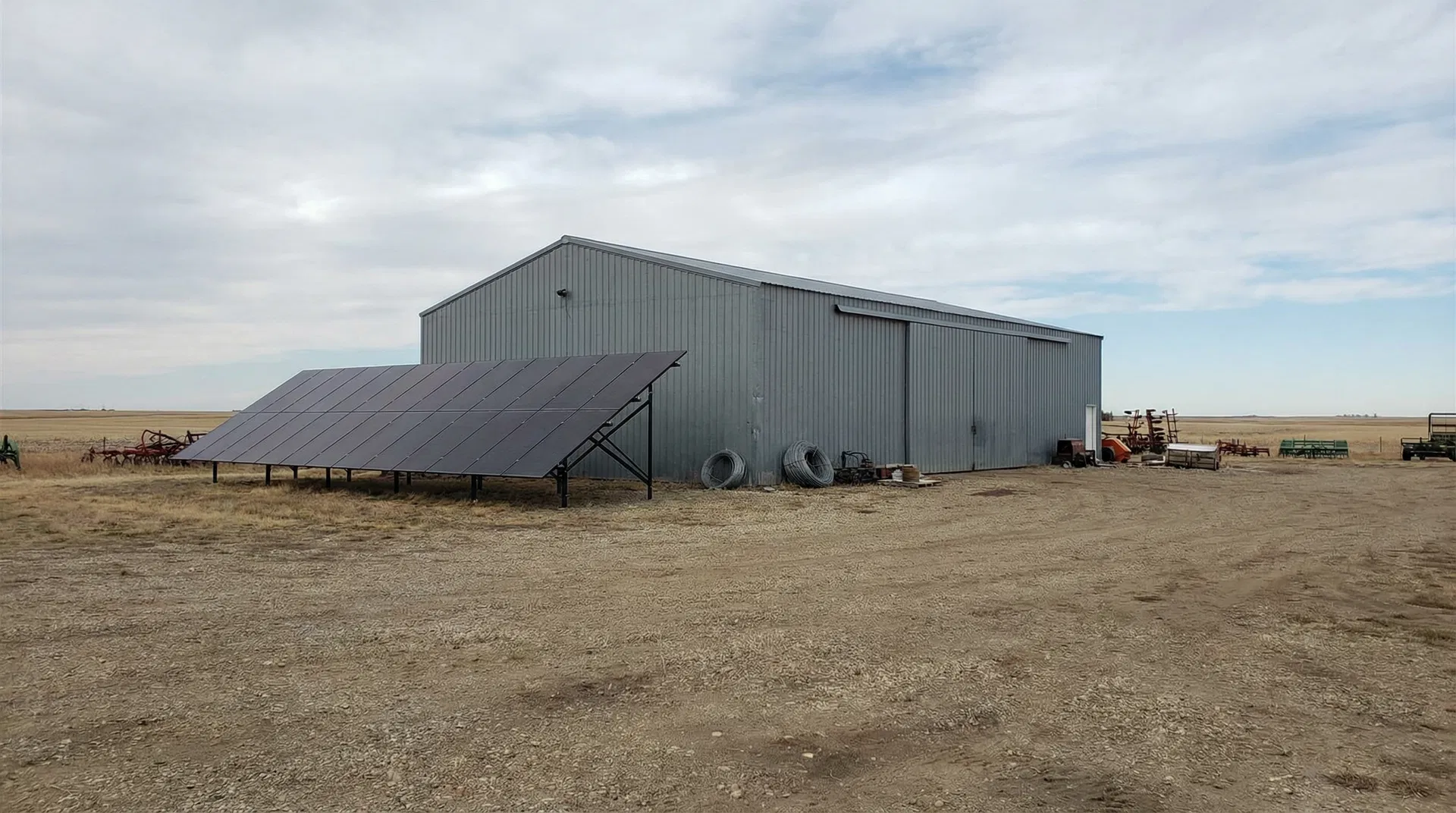
Rural properties near Didsbury rarely have just one load to design for. A typical acreage might include the house, a heated shop, a well pump, outbuildings, and seasonal loads like heat tape or a grain dryer. Each of those draws power on its own schedule, and the system has to handle the combination, not just the house on its own. That's why off-grid systems in this area are consistently larger than what you'd size for a city lot. Roof mount works well when the house or shop roof has the right pitch, faces the right direction, and doesn't carry shading from trees or adjacent structures. Ground mount is often the better call on acreages where the roof isn't ideal. It gives us flexibility to orient the array properly, avoid shading from yard trees or bins, and keep the install accessible for maintenance. A lot of rural properties have the land to make ground mount straightforward. We don't size systems from rule-of-thumb numbers. We work from the 12-month usage graph on your most recent power bill. That graph shows how your consumption shifts across seasons, which is exactly what you need to know before sizing a battery bank and panel array. A system sized from annual average consumption can leave you short in the months that matter most. We size for the real load, not the average.
Typical Load Profiles We Design For Near Didsbury
Home and Heated Shop
A house plus a heated shop is one of the most common off-grid load profiles we see on acreages near Didsbury. The shop adds a meaningful heating and lighting load through winter, and if there's a compressor or welder running regularly, peak demand climbs fast. We size the battery bank and panel array to cover both structures through overnight and multi-day low-production periods without relying on the generator as a primary power source.
Remote Cabin or Seasonal Property
Seasonal cabins and remote parcels that only see intermittent use have a different design priority than a full-time acreage. The system needs to hold a charge between visits and recover quickly when loads ramp up. A 5 to 7 kW system with modest battery storage is often enough for a well-equipped cabin running lights, a refrigerator, and a well pump, but we confirm that against the actual load list before settling on a design.
Acreage with Irrigation or Livestock Watering
Properties running irrigation pumps or electric livestock waterers have high-demand loads that run on a schedule, sometimes overlapping with the house and shop loads. A 10 to 15 kW system with a larger battery bank is a reasonable starting point for that kind of setup, but the actual sizing depends on pump horsepower, run times, and how those loads stack with the rest of the property. We work through that from your most recent power bill and a load audit.
FortisAlberta Interconnection in Didsbury
FortisAlberta is the wire service for Didsbury and the surrounding area. For properties going fully off-grid, a FortisAlberta interconnection application isn't required because the system doesn't connect to the distribution network. That's one of the practical advantages of a true off-grid design: no application process, no waiting on utility approval, and no ongoing wire service charges once the system is commissioned. For properties that are currently on the FortisAlberta grid and considering whether to stay connected or go off-grid, we work through that decision during the design review. Some properties are better served by a grid-tied or hybrid system that maintains the FortisAlberta connection as a backup. Others are better off cutting the line entirely, particularly when the annual wire service charge is significant relative to actual consumption. If a future grid-tied component is added, Range Road Solar handles the FortisAlberta application and design package. We know what the utility needs and we put the file together correctly the first time.
Project Economics and Design Review
| System Size | Annual Production | Year 1 Savings | Payback Period |
|---|---|---|---|
| 5-15 kW range, 8 kW typical |
Production, savings, and payback estimates require a property-specific design and your most recent power bill, and will vary based on site conditions, load profile, and current utility rules.
How We Work in Didsbury
Bill and Load Review
We review your power bill to understand your energy use in Didsbury and size the system to your actual consumption, not a generic estimate.
Site Assessment
We assess your roof or ground area, south-facing exposure, electrical service, and utility interconnection requirements specific to your property.
Design and Utility Application
We produce a system layout, production estimate, and cost summary, then submit your micro-generation application to your utility on your behalf.
Installation and Commissioning
Our crew installs racking, panels, inverter, and electrical connections. All work is performed by licensed electricians. We commission and test before handoff.
Current Program and Interconnection Review
Utility connection review
FortisAlberta reviews grid connection applications for properties in this service territory. For fully off-grid installs, a FortisAlberta interconnection application isn't part of the process. If a grid-tied component is included, Range Road Solar prepares and submits the design package to FortisAlberta on your behalf.
Current program review
Commercial, farm, and residential solar programs change, and eligibility rules are confirmed against current requirements at design time. We don't quote incentives that may no longer be active or assume a program applies before checking it against the project specifics. Any applicable programs are identified during the design review.
Frequently Asked Questions
Get a Solar Assessment for Didsbury
Submit a recent power bill and we will review your consumption and provide an honest assessment for your Didsbury property. No obligation.
(587) 330-7502 Book a CallMore Solar Services in Didsbury