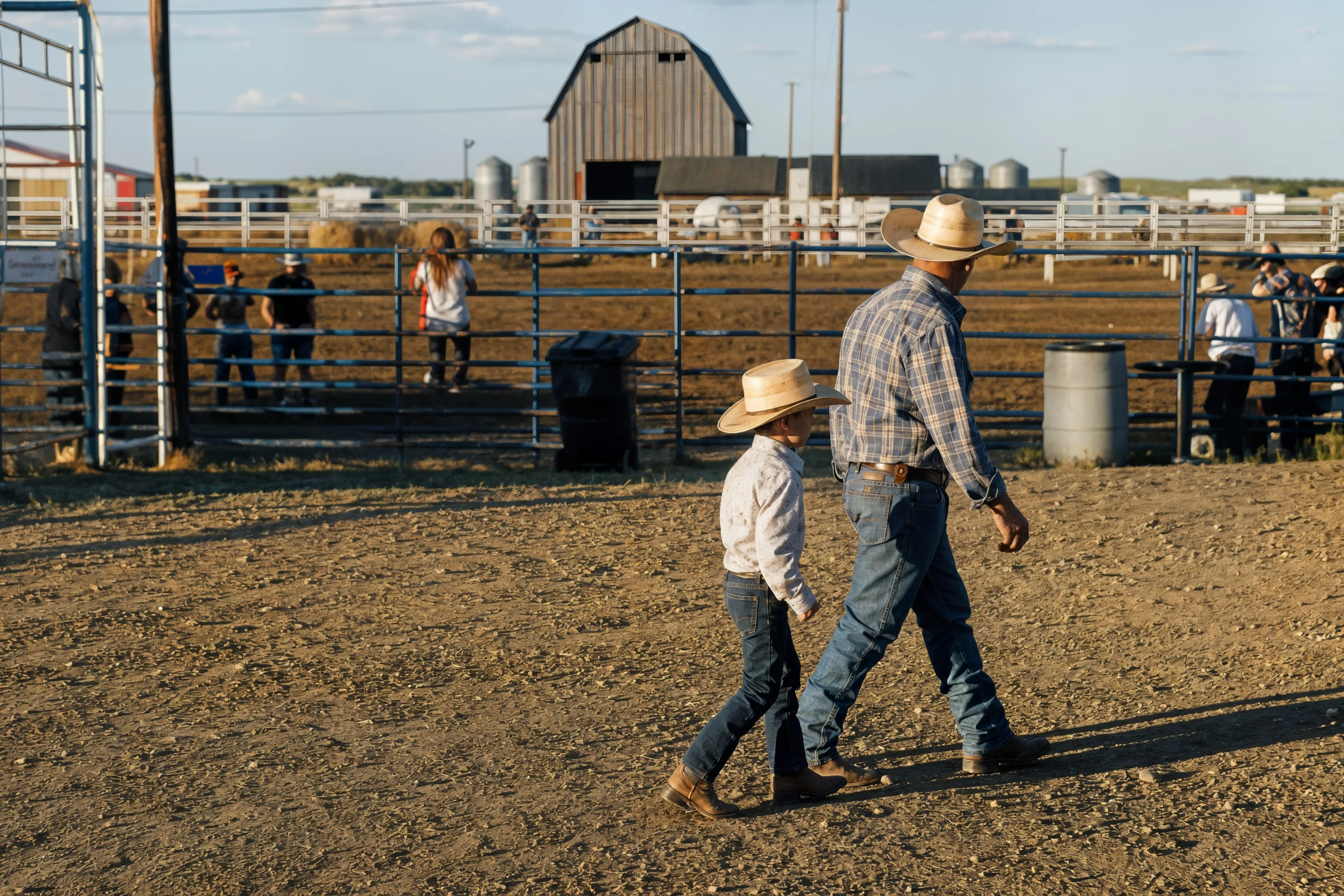
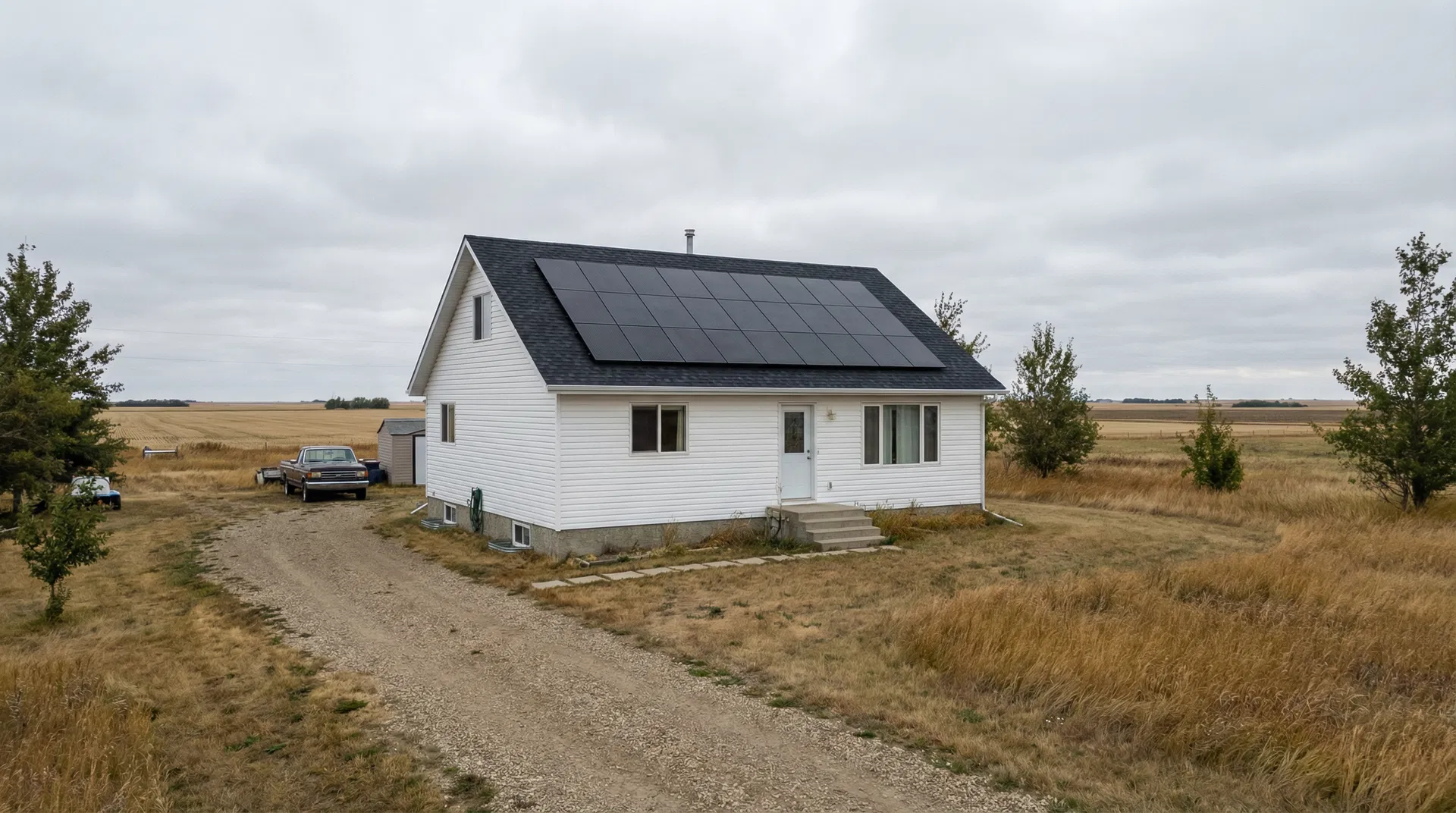
Off-grid solar in Carstairs, Alberta means a complete power system that never ties into the FortisAlberta grid at all: panels, batteries, and an inverter doing all the work a utility connection would otherwise do. We build these systems around LONGi panels, paired with a hybrid inverter and a lithium battery bank sized to carry the property through a run of low-sun days without a generator kicking on constantly. For a cabin, that might mean a small array and a modest battery built for weekend use. For a full-time home with a shop attached, the array and battery bank scale up to cover heating loads, well pumps, and workshop tools running through the winter. We size every system around actual appliances and equipment, not a generic acreage average: a chest freezer and a few LED circuits need a fraction of the storage that a CNC machine or a block heater circuit does. Ground mount is common on these properties since there's usually open land to work with and it sidesteps roof shading from shelterbelts and outbuildings, though a south-facing roof with a clear view of the sky works just as well when the layout calls for it. Every off-grid design includes a generator interconnect as a backup option, because even a well-sized battery bank benefits from a backstop during an unusually long stretch of cloud cover. We handle the full install, from panel mounting through battery commissioning, and walk the owner through the monitoring setup before we leave the site.
Solar Planning for Carstairs, Alberta Properties
Carstairs, Alberta sits in Mountain View County, incorporated as a town on September 1, 1966, and its economy still runs on agriculture, beef and barley farming that the community celebrates every year at Beef & Barley Days. Off-grid solar tends to make the most sense on the acreages, farmsteads, and cabin properties that spread out from the town core, especially where a FortisAlberta line extension would run past several quarter sections just to reach one yard site. Environment Canada's climate normals for the nearby Olds station put annual bright sunshine at 1,998.4 hours for this region, and Natural Resources Canada's photovoltaic potential mapping lists a specific yield of 1,292 kWh/kWp for the area. We mention those numbers as regional planning context only, not as a promise for your specific roof or ground-mount array; actual output depends on tree lines, building shade, orientation, and how the array is laid out on your land. That's why we don't quote a system off a rule of thumb. Instead we walk the property, look at what's actually drawing power (the house, a shop, a well pump, maybe a bin yard), and size the panels, hybrid inverter, and lithium battery bank around that real load, whether it's a hunting cabin used a few weekends a year or a full-time home.
Electrical Site Review for Carstairs, Alberta Properties
Voltage Rise
Voltage rise happens when power has to travel a long distance along a distribution line before it reaches a property, and rural feeders serving spread-out acreages often run longer than in-town service. On an off-grid system this matters less for the grid connection itself, since there isn't one, but the same distance principle applies to the wiring between your battery bank, inverter, and the loads in the house or shop. We size conductor gauge and inverter placement to keep voltage drop low enough that equipment isn't clipping or under-performing at the far end of a long run.
Single-Phase vs Three-Phase
Most rural properties around here run on single-phase service, but some larger operations, especially those with three-phase motors on irrigation pumps, grain augers, or shop equipment, have three-phase power instead. An off-grid hybrid inverter has to match what the property's loads actually need, so we confirm early whether any equipment on site requires three-phase power, since that changes both the inverter selection and the total system capacity we design around.
Panel Infrastructure
A lot of rural properties are still running electrical panels that are decades old, and an older panel's breaker capacity doesn't always leave room for a new hybrid inverter and battery system without some rework. We check the panel's age, its rated capacity, and how much room is left on the bus before we finalize a design. If the existing panel can't support the new load, the upgrade usually means a new panel and breaker sized to the full off-grid system, done as part of the install rather than as a surprise afterward.
Service Entrance Review
Even on an off-grid system, we check the condition of the service entrance and meter base if one already exists on the property, since a cracked or outdated meter base can be a safety issue on its own regardless of what power source feeds it. That review matters most if a property is going hybrid rather than fully independent, because a meter base in poor shape can hold up FortisAlberta's micro-generation application until it's replaced. Where an upgrade is needed, it's a straightforward swap we can schedule as part of the broader install.
Right-Sizing Off-Grid Solar for Carstairs, Alberta Properties
Rural systems almost always end up bigger than a typical in-town solar install, because a rural property usually isn't just powering a house. There's the home itself, maybe a heated shop, a well pump, a bin yard's worth of grain-handling equipment, or an irrigation pump running through summer, and every one of those loads has to be accounted for in the battery bank and array size, not just the house circuits. Roof versus ground mount comes down to what the yard actually looks like: a roof with a clear southern exposure and no shade from grain bins, shelterbelts, or machine sheds is a fine option, but a lot of acreages have exactly that kind of shading, or a roof pitch that isn't ideal, or simply have open land sitting right there. In those cases, ground mount usually wins, since it gives us full control over tilt and orientation and keeps the array clear of tree lines. For sizing, we don't start from a rule of thumb. Where a property already has a FortisAlberta account, the most recent power bill's 12-month usage graph tells us a lot about seasonal load swings before we ever visit. Where there's no existing account, like a bare-land cabin build, we build a load list from what's actually going to run and size the array and battery bank around that instead, then confirm everything on site.
Typical Load Profiles We Design For Near Carstairs
Weekend Cabin
A cabin used a few weekends a month and through hunting season usually needs a modest array and battery bank built around lighting, a fridge, water pumping, and maybe a space heater. We size these systems so the battery can carry the place through a stretch of unoccupied cloudy days without draining flat, and we build in a generator backup for the rare week nobody's around to check on it.
Full-Time Home + Heated Shop
A year-round home with an attached or detached heated shop is a different scale of load entirely, especially once a block heater circuit, shop tools, and winter heating are all pulling from the same battery bank. We size the array and storage around the combined household and shop load, usually with a generator interconnect built in as backup for the shortest, darkest stretches of the year.
Remote Site with Irrigation or Monitoring Equipment
Some properties need power out at a well site, a pivot, or a remote monitoring station far from the main yard, where running a FortisAlberta line simply isn't worth the cost for the load involved. These systems are usually smaller and built around a specific piece of equipment rather than a whole household, so we size the panel count and battery to that equipment's actual draw and duty cycle.
FortisAlberta and Off-Grid Systems in Carstairs, Alberta
FortisAlberta is the wire service across the area, but a true off-grid system doesn't connect to that grid at all, so there's no micro-generation interconnection application to file the way there would be for a grid-tied array. That's one of the appeals for a property sitting a long way from the nearest transformer: no line extension costs, no utility application, no waiting on FortisAlberta's process. If a property already has an existing FortisAlberta service and the owner wants to keep that connection running alongside battery storage as a backup, rather than going fully independent, that's a different design, and we handle whatever paperwork that hybrid setup requires. Before we finalize any off-grid design, we confirm the property's exact situation: whether there's an existing FortisAlberta hookup, how far the nearest line actually is, and what that would cost to extend, since that number is often what tips a property toward going off-grid in the first place.
Project Economics and Design Review
| System Size | Annual Production | Year 1 Savings | Payback Period |
|---|---|---|---|
| 5-15 kW range, 8 kW typical |
Actual production, savings, and payback depend on a property-specific design and, where one exists, your most recent power bill, and are provided only after that review.
How We Work in Carstairs
Bill and Load Review
We review your power bill to understand your energy use in Carstairs and size the system to your actual consumption, not a generic estimate.
Site Assessment
We assess your roof or ground area, south-facing exposure, electrical service, and utility interconnection requirements specific to your property.
Design and Utility Application
We produce a system layout, production estimate, and cost summary, then submit your micro-generation application to your utility on your behalf.
Installation and Commissioning
Our crew installs racking, panels, inverter, and electrical connections. All work is performed by licensed electricians. We commission and test before handoff.
Current Program and Interconnection Review
Utility connection review
For any property that keeps or adds a FortisAlberta connection alongside battery storage, FortisAlberta reviews the grid-connection application as part of its standard micro-generation process. Range Road Solar prepares and submits that design package, including single-line diagrams and equipment specifications, so the paperwork matches what FortisAlberta needs to see. A fully off-grid system with no line connection at all skips this step entirely.
Current program review
Eligibility for any commercial, farm, or residential program changes over time, so we check current rules against your specific property and use case at design time rather than relying on general assumptions. That review happens whether the project is a residential cabin, a working farm operation, or a small commercial site. We'll flag anything relevant during the design review rather than promising a specific benefit up front.
Frequently Asked Questions
Get a Solar Assessment for Carstairs
Submit a recent power bill and we will review your consumption and provide an honest assessment for your Carstairs property. No obligation.
(587) 330-7502 Book a CallMore Solar Services in Carstairs