
Solar rebates in Carstairs, Alberta shift as programs change, so every review starts with the equipment we'd actually install: LONGi panels paired with APsystems microinverters, sized to whatever system qualifies under the current rules. For most homes that lands somewhere in the 8 to 15 kW range, with 10 kW being typical, though the final number comes out of a site visit and your most recent power bill, not a guess. APsystems microinverters work well on the mixed rooflines we see on acreages and farm outbuildings, since each panel operates on its own circuit instead of tying the whole array to a single string inverter. That's useful on a property with a shop roof at one pitch and a house roof at another, which is common on the quarter-sections and larger lots around here. LONGi panels give us a consistent, well-tested baseline for sizing, whether the install goes on an in-town bungalow or a pole barn on an acreage. The rebate and incentive side of the job is a review, not a sales pitch. We check which micro-generation credits, if any, apply to the property, whether a farm or small business qualifies for the federal Clean Technology ITC, and whether any municipal programs are active at the time of design. None of that gets finalized until we've looked at the actual site and the current power bill, because program rules and eligibility change, and a number that was true last year might not hold today.
Solar Planning for Carstairs Properties
The Town of Carstairs, Mountain View County, was incorporated on September 1, 1966, and the area has grown from 4,077 residents to 4,898 at the most recent census count. That growth shows up in new builds on the edges of town as much as in the older character homes closer to the centre. Properties here range from standard in-town lots to acreages backing onto farmland, and every one of them sits on FortisAlberta's wires. That matters for a rebate or incentive review, because the paperwork and the eligibility rules follow the utility, not the street address. Beef & Barley Days draws a crowd every summer and the area's agricultural roots run deep, which means we see a steady mix of residential rebate questions alongside farm and small-business ones asking about the federal Clean Technology ITC. We don't hand out a rebate figure or a payback number off a brochure. We confirm what actually applies to a given property by pulling the most recent power bill and reviewing the site, because eligibility and system design both depend on specifics we can only get from the property itself, not a town-wide average.
Electrical Site Review for Carstairs Properties
Voltage Rise
Voltage rise happens when a solar inverter pushes power back onto a line that already runs higher than nominal voltage, which is more common on longer rural distribution runs. If the voltage at your service entrance is already elevated, the inverter has less headroom before it hits its upper limit and starts clipping output. We measure voltage on site before finalizing system size, because that number affects how much the inverter can actually deliver, not just what the panels are rated for.
Single-Phase vs Three-Phase
Properties in this area come with either single-phase or three-phase electrical service, depending on when the property was built and what it was built to run. Three-phase service, common on properties with larger shop equipment or irrigation pumps, opens up different inverter and system capacity options than single-phase service does. We confirm which one you have before we spec equipment, since the wrong assumption here means redesigning the system later.
Panel Infrastructure
Older rural properties often have electrical panels that were sized for the loads of decades ago, not a home plus a shop plus a solar array. We check the panel's age, its breaker capacity, and whether there's room for the backfeed breaker a solar system needs. If the existing panel can't support the addition, an upgrade means a new panel and possibly a service re-rate, which we scope out before the rest of the design moves forward.
Service Entrance Review
We check the condition of the service entrance and the meter base as part of every site visit, because FortisAlberta's micro-generation application depends on that infrastructure being in good working order. A meter base that's corroded, undersized, or otherwise out of spec can hold up the application until it's addressed. When an upgrade is needed, we identify it early so it doesn't surprise you partway through the project.
Right-Sizing Solar for Carstairs Properties
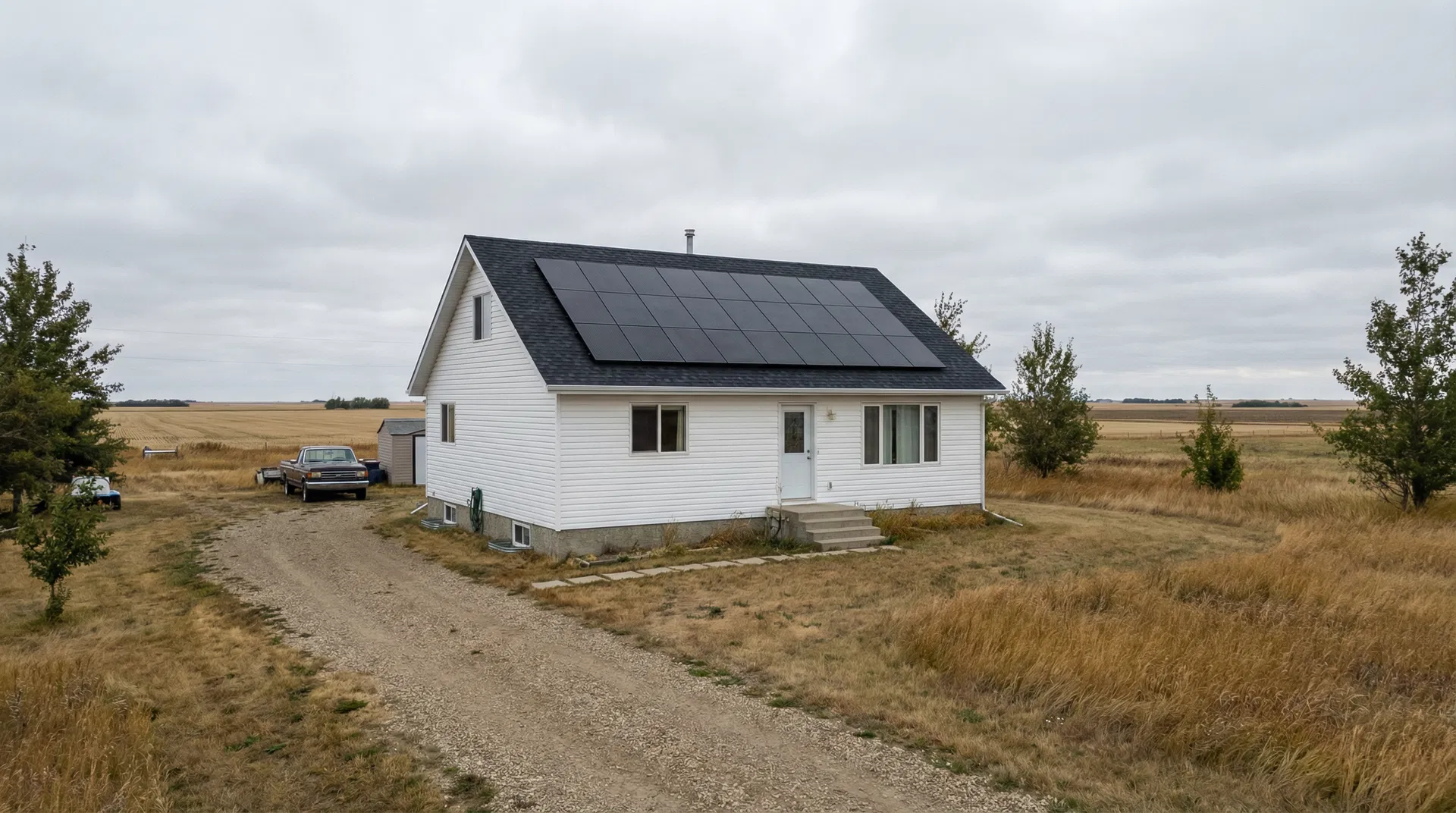
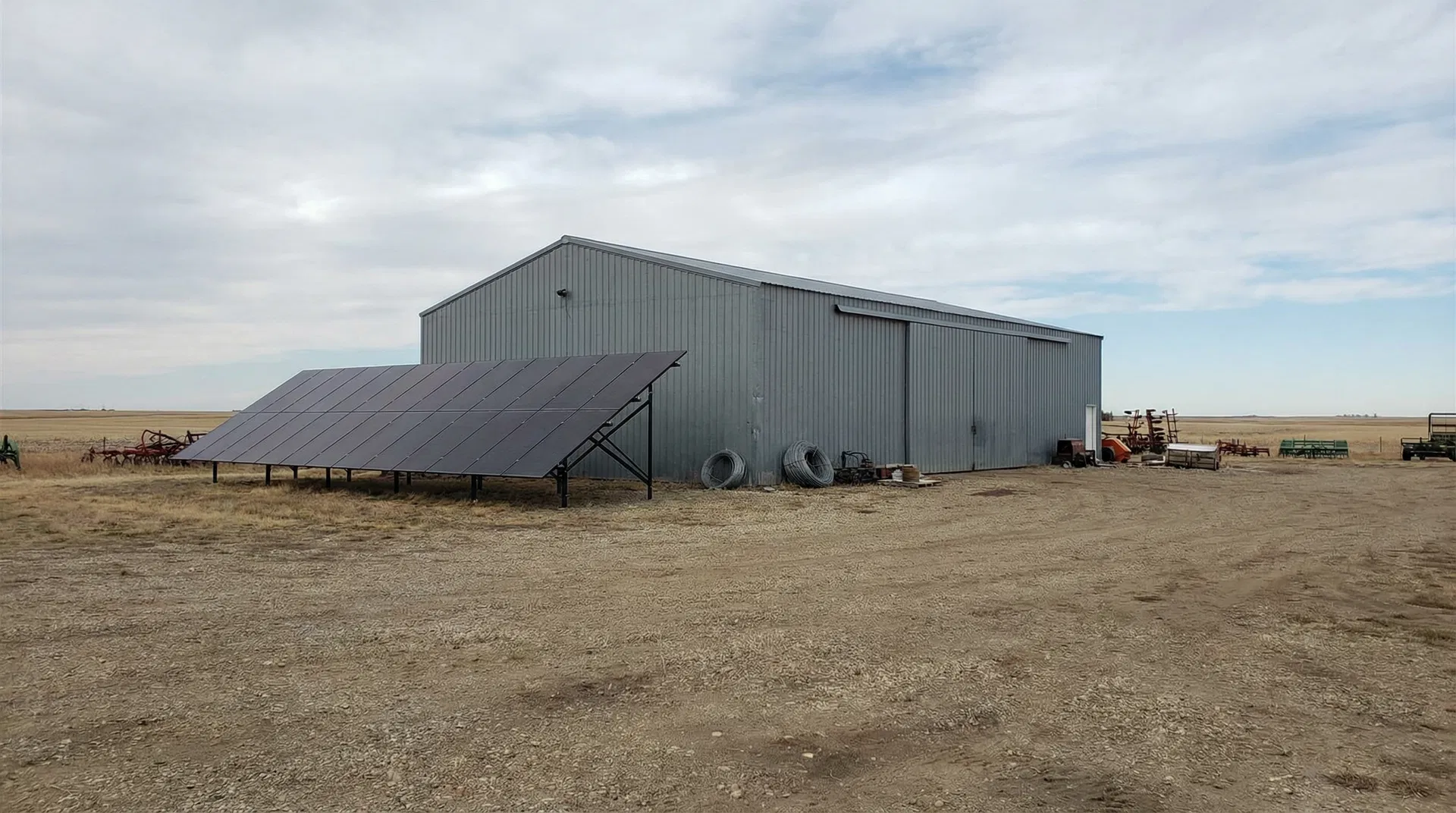
Rural properties typically carry more electrical load than a standard in-town house, because there's often a home, a shop, and sometimes a well pump, grain dryer, or other outbuilding all pulling from the same service. That's part of why solar systems on acreages and farms tend to run larger than a typical urban rooftop system, and it's one of the first things we look at on a site visit. Roof mount versus ground mount comes down to the specific property. A roof with good southern exposure and no shading is often the simplest option, but trees, outbuildings, or a steep or complicated roofline can rule that out fast. On a spread-out yard with open land available, a ground mount lets us pick the best orientation on the property instead of working around whatever pitch the roof happens to have, and it keeps the array clear of a roof that might need replacing down the line. We size every system from the 12-month usage graph on your most recent power bill, not a rule-of-thumb number per square foot or per occupant. That graph shows the actual pattern of use across the year, including seasonal loads like irrigation or heating, and it tells us more about what size system makes sense than any general guideline could. Combined with the site visit, that's what drives the final design.
Typical Load Profiles We Design For Near Carstairs
Home + Heated Shop
This is one of the most common setups we see on the edges of town and the surrounding acreages: a house plus a heated shop with its own circuits for lighting, tools, and sometimes a block heater or two in winter. We size the system off the combined usage pattern from your most recent power bill rather than estimating the shop and house separately, since they share one service and one solar array.
Acreage with Irrigation or Well Pump
Properties with a well pump or irrigation system carry a load profile with sharp seasonal spikes that a flat annual average would miss entirely. The 12-month usage graph on your power bill shows exactly when those spikes happen, which lets us size the array and the inverter configuration around the actual pattern instead of guessing at a typical month.
Small Farm or Agri-Business Operation
A grain dryer, a milking parlour, or shop equipment running on three-phase service all change what a system needs to handle, and this is also where the federal Clean Technology ITC review comes in for qualifying operations. We look at the equipment list and the usage graph together before sizing anything, because a farm operation's load profile rarely looks like a residential one.
FortisAlberta Interconnection in Carstairs
FortisAlberta is the wire service for every property here, in town and on the surrounding acreages alike. Any grid-tied solar system in the area goes through FortisAlberta's micro-generation interconnection process, and Range Road Solar prepares and submits that application as part of the install, not as an add-on. We put together the single-line diagram, the equipment specifications for the LONGi panels and APsystems microinverters, and the paperwork FortisAlberta needs to review the connection. We don't publish a standard approval timeline, a credit carryover rule, or a payout rate here, because those terms come from FortisAlberta and the retailer, not from us, and they can change. What we commit to is handling the application correctly the first time, based on your site design and your most recent power bill, and walking you through what FortisAlberta actually requires before the system goes in. If your property has an older service entrance or a panel that needs a look before an application can go in, we flag that as part of the same review.
Project Economics and Design Review
| System Size | Annual Production | Year 1 Savings | Payback Period |
|---|---|---|---|
| 8-15 kW range, 10 kW typical |
Production, savings, and payback figures require a property-specific design review and your most recent power bill before we can give you real numbers.
How We Work in Carstairs
Bill and Load Review
We review your power bill to understand your energy use in Carstairs and size the system to your actual consumption, not a generic estimate.
Site Assessment
We assess your roof or ground area, south-facing exposure, electrical service, and utility interconnection requirements specific to your property.
Design and Utility Application
We produce a system layout, production estimate, and cost summary, then submit your micro-generation application to your utility on your behalf.
Installation and Commissioning
Our crew installs racking, panels, inverter, and electrical connections. All work is performed by licensed electricians. We commission and test before handoff.
Current Program and Interconnection Review
Utility connection review
FortisAlberta reviews every grid-tied micro-generation application against its current interconnection rules, and that review happens regardless of whether the system is residential, farm, or small business. Range Road Solar puts together the design package, the single-line diagram, and the equipment specifications FortisAlberta asks for, and submits it on your behalf.
Current program review
Commercial, farm, and residential eligibility for micro-generation credits, the federal Clean Technology ITC, and any active municipal programs gets checked against the rules in place at the time we design your system. Programs and eligibility criteria change, so this review happens at design time, not off an old brochure.
Frequently Asked Questions
Get a Solar Assessment for Carstairs
Submit a recent power bill and we will review your consumption and provide an honest assessment for your Carstairs property. No obligation.
(587) 330-7502 Book a CallRelated Resources
More Solar Services in Carstairs