
Solar rebates and incentives for Crossfield, Alberta properties start with the system itself, because every program and every FortisAlberta application references the equipment that's actually going on the roof or in the yard. We install LONGi panels paired with APsystems microinverters on most residential and acreage jobs in this area, and that equipment list goes straight into the interconnection and program paperwork we submit on your behalf. For an in-town bungalow, that often means a straightforward roof-mount system in the 8 to 15 kW range. For a property with a shop, a barn, or irrigation pumps added to the load, the same equipment gets arranged differently, sometimes across a roof and a ground mount, to match what the site and the breaker panel can actually support. APsystems microinverters let us build a system in smaller strings, which matters when a roof has multiple planes, some shade from a tree line, or a mix of orientations, all of which show up on properties around here. We don't quote a package before we've seen your most recent power bill and walked the site. Once we have both, we put together a design package that lists the panel and microinverter model numbers, the system size, and the interconnection details FortisAlberta needs, and we review current programs against that specific design, not a generic estimate.
Solar Planning for Crossfield Properties
Crossfield, Alberta has grown from 2,983 residents to 3,599 at last count, and that growth shows up in the property types we design for: in-town bungalows, acreages on the edge of town, and working properties tied to the area's energy sector, including land near the TAQA North Crossfield Gas Plant. Every property on FortisAlberta's wire service has its own interconnection paperwork, and that paperwork is where solar rebates and incentives actually get decided, not in a sales brochure. We size systems in the 8 to 15 kW range for this area, with 10 kW as the typical build, and we confirm the final number against your most recent power bill rather than a generic rule of thumb. For reference, Natural Resources Canada's photovoltaic potential mapping puts the specific yield for this area at 1,287 kWh per kW of installed capacity, which is one input among several we use when modeling a design, not a promise of what any single property will produce. Pete Knight Days (Annual Rodeo) draws people into town every year, and the same mix of long-time farm families and newer residents shows up in our design calls: some want a straightforward home system, others are looking at a shop, a barn, and irrigation pumps on the same meter. Range Road Solar handles the FortisAlberta application paperwork either way, and we review whatever current programs apply to the property at the time of design.
Electrical Site Review for Crossfield Properties
Voltage Rise
Voltage rise happens when power flows a long way down a distribution line before it reaches a property, and rural feeders can run longer than in-town service. That matters for solar because a microinverter has to push its output voltage slightly above the grid voltage at the point of connection, and if the line voltage is already running high, there's less room before the inverter clips or throttles output. We check feeder conditions as part of the site review so the system is sized with that headroom in mind, not against it.
Single-Phase vs Three-Phase
Properties around Crossfield show up with either single-phase or three-phase electrical service, depending on when the property was connected and what it was built to run. That distinction matters for solar because microinverter selection and total system capacity both depend on which service type is feeding the panel. We confirm phase type during the site visit so the equipment list matches what's actually on the property, not what's typical.
Panel Infrastructure
Older rural properties sometimes carry an electrical panel that predates the loads now being asked of it, with limited breaker capacity for added circuits. We check panel age and remaining breaker space before finalizing a system size, because a solar interconnection needs physical room in the panel, not just space on the load calculation sheet. If the panel can't support the system, an upgrade gets scoped as part of the project, not discovered after the fact.
Service Entrance Review
The service entrance and meter base are where the physical interconnection actually happens, so we check their condition on every site visit. FortisAlberta's micro-generation application asks for the meter base configuration, and an aging or undersized meter base can hold up that application until it's addressed. When an upgrade is needed, we scope it into the project plan up front so it isn't a surprise partway through the FortisAlberta review.
Right-Sizing Solar for Crossfield Properties
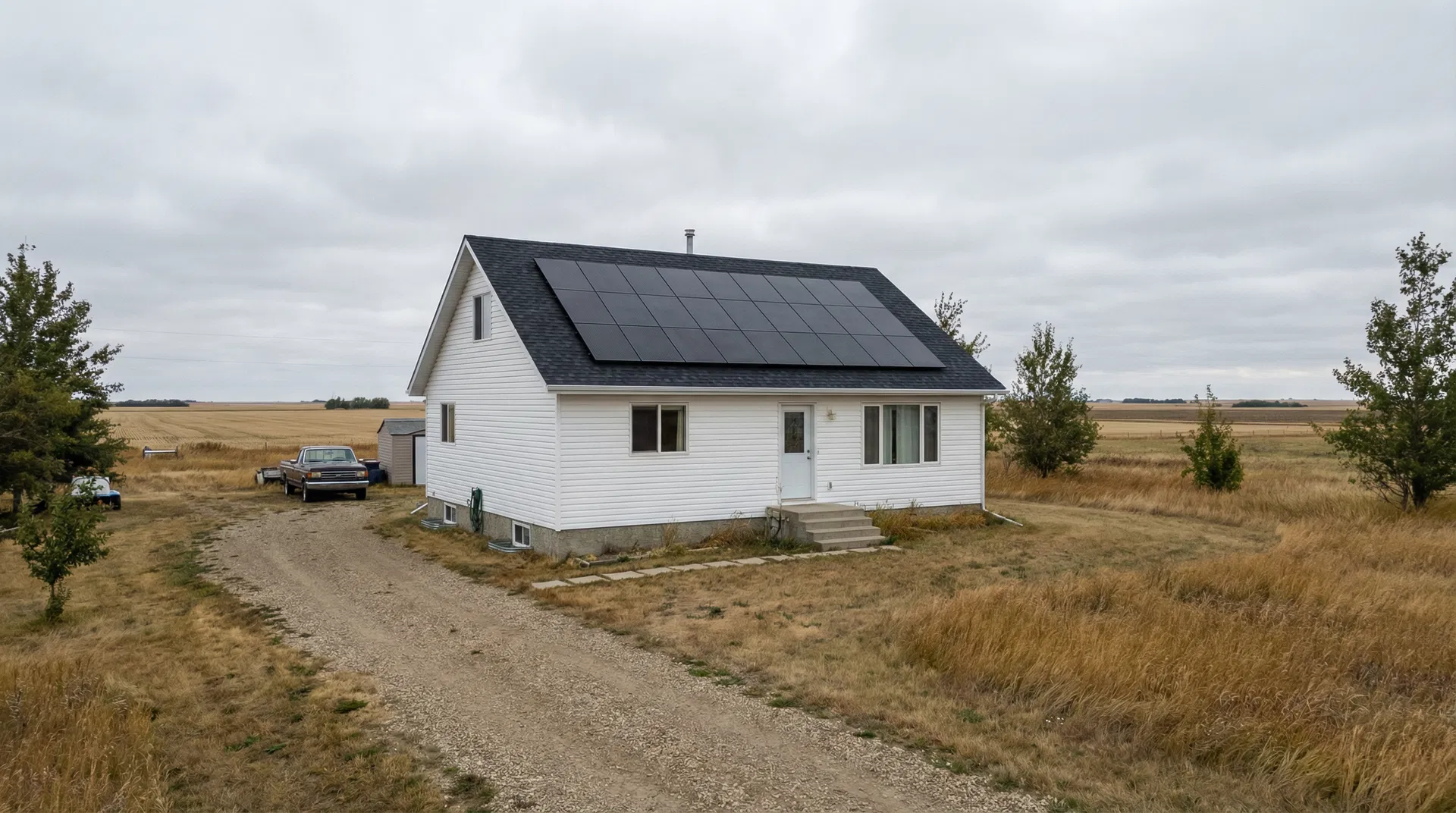
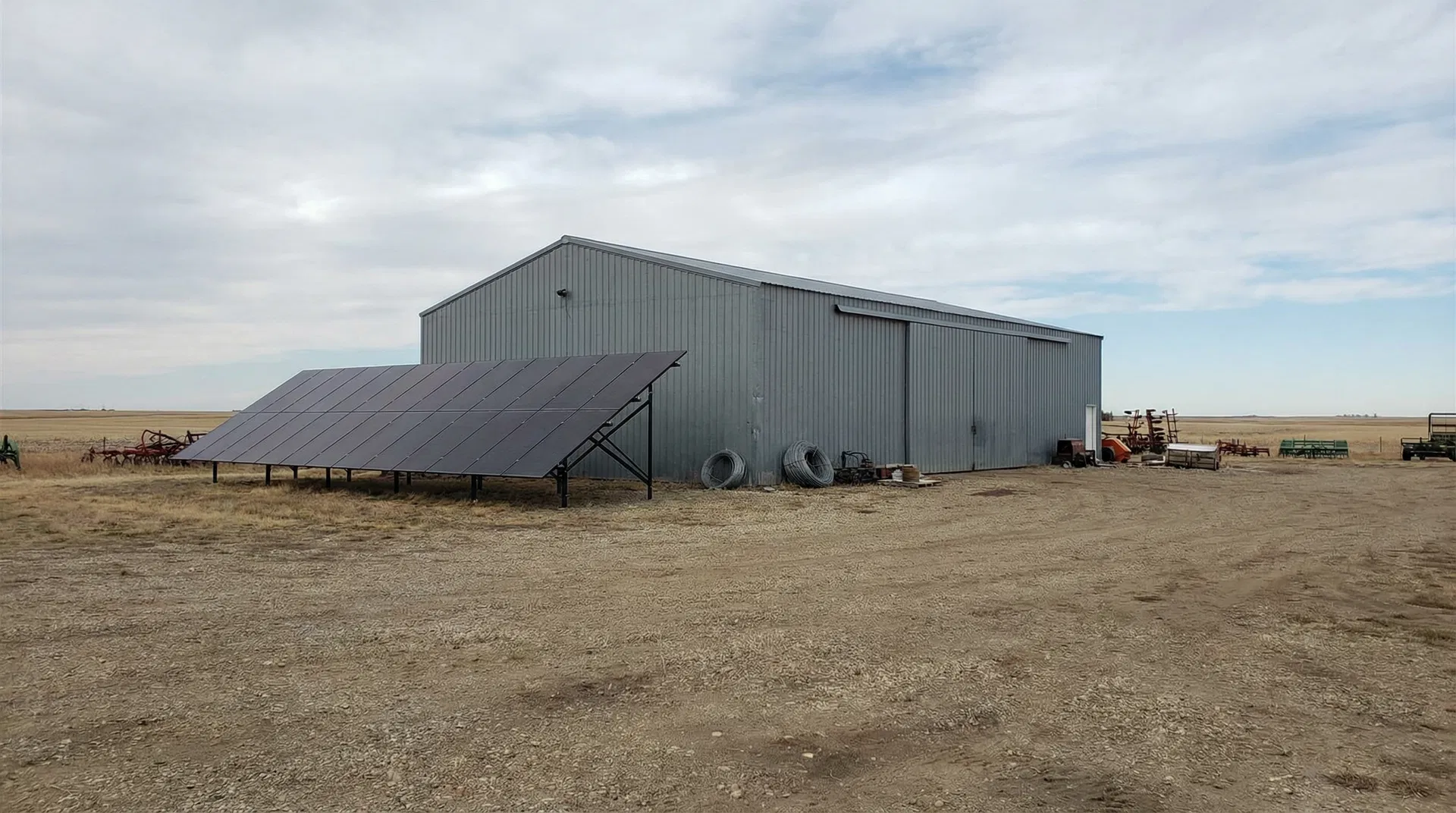
Rural systems around here tend to run larger than a typical in-town rooftop, because the load isn't just a house. A property might carry a home, a heated shop, a barn, and a well pump or grain-handling equipment, all on one service, and the system has to be sized for that combined load, not just the house alone. That's part of why the range for this area runs 8 to 15 kW rather than a single fixed number. Roof versus ground mount is a real decision, not a default: a roof with a good south or west-facing plane and no shade is often the simpler build, but a roof with tree shading, a steep or broken pitch, or multiple small planes can push the design toward a ground mount instead, especially on acreages with open yard space to work with. We don't size a system off a rule of thumb like watts per square foot or dollars per month. Instead, we pull the 12-month usage graph off your most recent power bill and design against the actual pattern it shows, month by month, alongside the site conditions we find on the walk-through. That combination, the usage graph and the physical site, is what sets the final system size, not a generic formula applied to every property the same way.
Typical Load Profiles We Design For Near Crossfield
Home Plus Heated Shop
This profile covers a house and a heated detached shop on one service, often with a shop that runs a furnace, lighting, and tool circuits through the colder months. We size the system against the combined usage pattern on your most recent power bill rather than treating the shop as an afterthought, since a heated shop can be a meaningful share of total draw.
Acreage With Irrigation or Well Pump
Properties with a well pump, irrigation, or livestock waterers add a load that doesn't show up on a typical home's bill, with periodic high draw rather than a steady pattern. We look at how that cycling shows up on the usage graph so the system isn't undersized for the peaks or oversized for the quiet months in between.
Working Property With Outbuildings
Some properties run a home alongside multiple outbuildings, grain handling equipment, or small-scale commercial use, each adding its own draw to the same service. We treat the full property as one load profile, built from the most recent power bill and a walk-through of every structure on the site, rather than designing around the house in isolation.
FortisAlberta Interconnection in Crossfield
FortisAlberta is the wire service for Crossfield, Alberta, and every grid-tied solar system we design for this area goes through FortisAlberta's micro-generation application process before it's switched on. Range Road Solar prepares and submits that application as part of the design package, so you're not the one chasing down single-line diagrams or equipment spec sheets. The application includes the LONGi panel and APsystems microinverter details, the system size within the 8 to 15 kW range we're proposing, and the interconnection point at your service entrance. We don't quote an approval timeline, because FortisAlberta sets that on its own schedule and it can vary by property and by current workload. We also don't state what happens to any credits the system generates: those terms come from FortisAlberta and your electricity retailer directly, and we point you to the current documents for that instead of guessing. What we do commit to is handling the paperwork correctly the first time, so the application isn't delayed by a missing form or an incomplete equipment list.
Project Economics and Design Review
| System Size | Annual Production | Year 1 Savings | Payback Period |
|---|---|---|---|
| 8-15 kW range, 10 kW typical |
Production, savings, and payback figures require a property-specific design review and your most recent power bill; we don't publish estimates without both.
How We Work in Crossfield
Bill and Load Review
We review your power bill to understand your energy use in Crossfield and size the system to your actual consumption, not a generic estimate.
Site Assessment
We assess your roof or ground area, south-facing exposure, electrical service, and utility interconnection requirements specific to your property.
Design and Utility Application
We produce a system layout, production estimate, and cost summary, then submit your micro-generation application to your utility on your behalf.
Installation and Commissioning
Our crew installs racking, panels, inverter, and electrical connections. All work is performed by licensed electricians. We commission and test before handoff.
Current Program and Interconnection Review
Utility connection review
FortisAlberta reviews every micro-generation grid connection application on its own process, and Range Road Solar builds and submits that application as part of your design package. We don't state how long FortisAlberta's review takes or what happens to any credits the system generates, since those terms come from FortisAlberta and your retailer directly.
Current program review
Commercial, farm, and residential eligibility for any current rebate, loan, or tax program gets checked against the rules in place at the time we finalize your design, not against rules that may be out of date by the time you read this. That review happens as part of the design process, using your property type and system size.
Frequently Asked Questions
Get a Solar Assessment for Crossfield
Submit a recent power bill and we will review your consumption and provide an honest assessment for your Crossfield property. No obligation.
(587) 330-7502 Book a CallRelated Resources
More Solar Services in Crossfield