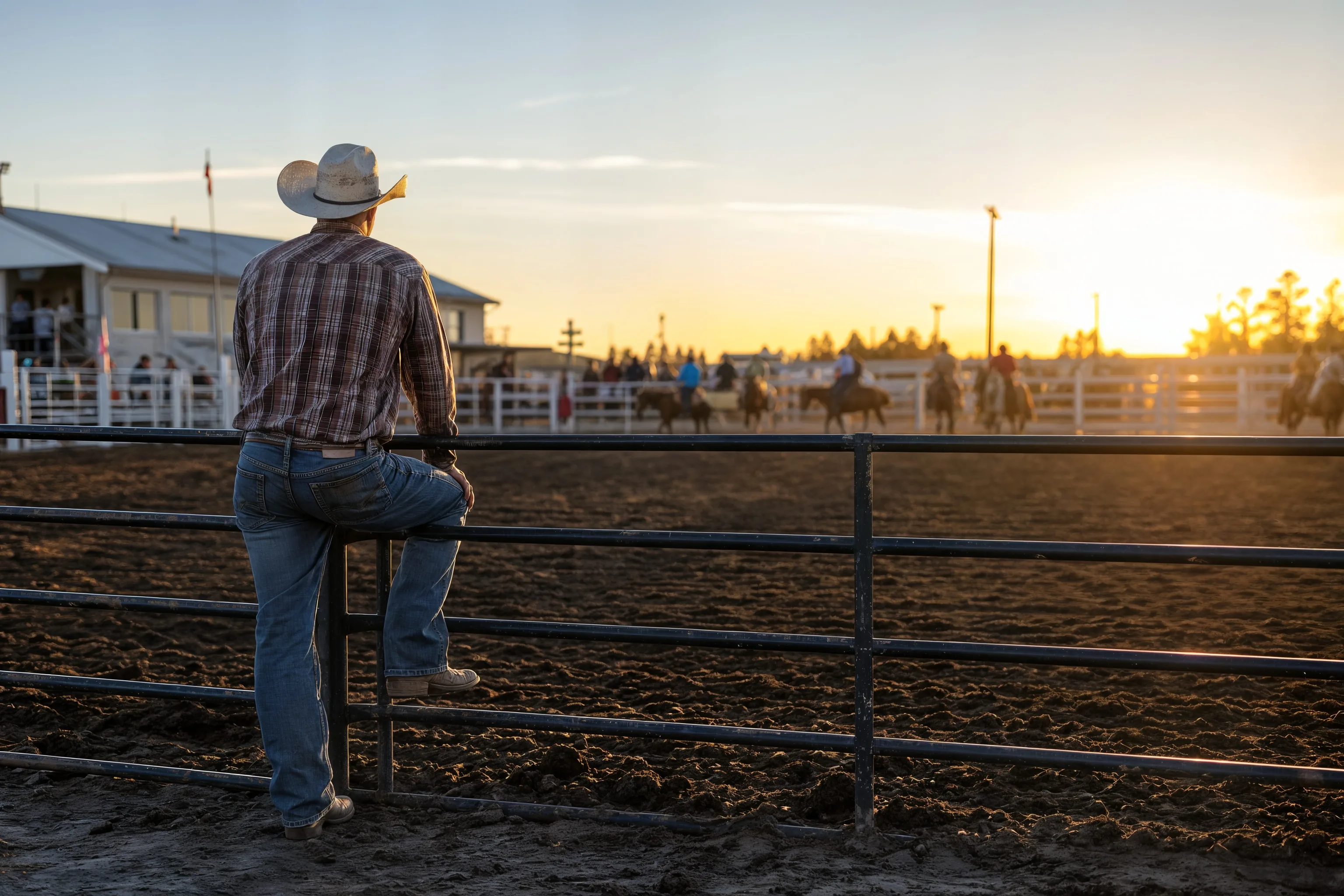
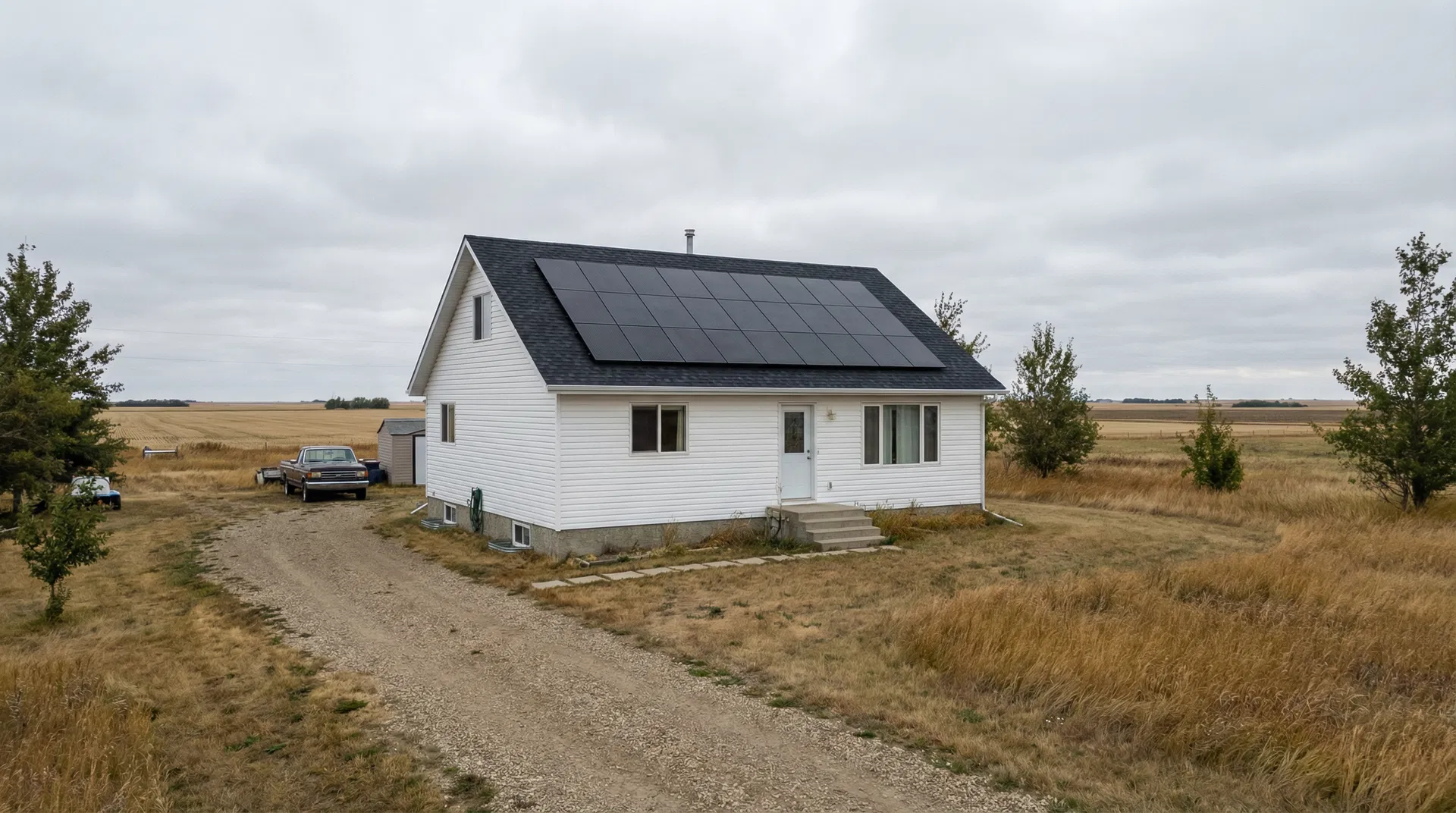
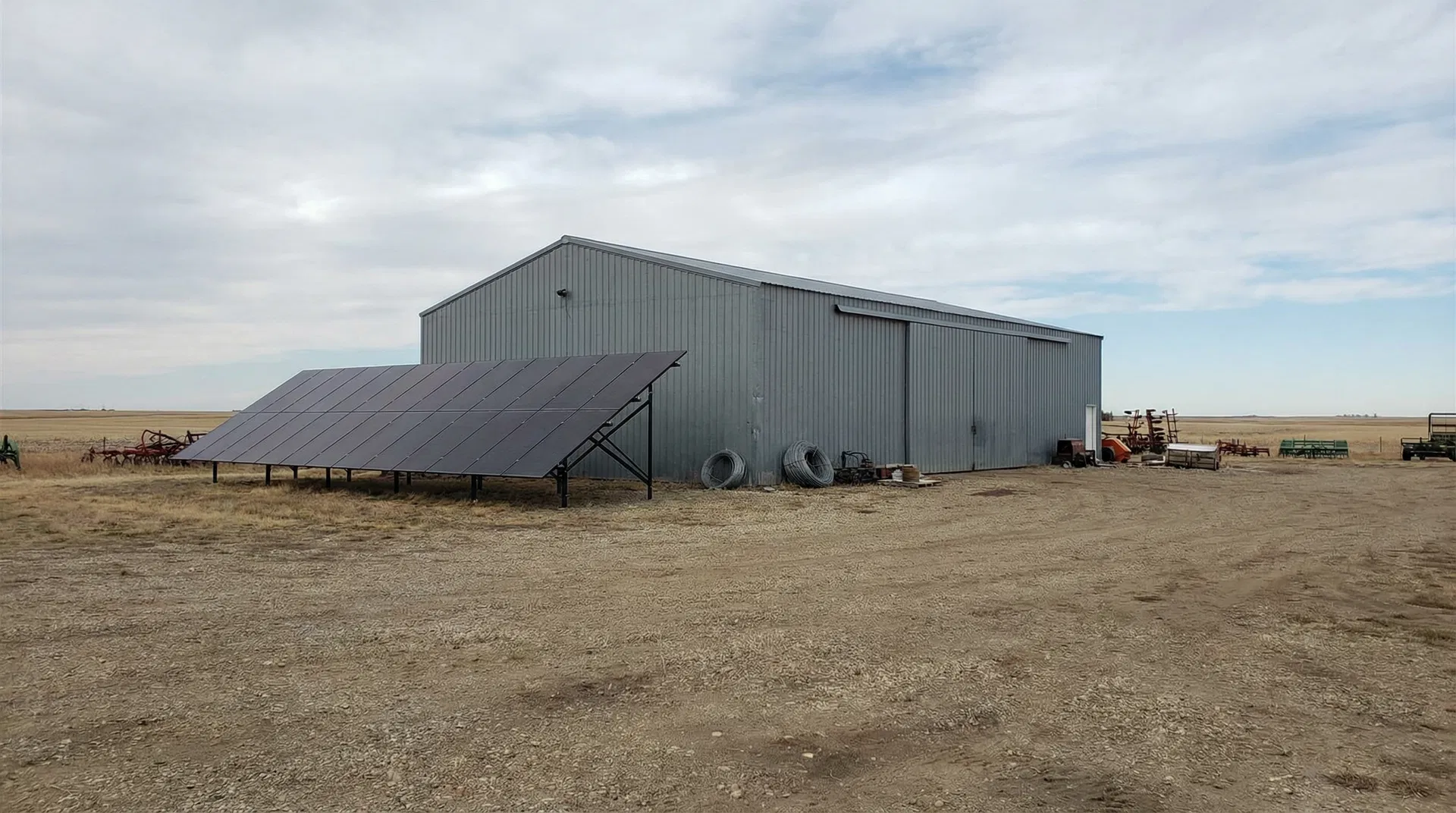
Farm solar in Crossfield has to work harder than a standard grid-tied residential array, because the loads it's offsetting are bigger and less predictable. We build these systems around LONGi panels and APsystems microinverters, and for anything in the 20 to 50 kW range, we default to ground-mount racking unless the roof geometry genuinely works better. Ground-mount arrays make sense on most farm properties near Crossfield: shops and machine sheds often have complicated rooflines, and a ground-mount array on open yard space is easier to service, easier to expand, and easier to angle for actual site conditions rather than whatever pitch the building happened to be built at. APsystems microinverters let us wire panel strings across uneven ground or partial shading from grain bins and shelterbelts without one shaded panel dragging down the whole string's output, which matters more on a spread-out yard than it does on a single roof plane. A typical farm system we quote in this area lands in the 20 to 50 kW range, with 25 kW as a common midpoint for a property running a house, shop, and grain handling equipment. Larger operations, especially anything irrigation-heavy or running multiple grain dryers, can push toward the top of that range. We don't quote off a square-footage guess. Every design starts with the 12-month usage graph on your most recent power bill, plus a walk of the yard to confirm roof condition, ground-mount siting, and how the panel and inverter layout should be split across the loads actually running on the property.
Solar Planning for Crossfield Properties
This area's population grew from 2,983 to 3,599 over the last census period, and a good share of that growth is happening on the acreages and quarter sections that ring the original townsite. Those properties carry a different electrical profile than a bungalow on a town lot. A working farm here might run a house, a heated shop, grain handling equipment, and livestock waterers off the same yard, and each of those loads has its own draw pattern across the year. That's the starting point for any farm solar design in this area: not a rule of thumb, but the actual equipment on the property and how it's wired. The property sits on FortisAlberta's distribution grid, the wire service that reviews every micro-generation connection application here. We design to that reality from the first site visit, not after the fact. The TAQA North Crossfield Gas Plant is a reminder that this has long been an energy-producing area, just not in the form most people first picture when they think about the local economy. Pete Knight Days draws people into town every year, but most of the properties we quote sit well outside the core, spread across yards where a ground-mount array can go up without touching the roofline at all. We size every system from the property's own usage pattern, not a generic estimate.
Electrical Site Review for Crossfield Properties
Voltage Rise
Voltage rise happens when the distance and load between a property and its distribution transformer cause voltage to climb higher than expected at the point of interconnection. Rural feeders serving properties in this area can run longer than urban feeders, which makes voltage rise a real design factor rather than an edge case. We check for it during the site review because it affects how hard an inverter can push without clipping, which in turn affects how we size the system.
Single-Phase vs Three-Phase
Properties in this area can have either single-phase or three-phase electrical service, depending on when the yard was built and what kind of equipment it was set up to run. That distinction matters for solar because inverter selection and total system capacity both depend on which type of service is already in place. We confirm phase configuration during the site visit rather than assuming it from the property type.
Panel Infrastructure
A lot of farm properties around here are running electrical panels that predate the loads now sitting on the yard, so we check breaker capacity and panel age before finalizing a design. We're looking for available breaker space, the panel's rated capacity, and whether its age or condition raises any concerns for adding a solar circuit. If the existing panel can't support the system, an upgrade means a new panel and breakers sized to handle both the farm's existing loads and the new solar circuit.
Service Entrance Review
We check the service entrance and meter base condition as part of every site review, since FortisAlberta's micro-generation application requires the interconnection point to meet current standards. A worn or outdated meter base can hold up an application even when the solar design itself is straightforward. If an upgrade is required, we fold it into the project scope and handle it as part of the interconnection process rather than treating it as a surprise change order.
Right-Sizing Solar for Crossfield Properties
A farm property in this area rarely runs on one load. There's the house, and then there's the shop, the grain handling equipment, maybe an irrigation pump or a livestock waterer system, and each of those draws power on its own schedule. That's why farm systems in this range end up bigger than a typical urban rooftop install: we're not sizing for one meter's worth of consistent household use, we're sizing for a whole yard's worth of overlapping equipment. Roof versus ground-mount comes down to the property itself. If the house or shop roof has good southern exposure, no shading from shelterbelts or grain bins, and a pitch that works for panel angle, a roof-mount can make sense. But a lot of farm yards have shading, awkward roof pitches, or simply more usable open ground than roof space, and in those cases a ground-mount array is the better call: it's easier to angle correctly, easier to expand later, and it doesn't compete with roof maintenance or replacement down the road. Either way, we don't size off a rule of thumb like square footage or panel count guesses. We size from the 12-month usage graph on your most recent power bill, cross-referenced against the site visit, so the system matches what the property actually draws across a full year rather than what a generic farm estimate would predict.
Typical Load Profiles We Design For Near Crossfield
Home + Heated Shop
This is one of the most common setups we see in this area: a house paired with a heated shop used for equipment storage and repair work. The shop's block heater and space heating load push total consumption well past what a house alone would need, and that's reflected in the size of system we design, sitting toward the lower half of our farm range. We confirm the exact split between house and shop from your most recent power bill before finalizing panel count.
Grain Handling and Drying
Properties running grain bins, augers, and a dryer see load spikes concentrated in a narrow window at harvest, which is a different pattern than steady year-round draw. We design around that spike rather than smoothing it into an average, which often pushes these systems toward the upper end of the 20 to 50 kW range. Ground-mount placement usually makes the most sense here, since bin yards leave open ground and often shade the nearest roofline.
Livestock and Irrigation
A yard running livestock waterers, barn lighting, and an irrigation pump has a more constant, spread-out draw than a grain operation's harvest spike. These loads tend to run through the shoulder seasons and summer rather than clustering at one time of year, and system sizing reflects that steadier pattern. We look at the usage graph on your most recent power bill to see how that draw shows up month to month before setting a final system size.
FortisAlberta Interconnection in Crossfield
This property is on FortisAlberta's distribution network, which means every grid-tied solar system here, farm-scale or otherwise, goes through FortisAlberta's micro-generation connection process before it can be switched on. Range Road Solar handles that application as part of the project: the technical drawings, the equipment specifications for the LONGi panels and APsystems microinverters, and the paperwork FortisAlberta requires to review the connection. For a 20 to 50 kW farm system, the application package is more detailed than a small residential job, since FortisAlberta is reviewing a larger interconnection on rural infrastructure. We prepare that package to match what a farm-scale system actually needs, rather than submitting a residential template and hoping it gets through review. We don't control how long FortisAlberta takes to process an application or what its current rules are for any given connection type, but we do make sure the submission is complete and accurate the first time, which keeps a farm project moving instead of stalling in review.
Project Economics and Design Review
| System Size | Annual Production | Year 1 Savings | Payback Period |
|---|---|---|---|
| 20-50 kW range, 25 kW typical |
Production, savings, and payback numbers depend on a property-specific design and your most recent power bill, and we won't give you a number before we've seen both.
How We Work in Crossfield
Bill and Load Review
We review your power bill to understand your energy use in Crossfield and size the system to your actual consumption, not a generic estimate.
Site Assessment
We assess your roof or ground area, south-facing exposure, electrical service, and utility interconnection requirements specific to your property.
Design and Utility Application
We produce a system layout, production estimate, and cost summary, then submit your micro-generation application to your utility on your behalf.
Installation and Commissioning
Our crew installs racking, panels, inverter, and electrical connections. All work is performed by licensed electricians. We commission and test before handoff.
Current Program and Interconnection Review
Utility connection review
FortisAlberta reviews every grid-tied solar connection application for properties on its distribution network, including farm-scale systems in the 20 to 50 kW range. Range Road Solar prepares and submits that design package, including the technical specifications for the LONGi panels and APsystems microinverters, so the application matches what FortisAlberta needs to review the connection.
Current program review
Eligibility rules for commercial, farm, and residential solar projects change, so we review current program rules against your specific project at the time we put the design together rather than relying on what applied to a past install. That review happens before we finalize a quote, not after.
Frequently Asked Questions
Get a Solar Assessment for Crossfield
Submit a recent power bill and we will review your consumption and provide an honest assessment for your Crossfield property. No obligation.
(587) 330-7502 Book a CallRelated Resources
More Solar Services in Crossfield