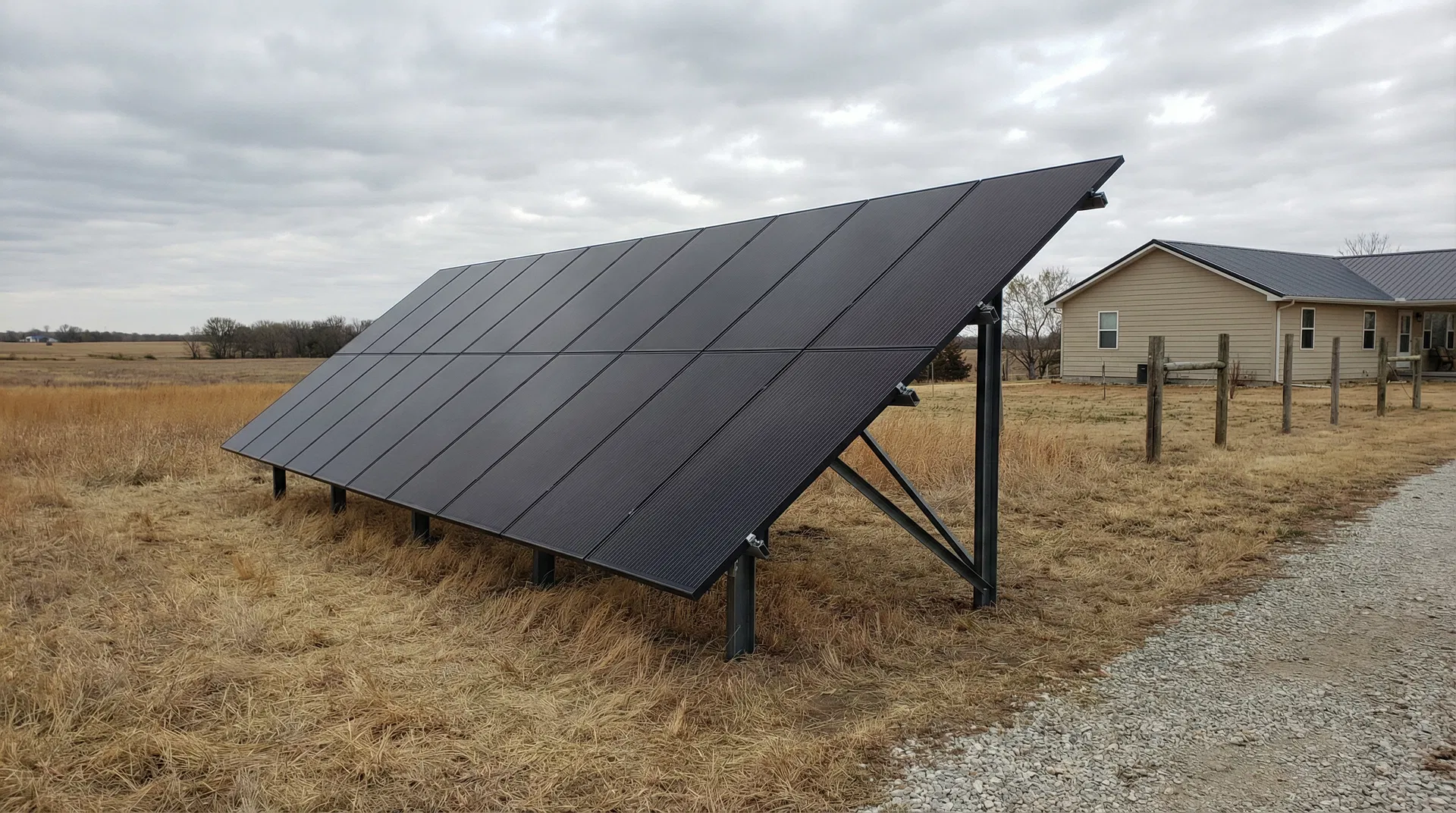
Solar quotes in Crossfield, Alberta start with one document: your most recent power bill. Alberta utility bills include a 12-month usage graph, and that graph tells us more about your property's needs than any satellite tool on the market. From there, we build a production model using your roof orientation, available ground space, shading conditions, and the electrical infrastructure already on the property. We specify LONGi solar panels, which are a well-proven module for Alberta conditions, paired with APsystems microinverters. Microinverters optimize each panel independently, which matters on properties where partial shading from outbuildings, trees, or multiple roof faces would otherwise drag down a string inverter system. The quote you receive from us includes a proposed system layout, panel and inverter specifications, the FortisAlberta micro-generation application package, and a project economics summary. We don't hand you a one-page estimate with a price and a handshake. You get a design you can actually evaluate. For properties near Crossfield, we most often design in the 8 to 15 kW range. A straightforward residential home might land around 10 kW. An acreage with a heated shop and additional outbuildings tends to push toward the upper end of that range or beyond it. Your most recent power bill and a site visit confirm where your property sits. We provide honest production estimates based on your actual power bills and site conditions, not inflated projections.
Solar Planning for Crossfield Properties
Properties in and around Crossfield, Alberta tend to be a solid fit for solar, but not because of any one reason. It's the combination: FortisAlberta grid access, a mix of residential homes and rural acreages, and the kind of electrical loads that respond well to an on-site generation system sized correctly from the start. That last part matters more than most quotes will tell you. A number pulled from a satellite image doesn't account for your panel orientation, your shop load, your irrigation timing, or the shading from that row of spruce trees on the west side. A real quote does. Range Road Solar builds every quote from your most recent power bill and a site assessment. We're not guessing at what your system should do. We're designing it around what your property actually uses. For properties near Crossfield, that process typically identifies a system in the 8 to 15 kW range, with a 10 kW design being common for a home with attached or detached heated space. Whether that fits your property depends on the specifics, and that's exactly what the design review is for.
Electrical Site Review for Crossfield Properties
Voltage Rise
Voltage rise occurs when a solar system pushes current back into the local distribution line, raising voltage at the point of connection. Rural distribution lines serving properties near Crossfield can have different impedance characteristics than urban feeders, which affects how much voltage rise your system contributes. If voltage rise exceeds the threshold permitted by FortisAlberta, the inverter will clip or curtail output, and we account for this in system sizing before anything gets installed.
Single-Phase vs Three-Phase
Rural and semi-rural properties in Alberta are served by either single-phase or three-phase electrical service, and the distinction directly affects inverter selection and how large a system the service can support. A single-phase property has a more limited capacity ceiling before infrastructure upgrades become necessary, while three-phase service opens up more headroom for larger systems. We confirm which service type your property has during the site review and spec inverters accordingly.
Panel Infrastructure
Older electrical panels on rural properties may not have sufficient breaker capacity to support a solar backfeed connection without modifications. We assess the panel's rated amperage, available breaker slots, and overall condition during the site review. If an upgrade is required, we identify it upfront so it's included in the project scope rather than discovered mid-installation.
Service Entrance Review
The service entrance and meter base are the first things FortisAlberta looks at when reviewing a micro-generation application. We check the meter base condition, the weatherhead, and the main disconnect to confirm they meet current interconnection requirements. If an upgrade is needed, we flag it before submitting the application so the project isn't delayed by a revision request from FortisAlberta.
Right-Sizing Solar for Crossfield Properties
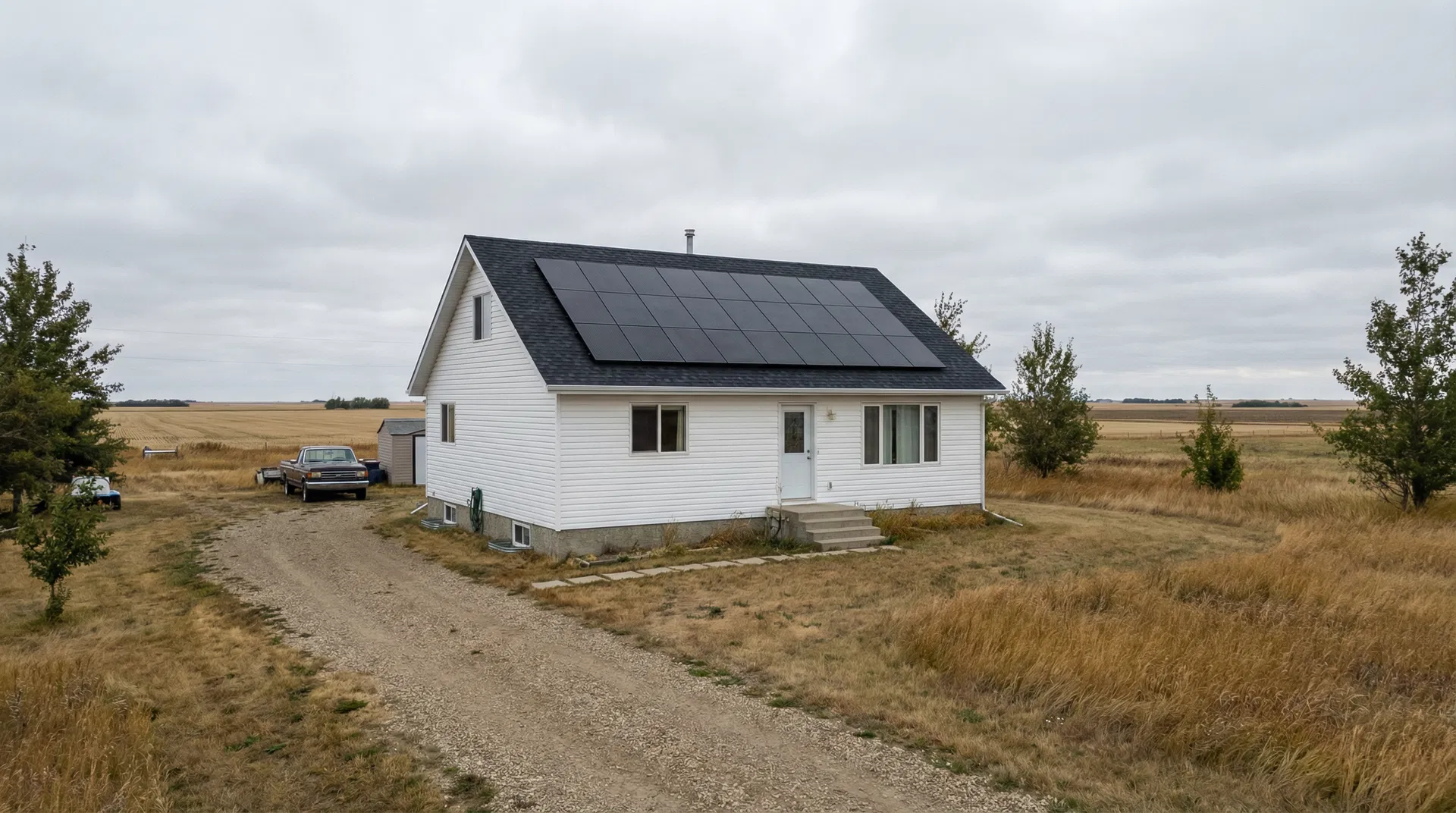
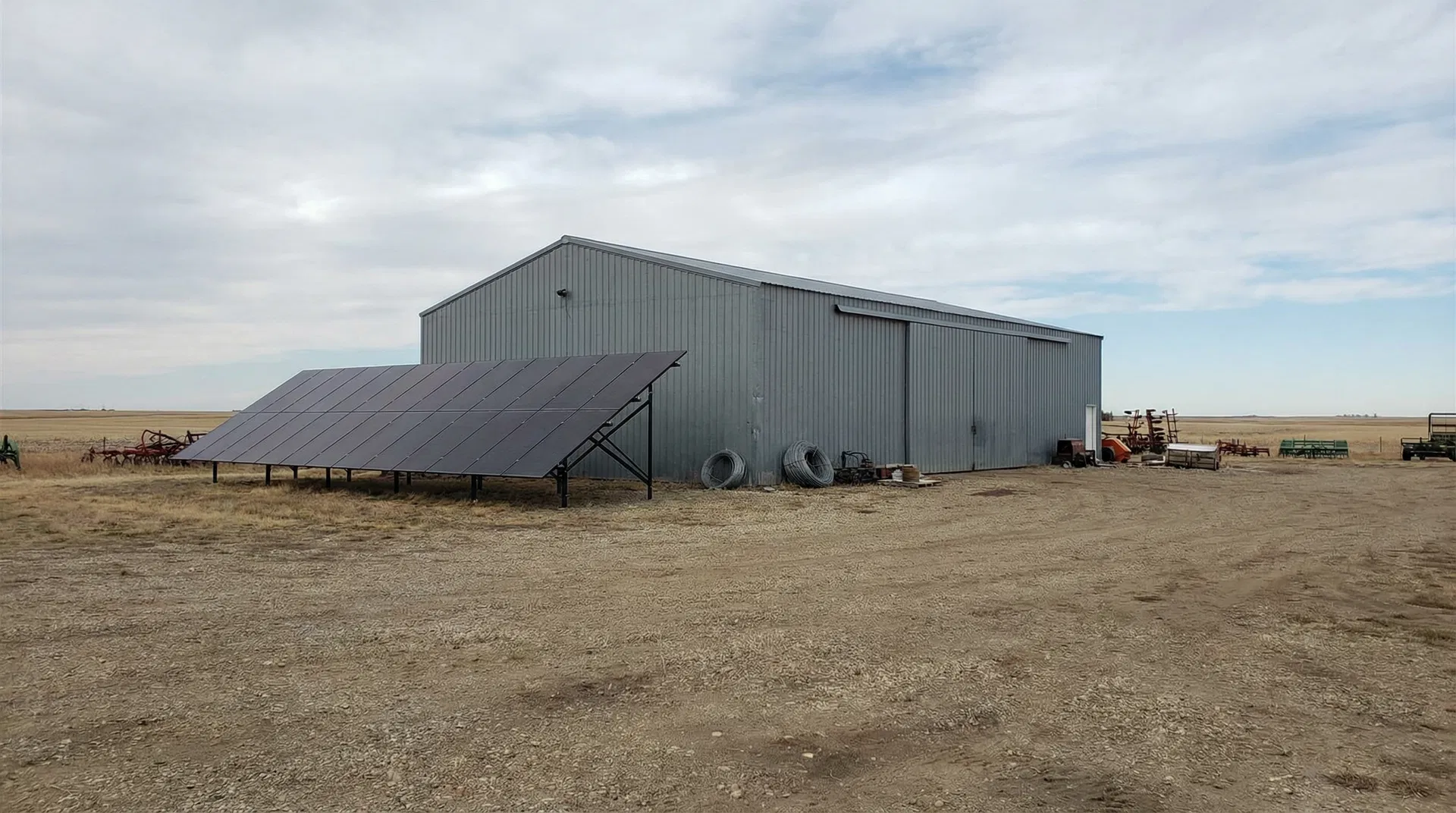
Rural properties carry more electrical load than a city house, and that gap is wider than most people expect. A home with a heated shop, an irrigation pump, and a grain handling system can use two or three times the electricity of a comparable urban property. That's why the 8 to 15 kW systems we typically see near Crossfield aren't oversized. They're sized to what the property actually uses. The starting point is always the 12-month usage graph on your most recent power bill. That graph shows us your seasonal pattern: whether you're heating heavy in winter, running pumps in summer, or carrying a relatively flat load year-round. We don't work from rule-of-thumb numbers. We size from usage. Once we understand your load profile, we look at where to put the array. On a home or acreage with good south-facing roof space and minimal shading, a roof mount is usually the most cost-effective option. But on farm properties with multiple outbuildings, large equipment blocking roof access, or a south-facing yard with available land, a ground mount often makes more sense. We're not pushing one over the other. We're recommending what fits your layout. When a roof has partial shading from trees or neighbouring structures, or when the pitch isn't ideal, a ground mount lets us orient the panels correctly regardless of what's on the roof. That detail matters more than most quotes will acknowledge. We walk the site before we spec anything.
Typical Load Profiles We Design For Near Crossfield
Home + Heated Shop
A residential home paired with a heated detached shop is one of the most common setups we design for in this area. The shop load varies by use: an occasional hobby space draws less than a working shop running welders, air compressors, or a vehicle lift regularly. We pull the full combined usage from the 12-month graph on your power bill and size the array to offset the combined load, not just the house portion.
Acreage with Well Pump and Year-Round Outbuildings
Properties running a submersible well pump alongside multiple outbuildings carry a more spread-out load that spikes seasonally. Well pumps, livestock waterers, and heated storage all add to the baseline in ways that aren't obvious until you look at the 12-month usage graph. A system sized only against winter consumption can leave summer offset on the table, so we account for the full annual shape of your usage before settling on system size.
Residential Home with EV Charging
Adding an electric vehicle to a home's load can shift the usage profile significantly, particularly if charging happens overnight on a Level 2 charger. A home that was drawing 800 to 1,000 kWh per month before an EV might push to 1,200 to 1,400 kWh or higher, depending on driving habits. We factor in current and anticipated charging load when sizing the system so the array doesn't underproduce relative to what the property is actually consuming.
FortisAlberta Interconnection in Crossfield
Crossfield, Alberta is served by FortisAlberta as the wire service. That means your micro-generation application goes through FortisAlberta, and the interconnection process follows their current technical and administrative requirements. Range Road Solar handles the application package on your behalf. We prepare the technical documentation, submit it to FortisAlberta, and coordinate the review process. You don't have to navigate the utility directly. What we can't do is guarantee a specific approval timeline or predict how FortisAlberta will respond to any particular site configuration. Some properties require additional review depending on the local grid segment. That's why we assess service entrance condition, meter base compatibility, and any site-specific electrical factors before we submit. Getting the application right the first time is faster than chasing a revision. If your meter base or service entrance needs an upgrade to meet FortisAlberta's interconnection requirements, we identify that during the design review so it's factored into the project before any work begins.
Project Economics and Design Review
| System Size | Annual Production | Year 1 Savings | Payback Period |
|---|---|---|---|
| 8-15 kW range, 10 kW typical |
Production, savings, and payback figures require a property-specific design and your most recent power bill to calculate accurately.
How We Work in Crossfield
Bill and Load Review
We review your power bill to understand your energy use in Crossfield and size the system to your actual consumption, not a generic estimate.
Site Assessment
We assess your roof or ground area, south-facing exposure, electrical service, and utility interconnection requirements specific to your property.
Design and Utility Application
We produce a system layout, production estimate, and cost summary, then submit your micro-generation application to your utility on your behalf.
Installation and Commissioning
Our crew installs racking, panels, inverter, and electrical connections. All work is performed by licensed electricians. We commission and test before handoff.
Current Program and Interconnection Review
Utility connection review
FortisAlberta reviews all micro-generation connection applications for properties in their service territory, including Crossfield. Range Road Solar prepares and submits the full design package on your behalf. We don't ask you to navigate the utility's process independently.
Current program review
Residential, acreage, and farm properties may have eligibility for programs or incentives depending on current rules at the time of installation. We don't publish program details that may have changed since this page was written. Eligibility is confirmed against current rules during your design review.
Frequently Asked Questions
Get a Solar Assessment for Crossfield
Submit a recent power bill and we will review your consumption and provide an honest assessment for your Crossfield property. No obligation.
(587) 330-7502 Book a CallMore Solar Services in Crossfield