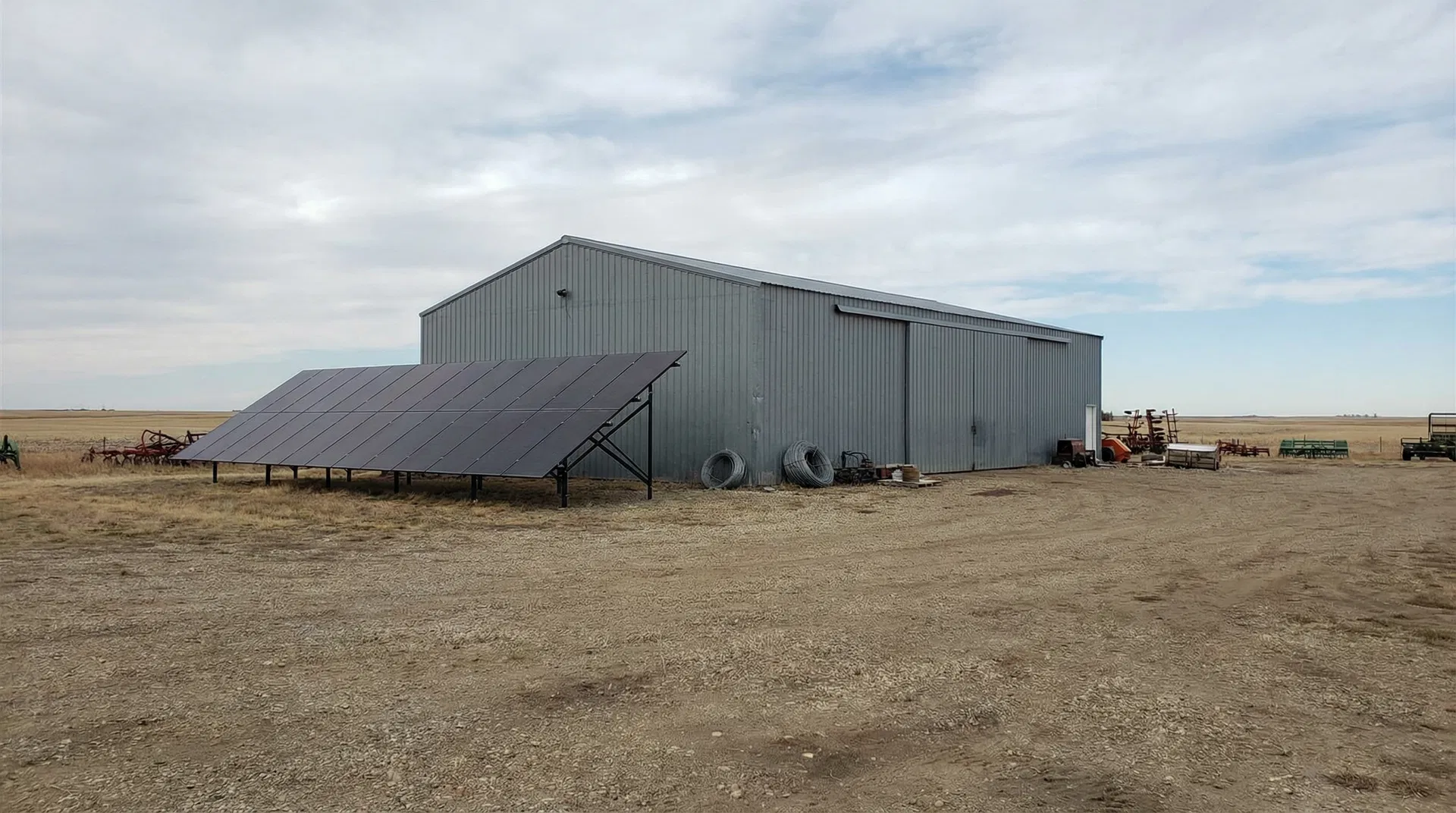
Solar Crossfield shop and outbuilding projects almost always start with a building that wasn't wired with solar in mind: a pole shed, a Quonset, or a detached garage that's seen some wiring changes over the years. We install both grid-tied systems that tie into the property's existing service and standalone systems for buildings that don't need, or don't have, a utility connection at all, like a shop out past the yard light. Every install uses LONGi panels and APsystems microinverters, mounted either on the building's roof or on a ground-mount rack when the roof pitch, orientation, or shading doesn't work. Ground-mount is common on properties where the shop sits in the shadow of grain bins, shelterbelts, or a second building, and it gives us more control over panel angle than a roof ever will. APsystems microinverters let us build out a shop array in stages, adding a string for a second outbuilding later without re-engineering the whole system, which matters on properties around here where the shop gets built out over a few seasons rather than all at once. We also design for the loads that actually run in these buildings: welders, compressors, grain dryers, livestock waterers, block heaters in winter. Those loads don't look like a house's load profile, and sizing a system off a residential rule of thumb usually gets it wrong in one direction or the other. Whether the building is a working farm shop, a detached garage with a home office, or a standalone outbuilding with no other utility service, the design process is the same: we look at the roof or available yard space, the building's electrical service, and your most recent power bill before we size anything.
Solar Planning for Crossfield Properties
Crossfield, Alberta has grown from 2,983 residents to 3,599 in the most recent census count, and a lot of that growth sits on acreages and commercial lots with a shop, a barn, or an outbuilding pulling as much power as the house. FortisAlberta runs the distribution wires here, and any grid-tied system we design gets built around their interconnection rules from the first site visit. We're not working off average weather or a generic yield chart. Natural Resources Canada's photovoltaic potential maps put this part of Alberta at a specific yield of 1,287 kWh per kW of installed capacity, which is a useful planning reference, but your actual output depends on your roof pitch, your tree line, and how your shop sits relative to the sun. Properties near the Pete Knight Memorial Arena and out toward the acreages that host Pete Knight Days each September tend to run mixed loads: house, shop, maybe an irrigation pump or grain-handling equipment. That's a different design problem than a single rooftop array on a quarter-acre lot in town, and it's why we size every system from your most recent power bill and a walk-through of the property, not a one-size answer pulled from a brochure.
Electrical Site Review for Crossfield Properties
Voltage Rise
Voltage rise happens when power pushes through a long run of distribution line and the voltage at the far end sits higher than at the substation, which is common on rural feeders serving spread-out properties. If the voltage at your shop or outbuilding is already running high, it limits how much solar we can safely add before the inverter starts clipping output to stay within range. We check this during the site review and size the system, and set inverter configuration, around what the line can actually handle.
Single-Phase vs Three-Phase
Properties can have either single-phase or three-phase electrical service, depending on when the building was wired and what kind of equipment it runs. A shop with a large compressor, a grain dryer, or certain farm equipment is more likely to be on three-phase power, and that changes which microinverters and system configuration make sense. We confirm which service type your building has before we finalize the design, since the wrong assumption here means the wrong equipment order.
Panel Infrastructure
A lot of outbuildings on rural Alberta properties are running on an older electrical panel that was sized for lighting and a few outlets, not for solar production added on top of existing loads. We check the panel's age, its breaker capacity, and whether there's room for the backfeed breaker a solar system needs. If the panel can't support the addition, an upgrade means a new panel sized for both the building's existing loads and the solar system, installed before the solar equipment goes in.
Service Entrance Review
We review the service entrance and meter base on every project, checking the condition of the conductors, the grounding, and whether the meter base is rated for the addition of a micro-generation system. This matters because FortisAlberta's micro-generation application asks for details on the existing service equipment, and an outdated or damaged meter base can hold up that application. If an upgrade is required, we flag it during the site review so it's handled before the application goes in, not after.
Right-Sizing Solar for Crossfield Properties
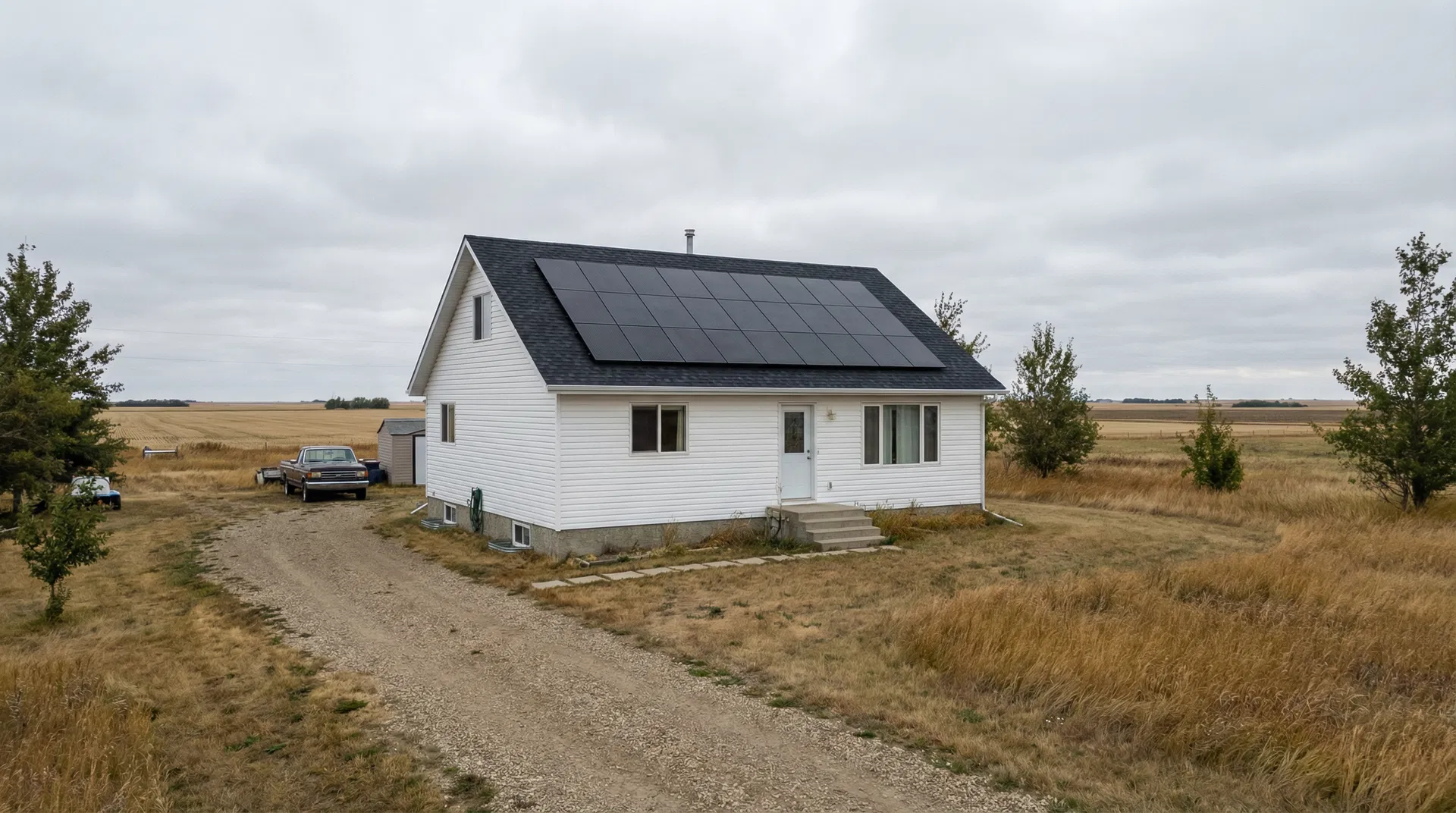
A system sized for an acreage or farm property usually ends up bigger than a typical in-town rooftop system, and that's because rural properties aren't running one load. A house, a heated shop, a second outbuilding, maybe an irrigation pump or grain-handling equipment: each one adds to the total the system has to cover, and we size for all of them together rather than the house alone. Roof versus ground mount comes down to what the property actually looks like. If the shop roof faces the wrong direction, has a low pitch, or sits in the shade of a shelterbelt or a grain bin, a roof-mount array won't perform the way it should, and a ground mount on open yard space is usually the better call. Properties with room to spread panels out on the ground also get more flexibility on panel angle than a fixed roof ever allows. Either way, we don't size off a rule of thumb like watts per square foot or a flat number per building. We pull the 12-month usage graph off your most recent power bill, which shows how your loads actually shift through the year, and we combine that with a site walk-through covering roof condition, shading, and available ground space. That combination, your actual usage pattern plus the physical realities of the property, is what determines the system size we recommend, not a generic formula.
Typical Load Profiles We Design For Near Crossfield
Home + Heated Shop
This is the setup we see most often: a house and a heated detached shop, both drawing off the same electrical service or close to it. The shop's heat, often electric or a mix of electric and another fuel source, tends to be the biggest swing load through the winter months. We size the system around the full pattern on your most recent power bill rather than estimating the shop and house separately.
Farm Shop + Grain Handling
Grain handling equipment, augers, dryers, aeration fans, runs hard for short stretches at harvest and sits idle the rest of the year, which makes for a load profile that doesn't look anything like a steady residential draw. A system designed for this kind of property has to account for those seasonal spikes without being oversized for the quiet months. We look at the usage graph on your bill to see exactly when and how hard those loads hit.
Standalone Outbuilding, No Grid Tie
Some outbuildings, a detached shop out past the yard light, or a building with no existing utility connection, don't need a grid-tied system at all. These get a standalone system sized purely around what runs in that building: lighting, tools, maybe a block heater, nothing more. Because there's no FortisAlberta interconnection involved, sizing comes down entirely to the equipment list and how often it runs.
FortisAlberta Interconnection in Crossfield
FortisAlberta is the wire service here, and any grid-tied shop or outbuilding system we install has to go through their micro-generation interconnection process before it's turned on. That application covers the electrical design, the point of connection, and the equipment specs for the panels and microinverters we're installing. We handle that paperwork directly: preparing the single-line diagram, the equipment data sheets, and the application itself, then submitting it to FortisAlberta on your behalf. For a standalone system with no grid connection, like a system built just to run a shop's lighting and tools off-grid, this step doesn't apply at all, and we'll tell you upfront which category your project falls into. We don't quote approval timelines or make claims about how FortisAlberta will apply credits or settle production, because those are FortisAlberta's rules to apply, not ours to promise. What we can tell you is that we've been through their process before and we build the application package to match what they ask for.
Project Economics and Design Review
| System Size | Annual Production | Year 1 Savings | Payback Period |
|---|---|---|---|
| 8-20 kW range, 12 kW typical |
Production, savings, and payback figures are provided only after a property-specific design review and a look at your most recent power bill.
How We Work in Crossfield
Bill and Load Review
We review your power bill to understand your energy use in Crossfield and size the system to your actual consumption, not a generic estimate.
Site Assessment
We assess your roof or ground area, south-facing exposure, electrical service, and utility interconnection requirements specific to your property.
Design and Utility Application
We produce a system layout, production estimate, and cost summary, then submit your micro-generation application to your utility on your behalf.
Installation and Commissioning
Our crew installs racking, panels, inverter, and electrical connections. All work is performed by licensed electricians. We commission and test before handoff.
Current Program and Interconnection Review
Utility connection review
FortisAlberta reviews every grid-tied micro-generation application before a system is turned on, covering the electrical design and point of connection for your property. Range Road Solar prepares that full design package, single-line diagram, equipment specs, and application, and submits it on your behalf.
Current program review
Eligibility for commercial, farm, and residential programs changes, so we check your project against whatever rules are current at the time we're doing the design, rather than assuming last year's terms still apply. This applies whether your property is zoned residential, agricultural, or commercial.
Frequently Asked Questions
Get a Solar Assessment for Crossfield
Submit a recent power bill and we will review your consumption and provide an honest assessment for your Crossfield property. No obligation.
(587) 330-7502 Book a CallRelated Resources
More Solar Services in Crossfield