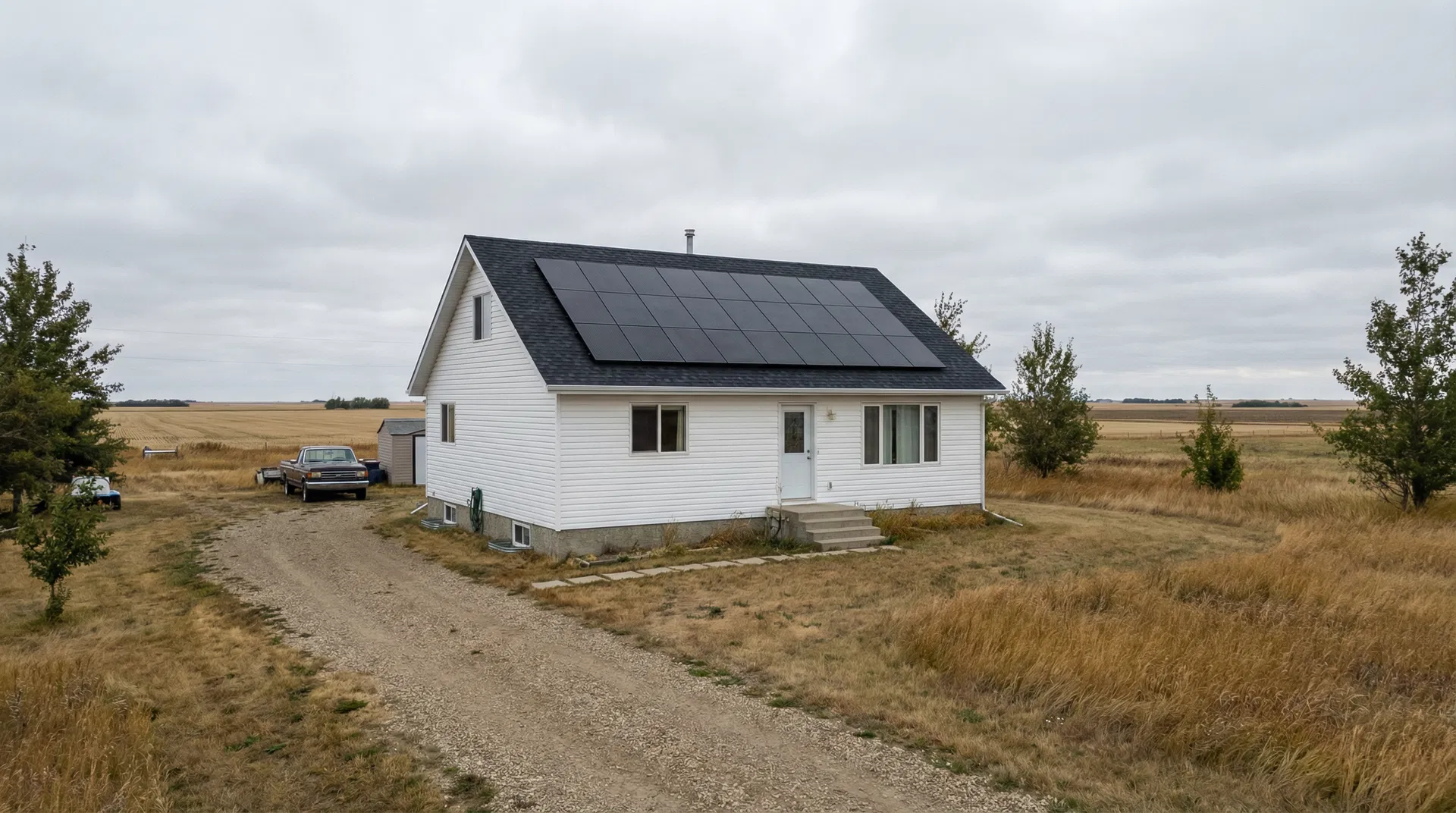
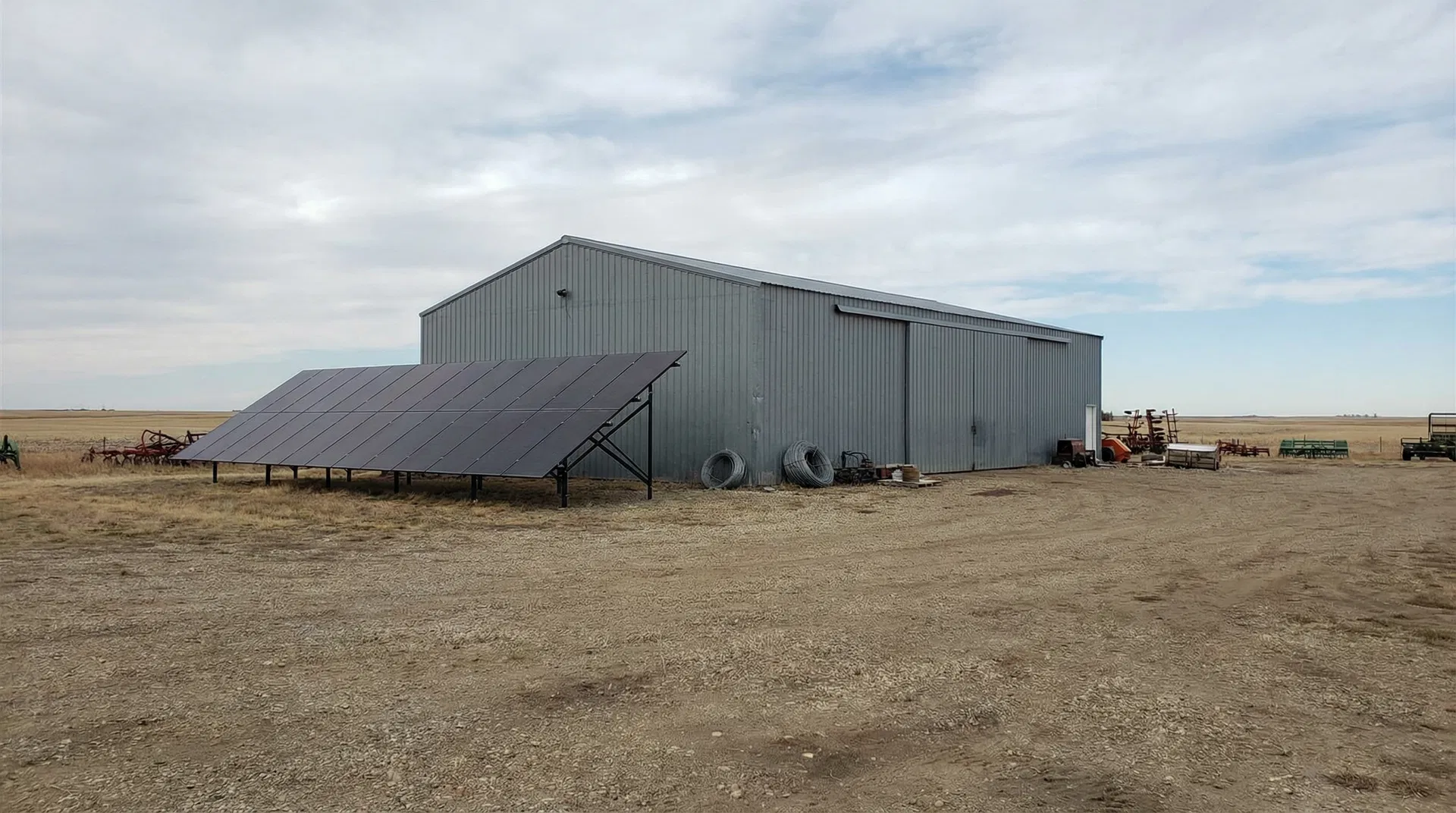
When people search for acreage solar Crossfield, they're usually dealing with a property that has more going on electrically than a standard in-town house: a shop, a well pump, grain handling equipment, or livestock infrastructure pulling power alongside the home itself. We design acreage systems in the 12-18 kW range for these properties, with 15 kW being a common starting point once we've looked at the actual loads on site. Every system we install uses LONGi panels paired with APsystems microinverters. The microinverter setup matters more on acreages than it does on a typical subdivision roof, because panel arrays here often get split across a house roof, a shop roof, or a ground-mount array in the yard, each facing a different direction or catching different shade patterns through the day. Microinverters let each panel perform on its own instead of the whole string dropping to the worst-performing panel, which is a real consideration when a shelterbelt or a grain bin throws shade across part of an array. Mounting is a case-by-case call. Some properties out here have a south-facing shop roof that's a clean fit. Others have roofs broken up by dormers, vents, or trees, and open yard space that makes ground mount the more practical option. We walk the property, look at roof pitch and orientation, check what shade moves across the yard through the day, and size the array around your buildings and your most recent power bill, not a generic template.
Solar Planning for Crossfield Properties
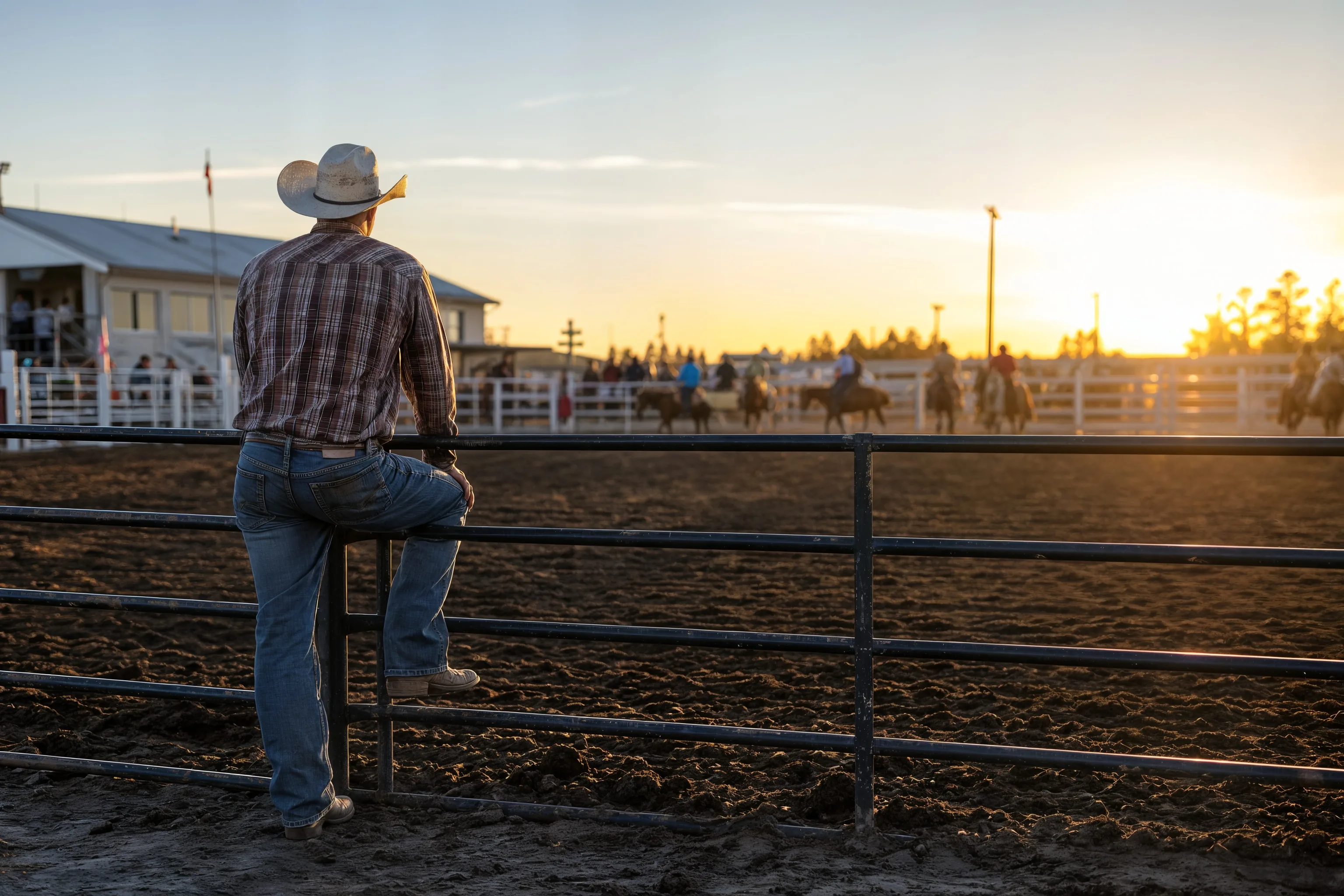
This area has grown from 2,983 residents to 3,599 at the most recent census, and a lot of that growth is showing up on acreages and larger residential lots outside the core grid. Properties out here often carry loads that go beyond a typical in-town bungalow: shops, barns, well pumps, and machinery that don't show up on a suburban power bill. FortisAlberta is the wire service for this area, and any acreage system we design has to work within that utility's interconnection requirements from day one, not as an afterthought. Solar planning for a property like this starts with what's actually on the land, not a generic estimate. We look at how the buildings sit relative to each other, whether there's a heated shop or outbuilding pulling extra draw, and what the service entrance can handle. Community life still centers on things like Pete Knight Days, the annual rodeo that draws people from across the region, and nearby anchors like the TAQA North Crossfield Gas Plant point to a local economy that's used to running serious equipment day in and day out. That's the same mindset we bring to acreage solar: size the system to the property's real loads, confirmed through a site visit and your most recent power bill, not a one-size formula built for a town lot.
Electrical Site Review for Crossfield Properties
Voltage Rise
Voltage rise happens when power has to travel a long distance along a distribution line before it reaches a property, and rural feeders serving acreages in this area can run longer than in-town service. Higher voltage at the point of connection affects how much headroom your inverters have before they clip output to stay within safe limits. We check line conditions at your service point so system sizing accounts for this instead of assuming town-lot voltage.
Single-Phase vs Three-Phase
Acreage properties out here can be fed by either single-phase or three-phase FortisAlberta service, depending on how the property was originally connected and what's on it. That distinction affects which inverter models are compatible and how much total capacity the system can support. We confirm which service type is present on your property before we finalize equipment selection, since the wrong assumption here means redesigning the system later.
Panel Infrastructure
Older rural properties in this area sometimes have electrical panels that predate the breaker capacity a 12-18 kW solar system needs. We check the panel's age, its rated capacity, and how much room is left for a new solar breaker before we finalize a design. If the existing panel can't support the addition, an upgrade to the panel itself is part of the project scope, not a surprise after installation.
Service Entrance Review
We review the condition of the service entrance and meter base as part of every site visit, since FortisAlberta's micro-generation application requires that equipment to meet current standards before a system can be interconnected. An aging or non-compliant meter base can hold up the application even if the solar system itself is ready to go. When an upgrade is needed, we scope and schedule it as part of the project so it doesn't become a delay later.
Right-Sizing Solar for Crossfield Properties
Acreage systems run larger than a typical town rooftop because there's usually more than one thing drawing power: the house, plus a shop, plus outbuildings, plus sometimes a well pump or grain-handling equipment running seasonally. That's part of why we design in the 12-18 kW range for acreages in this area rather than the smaller systems that fit a standard in-town bungalow. Roof versus ground mount is a property-by-property decision. If there's a south- or west-facing roof on the house or shop with clear sky and no shade from trees or grain bins, that's often the simplest and most cost-effective mount. Ground mount becomes the better call when the available roofline is broken up, shaded, poorly pitched, or already occupied, and when there's open yard space to work with instead. Acreages tend to have more of that spare land than in-town lots, which keeps ground mount on the table more often out here. Either way, we size the system from the 12-month usage graph printed on your most recent power bill, not a rule-of-thumb number based on square footage or guesswork. That graph shows us your actual seasonal draw, including anything that spikes in winter or summer, and it's the starting point for matching array size to what your property really uses rather than what a generic acreage estimate assumes.
Typical Load Profiles We Design For Near Crossfield
Home Plus Heated Shop
This is one of the most common acreage profiles: a house plus a heated workshop that runs power tools, block heaters, or a compressor through the colder months. We pull the 12-month usage graph from your most recent power bill to see how much that shop load adds on top of the house, then size the array and inverter count to match both buildings rather than just the home.
Home Plus Well Pump and Outbuildings
Properties with a well pump, a barn, and a couple of smaller outbuildings tend to have steadier, more spread-out draw rather than one big spike. We look at how those loads show up across the year on your power bill and often split the array between roof space on the house and a second structure to match where the draw actually is.
Home Plus Grain Handling or Livestock Equipment
Seasonal equipment like grain augers, aeration fans, or livestock waterers can push usage well above what the house alone would need during specific months. We size for that seasonal peak using the usage graph on your bill rather than an average, so the system is built around the property's real high-draw periods instead of a flattened annual number.
FortisAlberta Interconnection in Crossfield
FortisAlberta is the wire service for this area, and every acreage solar system we design here has to go through their micro-generation interconnection process before it's turned on. That application covers the technical side of connecting a customer-owned generation system to FortisAlberta's distribution lines, and it has to match the equipment and system size we actually install, down to the panel and microinverter specs. We handle that application on your behalf as part of the project, from the initial submission through to the documentation FortisAlberta requires for sign-off. Rural FortisAlberta lines out here can look different from one property to the next, depending on how the property is fed and what's already on the line, which is part of why we do a site-specific electrical review before finalizing a system design rather than assuming a standard connection. We don't quote approval timelines, credit handling, or payout terms here, because those are governed by FortisAlberta's current rules and your retailer's policies, not by us. We'll walk you through what applies to your account once we're at the design stage.
Project Economics and Design Review
| System Size | Annual Production | Year 1 Savings | Payback Period |
|---|---|---|---|
| 12-18 kW range, 15 kW typical |
Production, savings, and payback figures require a property-specific design review and your most recent power bill, since we don't publish generic numbers that wouldn't be accurate for your property.
How We Work in Crossfield
Bill and Load Review
We review your power bill to understand your energy use in Crossfield and size the system to your actual consumption, not a generic estimate.
Site Assessment
We assess your roof or ground area, south-facing exposure, electrical service, and utility interconnection requirements specific to your property.
Design and Utility Application
We produce a system layout, production estimate, and cost summary, then submit your micro-generation application to your utility on your behalf.
Installation and Commissioning
Our crew installs racking, panels, inverter, and electrical connections. All work is performed by licensed electricians. We commission and test before handoff.
Current Program and Interconnection Review
Utility connection review
FortisAlberta reviews every micro-generation interconnection application against its current technical requirements before a system can be connected to the grid. Range Road Solar prepares and submits that design package on your behalf, matched to the specific equipment and system size we're installing. We don't control FortisAlberta's review process, but we make sure the paperwork we submit is complete and accurate the first time.
Current program review
Eligibility for any commercial, farm, or residential program changes over time, so we check what currently applies to your property against the rules in place at the time of your design review rather than relying on outdated information. This applies whether the system is going on a home, a farm operation, or a small commercial building on the property.
Frequently Asked Questions
Get a Solar Assessment for Crossfield
Submit a recent power bill and we will review your consumption and provide an honest assessment for your Crossfield property. No obligation.
(587) 330-7502 Book a CallRelated Resources
More Solar Services in Crossfield