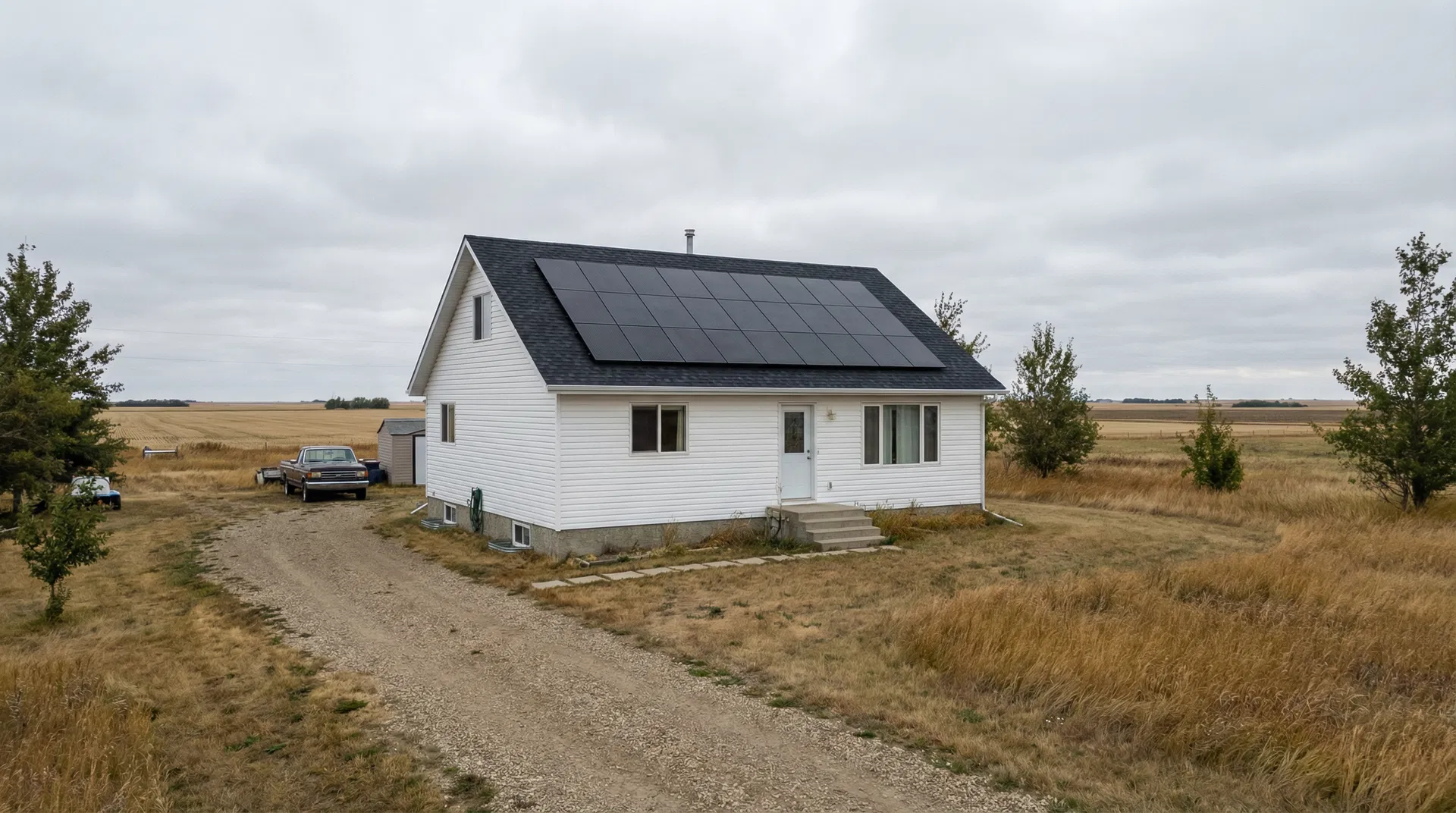
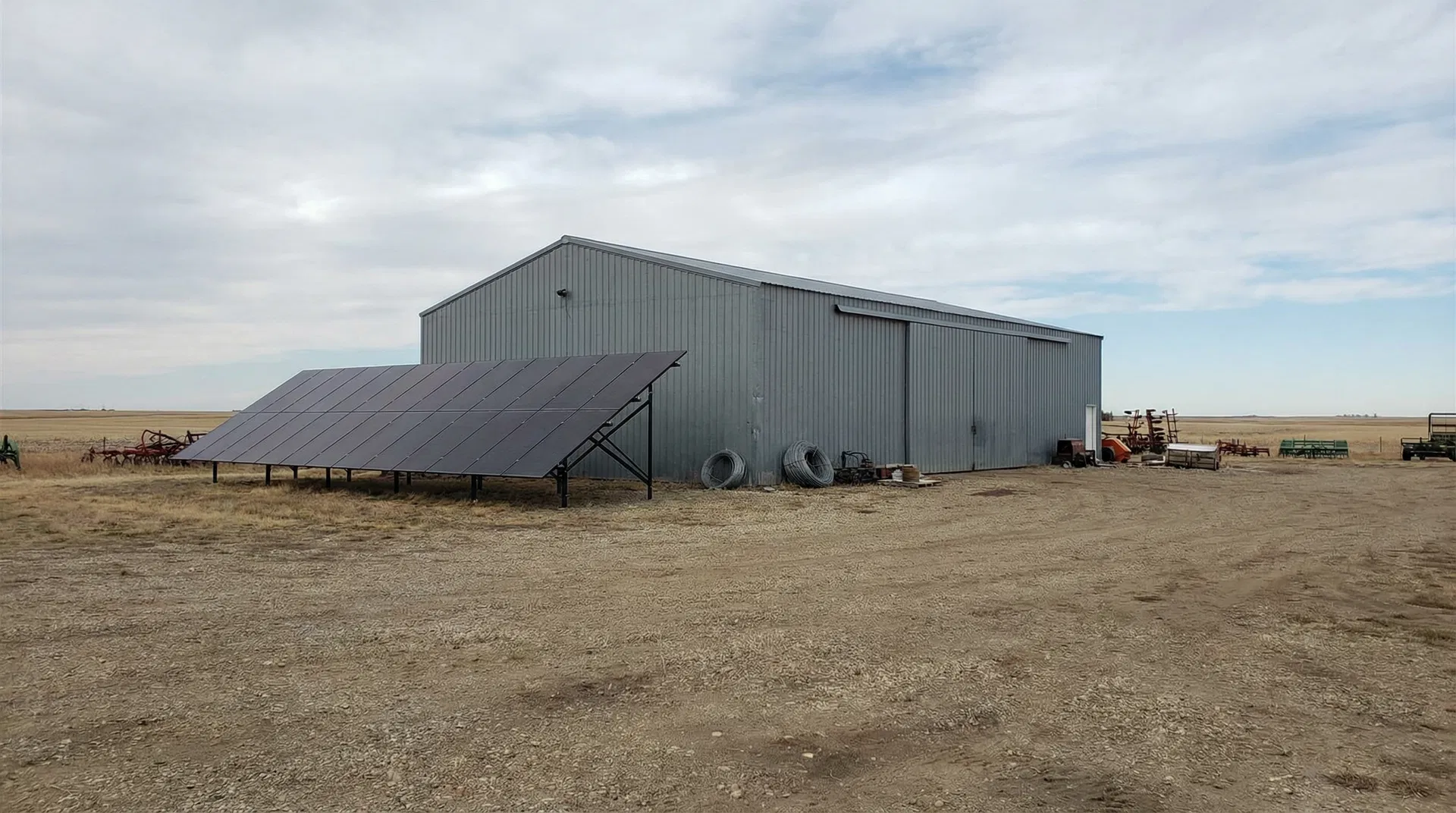
Solar Airdrie acreage installs typically run 12 to 18 kW, larger than a standard in-town rooftop system, because acreage properties carry more than one electrical load under one power bill: the house, a shop, sometimes a well pump or grain-handling equipment. We build every system around LONGi panels and APsystems microinverters. LONGi panels give us a strong track record on larger arrays, which matters when you're covering a house roof and a shop roof, or a ground-mount array split across two rows. APsystems microinverters let each panel operate independently, so partial shading from a shelterbelt, a grain bin, or a machine shed on one string doesn't drag down output from the rest of the array. On acreage properties we look at both roof-mount and ground-mount options. A newer shop roof with good south or west exposure is often the simplest install. A ground-mount array makes sense when the house roof is broken up by dormers, faces the wrong direction, or is shaded by mature trees, and there's open yard space to work with instead. Some acreage properties split the array across a house roof and a ground-mount bank to reach the full 12-18 kW range without overloading one roof section. Every install goes through a site design first: roof or ground conditions, shading, orientation, and the load shown on your most recent power bill. That's what determines panel count and layout, not a standard package size.
Solar Planning for Airdrie Properties
Airdrie's population has climbed from 61,581 to 74,100 according to recent census counts, and that growth shows up on acreage properties ringing the edge of town: bigger shops, more outbuildings, and higher electrical loads than a standard in-town lot. A property near Iron Horse Park faces different shading and roof-orientation questions than one further out on open grid land, so we start every acreage project with a site walk, not a generic quote. Environment Canada's climate normals put the Calgary-area station at 2,396.3 hours of bright sunshine annually, and Natural Resources Canada lists a photovoltaic specific yield of 1,292 kWh per kWp for this region. Those are regional reference figures, not a promise of what your roof or ground-mount array will produce. Your actual output depends on orientation, shading from trees or grain bins, tilt, and how FortisAlberta's interconnection rules apply to your service. That's why we don't quote a system off a rule of thumb. We pull the 12-month usage graph off your most recent power bill, walk the property, and size the array against your real load, whether that's a house alone or a house plus shop plus a well pump. On acreages, roof space and ground space both matter, and the right call depends on what's actually on the property.
Electrical Site Review for Airdrie Properties
Voltage Rise
Voltage rise happens when a distribution line runs a long distance from the transformer to your property, and rural feeders in this area can run longer than in-town lines. Higher voltage rise at the point of connection can push an inverter toward its upper voltage limit, which triggers clipping and cuts into output during peak sun. We check line conditions and inverter voltage windows as part of system sizing, so the array is matched to what your specific service can actually handle.
Single-Phase vs Three-Phase
Rural Alberta properties can run on single-phase or three-phase service, and which one you have changes which inverter equipment fits your system. Three-phase service generally opens up more inverter and capacity options for larger acreage loads, while single-phase service narrows the equipment choices and can cap how much capacity you can add at once. We confirm your service type before finalizing equipment, since it affects both inverter selection and how the system is sized.
Panel Infrastructure
Older acreage properties sometimes have an electrical panel that predates the property's current load, with breaker capacity that doesn't leave room for a 12-18 kW solar system. We check the panel's age, its rated capacity, and how much breaker space is free before we finalize a design. If the panel can't support the new system, an upgrade to a larger panel is scoped into the project rather than discovered after the fact.
Service Entrance Review
We inspect the service entrance and meter base condition on every acreage site, since FortisAlberta's micro-generation application requires the meter base to meet current standards before a system can be connected. An older or damaged meter base can hold up the application even after the solar design itself is finished. When an upgrade is required, we scope it into the project plan up front so it doesn't surface as a surprise partway through the FortisAlberta review.
Right-Sizing Solar for Airdrie Properties
Acreage systems run bigger than in-town rooftop solar because there's usually more than one load sharing a single power bill: the house, a heated shop, maybe a well pump, grain dryer, or irrigation pump. That's part of why acreage systems in this area typically land in the 12-18 kW range instead of the smaller systems common on standard residential lots. Roof or ground-mount isn't a default choice; it comes down to what the property looks like. A shop roof with clear south or west exposure and no nearby trees is often the easiest install. A ground-mount array becomes the better call when the house roof is shaded by shelterbelts or mature trees, faces the wrong direction, has a steep or broken roofline, or when there's simply open yard space that's easier to work with than the roof. We don't size a system off a rule of thumb like watts per square foot of house. We pull the 12-month usage graph off your most recent power bill, which shows how your load shifts through the year between the house, shop, and any seasonal equipment, and we use that alongside a site walk to land on an array size and layout. That combination, your bill's usage graph plus the physical site, is what tells us whether you need 12 kW, 18 kW, or somewhere in between.
Typical Load Profiles We Design For Near Airdrie
Home + Heated Shop
This is the most common load profile we see on acreages in this area: a house plus a heated shop used for a home business, vehicle storage, or hobby work. The shop's heat and any block heaters or power tools add a load that a standard in-town home doesn't carry. We size the array against the combined usage shown on your most recent power bill, not the house alone.
Home + Well Pump + Irrigation
Properties with an on-site well and any yard or garden irrigation carry a load profile with sharper seasonal swings than a house on municipal water. Pump cycling adds usage that doesn't show up on a typical suburban bill. We look at how that usage tracks across the 12-month graph on your bill to make sure the system accounts for both the steady house load and the seasonal pump load.
Home + Grain Handling or Outbuildings
Some acreages run grain handling equipment, an aeration fan, or multiple outbuildings off the same service, which adds load that spikes at specific times of year rather than staying flat. We treat that seasonal spike as part of the sizing conversation, not an afterthought, and look at how it shows up on your most recent power bill before finalizing array size.
FortisAlberta Interconnection in Airdrie
Airdrie sits in FortisAlberta's distribution territory, so any acreage solar system you install here connects to the grid through FortisAlberta's micro-generation process, not a different wire service. That process requires a formal application and technical review before your system can be energized, and it's specific to your property, your transformer, and your existing service size. Range Road Solar handles that application as part of your project: we prepare the technical package, including your system design and equipment specifications, and submit it to FortisAlberta on your behalf. On acreage properties, this step often involves extra review because rural services can run single-phase or three-phase, and the size of your existing service affects what the distribution system can accept. We don't guess at approval timelines or what FortisAlberta will require for your specific transformer or line section, because that depends on your service and their current review process. What we can tell you is that we manage the paperwork end to end, so you're not the one chasing down forms or technical specifications while your system sits half-finished.
Project Economics and Design Review
| System Size | Annual Production | Year 1 Savings | Payback Period |
|---|---|---|---|
| 12-18 kW range, 15 kW typical |
Production, savings, and payback figures require a property-specific design and a review of your most recent power bill; we don't publish estimates that skip that step.
How We Work in Airdrie
Bill and Load Review
We review your power bill to understand your energy use in Airdrie and size the system to your actual consumption, not a generic estimate.
Site Assessment
We assess your roof or ground area, south-facing exposure, electrical service, and utility interconnection requirements specific to your property.
Design and Utility Application
We produce a system layout, production estimate, and cost summary, then submit your micro-generation application to your utility on your behalf.
Installation and Commissioning
Our crew installs racking, panels, inverter, and electrical connections. All work is performed by licensed electricians. We commission and test before handoff.
Current Program and Interconnection Review
Utility connection review
FortisAlberta reviews every micro-generation application before a new solar system can be connected to the grid, and that review is specific to your property and existing service. Range Road Solar prepares the full design package, including system specifications and site details, and submits it to FortisAlberta on your behalf.
Current program review
Eligibility for any current commercial, farm, or residential program is reviewed against the rules in effect at the time of your design, since those rules can change. We check what applies to your specific property and project type as part of the design review, rather than assuming a general answer applies to every acreage.
Frequently Asked Questions
Get a Solar Assessment for Airdrie
Submit a recent power bill and we will review your consumption and provide an honest assessment for your Airdrie property. No obligation.
(587) 330-7502 Book a CallRelated Resources
More Solar Services in Airdrie