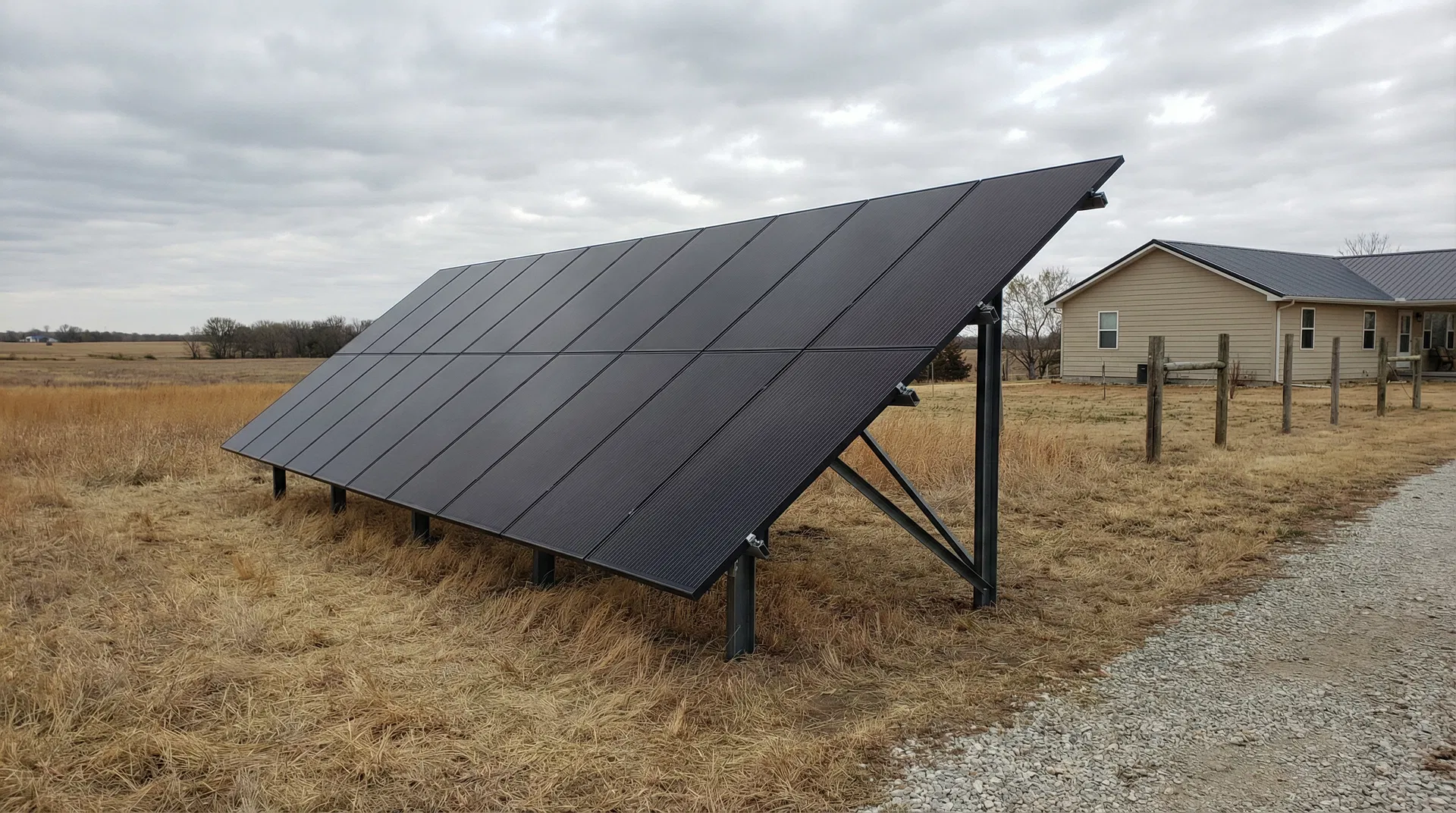
Farm solar systems alberta properties typically require isn't a scaled-up version of a suburban rooftop job. The load profiles are heavier, the property layouts are more complex, and the electrical infrastructure on older farmyards often needs a closer look before a single panel goes up. We design and install systems in the 20-50 kW range for agricultural properties near Airdrie, with 25 kW being a common starting point for a home-plus-shop combination with moderate ancillary loads. For larger grain operations or properties with significant three-phase equipment, sizing moves higher within that range. LONGi panels are our standard choice for farm installs. They're built to handle the output demands of larger arrays and they hold up on exposed ground-mount structures where wind loads are real. For systems where microinverters are the right fit, we use APsystems. Ground-mount is the preferred configuration for farm-scale systems. Rooftops on older shops or quonsets often have pitch, shading, or structural concerns that make ground-mount the cleaner option. When available land isn't a constraint, a ground-mount array also gives us full control over orientation and tilt, which matters at this scale. Every installation includes our standard site assessment: panel and breaker capacity review, service entrance condition, meter base inspection, and a shading analysis of the proposed mount location. We don't skip steps because a property looks straightforward. Rural electrical sites have a way of surfacing surprises, and finding them before the interconnection application is a lot better than finding them after.
Solar Planning for Airdrie Properties
Farm and agricultural properties near Airdrie run a different kind of electrical load than a residential lot in town. You've got a house, a heated shop, outbuildings, and in many cases irrigation or grain-handling equipment all pulling from the same service. That combination means your power bill tells a very different story than what a standard residential solar calculator would assume. It also means the system design has to account for all of it. We start every farm solar project with your most recent power bill, which includes a 12-month usage graph that shows exactly how your consumption shifts across the year. Harvest season looks nothing like January. Irrigation months look nothing like the shoulder season. That usage pattern is what drives system sizing decisions, not a square-footage formula or a rule-of-thumb number from a sales sheet. Properties in this area are served by FortisAlberta for wire service, and the interconnection application has specific requirements we handle on your behalf. Before any panels go on a roof or in the ground, we confirm the electrical site conditions, the meter base, and the service entrance. That work isn't optional. It's what keeps the system performing the way the production model says it will.
Electrical Site Review for Airdrie Properties
Voltage Rise
Voltage rise happens when a solar system pushes current back onto a distribution line that already has elevated voltage. On rural distribution lines, which often serve a small number of properties over longer wire runs, the line impedance tends to be higher than in dense urban areas, which makes voltage rise more likely. When voltage rise exceeds the inverter's allowable threshold, the inverter clips or shuts down to protect the grid, which reduces the system's output. We account for local distribution conditions during system sizing so the array is designed to operate within acceptable voltage limits.
Single-Phase vs Three-Phase
Rural properties near Airdrie can have either single-phase or three-phase electrical service depending on the loads the property was built to handle. Grain handling equipment, larger irrigation pumps, and commercial-scale shop loads often require three-phase service, and the phase configuration at your meter directly affects how we select and configure inverters. A system designed for single-phase service can't simply be reused on a three-phase site without changes to the inverter setup and wiring. We confirm your service configuration during the site assessment before the design is finalized.
Panel Infrastructure
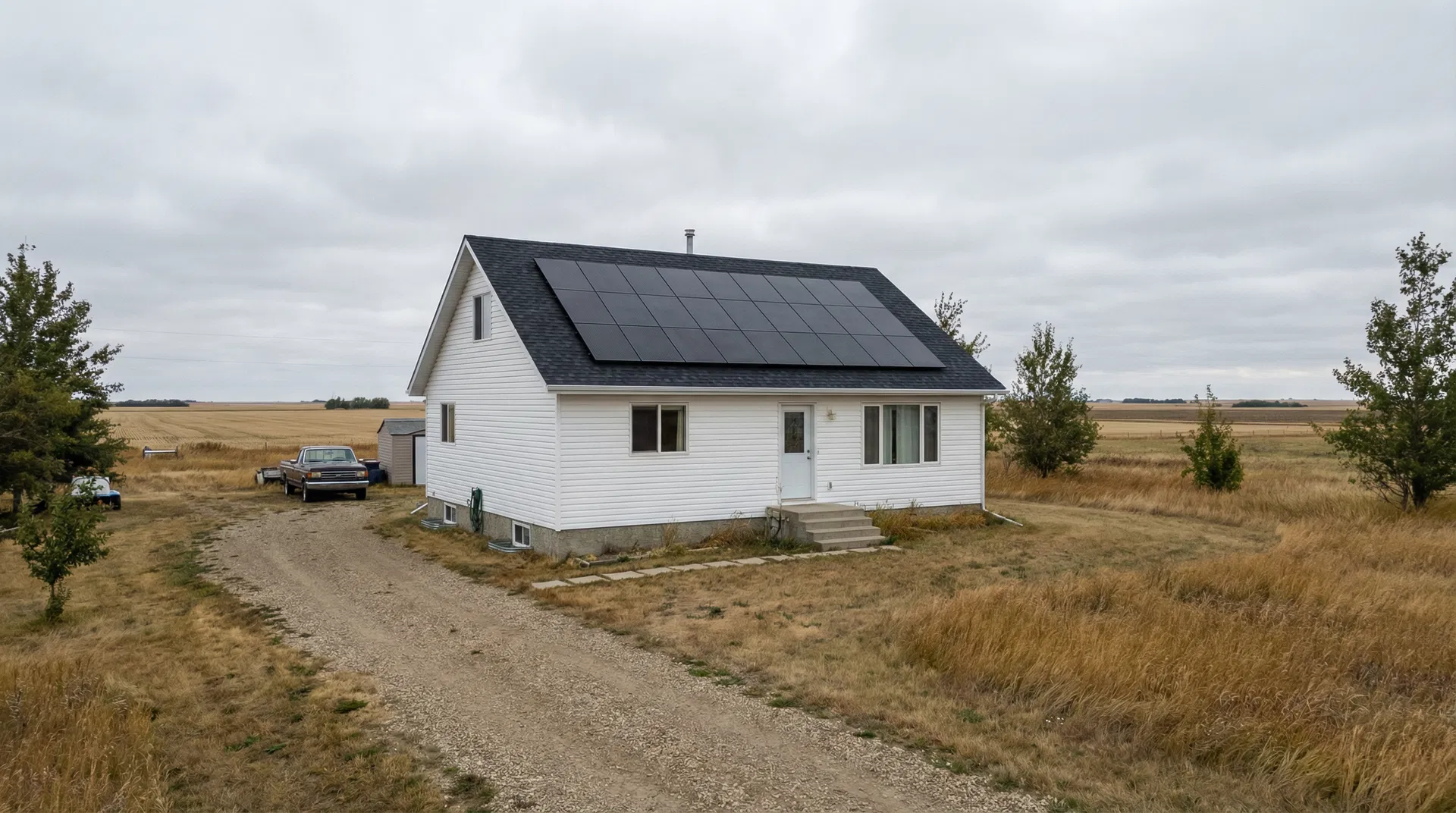
Older farmyards often have electrical panels that were sized for the loads the property carried decades ago, not for the addition of a solar system in the 20-50 kW range. We inspect the breaker panel for available capacity, breaker condition, and panel age as part of every site assessment. If the existing panel can't support the solar system's interconnection requirements, a panel upgrade is required before the installation can proceed, and we'll include that scope and cost in your design review so there are no surprises.
Service Entrance Review
The service entrance and meter base are what FortisAlberta inspects when reviewing a micro-generation interconnection application. If the meter base is an older type that doesn't support bi-directional metering, or if the service entrance has weathering or capacity issues, the interconnection application won't proceed until upgrades are made. We inspect the service entrance and meter base during our site visit, confirm whether either needs work, and include that scope in the project plan before we submit anything to FortisAlberta.
Right-Sizing Solar for Airdrie Properties
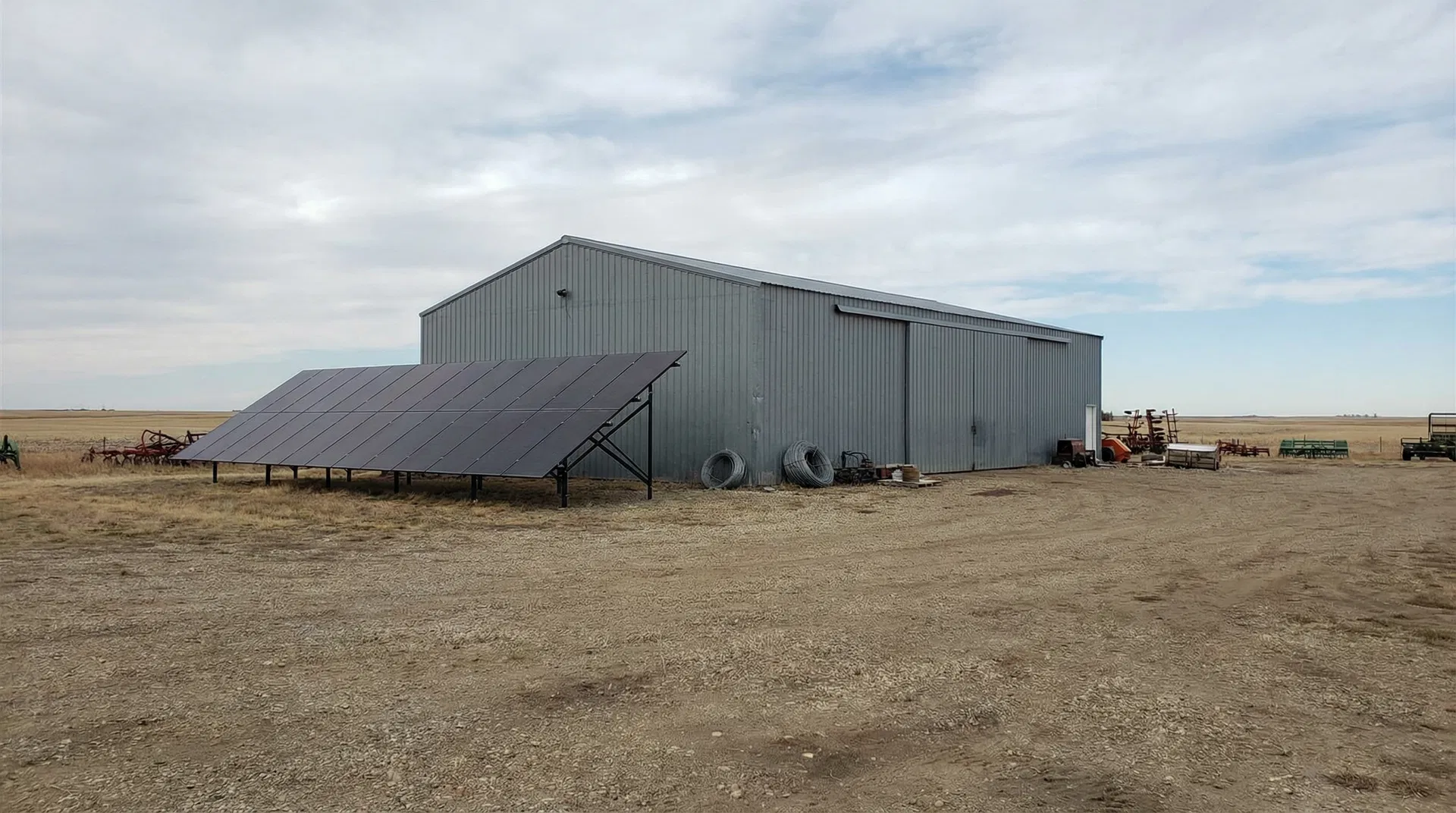
Farm properties near Airdrie don't size solar the way a suburban homeowner does. You're not designing for one meter serving one house. You're designing for a house, a heated shop, grain bins with aeration fans, possibly irrigation, and whatever other outbuildings draw power from the same service. Each of those loads has its own seasonal pattern, and the system has to be sized to offset meaningful portions of all of them, not just the residential portion. That's why 20-50 kW is the relevant range for agricultural installs here, and why some operations land at the higher end of that range. The roof-versus-ground-mount decision comes down to the specific property layout. Rooftops on older shops or quonsets can work, but they often have structural limitations, low pitches, north-facing sections, or shading from adjacent grain bins and trees that make them poor candidates. When usable flat land is available, which it usually is on a working farmyard, a ground-mount array gives us control over tilt, orientation, and row spacing that a rooftop can't match. We size every system from the 12-month usage graph on your most recent power bill. Alberta utility bills include that graph, and it shows exactly how your consumption moves across the year, including the seasonal spikes that rule-of-thumb sizing tools miss entirely. We don't quote a system size before we've seen that data. A design built on your actual usage is the only design worth installing.
Typical Load Profiles We Design For Near Airdrie
Home Plus Heated Shop
This is the most common starting point for agricultural properties in the area. The residential load runs year-round, but a heated shop adds a significant winter draw from in-floor heat, unit heaters, or panel heaters that can rival or exceed the house itself. We pull the 12-month usage graph from your most recent power bill to see how those seasonal swings look across the full year, then size the array to offset a meaningful share of the combined load rather than just the summer baseline.
Grain Operation with Aeration and Handling
Grain farms with on-site storage typically see heavy electrical use concentrated around harvest and post-harvest, when aeration fans run continuously for weeks. A 25-35 kW system is often the starting point for this profile, but the actual size depends on the number of bins, fan motor sizes, and whether grain handling equipment runs on the same service. We size from the usage graph on your most recent power bill, which captures those concentrated seasonal spikes that a simple monthly-average estimate would understate.
Acreage Plus Irrigation
Properties with irrigation loads have one of the most variable usage profiles we see. Summer draw from pumping can be substantial, but the off-season load drops significantly if heating and shop loads are modest. A system sized only for the summer peak may not make economic sense unless the irrigation load is large enough to justify it. We review the full 12-month usage graph from your most recent power bill to understand the load shape before recommending a system size, because getting the balance right between peak offset and year-round production is what determines whether the economics work.
FortisAlberta Interconnection Near Airdrie
FortisAlberta is the wire service for Airdrie and the surrounding area. Any solar system connected to the grid here goes through FortisAlberta's micro-generation interconnection process, and that process has specific documentation and design requirements. We handle the interconnection application on your behalf. That includes preparing the technical design package, completing the application forms, and coordinating with FortisAlberta through the review process. You don't need to manage that paperwork yourself. What you do need is a meter base and service entrance that meet FortisAlberta's current requirements for interconnected generation. We inspect both during our site assessment. If the meter base or service entrance needs an upgrade before the application can proceed, we'll tell you upfront so there are no cost surprises mid-project. Farm properties served by FortisAlberta also fall under Alberta's micro-generation regulation, which governs how surplus generation is credited. The specifics of how that works depend on your retail electricity arrangement and current regulatory rules, both of which we review with you during the design process.
Project Economics and Design Review
| System Size | Annual Production | Year 1 Savings | Payback Period |
|---|---|---|---|
| 20-50 kW range, 25 kW typical |
Production, savings, and payback estimates require a property-specific design and the 12-month usage graph from your most recent power bill.
How We Work in Airdrie
Bill and Load Review
We review your power bill to understand your energy use in Airdrie and size the system to your actual consumption, not a generic estimate.
Site Assessment
We assess your roof or ground area, south-facing exposure, electrical service, and utility interconnection requirements specific to your property.
Design and Utility Application
We produce a system layout, production estimate, and cost summary, then submit your micro-generation application to your utility on your behalf.
Installation and Commissioning
Our crew installs racking, panels, inverter, and electrical connections. All work is performed by licensed electricians. We commission and test before handoff.
Current Program and Interconnection Review
Utility connection review
FortisAlberta reviews all micro-generation interconnection applications for properties in Airdrie and the surrounding service territory. Range Road Solar prepares the full technical design package and submits the application on your behalf. You don't need to coordinate directly with FortisAlberta to get the application moving.
Current program review
Commercial and agricultural solar installations may be eligible for federal or provincial programs depending on the operation type, system size, and current program rules. We review what's available and what you'd qualify for at the time of your design review, based on the rules in effect at that point. Program eligibility and structure change, so we confirm current status before your project moves to installation.
Frequently Asked Questions
Get a Solar Assessment for Airdrie
Submit a recent power bill and we will review your consumption and provide an honest assessment for your Airdrie property. No obligation.
(587) 330-7502 Book a CallRelated Resources
More Solar Services in Airdrie