
Our free solar consultation for Airdrie, Alberta homeowners and businesses starts with your most recent power bill, not a generic sales pitch. We look at the 12-month usage graph on that bill, walk your property, and talk through whether a system in the 8 to 25 kW range makes sense for how you actually use power, with 10 kW being a common starting point for a standard home. The consultation covers roof or ground-mount options depending on your property layout, your electrical panel and service type, and any secondary loads like a detached garage, shop, or home business that pulls extra power. We default to LONGi panels paired with APsystems microinverters for the systems we design, since that combination handles the mix of roof types and partial shading we commonly see on local properties. If your site calls for something different, we'll say so. There's no pressure and no obligation at the end of it. You'll walk away with a realistic sense of system size, equipment, and what the design and interconnection process looks like, based on your property and your bill, not a template pulled off a shelf. That honesty is part of why Alberta homeowners and small business owners, from acreages to in-town lots, ask us for a second look before signing with anyone else.
Solar Planning for Airdrie Properties
Airdrie, Alberta was a Village as of September 10, 1909, became a Town on May 1, 1974, and was incorporated as a City on January 1, 1985, and growth hasn't slowed since: the 2021 census put the population at 74,100, up from 61,581 before that. That kind of growth means new subdivisions sit next to older acreages and established neighbourhoods near Iron Horse Park, so no two roofs we look at have the same pitch, shading, or electrical service. The local economy leans heavily on the Transportation and Logistics sector, and a lot of the properties we visit include a home plus a shop or warehouse space with its own load profile. Environment Canada's climate normals for the nearby Calgary International Airport station record 2,396.3 hours of bright sunshine annually, and Natural Resources Canada's photovoltaic potential maps put the specific yield for this region at 1,292 kWh/kWp. Those are regional reference figures, not a promise about what your roof will produce. What your system actually generates depends on your roof's orientation, shading from trees or neighbouring structures, and the load pattern on your most recent power bill. That's why we run a site-specific design review before we quote a system size, instead of applying a one-size-fits-all number to every property.
Electrical Site Review for Airdrie Properties
Voltage Rise
Voltage rise happens when distribution line conditions push voltage higher than a home's normal range, and it's more common toward the end of longer feeders. We check for it during the site review because it can cause an inverter to clip output or shut down under certain conditions. Where voltage rise is a factor, it affects how we size the system and which inverter settings we use.
Single-Phase vs Three-Phase
Properties in this area can have either single-phase or three-phase electrical service, depending on when the property was built and what it was originally built to support. The service type affects which inverters we can use and how much system capacity we can safely connect. We confirm your service type during the site visit, before we finalize any equipment selection.
Panel Infrastructure
Older electrical panels don't always have the breaker capacity to support a new solar system, so we check panel age and available breaker space as part of every site review. We're looking for enough room for a dedicated solar breaker and confirming the panel itself is in good condition. If the panel can't support the system, an upgrade means swapping in a panel with more capacity before we can connect anything.
Service Entrance Review
We check the condition of your service entrance and meter base because FortisAlberta requires that equipment to be in good shape before approving a micro-generation interconnection application. Corroded or outdated meter bases can hold up the application or need attention before we can move forward. If an upgrade is needed, we'll flag it during the design review so it doesn't surprise you later.
Right-Sizing Solar for Airdrie Properties
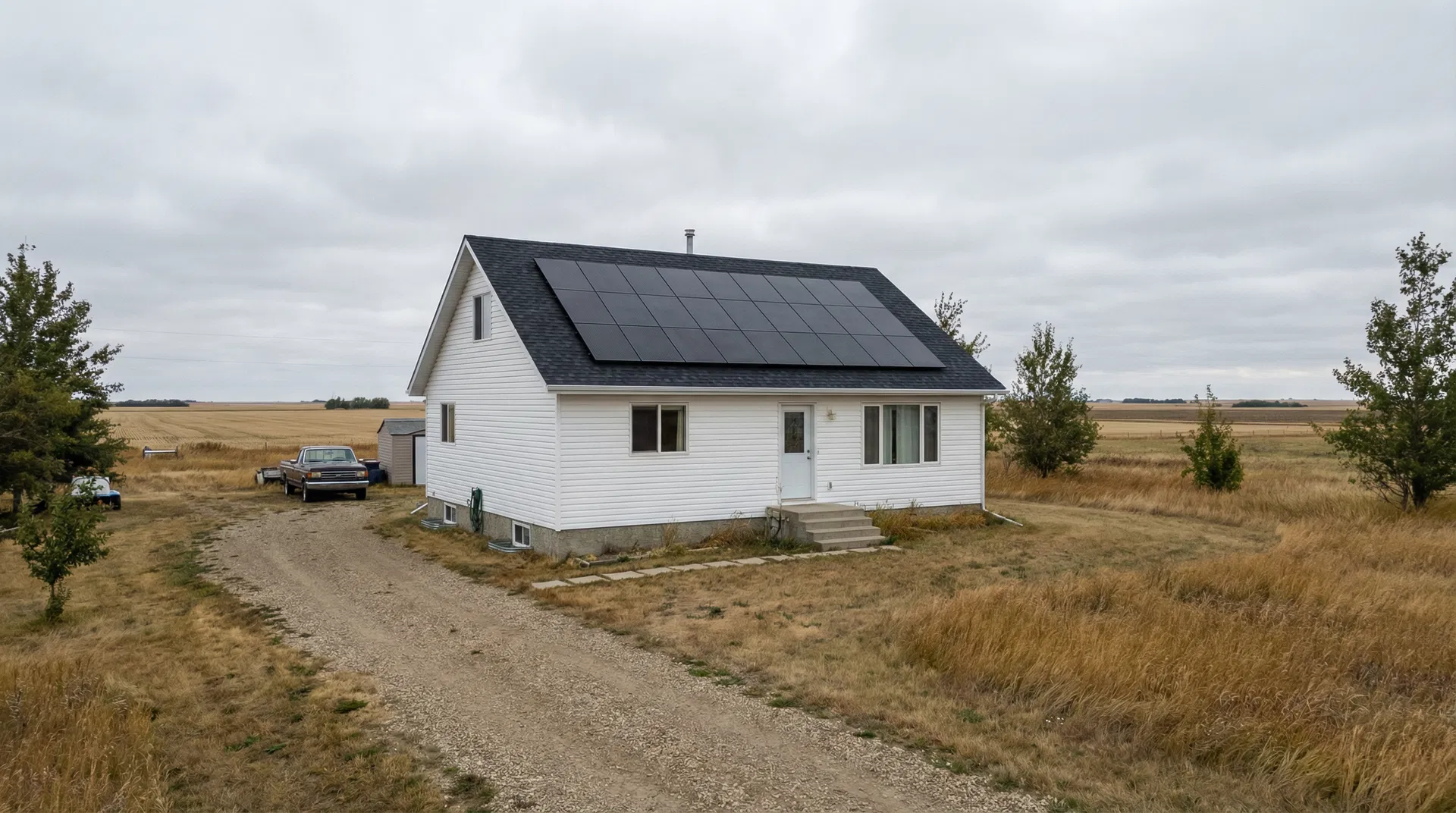
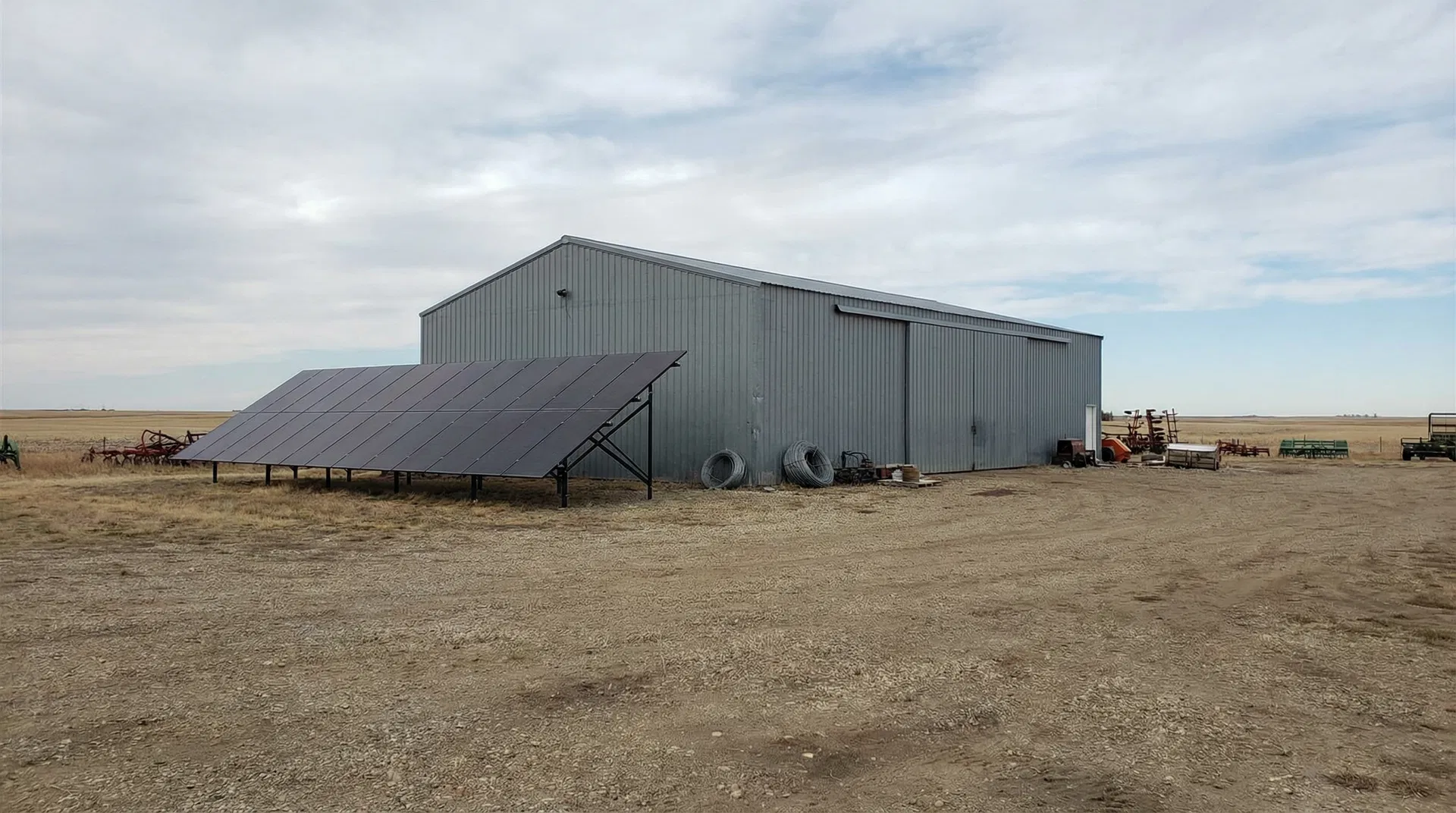
Rural and edge-of-town properties in this area often carry more electrical load than a standard in-town home. A house with an attached shop, a detached garage, or outbuildings pulls more power than the house alone, and that changes what system size actually makes sense. That's one reason we don't size systems off a rule-of-thumb number tied to square footage or roof area. Roof mount works well when you've got clear southern or western exposure without much shading from trees or neighbouring structures. Ground mount becomes the better call when the roof is heavily shaded, has a poor pitch for solar, or when the property has open yard space that makes a ground-mounted array easier to access and maintain. Both options go through the same site review before we recommend one over the other. Either way, we size the system from the 12-month usage graph on your most recent power bill, not a guess. That graph shows us your actual usage pattern across the year, including any seasonal spikes from heating, a shop, or other equipment. Combined with a look at your roof or yard space during the site visit, that usage data is what drives the system size we recommend, whether that lands at 8 kW or closer to 25 kW.
Typical Load Profiles We Design For Near Airdrie
Home with Standard Usage
Most single-family homes in this area fall into this profile: one house, a typical mix of appliances, and no major secondary loads. We size these systems from the 12-month usage graph on your most recent power bill, which usually points toward something in the lower to middle end of the 8 to 25 kW range. The exact number still comes down to your roof space and shading.
Home Plus Detached Garage or Shop
Add a detached garage, workshop, or heated outbuilding and the load profile changes, often pushing the recommended system size higher. We look at how that secondary structure is used, whether it's got its own subpanel, and how that shows up on the power bill's usage graph before recommending a size. These properties often land toward the middle or upper end of the range.
Larger Home with EV Charging or Pool Equipment
A larger home running an EV charger, pool pump, or hot tub carries a different usage pattern than a standard house, usually with higher and more consistent draw. We factor that pattern into the design using the usage graph on your most recent power bill rather than assuming a flat number for every bedroom or square foot. These profiles tend to need more panels or a system sized toward the higher end of our range.
FortisAlberta Interconnection in Airdrie
FortisAlberta is the wire service here, which means any grid-tied solar system needs an interconnection application filed with them before it can be switched on. Range Road Solar prepares that application as part of your design package: the single-line diagram, equipment specifications for the LONGi panels and APsystems microinverters, and the paperwork FortisAlberta requires to review a micro-generation connection. You won't be filling out that form yourself or guessing at what FortisAlberta needs to see. We don't control FortisAlberta's review timeline, their credit settlement rules, or their current tariff structure, and we won't guess at those on your behalf. What we can do is make sure your application package is complete and accurate the first time it's submitted, which helps avoid unnecessary back-and-forth with the utility.
Project Economics and Design Review
| System Size | Annual Production | Year 1 Savings | Payback Period |
|---|---|---|---|
| 8-25 kW range, 10 kW typical |
Actual production, savings, and payback depend on a property-specific design and the numbers on your most recent power bill.
How We Work in Airdrie
Bill and Load Review
We review your power bill to understand your energy use in Airdrie and size the system to your actual consumption, not a generic estimate.
Site Assessment
We assess your roof or ground area, south-facing exposure, electrical service, and utility interconnection requirements specific to your property.
Design and Utility Application
We produce a system layout, production estimate, and cost summary, then submit your micro-generation application to your utility on your behalf.
Installation and Commissioning
Our crew installs racking, panels, inverter, and electrical connections. All work is performed by licensed electricians. We commission and test before handoff.
Current Program and Interconnection Review
Utility connection review
FortisAlberta reviews grid connection applications for any solar system tied into its distribution network. Range Road Solar prepares and submits the design package as part of your project, so you're not navigating that application on your own.
Current program review
Eligibility for commercial, farm, and residential programs changes, so we check current rules against your specific project at design time rather than relying on outdated information. This applies whether you're a homeowner, a business, or running equipment on an acreage nearby.
Frequently Asked Questions
Get a Solar Assessment for Airdrie
Submit a recent power bill and we will review your consumption and provide an honest assessment for your Airdrie property. No obligation.
(587) 330-7502 Book a CallRelated Resources
More Solar Services in Airdrie