Red Deer County · Free solar consultation
Free Solar Consultation in Red Deer, Alberta
No sales pitch. No obligation. We review your actual power bill, assess your property, and tell you exactly what a solar system would do for it.
Every solar consultation Red Deer Alberta homeowner or business owner books with us follows the same process: we review your most recent power bill, walk the property, assess your roof or ground-mount conditions, and build a system design based on what we actually find, not a template. For residential properties in the area, systems in the 8 to 25 kW range cover most scenarios, with a 10 kW system being a common starting point for a household with moderate to higher electrical loads. But that number moves depending on whether you're heating a shop, running irrigation, or charging a vehicle. We size to your actual usage, not an average. On the equipment side, we install LONGi solar panels and APsystems microinverters on most residential and acreage builds. LONGi panels are reliable and well-suited to Alberta's variable weather. APsystems microinverters handle shading and panel-level variability better than string setups, which matters on roofs that aren't perfectly oriented or that pick up shade from dormers, chimneys, or nearby trees. The consultation wraps up with a written system design, a production model built from your actual bill data and site conditions, and a clear explanation of the City of Red Deer interconnection process. You'll know what the project involves before anyone asks you to sign anything. That's the point of the consultation.
Solar Planning for Red Deer Properties
Red Deer sits in central Alberta with a mix of residential neighbourhoods, acreages on the edges, and a strong base of commercial and industrial properties. That variety means solar planning here isn't one-size-fits-all. A bungalow with a south-facing roof has a completely different design conversation than a property with a shop, a heated outbuilding, and year-round electrical loads running across multiple meters. We don't start with a ballpark quote. We start with your most recent power bill, because the 12-month usage graph on that document tells us more about your property's solar potential than any rule-of-thumb formula. From there, we assess your roof orientation, available ground space, shading conditions, and existing electrical infrastructure before we put a number on anything. The consultation is free and it's genuinely a design conversation, not a closing pitch. You'll leave knowing what system size makes sense for your property, whether roof or ground mount is the right call, and what the interconnection process with the City of Red Deer looks like. If it doesn't pencil out for your situation, we'll tell you that too.
Electrical Site Review for Red Deer Properties
Voltage Rise
Voltage rise happens when a solar system exports power onto a distribution line and pushes the line voltage above the utility's acceptable threshold. On some distribution segments, existing voltage conditions can limit how much a system can export before the inverter clips or the utility requires design changes. We assess voltage rise during the design process to make sure the system we size for your property is compatible with what the local grid can accept at your connection point.
Single-Phase vs Three-Phase
Properties in and around Red Deer can be served by either single-phase or three-phase electrical service, and that distinction matters when we're selecting inverters and determining system capacity. APsystems microinverters are configured to match your service type, and some larger systems on three-phase service can handle higher total capacity without breaker or panel constraints. We confirm your service type during the site assessment before finalizing the equipment design.
Panel Infrastructure
Older electrical panels, whether on a home built decades ago or on a shop that hasn't had an electrical upgrade in years, don't always have the breaker capacity to support a solar backfeed circuit without modifications. We assess your panel age, breaker capacity, and available space during every site visit. If an upgrade is needed, we include that scope in the design review so you know what the full project involves before committing.
Service Entrance Review
The service entrance and meter base are the physical connection point between your property and the City of Red Deer's distribution grid, and their condition matters when it comes to the micro-generation application. We check the meter base for compatibility with the interconnection requirements the City of Red Deer applies to solar installations. If the meter base needs upgrading to meet those requirements, we flag it early so it doesn't hold up the application later.
Right-Sizing Solar for Red Deer Properties
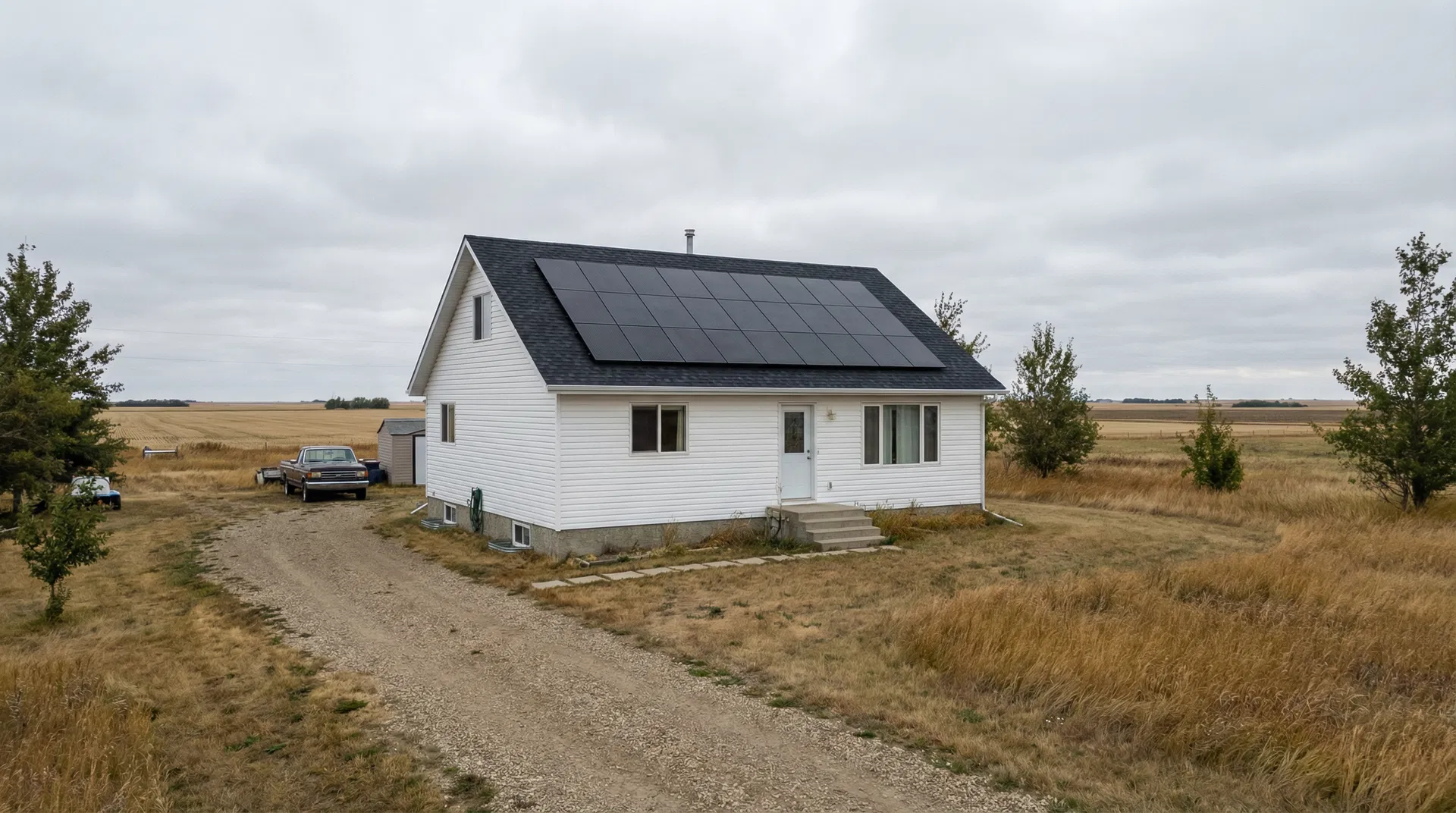
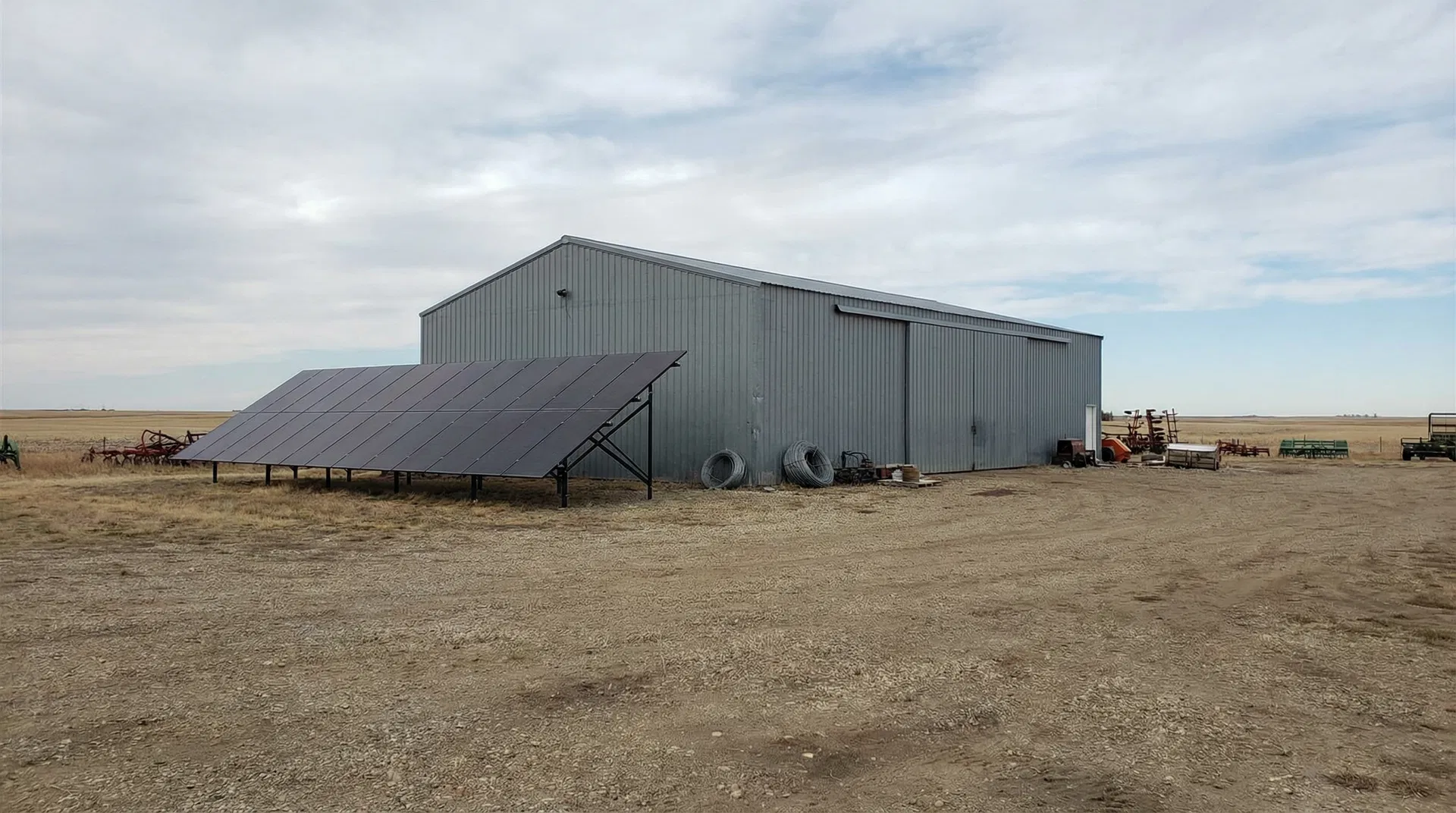
Properties around Red Deer carry more electrical load than a typical urban house, and that changes how we think about system sizing. A home on its own might justify a mid-range system. Add a heated shop, a garage with tools and compressors, an outbuilding on a separate circuit, or irrigation and grain-handling equipment, and you're looking at substantially higher annual consumption across multiple loads. We size to cover that full picture, not just the house. Roof mount works well for properties with a clean south, southeast, or southwest-facing roof that isn't heavily shaded and has enough square footage for the system the usage calls for. When the roof doesn't fit those criteria, or when the property has open yard space that makes a ground-mounted array more practical, ground mount is often the better call. Properties with trees or outbuildings casting shade on the roof, poor pitch angles, or a spread-out layout with available land are strong candidates for ground mount. We don't size systems from a per-square-foot formula or a standard residential average. We pull the 12-month usage graph from your most recent power bill. That graph shows us your actual consumption pattern month by month, including how your loads shift between summer and winter. It's the most accurate starting point we have, and it's the only way to build a design that actually fits your property rather than a generic profile.
Typical Load Profiles We Design For Near Red Deer
Home Plus Heated Shop
A residential property with a heated shop running year-round electric heat, lighting, and power tools carries combined loads that can push well beyond what a house alone would need. We review the 12-month usage graph on your most recent power bill to see how shop heating affects winter consumption and size the array to cover the full combined draw. Systems for this profile often fall in the 14 to 20 kW range depending on shop size and hours of use.
Commercial or Light Industrial Property
Commercial and light industrial properties in Red Deer tend to have consistent daytime loads, which aligns well with solar production timing. HVAC, lighting, refrigeration, and process equipment all contribute to a load profile we assess from your most recent power bill before recommending a system size. Depending on demand structure and the City of Red Deer's current micro-generation rules, we'll also review whether your connection setup affects how the system is designed.
Acreage With Multiple Outbuildings
Acreage properties near Red Deer often include a house, one or more outbuildings, and seasonal or year-round electrical loads spread across the property. If those loads run through a single meter, we design to cover total consumption. If outbuildings are on separate meters, we discuss whether a single larger system or separate arrays make more sense for your layout. The answer comes from the site assessment and your most recent power bill, not a standard residential formula.
City of Red Deer Interconnection
The City of Red Deer operates its own electric utility and serves as the wire service for properties within Red Deer. That makes the interconnection process here different from properties served by ATCO or FortisAlberta. The City of Red Deer reviews micro-generation applications and governs how solar systems connect to the local distribution grid. Range Road Solar handles the full interconnection application on your behalf. We prepare the technical design package, submit it to the City of Red Deer, and coordinate any follow-up the utility requires. You don't need to navigate that process on your own. Because the City of Red Deer runs its own grid and sets its own interconnection requirements, we confirm current rules and application requirements at the time of your design review. Grid policy and application procedures can change, and we work from the most current information when we prepare your package. If your meter base or service entrance needs attention before the application can proceed, we'll flag that during the site assessment.
Project Economics and Design Review
| System Size | Annual Production | Year 1 Savings | Payback Period |
|---|---|---|---|
| 8-25 kW range, 10 kW typical |
Production, savings, and payback estimates require a property-specific design and your most recent power bill, and will vary based on site conditions and current utility rules.
How We Work in Red Deer
Bill and Load Review
We review your power bill to understand your energy use in Red Deer and size the system to your actual consumption — not a generic estimate.
Site Assessment
We assess your roof or ground area, south-facing exposure, electrical service, and utility interconnection requirements specific to your property.
Design and Utility Application
We produce a system layout, production estimate, and cost summary, then submit your micro-generation application to your utility on your behalf.
Installation and Commissioning
Our crew installs racking, panels, inverter, and electrical connections. All work is performed by licensed electricians. We commission and test before handoff.
Current Program and Interconnection Review
Utility connection review
The City of Red Deer reviews and approves micro-generation applications for solar systems connected to its distribution grid. Range Road Solar prepares the full technical design package and submits the application on your behalf. We work from the City of Red Deer's current interconnection requirements at the time of your project.
Current program review
Commercial, farm, and residential properties may be eligible for federal or provincial programs at the time of your installation, and eligibility rules change. We review current program availability against your property type and system design during the consultation, so you're working with up-to-date information rather than whatever was listed online when you started researching.
Frequently Asked Questions
Get a Solar Assessment for Red Deer
Submit a recent power bill and we will review your consumption and provide an honest assessment for your Red Deer property. No obligation.
(587) 330-7502 Book a CallRelated Resources
More Solar Services in Red Deer