Red Deer County · Solar installers
Solar Installers in Red Deer, Alberta
Full-service solar installation for properties in the area: LONGi panels, APsystems microinverters, and complete municipal utility interconnection handling from design through commissioning.
We're the solar installers Red Deer, Alberta property owners call when they want the work done once and done right. Every system we install uses LONGi panels and APsystems microinverters. LONGi panels deliver consistent output across a range of roof and ground mounting conditions. APsystems microinverters operate at the panel level, which means one shaded or dirty panel doesn't reduce the output of the whole array. It's a combination that holds up well and meets the technical requirements for grid connection. For residential properties, we work in the 8 to 15 kW range. A 10 kW system is a common size for a home with moderate annual consumption, but the right number for your property comes from your actual usage data, not from an average. We start with the 12-month usage graph on your most recent power bill. That graph shows the seasonal shape of your consumption, which is what drives how the array gets sized. Installation covers the physical array, inverter mounting, conduit runs, and electrical connections to your panel. We handle the micro-generation application with the utility, coordinate the electrical inspection, and commission the system once it's connected. If the property needs electrical upgrades to support the system, we identify those during the design review, not on install day. We work on roof mounts, ground mounts, and flat-roof commercial layouts. If the best surface for your property isn't immediately obvious, we'll tell you during the site assessment.
Solar Planning for Red Deer Properties
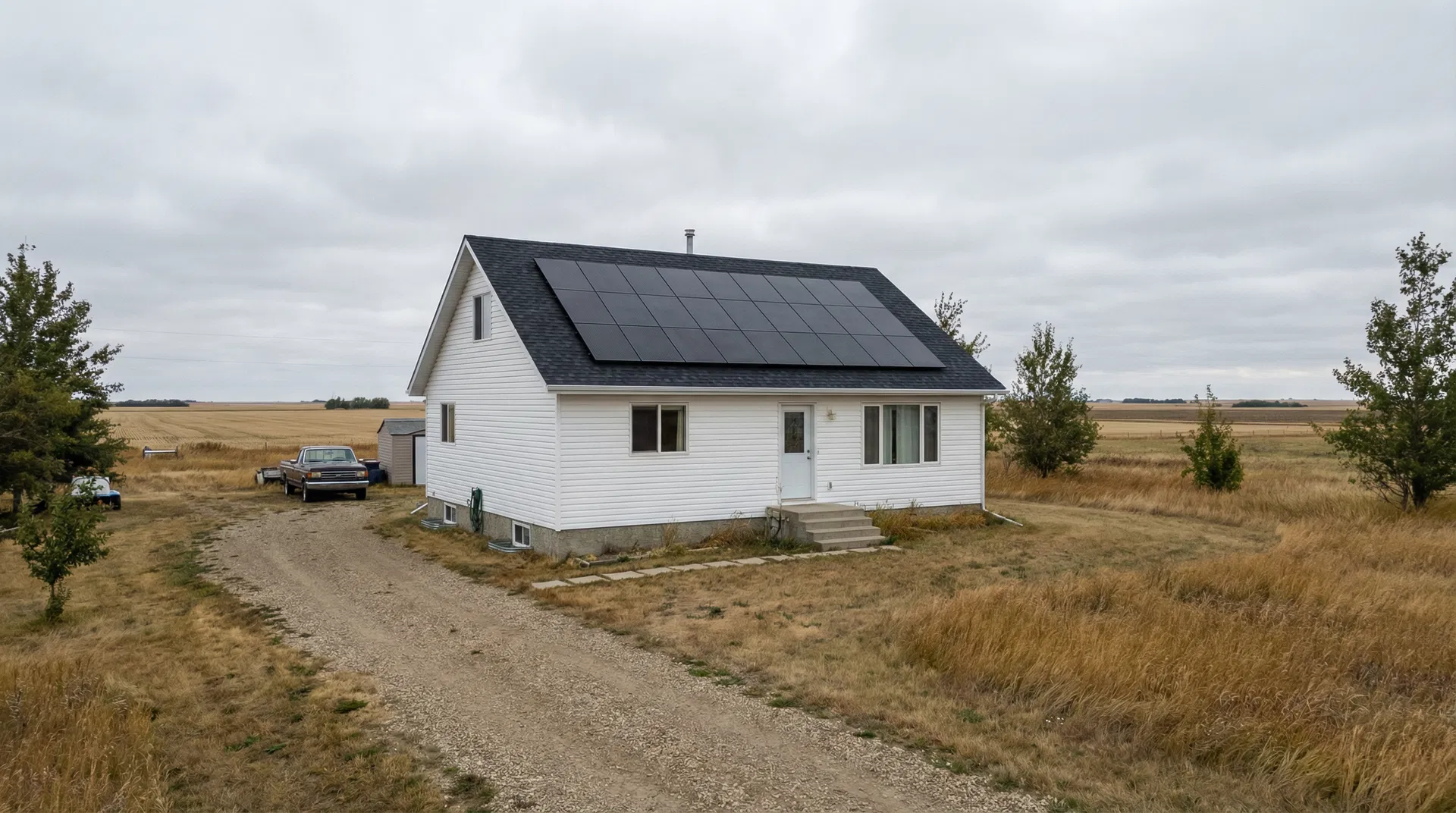
Properties in the area don't all look the same from a solar planning standpoint. Newer construction often has south-facing rooflines that suit a roof mount. Older homes sometimes have roof geometry that doesn't work as well, and a ground mount on available yard space ends up being the better option. The orientation of the main roofline, nearby trees, and what outbuildings are on the property all factor into which approach makes sense. The municipal utility here handles electrical service and grid connection applications for solar installations. That process runs through its own requirements, separate from the provincial wire services used across most of rural Alberta. We handle the application and know what the documentation package needs to include. We don't assume a system size before we've reviewed the site. A property running a heated shop, high-draw appliances, or an irrigation pump needs a different design than a standard in-town residence. We start from your most recent power bill and build from there. The 12-month usage graph on that bill tells us more about your actual consumption than any estimate based on square footage or bedroom count.
Electrical Site Review for Red Deer Properties
Voltage Rise
Voltage rise happens when a solar system exports power into the distribution network and pushes line voltage above the allowable operating range. Depending on the distribution conditions at your service point, this can cause inverters to reduce output or disconnect temporarily. We assess voltage rise potential during system design and size the system to avoid clipping that would reduce your actual production.
Single-Phase vs Three-Phase
Properties in and around the area can have either single-phase or three-phase electrical service, and that difference matters for how a solar system gets wired. Single-phase service is common in most residential properties, while three-phase service, found in some commercial and agricultural setups, supports higher loads and changes which inverter configurations work. We confirm your service type during the site review and select inverters that match.
Panel Infrastructure
Older electrical panels sometimes don't have enough breaker capacity to accept a solar backfeed breaker at the size the system requires. We check the panel's total rated capacity, existing breaker load, and equipment age during the site review. If the panel can't support the system without modifications, we'll identify the upgrade needed and include it in the project scope before installation starts.
Service Entrance Review
The service entrance and meter base are what the City of Red Deer examines when reviewing a micro-generation application, and their condition affects whether the application goes through without revision requests. We check the meter base, main disconnect, and service entrance condition as part of the design review. If an upgrade is required to meet the utility's technical standards, we scope it before submitting the application.
Right-Sizing Solar for Red Deer Properties
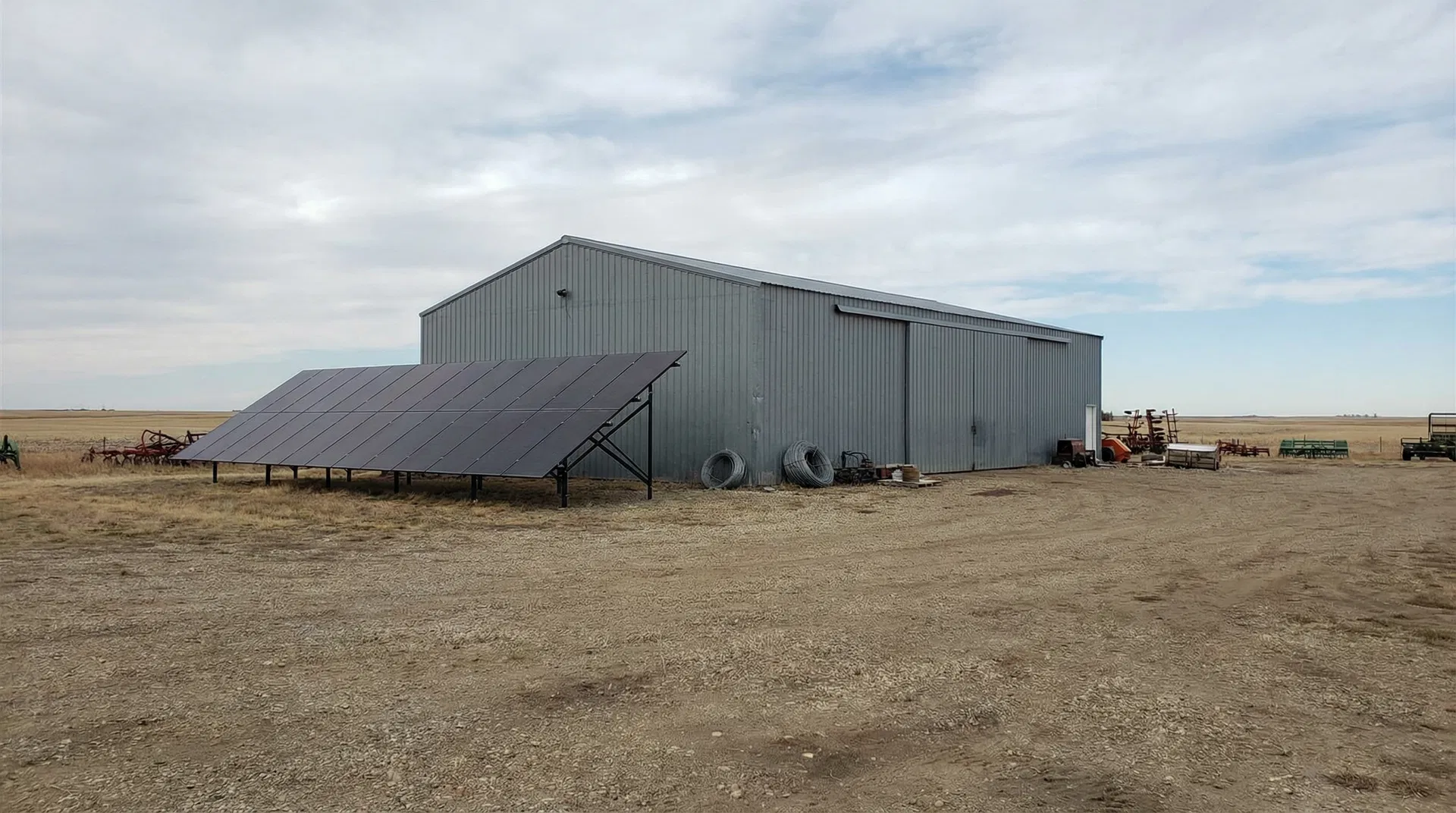
Rural and semi-rural properties generally carry more electrical load than a standard in-town home. A heated shop on a separate service, well pumps, outbuildings with their own circuits, and irrigation or grain-handling equipment can push total consumption to two or three times what the house uses alone. When we size a system for a property like that, we're not just sizing for the house. We're accounting for everything on the meter. The roof vs ground mount decision comes down to what the property actually offers. If the main roof has solid southern exposure without meaningful shading from trees or adjacent structures, it's often the right surface. But a lot of properties don't work that way. Steep or east-west rooflines, trees that shade the south face for part of the day, or properties with open land nearby are situations where a ground mount produces better results. We assess both options during the site review and tell you which one makes more sense for your layout. We size systems from the 12-month usage graph on your most recent power bill. That graph shows the seasonal peaks and valleys in your consumption, and that's the data that determines how large the array needs to be. We don't use a square footage number or a per-person estimate. If your load profile is unusual, like a shop that runs hard in winter and sits idle in summer, that pattern shows up in the graph and gets accounted for in the design.
Typical Load Profiles We Design For Near Red Deer
Home Plus Heated Shop
A house with a heated attached or detached shop is one of the most common load profiles we see in this region. The shop's heating load in winter creates a seasonal spike that's clearly visible in the 12-month usage graph on your power bill, and that spike is what drives the system size up. Properties with this setup typically warrant a 12 to 15 kW system, though the exact size depends on how the shop is heated and how often it runs.
Acreage With Multiple Outbuildings
Acreages with a main house, a barn or equipment storage, and one or two smaller outbuildings often have multiple sub-panels fed from a single service entrance. We map each structure's contribution to total annual usage and size the array to offset the combined load across the property. Systems for this profile often land above 13 kW and suit a ground mount on available flat land better than an installation spread across multiple rooflines.
In-Town Residential
In-town homes without a shop or large ancillary loads have the most straightforward load profiles we work with. A modern house with average occupant usage typically sizes out at 8 to 10 kW. We still start from your most recent power bill rather than square footage or bedroom count, because two houses with identical footprints can have very different consumption patterns.
City of Red Deer Interconnection
The City of Red Deer operates its own electrical utility, which puts it in a different category from most Alberta properties. The interconnection process for solar here runs through the municipal utility rather than a provincial wire service. That distinction affects how the application package gets prepared and what documentation the review process requires. Range Road Solar handles the design package and submits the micro-generation application on your behalf. The City reviews grid connection requests against its own technical standards, and we design the system to those standards from the start. That approach avoids back-and-forth that happens when a system is designed without the utility's requirements in mind. We don't make claims about how long the review process takes or what credit settlement looks like under the current tariff, because those details change. What we can tell you is that we prepare a complete application package and manage the process so you're not chasing paperwork between us and the utility.
Project Economics and Design Review
| System Size | Annual Production | Year 1 Savings | Payback Period |
|---|---|---|---|
| 8-15 kW range, 10 kW typical |
Production, savings, and payback estimates require a property-specific design and your most recent power bill before we can give you a number worth trusting.
How We Work in Red Deer
Bill and Load Review
We review your power bill to understand your energy use in Red Deer and size the system to your actual consumption — not a generic estimate.
Site Assessment
We assess your roof or ground area, south-facing exposure, electrical service, and utility interconnection requirements specific to your property.
Design and Utility Application
We produce a system layout, production estimate, and cost summary, then submit your micro-generation application to your utility on your behalf.
Installation and Commissioning
Our crew installs racking, panels, inverter, and electrical connections. All work is performed by licensed electricians. We commission and test before handoff.
Current Program and Interconnection Review
Utility connection review
The municipal utility reviews grid connection applications for solar installations within its service territory. Range Road Solar prepares the design package and submits the application on your behalf, including the technical documentation required to assess the connection. We handle that process so you're not coordinating between the installer and the utility on your own.
Current program review
Commercial, farm, and residential installations may qualify for programs at the federal or provincial level depending on current rules and property type. Eligibility gets reviewed against whatever is in effect at the time of your design, not at the time this page was written. We confirm what applies to your specific situation during the design review.
Frequently Asked Questions
Get a Solar Assessment for Red Deer
Submit a recent power bill and we will review your consumption and provide an honest assessment for your Red Deer property. No obligation.
(587) 330-7502 Book a CallRelated Resources
More Solar Services in Red Deer