Red Deer County · Ground mount solar
Ground Mount Solar in Red Deer, Alberta
For Red Deer properties with available land, a ground mount system puts your panels exactly where the sun hits best. We handle design, engineering, and City of Red Deer interconnection.
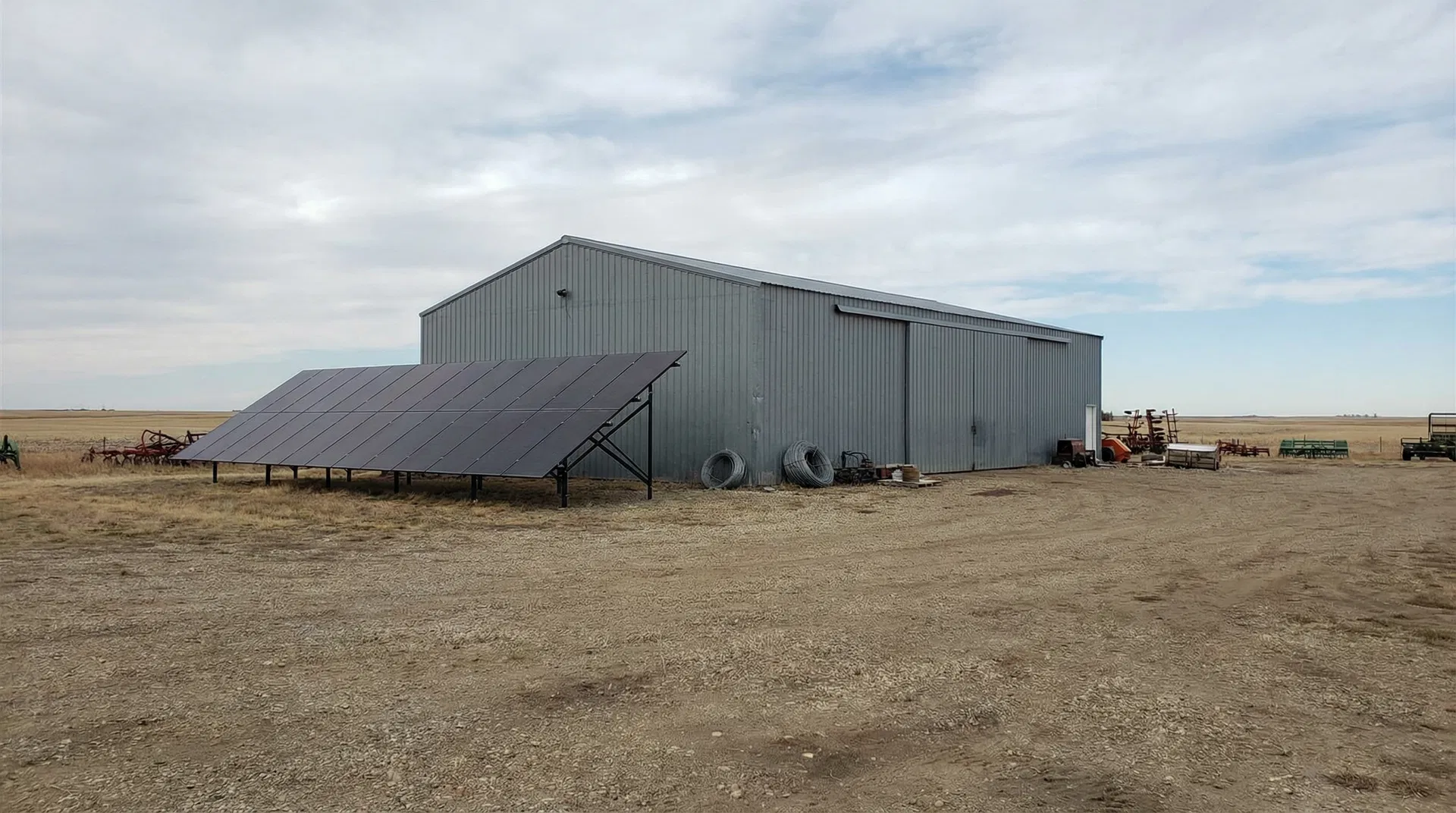
Solar ground mount solar in Red Deer, Alberta starts with a site that has land available and a reason to use it. Our ground mount installations use LONGi solar panels on engineered steel racking, sized and positioned based on your site orientation and shading assessment. APsystems microinverters are mounted at the panel level, which means each panel in the array operates independently. If one panel is shaded by a post or a nearby structure, the rest of the array keeps producing at full capacity. Engineered racking is not optional on a ground mount. Alberta wind and frost loads require stamped engineering drawings, and we include that in every project. The racking is anchored to ground screws or concrete footings depending on soil conditions on your specific site. We assess that during the design review. For farm and acreage properties, system sizes typically run between 10 and 30 kW, with 15 kW being a common starting point for a home plus heated shop combination. Larger operations with grain handling equipment, irrigation systems, or multiple outbuildings may need the upper end of that range. We don't guess at sizing. We pull the 12-month usage graph from your most recent power bill and build the system size from your actual consumption data. Every installation we do is handled by our own crew. We don't subcontract the work.
Solar Planning for Red Deer Properties
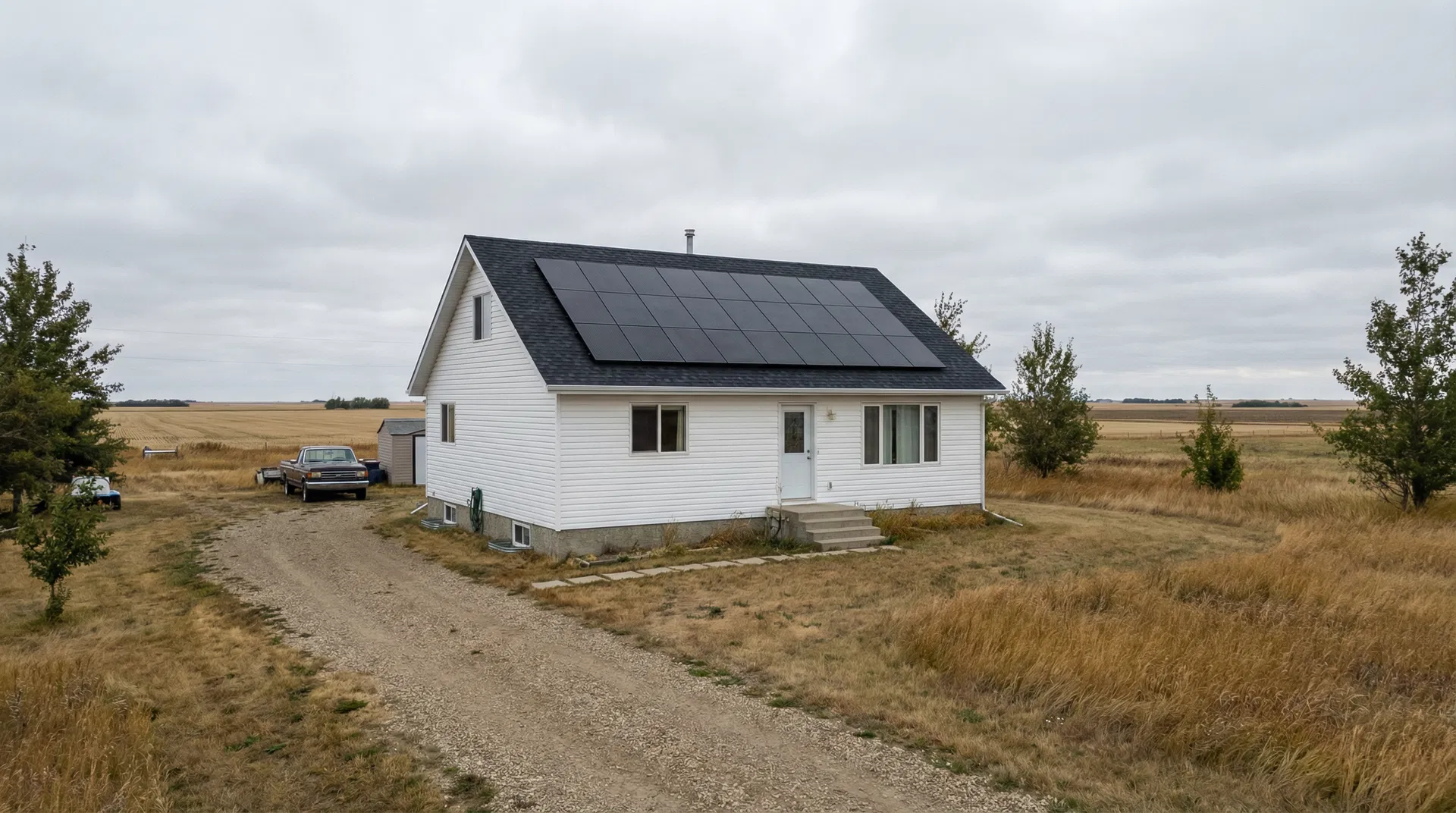
Properties around Red Deer often have something that urban lots don't: room to work with. When a roof isn't the right fit, whether it's shaded by a shelter belt, oriented the wrong direction, or simply not large enough for the system size the property needs, a ground mount gives you the flexibility to place panels where they'll actually perform. Ground mount systems in the 10 to 30 kW range are common on acreages and farm properties here. They're sized to offset meaningful portions of combined household, shop, and outbuilding loads, not just the kitchen and living room. A heated shop running year-round changes the load math considerably compared to a standard residential system. The starting point for every design we do is your most recent power bill. Alberta utility bills include a 12-month usage graph, and that graph tells us far more about what this property actually needs than any rule-of-thumb calculator. From there, we assess your site layout, shading, soil and ground conditions, and service entrance before we give you a number. That's the Range Road Solar process: design first, quote second.
Electrical Site Review for Red Deer Properties
Voltage Rise
Voltage rise happens when a solar system pushes electricity back toward the grid and raises the line voltage above what inverters are designed to operate within. On longer distribution runs, the voltage rise effect can be more pronounced, which can cause inverters to clip or throttle output to stay within acceptable limits. We assess voltage rise conditions during system sizing so the final design accounts for it rather than discovering it after installation.
Single-Phase vs Three-Phase
Properties in rural Alberta may be served by either single-phase or three-phase electrical service, and the distinction matters significantly for how a solar system is designed. Three-phase service allows larger system capacity to be distributed across phases, while single-phase service has different inverter configuration requirements. We confirm your service type during the site review and select APsystems microinverter configurations that match your existing infrastructure.
Panel Infrastructure
Older electrical panels on farm and acreage properties aren't always rated for the breaker capacity a solar system requires. We assess the panel age, breaker ampacity, and available space as part of every design review. If the existing panel can't support the system without modification, we include a panel upgrade in the project scope before quoting, so there are no surprises during installation.
Service Entrance Review
The meter base and service entrance are reviewed as part of every ground mount project because the City of Red Deer's micro-generation application process includes requirements for how the system connects at the point of entry. If the meter base is outdated or not compatible with the required interconnection configuration, an upgrade is needed before the application is submitted. We identify this during the design review so it's part of the plan from the beginning.
Right-Sizing Solar for Red Deer Properties
Rural and acreage properties near Red Deer typically carry more electrical load than a standard city lot. It's not just the house. It's the heated shop, the outbuildings, the well pump, and in some cases irrigation systems or grain handling equipment that run seasonally but draw significant power when they do. All of that shows up on your power bill, and all of it factors into how large a system actually needs to be. The roof versus ground mount decision comes down to a few practical questions. Does the roof face the right direction? Is it shaded by trees or adjacent buildings during peak daylight hours? Is there enough unobstructed surface area for the system size the property needs? When the answer to any of those questions is no, a ground mount is the right call. It lets us orient the array correctly and place it where shading isn't an issue, regardless of where the house happens to be positioned on the lot. We size every system from the 12-month usage graph on your most recent power bill. That graph shows your actual consumption by month, including seasonal peaks from heating, shop use, or agricultural equipment. A rule-of-thumb system size based on average household consumption won't fit a property with a 40-by-60 heated shop running through an Alberta winter. Your bill tells us what the property actually uses, and we design to that. We provide honest production estimates based on your actual power bills and site conditions, not inflated projections.
Typical Load Profiles We Design For Near Red Deer
Home + Heated Shop
This is the most common profile we see on acreage properties near Red Deer. A residential household combined with a heated detached shop running through winter months creates a load that often justifies a 15 to 20 kW ground mount system. We size from the 12-month usage graph on your most recent power bill, which captures both the winter heating load and the summer baseline so the system is built for the actual annual demand, not just one season.
Hobby Farm with Multiple Outbuildings
Properties running a barn, chicken coop, equipment shed, and residence together carry spread-out loads that don't always concentrate on one structure. A ground mount positioned away from the buildings gives us the angle and clearance we need, while the 10 to 30 kW range accommodates the combined draw. We review the full property layout and the 12-month usage history before recommending a system size.
Commercial Acreage or Light Industrial
Some properties outside Red Deer run small commercial operations, welding shops, or light processing equipment alongside a residence, pushing total consumption well above a typical household. These operations often benefit from a system at or near the 30 kW upper end of the ground mount range. We review the most recent power bill and any known seasonal equipment schedules to model demand accurately before the design is finalized.
City of Red Deer Interconnection
Red Deer is served by the City of Red Deer as the wire service for properties within its service territory. Any solar system connected to the grid here requires a micro-generation application submitted to the City of Red Deer, not to a provincial utility. Range Road Solar handles the full interconnection package. That includes the single-line electrical diagram, the equipment specifications, and the completed application forms required by the City of Red Deer. You don't need to manage the paperwork side of this. The City of Red Deer reviews applications and approves interconnection based on their current technical requirements. We design every system to meet those requirements from the start, which keeps the review process straightforward. If the meter base or service entrance needs to be upgraded before the application goes in, we identify that during the design review and include it in the project scope before any work begins. We work within the current rules of the wire service. If those rules change, we design to the updated requirements.
Project Economics and Design Review
| System Size | Annual Production | Year 1 Savings | Payback Period |
|---|---|---|---|
| 10-30 kW range, 15 kW typical |
Production, savings, and payback estimates require a property-specific design review and your most recent power bill before any numbers are confirmed.
How We Work in Red Deer
Bill and Load Review
We review your power bill to understand your energy use in Red Deer and size the system to your actual consumption — not a generic estimate.
Site Assessment
We assess your roof or ground area, south-facing exposure, electrical service, and utility interconnection requirements specific to your property.
Design and Utility Application
We produce a system layout, production estimate, and cost summary, then submit your micro-generation application to your utility on your behalf.
Installation and Commissioning
Our crew installs racking, panels, inverter, and electrical connections. All work is performed by licensed electricians. We commission and test before handoff.
Current Program and Interconnection Review
Utility connection review
The City of Red Deer reviews all grid connection applications for solar systems within its service territory. Range Road Solar prepares the full design package required for that application, including electrical drawings and equipment documentation. We submit the application on your behalf and manage any technical follow-up the City of Red Deer requires.
Current program review
Eligibility for farm, commercial, and residential solar programs changes, and what applies to a specific property depends on current rules at the time of design. We review applicable programs during the design process and confirm what your property qualifies for before the project moves forward. We don't rely on program information that may have expired.
Frequently Asked Questions
Get a Solar Assessment for Red Deer
Submit a recent power bill and we will review your consumption and provide an honest assessment for your Red Deer property. No obligation.
(587) 330-7502 Book a CallRelated Resources
More Solar Services in Red Deer