Red Deer County · Solar cost and pricing
Solar Cost in Red Deer, Alberta: Real Installed Pricing
What does solar actually cost in Red Deer, Alberta? We build system quotes from your power bill and site conditions, not ballpark guesses. No inflated projections.
When someone searches solar cost Red Deer Alberta, they're usually looking for a number they can plan around. The honest answer is that installed pricing depends on system size, equipment, roof or ground-mount configuration, and your site's electrical infrastructure. Range Road Solar installs LONGi solar panels and APsystems microinverters on every residential project. LONGi panels are a proven, high-efficiency monocrystalline option with a strong track record in Alberta conditions. APsystems microinverters work at the panel level, which means shading on one panel doesn't pull down the output of the whole array. That matters on properties where a chimney, dormer, or nearby tree creates partial shading through portions of the day. Residential systems we install in this area typically fall in the 8-15 kW range. A 10 kW system is a common design point for a house with average consumption, but homes with larger heated spaces, EV charging, or agricultural outbuildings on the same meter often land closer to the upper end of that range. Pricing scales with size, equipment, and installation complexity. Ground-mount systems on acreage lots carry different structural and trenching costs than a straightforward rooftop install. We itemize all of that in your design review so you know exactly what you're paying for and why. No vague per-watt estimates that don't account for your actual site.
Solar Planning for Red Deer Properties
Red Deer sits in Alberta's deregulated electricity market, which means your rate can shift with market conditions. That makes understanding what a solar system actually produces on your specific property more important than any generic payback estimate you'll find online. The cost of a solar system in this area depends on roof orientation, available ground space, shading from surrounding structures or trees, your panel and inverter selection, and the size of the system the City of Red Deer interconnection process will approve for your service. Residential systems in the 8-15 kW range are common here, with a 10 kW system being a typical starting point for homes with moderate to high consumption. But that number can move significantly based on what's actually on your property. A home with a heated shop draws a different load profile than a single-family residence on a standard lot. We don't quote from averages. We pull your most recent power bill, review the 12-month usage graph it contains, assess your site conditions, and build a design that reflects what's actually happening at your address. That's the only way to give you a cost and production estimate you can trust.
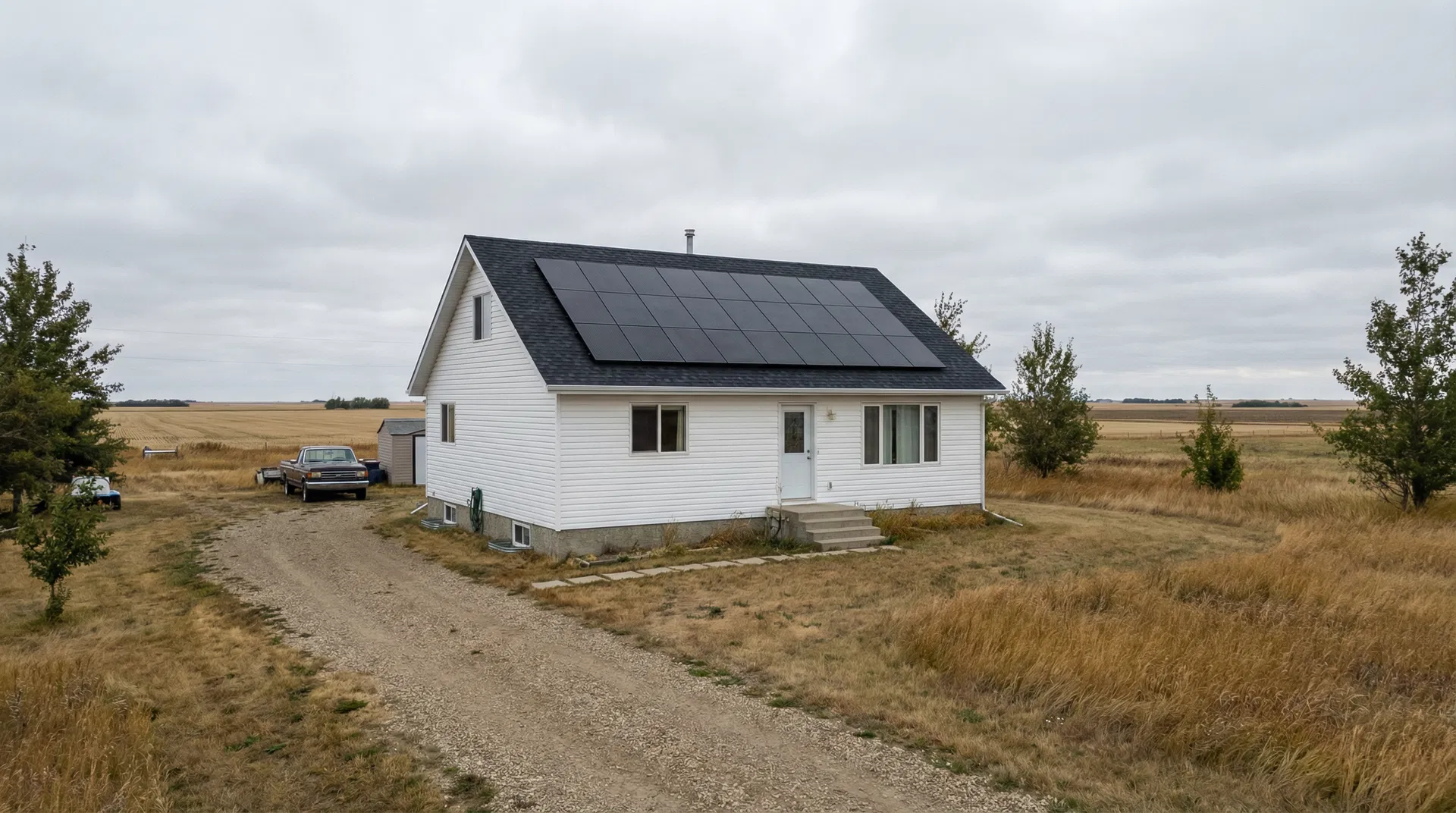
Electrical Site Review for Red Deer Properties
Voltage Rise
Voltage rise happens when a solar system pushes current back toward the grid and local distribution conditions cause the voltage at your service point to climb above acceptable limits. If the rise is too high, your inverters will clip output or shut down to protect the grid, which reduces what your system actually produces. We assess voltage rise conditions during the design phase so the system is sized to operate within the limits the City of Red Deer's distribution network can accommodate.
Single-Phase vs Three-Phase
Properties in and around Red Deer, Alberta may be served by single-phase or three-phase electrical service, and that distinction affects both inverter selection and the maximum system capacity the interconnection will support. APsystems microinverters are configured to match the phase service at your property. Getting that match right at the design stage avoids interconnection issues and ensures the system operates at the capacity you're paying for.
Panel Infrastructure
Older electrical panels on Red Deer properties may not have the breaker capacity to support a solar system without an upgrade. We assess the panel age, available breaker slots, and the current total amperage draw before finalizing the system design. If the panel can't safely accommodate the solar backfeed breaker, we'll include a panel upgrade in the project scope and cost it out transparently before you proceed.
Service Entrance Review
The service entrance and meter base are reviewed as part of every design we prepare for City of Red Deer interconnection applications. The meter base condition matters because the City may require a specific meter base configuration to accept the micro-generation connection. If the existing meter base doesn't meet those requirements, an upgrade is needed before the application can be approved, and we'll identify that before submission rather than after.
Right-Sizing Solar for Red Deer Properties
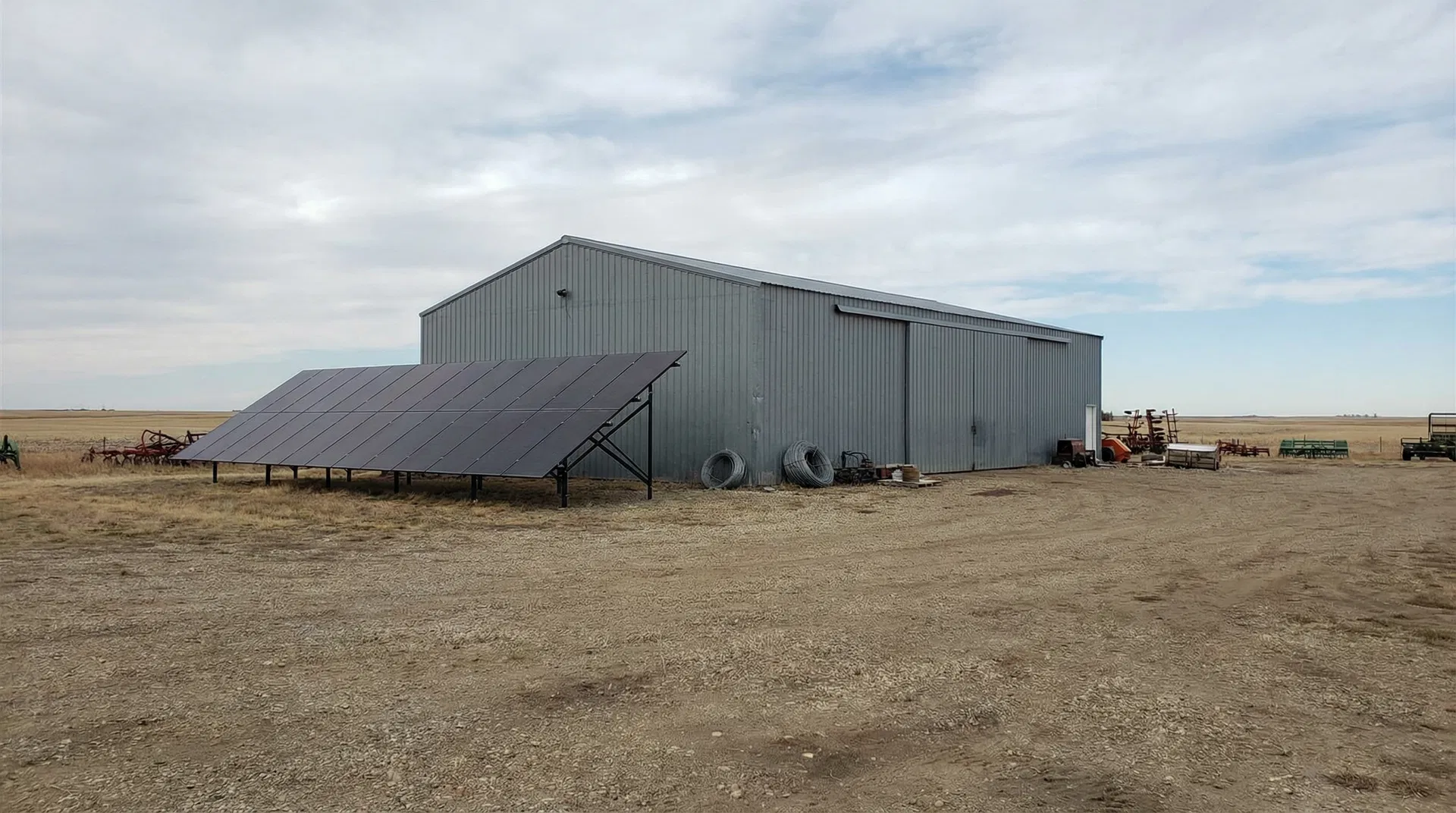
Properties in and around Red Deer aren't all pulling the same load. A house on a standard residential lot has a different consumption profile than a property with a heated shop, a second outbuilding on the same meter, or seasonal loads like irrigation or grain handling equipment. That's why we don't size systems from a rule of thumb. The starting point for every design is the 12-month usage graph on your most recent power bill. That graph shows how your consumption actually moves through the year, including seasonal peaks from heating, cooling, or agricultural equipment. It's the difference between a system that covers your real usage and one that underdelivers because it was sized for someone else's property. Roof mount is the default for most in-town properties where the roof orientation and pitch are suitable and shading is minimal. Ground mount becomes the right call when the roof isn't usable, whether that's from heavy shading by nearby buildings or mature trees, a pitch that doesn't face south well, or a roof age that doesn't make sense to build on. Acreage lots often have available yard space that makes ground mount straightforward, and in those cases it can allow for a larger, more optimized array than the roof permits. We look at both options during the site assessment and recommend whichever gives you the better output per dollar spent. System sizes for Red Deer residential properties typically fall in the 8-15 kW range, with 10 kW being a common design point for moderate consumption homes.
Typical Load Profiles We Design For Near Red Deer
Home Plus Heated Shop
A residential property with a heated shop on the same meter carries a substantially larger winter load than a home alone, often pushing annual consumption well above what a standard 10 kW system can offset. We pull the 12-month usage graph from the power bill to see exactly how much of that load is seasonal versus consistent before recommending a system size. For this profile, systems toward the upper end of the 8-15 kW range are common, and ground mount is worth evaluating if the yard space is available.
Residential Home with EV Charging
Homes where one or more electric vehicles are charged overnight add a significant repeating load that doesn't always show clearly as a seasonal spike but raises baseline consumption year-round. A 10-12 kW system is a reasonable starting point for this profile, though the right size depends on how many vehicles are charging, how often, and what the rest of the home's consumption looks like across the 12-month graph on the current power bill.
Acreage with Multiple Structures
Acreage properties with a main residence, a shop, and additional outbuildings all on the same service can have consumption profiles that reach the upper boundary of residential system sizing or push into commercial territory. Ground mount is frequently the better option here because the roof area across multiple structures is rarely optimally oriented. We assess all buildings on the service during the site review and size from the actual 12-month usage data, not a guess based on square footage.
City of Red Deer Interconnection
The City of Red Deer is the wire service for properties within its service territory, and all solar installations in that territory require a micro-generation interconnection application through the City. This is separate from your electricity retailer. The wire service reviews the application to confirm the proposed system is compatible with the local distribution network before installation can be commissioned. Range Road Solar handles the full interconnection application on your behalf. We prepare the design package, the single-line diagram, and the equipment documentation the City requires. You don't need to navigate that process yourself. What we do need from you is your most recent power bill and access to the site for an assessment. The meter base condition, service entrance configuration, and panel capacity at your property all factor into what gets submitted. If any of those components need upgrading to meet the City's requirements, we'll flag that before you commit to anything. We won't leave you discovering costs after the fact.
Project Economics and Design Review
| System Size | Annual Production | Year 1 Savings | Payback Period |
|---|---|---|---|
| 8-15 kW range, 10 kW typical |
Production, savings, and payback estimates require a property-specific design and your most recent power bill.
How We Work in Red Deer
Bill and Load Review
We review your power bill to understand your energy use in Red Deer and size the system to your actual consumption — not a generic estimate.
Site Assessment
We assess your roof or ground area, south-facing exposure, electrical service, and utility interconnection requirements specific to your property.
Design and Utility Application
We produce a system layout, production estimate, and cost summary, then submit your micro-generation application to your utility on your behalf.
Installation and Commissioning
Our crew installs racking, panels, inverter, and electrical connections. All work is performed by licensed electricians. We commission and test before handoff.
Current Program and Interconnection Review
Utility connection review
The City of Red Deer reviews micro-generation interconnection applications for properties within its wire service territory. Range Road Solar prepares and submits the full design package on your behalf, including the single-line diagram and equipment specifications the City requires. You don't need to coordinate directly with the utility on the technical submission.
Current program review
Eligibility for federal, provincial, and utility-linked programs changes over time, and the rules that apply to your property depend on your ownership structure, system size, and the current program criteria at the time of your design. We review applicable programs against current rules during the design process and don't include outdated or discontinued incentives in your financial projections.
Frequently Asked Questions
Get a Solar Assessment for Red Deer
Submit a recent power bill and we will review your consumption and provide an honest assessment for your Red Deer property. No obligation.
(587) 330-7502 Book a CallRelated Resources
More Solar Services in Red Deer