Red Deer County · Off-grid solar
Off-Grid Solar in Red Deer, Alberta
For acreages, cabins, and remote sites where a utility connection costs more than building your own power system, we design off-grid solar from 5 to 15 kW with lithium battery backup.
Off-grid solar in Red Deer, Alberta starts with a system design built around your specific property loads, not a catalogue package. Every system we install uses LONGi panels paired with hybrid inverters and lithium battery storage. That combination handles the wide load swings you get on a working acreage, from baseline lighting and appliances to the surge draw of a well pump or a heated shop. Systems in the 5 to 15 kW range cover most residential and small farm off-grid applications. An 8 kW system is typical for a single-family acreage with moderate outbuilding loads. Larger properties with multiple structures, grain handling equipment, or irrigation circuits often need more capacity, and we size accordingly. Hybrid inverters give you options the older off-grid setups didn't. You can run fully off-grid, connect to the grid as a backup source, or operate in a mixed mode that keeps batteries topped up during extended low-production periods. The right configuration depends on whether a utility connection is even available at your site. For properties that are genuinely remote, a fully off-grid design with appropriately sized battery storage is often the cleanest answer. Lithium battery banks are sized to match your overnight draw and your longest expected low-production window. We don't guess at that number. We calculate it from your usage data and the design review, then confirm it before a single panel is ordered.
Solar Planning for Red Deer Properties
Not every property in central Alberta has a straightforward path to the grid. Some acreages sit far enough from the nearest line that extending utility service costs more than building an independent system. Others have shops, outbuildings, or irrigation loads that make grid dependence a real liability when power goes out. Off-grid solar addresses both problems directly. Properties around Red Deer vary a lot. You might have a newer acreage with a well-equipped shop, an older quarter section with aging electrical infrastructure, or a remote site that's never had a permanent connection. Each of those scenarios calls for a different system design, and the difference matters when you're sizing battery storage and deciding between a roof mount and a ground mount. We don't work from rule-of-thumb numbers. We start with your most recent power bill, which includes a 12-month usage graph, and we combine that with a site assessment to build a system sized for your actual loads. That's how you avoid buying more system than you need, or worse, building one that falls short when your shop heater kicks on in January.
Electrical Site Review for Red Deer Properties
Voltage Rise
Voltage rise happens when a solar system pushes power back toward the service entrance and the local distribution conditions cause the line voltage to climb above acceptable limits. When voltage rises too high, the inverter throttles output to protect the grid, a process called clipping, which reduces what your system actually delivers. We assess distribution conditions at your site and factor voltage rise limits into the inverter selection and array sizing before the design is finalized.
Single-Phase vs Three-Phase
Rural Alberta properties can be served by either single-phase or three-phase power, and the distinction directly affects which inverters we specify and how much capacity the system can carry. Three-phase service is common on farm properties with larger motor loads, while residential acreages typically run single-phase. We confirm your service type during the site review and match the inverter configuration to what you actually have.
Panel Infrastructure
Older electrical panels on acreage properties often have breaker capacity or physical space that won't support a solar system without upgrades. We assess breaker ampacity, available slots, and panel age during every site review. If the existing panel can't safely accommodate the solar breaker, we include a panel upgrade in the project scope rather than leaving it as a surprise after installation.
Service Entrance Review
The meter base and service entrance condition matter for any system that connects to the City of Red Deer's grid, because the utility reviews that equipment as part of the micro-generation application. We check the meter base for age, condition, and whether it meets current requirements before the application goes in. If an upgrade is required, we identify it early so it's built into the project timeline and budget.
Right-Sizing Solar for Red Deer Properties
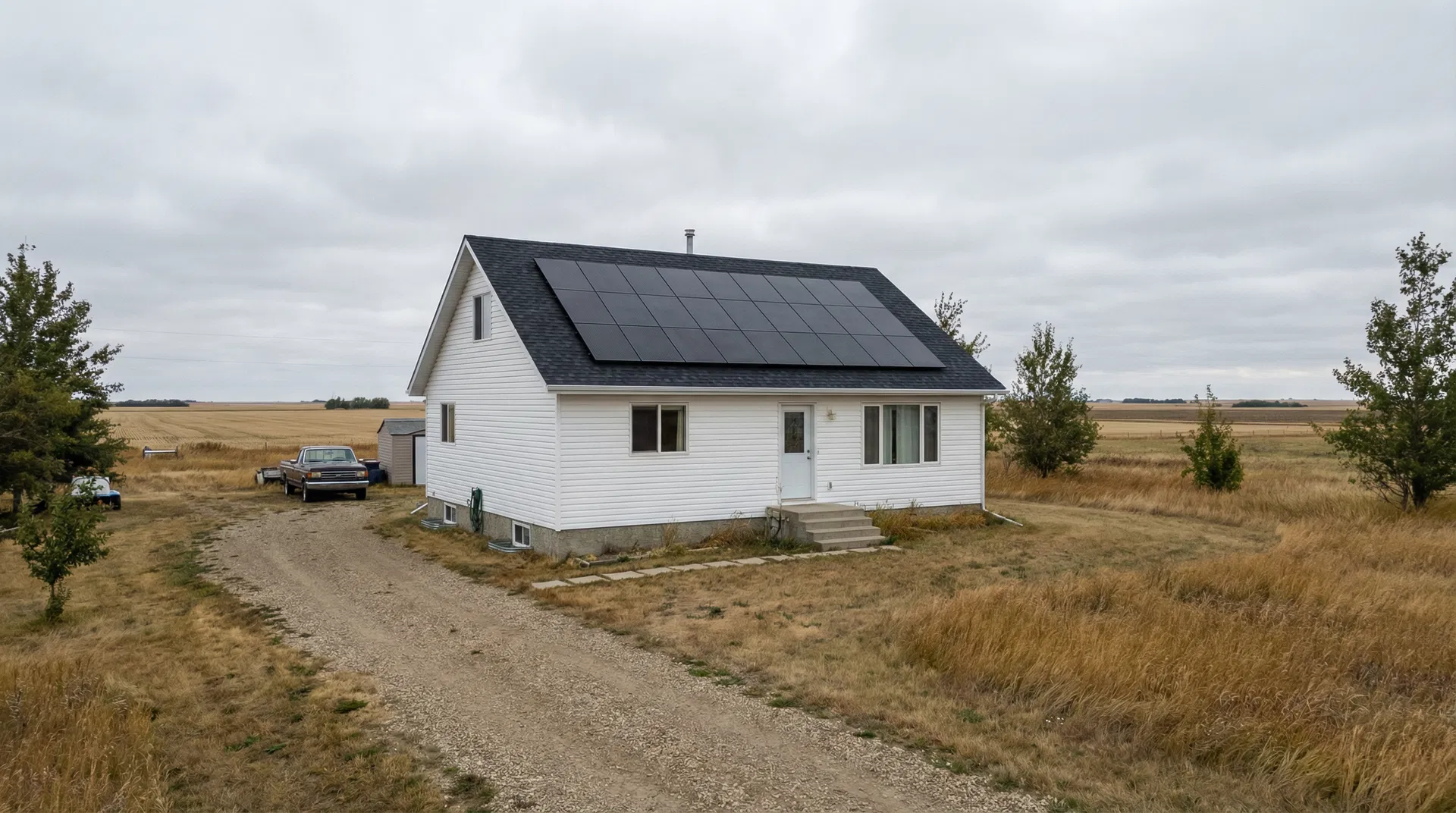
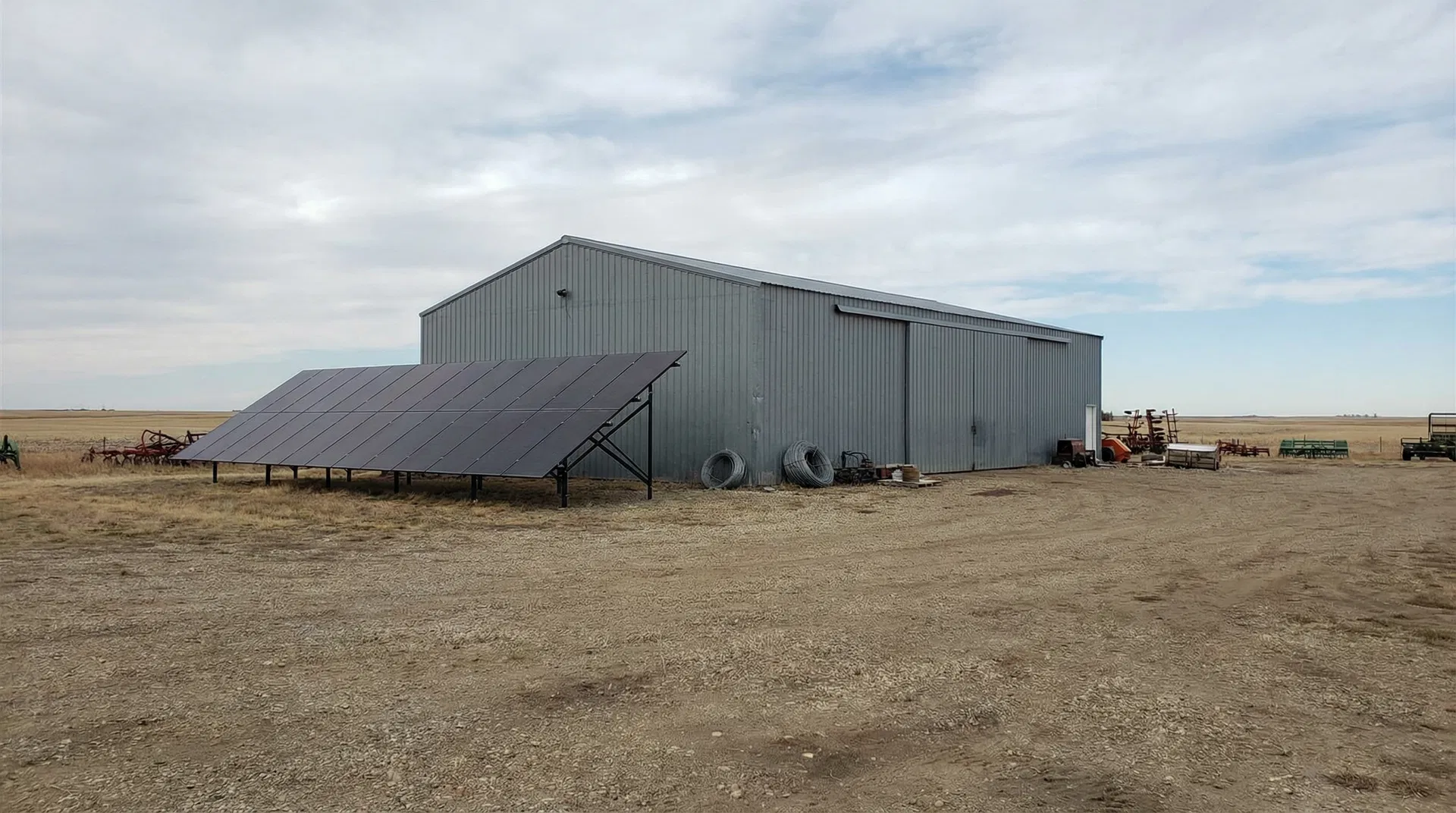
Rural properties near Red Deer don't follow the same load profile as a city lot. A working acreage often runs a home, a heated shop, one or more outbuildings, a well pump, and sometimes irrigation or grain handling equipment. All of those loads add up, and they don't all run at the same time, which means sizing the system requires understanding your actual usage pattern rather than stacking worst-case numbers. Roof mount works well when you've got a newer shop or house roof with a decent pitch and minimal shading. Ground mount is the right call when tree cover, a low roof pitch, or a spread-out yard makes the roof a poor candidate. Acreages often have open land available, and a ground-mounted array can be oriented for better production than a roof that happens to face the wrong direction. We don't size systems from rule-of-thumb kilowatts-per-bedroom estimates. We start with the 12-month usage graph on your most recent power bill. That graph tells us how your consumption moves through the seasons, which matters on acreages where heating, irrigation, and field equipment create big swings between summer and winter draw. From that baseline, we build a design that fits your property's actual shape, not a generic central Alberta average. The result is a system that covers what you need without buying capacity you won't use.
Typical Load Profiles We Design For Near Red Deer
Home Plus Heated Shop
A residential acreage with a 1,500-square-foot home and a heated detached shop represents one of the most common load profiles we see in this area. The shop heating load, lighting, and compressor draw push total consumption well above a typical city home, often requiring a system in the 10 to 15 kW range to cover the combined usage. We size the battery bank to handle overnight draw from both structures without running the backup source during normal operation.
Remote Cabin or Seasonal Property
A seasonal cabin with no utility access needs a leaner design focused on lighting, a small fridge, water pump, and device charging rather than the full residential load profile. Systems in the 5 to 8 kW range with appropriately sized lithium storage typically cover this scenario, and the off-grid design means there's no grid application process to navigate. We confirm the load list during the design review so the battery capacity matches how the cabin actually gets used.
Acreage With Irrigation or Grain Handling
Properties with irrigation pumps or grain augers and conveyors have high-draw seasonal loads that can dominate the annual usage profile for a few months of the year. A system sized only for baseline home and shop use will fall short when that equipment runs. We pull the seasonal usage spikes from the 12-month graph on your most recent power bill and factor them directly into the array and battery sizing so the system handles peak season without relying entirely on a generator or grid backup.
City of Red Deer Interconnection for Off-Grid Systems
Properties served by the City of Red Deer that want a grid-tied or hybrid off-grid system need to go through the City of Red Deer's micro-generation application process before commissioning. For fully off-grid installations with no grid connection, that application isn't required, but the electrical work still needs to meet Alberta Safety Codes and pass inspection. If your design calls for a hybrid setup that maintains a grid connection as a backup, Range Road Solar handles the interconnection application package on your behalf. We prepare the single-line diagram, the equipment documentation, and the site information the City of Red Deer requires. We submit it and track the application through to approval. For remote sites with no utility access, we coordinate directly with you and any required inspectors to make sure the installation meets code. The goal is the same either way: a system that's legal, safe, and ready to run without surprises.
Project Economics and Design Review
| System Size | Annual Production | Year 1 Savings | Payback Period |
|---|---|---|---|
| 5-15 kW range, 8 kW typical |
Production, savings, and payback figures require a property-specific design and your most recent power bill.
How We Work in Red Deer
Bill and Load Review
We review your power bill to understand your energy use in Red Deer and size the system to your actual consumption — not a generic estimate.
Site Assessment
We assess your roof or ground area, south-facing exposure, electrical service, and utility interconnection requirements specific to your property.
Design and Utility Application
We produce a system layout, production estimate, and cost summary, then submit your micro-generation application to your utility on your behalf.
Installation and Commissioning
Our crew installs racking, panels, inverter, and electrical connections. All work is performed by licensed electricians. We commission and test before handoff.
Current Program and Interconnection Review
Utility connection review
For hybrid systems that maintain a connection to the City of Red Deer's grid, the utility reviews the micro-generation application before the system can be commissioned. Range Road Solar prepares and submits that application package on your behalf. For fully off-grid installations with no grid tie, the electrical work still requires Safety Codes inspection, which we coordinate as part of the project.
Current program review
Residential, farm, and commercial properties may be eligible for programs that offset system costs, but eligibility rules and available programs change. We review current program availability against your specific property type and ownership structure at the time of the design review. We don't promise programs that may no longer be active by the time your project is ready to proceed.
Frequently Asked Questions
Get a Solar Assessment for Red Deer
Submit a recent power bill and we will review your consumption and provide an honest assessment for your Red Deer property. No obligation.
(587) 330-7502 Book a CallMore Solar Services in Red Deer