Red Deer County · Shop and outbuilding solar
Shop Solar in Red Deer, Alberta for Shops and Outbuildings
Range Road Solar designs and installs 8-20 kW solar systems for shops, barns, and outbuildings across Red Deer, Alberta and the surrounding area. Grid-tied and standalone configurations available.
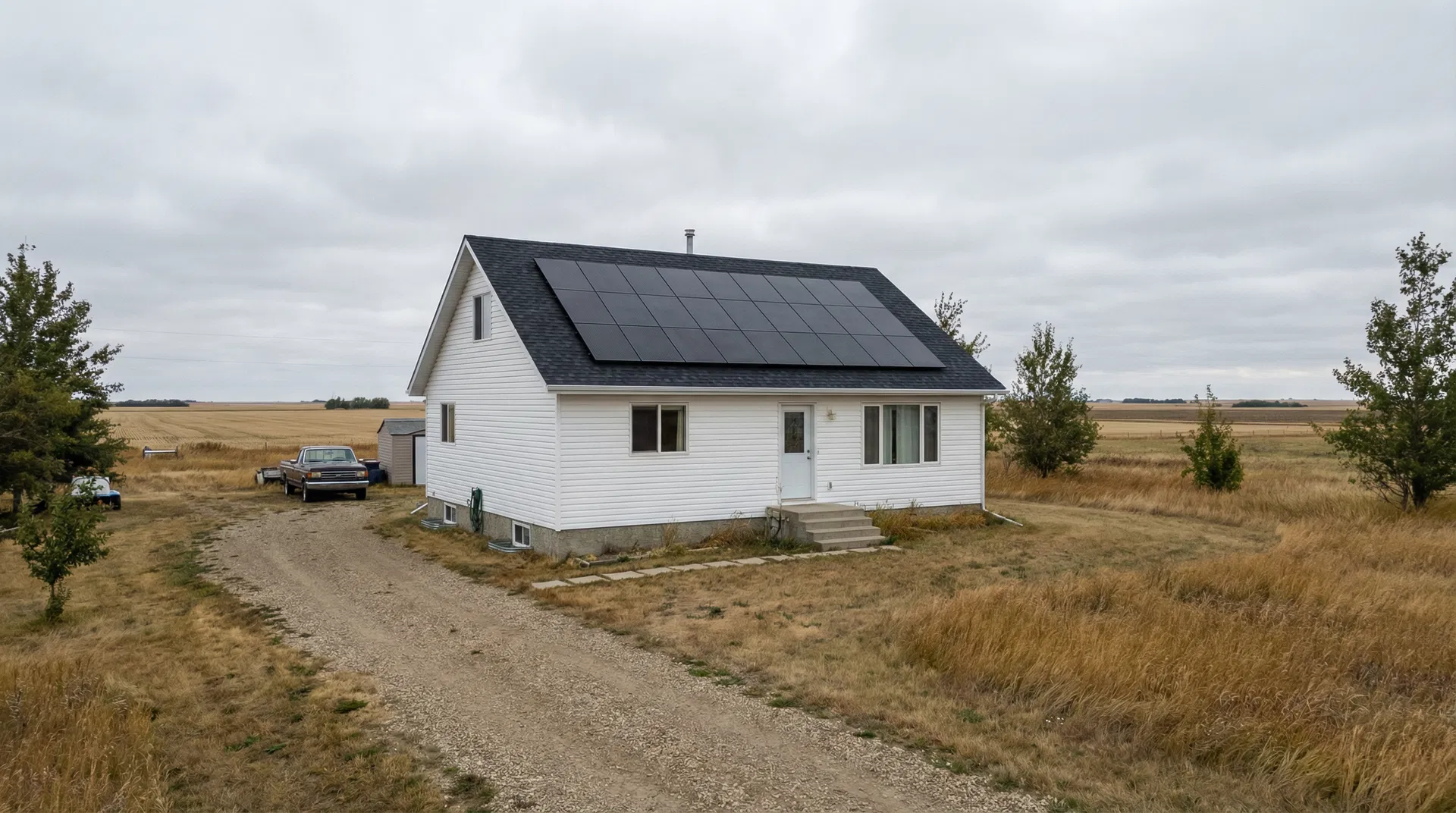
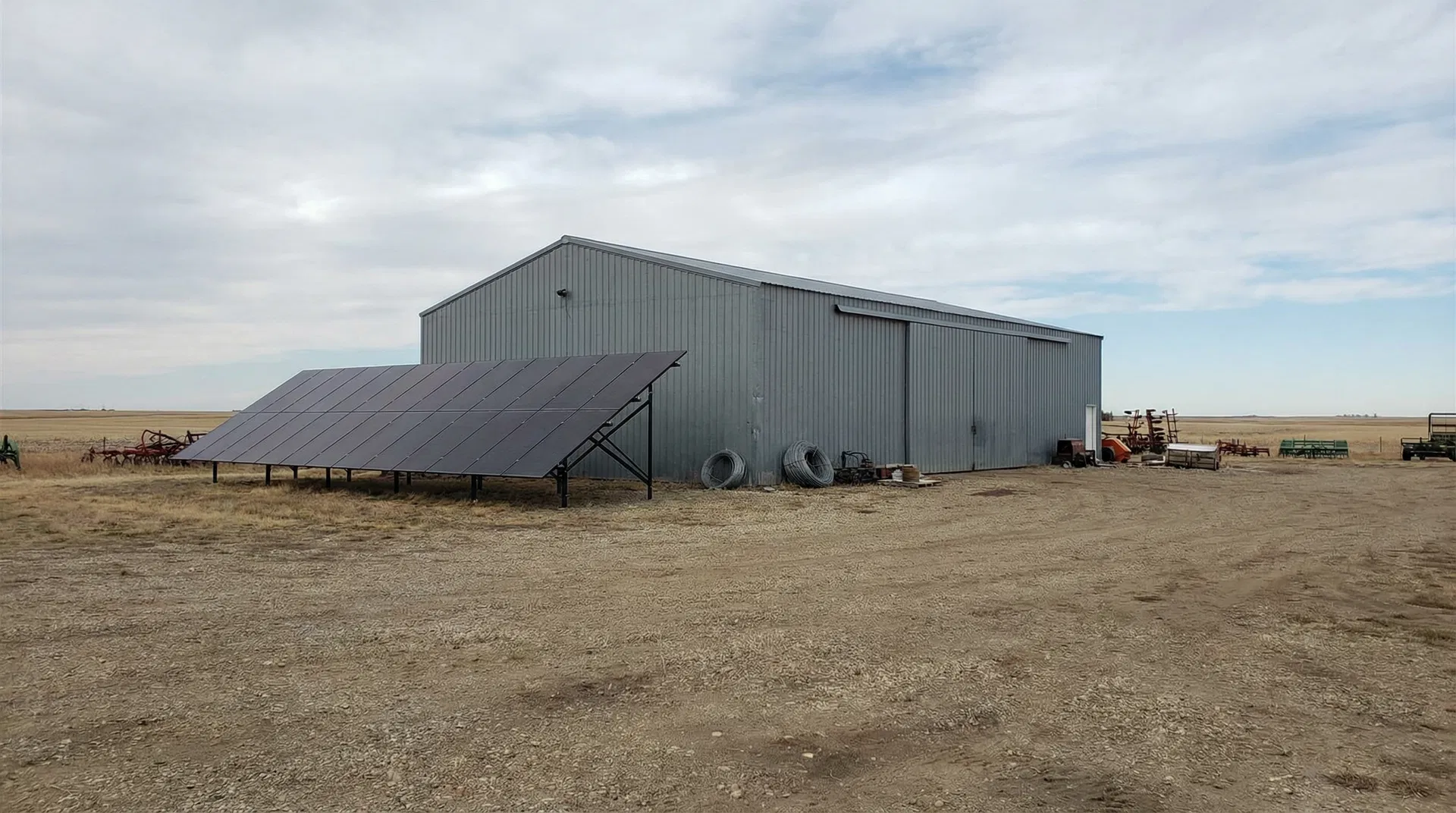
Solar shop solar in Red Deer, Alberta starts with understanding what the building actually does. A welding shop running heavy intermittent loads looks nothing like a cold storage building with constant refrigeration. Our designs account for those differences from the start. We install LONGi solar panels on both rooftop and ground-mount configurations. For shop roofs, we assess pitch, orientation, and structural condition before committing to a layout. Flat or low-slope commercial-style roofs are common on Red Deer area shops, and we work with ballasted racking systems where penetrations aren't practical. Ground-mount arrays are a straightforward option when the yard has available space and the roof isn't ideal, whether that's due to shading from trees, poor pitch, or a roof that's due for replacement in the next few years. APsystems microinverters are our standard for shop installs. Each panel runs its own inverter, which means shading from an adjacent building or rooftop obstruction doesn't drag down the whole array the way it would with a string inverter setup. It also gives us panel-level monitoring, so we can see exactly how the system is performing over time without guessing. System sizes for shops and outbuildings in the Red Deer area typically fall in the 8-20 kW range, with 12 kW being a common starting point for a single heated shop with moderate electrical loads. Larger operations with multiple buildings or higher-draw equipment often push into the upper end of that range or beyond. We confirm the right size through the design review, not a rule of thumb.
Solar Planning for Red Deer Properties
Shops and outbuildings are some of the best candidates for solar in Alberta. They tend to have large, unobstructed roof sections, consistent daytime loads like compressors, welders, heating systems, and lighting, and enough electrical consumption to justify a system in the 8-20 kW range. That's a different conversation than a standard residential install, and it calls for a different design process. Red Deer properties served by the City of Red Deer utility sit on a municipal grid that has its own interconnection process for micro-generation. Before we talk panels and inverters, we look at the electrical infrastructure on the building itself, what loads are pulling power and when, and how the meter base and service entrance are set up. A shop that runs three-phase equipment needs a different inverter strategy than one running single-phase loads. A heated shop with radiant or forced-air heat draws power patterns that look nothing like a home. We don't size systems from averages. We size them from the 12-month usage graph on your most recent power bill, combined with a site walk. That's what produces a design you can actually rely on, not one that looks good in a proposal but underperforms once the equipment is running.
Electrical Site Review for Red Deer Properties
Voltage Rise
Voltage rise happens when a solar system pushes power back toward the grid and the local distribution line can't absorb it quickly enough, causing the voltage at the meter to climb above acceptable limits. When voltage rise is a concern, the inverter's anti-islanding protection will clip output or shut down the system to stay within utility-permitted voltage bands. We assess voltage rise conditions during the design process and size the system accordingly so you're not losing production to avoidable clipping.
Single-Phase vs Three-Phase
Shops and commercial outbuildings in the Red Deer area can have either single-phase or three-phase electrical service, and the distinction matters a great deal for how a solar system is designed. Three-phase service supports higher-capacity loads and requires inverter configurations that balance output across all three legs, while single-phase properties have a simpler but more capacity-limited setup. We confirm service type during the site review and select APsystems microinverter configurations that match what's actually coming into the building.
Panel Infrastructure
Older electrical panels on shops and outbuildings often have limited breaker capacity or outdated equipment that wasn't designed to accept a solar backfeed connection. We check breaker capacity, panel age, and available space for a solar feed breaker during every site assessment. If the existing panel can't safely support the system, we'll tell you upfront what an upgrade involves and include it in the project scope rather than discovering it after installation begins.
Service Entrance Review
The service entrance and meter base are the connection point between the City of Red Deer's distribution system and your building's wiring, and their condition directly affects whether a micro-generation application can proceed without additional work. We check the meter base for damage, clearance, and compatibility with the utility's requirements before submitting the interconnection application. If an upgrade is needed, we flag it early so it doesn't hold up the project at a later stage.
Right-Sizing Solar for Red Deer Properties
Properties in the Red Deer area often run electrical loads that would look enormous to a typical residential installer. A heated shop alone can draw as much power as an entire house. Add a home, a secondary outbuilding, a grain auger, or an irrigation pump to the picture, and you're dealing with a combined load profile that a modest residential system won't touch. That's why shop and outbuilding solar in this area regularly lands in the 8-20 kW range, and sometimes higher when multiple structures are involved. The roof vs ground-mount question comes up on almost every acreage and commercial property we visit. A shop roof that faces south with good pitch and no shading is often the cleanest solution. But if the roof is oriented poorly, covered in shade from a nearby grain bin or tree line, or due for replacement in the next few years, ground mount is the better call. It's not a compromise. On properties with available yard space, a ground-mounted array can actually outperform a compromised rooftop install by a meaningful margin. We don't size systems from rule-of-thumb numbers or provincial averages. We start with the 12-month usage graph on your most recent power bill. Alberta utility bills show your consumption month by month, which means we can see your winter heating load, your summer peak, and everything in between. Combined with a site walkthrough and shading assessment, that graph is what drives the design. That's the difference between a system that performs as expected and one that doesn't.
Typical Load Profiles We Design For Near Red Deer
Heated Shop with Home
This is the most common profile we see on Red Deer area properties: a home running standard residential loads plus a heated shop drawing 40-80 amps for radiant or forced-air heat, lighting, and intermittent tool use. The combined load profile pushes total consumption well above what a residential-only system would address. We size from the full property's 12-month usage graph to make sure the system covers both structures without leaving significant load on the grid unnecessarily.
Commercial Shop or Light Industrial Bay
Welding shops, fabrication bays, and light industrial buildings in the Red Deer area often run 200-amp or larger three-phase service with intermittent but high-draw equipment. A 15-20 kW solar array can offset a substantial portion of daytime base load, even when peak equipment loads exceed what any reasonably sized solar system could cover on its own. We design around the base and mid-range load, not the peak, so the economics are grounded in what the system will actually offset.
Acreage with Shop and Outbuildings
Properties with a home, a detached shop, and one or more secondary outbuildings like a barn, cold storage unit, or equipment shed create a distributed load picture that a single small system won't address. An 18-20 kW array with a ground-mount or multi-roof configuration can be designed to cover the bulk of consumption across all structures from a single City of Red Deer interconnection point. We map the loads across buildings during the site review and design a system that balances coverage with practical installation logistics.
City of Red Deer Interconnection for Shop Solar
Red Deer's electrical service is provided by the City of Red Deer, which operates its own municipal utility. That makes the interconnection process here different from properties served by FortisAlberta or other wire services across the province. When you install a grid-tied solar system on a shop or outbuilding in Red Deer, the micro-generation application goes through the City of Red Deer's utility, not a provincial wire service. Range Road Solar handles the full application package. That includes the system design documentation, single-line diagrams, equipment specifications, and everything the utility needs to review the interconnection request. We don't hand you a folder of paperwork and wish you luck. We prepare it, submit it, and follow up. What we won't do is quote you a specific approval timeline or credit settlement outcome, because those details are set by the utility and current rules, and they can change. What we can tell you is that we've done this before, we know what the City of Red Deer's process requires, and we build the application package to meet those requirements the first time.
Project Economics and Design Review
| System Size | Annual Production | Year 1 Savings | Payback Period |
|---|---|---|---|
| 8-20 kW range, 12 kW typical |
Production, savings, and payback estimates require a property-specific design and your most recent power bill, and cannot be reliably determined without them.
How We Work in Red Deer
Bill and Load Review
We review your power bill to understand your energy use in Red Deer and size the system to your actual consumption — not a generic estimate.
Site Assessment
We assess your roof or ground area, south-facing exposure, electrical service, and utility interconnection requirements specific to your property.
Design and Utility Application
We produce a system layout, production estimate, and cost summary, then submit your micro-generation application to your utility on your behalf.
Installation and Commissioning
Our crew installs racking, panels, inverter, and electrical connections. All work is performed by licensed electricians. We commission and test before handoff.
Current Program and Interconnection Review
Utility connection review
The City of Red Deer reviews grid connection applications for micro-generation systems installed within its service territory. Range Road Solar prepares the full design package required for that review, including system documentation and equipment specifications. We handle the submission so you're not navigating the utility's process on your own.
Current program review
Commercial, agricultural, and residential properties may have access to different programs depending on ownership structure, system size, and current eligibility rules. We review applicable programs against your specific property and install at design time, rather than assuming a program that applied to a previous install still applies to yours. Rules change, and we check current conditions before making any program-related recommendations.
Frequently Asked Questions
Get a Solar Assessment for Red Deer
Submit a recent power bill and we will review your consumption and provide an honest assessment for your Red Deer property. No obligation.
(587) 330-7502 Book a CallRelated Resources
More Solar Services in Red Deer