Red Deer County · Solar financing
Solar Financing in Red Deer, Alberta
Monthly payments sized against the bill the system replaces. We design the system first, then structure financing around your actual usage and roof or ground-mount conditions.
Solar financing in Red Deer, Alberta is the focus of this page, and it's worth being direct about what that means in practice. Financing isn't just a monthly payment figure. It's a structure that either aligns with your power bill reduction or it doesn't. We build the system spec before we talk numbers, because a payment sized against an undersized or oversized system doesn't serve anyone. For residential and acreage properties in the area, systems typically fall in the 8 to 15 kW range, with 10 kW being a common starting point for a home with moderate electrical loads. Larger properties with shops, outbuildings, or supplemental heat will often push toward the upper end of that range or beyond. The right size comes from your most recent power bill, not from a brochure. We install LONGi panels paired with APsystems microinverters on every project. The microinverter setup means each panel operates independently. One panel in partial shade doesn't drag down the whole array. That matters for Red Deer properties where roof orientation, tree lines, or adjacent structures can create uneven shading across different parts of the day. Financing is structured after the design is complete. We don't lead with a payment pitch. We lead with a system that makes sense for your property, then match a financing product to the projected offset. If you want to see what a realistic monthly payment looks like against a real system design, a free design review is where that conversation starts. You'll need your most recent power bill and a few minutes to talk through the property layout.
Solar Planning for Red Deer Properties
Red Deer properties run a wide range of electrical loads. A home with a heated double garage is a different sizing conversation than a property that also runs a shop, irrigation equipment, or outbuildings. Both are common in and around the area, and both require a design built around real usage data rather than a rule-of-thumb number. Financing a solar install makes the most sense when the monthly payment is sized against what the system actually offsets. That means the design work comes first. We pull the 12-month usage graph from your most recent power bill, assess the roof or available ground space, check shading and orientation, and then build a system spec. Once the spec is solid, the financing conversation has real numbers behind it. We're not a big-box retailer pushing a package deal. We're a small Alberta company that does the site work, handles the City of Red Deer interconnection application, and installs equipment we stand behind. LONGi panels and APsystems microinverters are what we use because they hold up and because the microinverter architecture gives us panel-level monitoring and design flexibility that string systems don't offer. If the numbers work for your property, we'll tell you. If they don't, we'll tell you that too.
Electrical Site Review for Red Deer Properties
Voltage Rise
Voltage rise occurs when a solar system pushes power back toward the grid and the local distribution line voltage climbs above the acceptable operating range. Distribution conditions in any given area, including line length and the number of other loads on the circuit, affect how much rise a system can generate before the inverter is required to clip output to stay within limits. We assess voltage rise potential during the design phase so the system is sized to operate within acceptable limits under the City of Red Deer's interconnection rules.
Single-Phase vs Three-Phase
Properties in and around Red Deer may be served by either single-phase or three-phase electrical service, depending on the nature of the property and its history. Three-phase service is more common on commercial and agricultural properties with large motor loads, while most residential properties run single-phase. The service type affects which inverter configurations are viable and what the practical capacity ceiling looks like for a given install, so we confirm the service type during the site assessment before finalizing the system design.
Panel Infrastructure
Older electrical panels are common on established properties, and a panel that was adequate for the original load may not have the breaker capacity to support a solar system without an upgrade. We assess the panel age, the available breaker slots, and the main breaker rating as part of every site review. If the existing panel can't support the system, we factor a panel upgrade into the project scope so there are no surprises after the design is approved.
Service Entrance Review
The service entrance and meter base are reviewed as part of the interconnection package submitted to the City of Red Deer. The meter base condition matters because the utility needs a suitable metering point for a bi-directional meter, which is required for micro-generation operation. If the existing meter base doesn't meet current standards, an upgrade is required before the City of Red Deer will approve the interconnection, and we identify that requirement during the site assessment so it's built into the project from the start.
Right-Sizing Solar for Red Deer Properties
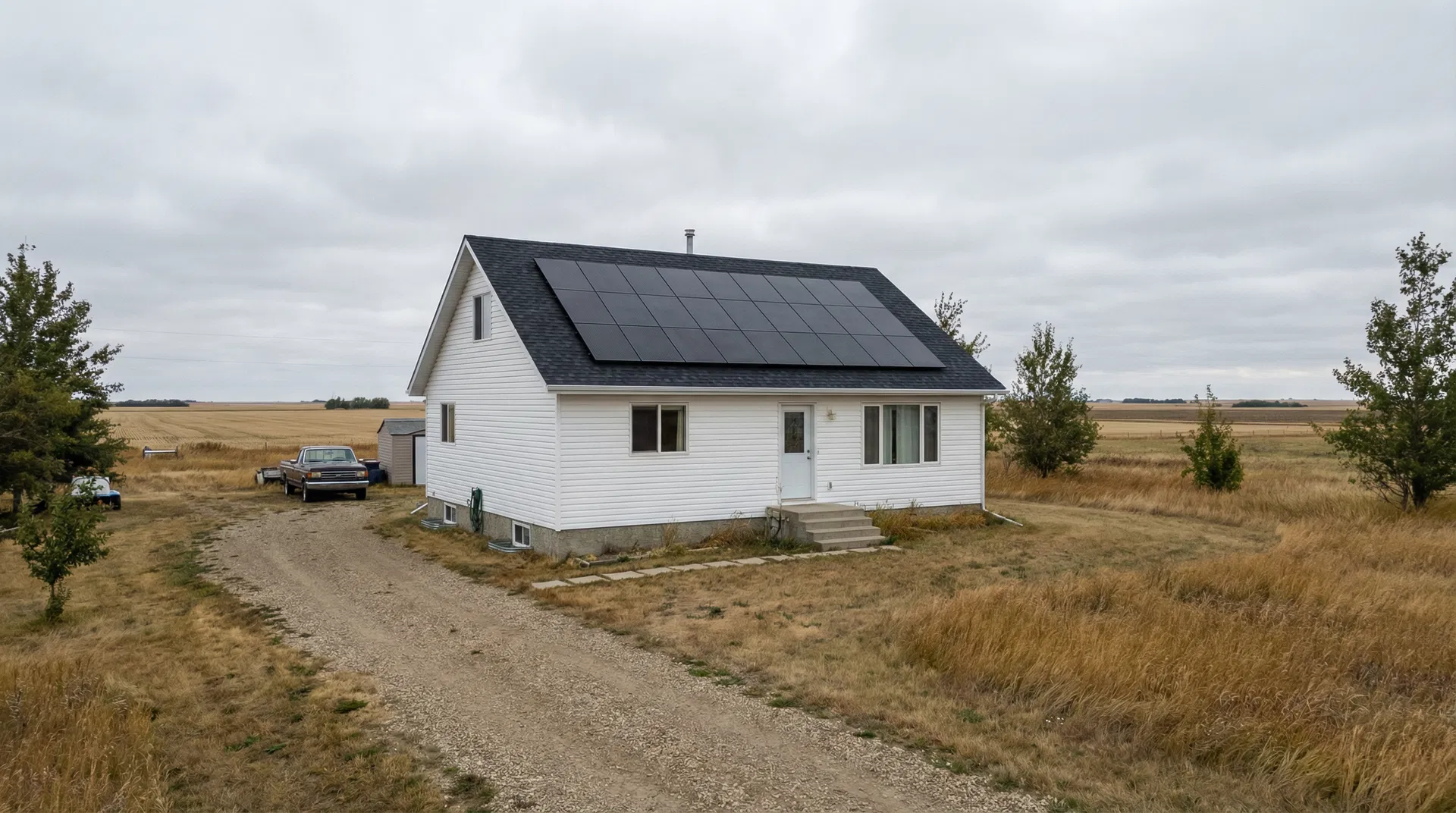
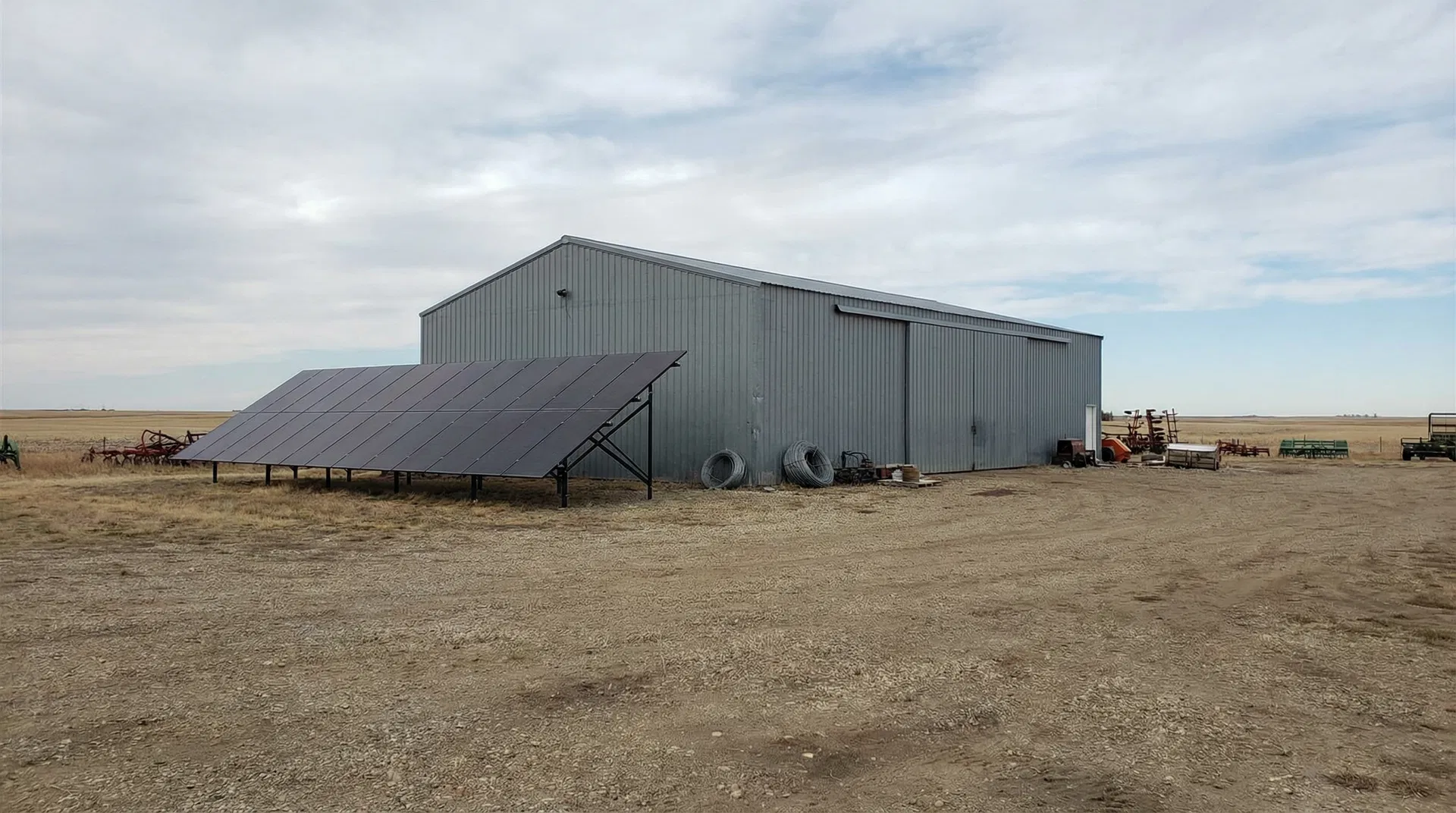
Rural and peri-urban properties near Red Deer don't size like a suburban home on a small lot. A house with a heated shop, a second outbuilding, and an electric vehicle charger is carrying three or four distinct load categories, each of which adds to the annual usage total. That's why systems in this area often land in the 10 to 15 kW range or higher, while a straightforward residential install on a smaller lot might sit closer to 8 kW. The right number comes from the property, not from a provincial average. We size every system from the 12-month usage graph on your most recent power bill. That graph shows seasonal variation, which matters a great deal for properties with high winter loads from supplemental heat or heated outbuildings. A rule-of-thumb kW-per-person estimate won't catch that. The usage graph does. The roof versus ground-mount decision follows the same logic. If the roof has good south-facing exposure, solid pitch, and no shading from trees or adjacent structures, a roof mount is usually the straightforward choice. But if the yard is spread out, the roof is shaded through part of the day, or the pitch isn't ideal, a ground mount often produces a better result. We don't default to one approach. We look at the site and recommend what actually works. For properties with multiple loads across several buildings, we sometimes design a system that prioritizes the highest-consumption loads first, then models whether adding capacity to cover additional loads changes the economics. That conversation starts with your most recent power bill.
Typical Load Profiles We Design For Near Red Deer
Home + Heated Double Garage
A residential property with a heated double garage attached or detached adds meaningful winter load to the home's base consumption, and that seasonal spike shows clearly in the 12-month usage graph. We size the system to cover both loads rather than just the house, which typically pushes the design toward 10 to 12 kW depending on the heating method. Your most recent power bill and a roof or ground-mount assessment are what confirm the right spec for this profile.
Home + Detached Workshop
A home paired with a working shop, whether it runs welding equipment, compressors, or woodworking tools, carries an intermittent but high-draw load on top of the residential base. That combination often justifies a 12 to 15 kW system, and the design needs to account for the shop's demand pattern across different seasons. We pull both the residential and shop usage from the power bill and treat them as a single load profile to make sure the system is sized for actual consumption, not just the house.
Acreage with Outbuildings and EV Charging
Properties with multiple outbuildings and an electric vehicle charger are among the higher-consumption residential profiles we design for. EV charging adds a consistent overnight load that doesn't always show up as a dramatic spike but accumulates significantly over a billing cycle. Combined with outbuilding loads and the residential base, this profile often lands in the 13 to 15 kW range, and ground-mount configurations are worth considering if the roof area is limited or split across multiple structures.
City of Red Deer Interconnection
The City of Red Deer is the wire service for properties in this area. That means any solar system connected to the grid here goes through the City of Red Deer's micro-generation application process, not a rural electric cooperative or a provincial wire service like ATCO or FortisAlberta. Municipal wire services have their own interconnection requirements, application processes, and technical standards. The City of Red Deer reviews grid connection applications for micro-generation systems, and the design package we submit needs to meet their specifications. Range Road Solar handles the full interconnection application. We prepare the technical documentation, submit the package to the City of Red Deer on your behalf, and follow up through the review process. You don't need to navigate the utility side of this yourself. What we need from you at the design stage is your most recent power bill and access to the property for a site assessment. From there, we handle the paperwork.
Project Economics and Design Review
| System Size | Annual Production | Year 1 Savings | Payback Period |
|---|---|---|---|
| 8-15 kW range, 10 kW typical |
Production, savings, and payback estimates require a property-specific design assessment and your most recent power bill.
How We Work in Red Deer
Bill and Load Review
We review your power bill to understand your energy use in Red Deer and size the system to your actual consumption — not a generic estimate.
Site Assessment
We assess your roof or ground area, south-facing exposure, electrical service, and utility interconnection requirements specific to your property.
Design and Utility Application
We produce a system layout, production estimate, and cost summary, then submit your micro-generation application to your utility on your behalf.
Installation and Commissioning
Our crew installs racking, panels, inverter, and electrical connections. All work is performed by licensed electricians. We commission and test before handoff.
Current Program and Interconnection Review
Utility connection review
The City of Red Deer reviews micro-generation interconnection applications for properties within its service territory. Range Road Solar prepares and submits the full design package on your behalf, including the documentation the City requires for grid connection approval. We handle the application process so you're not navigating utility requirements on your own.
Current program review
Eligibility for commercial, farm, and residential programs is reviewed against the rules that are current at the time of your design review. Program availability and rules change, and what applied to a neighbour's install a year ago may not apply to yours today. We confirm current eligibility during the design process, not after the system is already specified.
Frequently Asked Questions
Get a Solar Assessment for Red Deer
Submit a recent power bill and we will review your consumption and provide an honest assessment for your Red Deer property. No obligation.
(587) 330-7502 Book a CallMore Solar Services in Red Deer