Red Deer County · Solar quotes
Solar Quotes for Red Deer, Alberta Homes and Properties
A free design review based on your most recent power bill, not a satellite estimate. Built for homes, farms, and acreages across Central Alberta.
Solar quotes for Red Deer, Alberta properties start with a real system design, not a ballpark pulled from satellite imagery. We ask for one document: your most recent power bill. It includes a 12-month usage graph showing your consumption month by month, which tells us far more than a square footage estimate ever could. From there, we model your roof or ground-mount layout, account for any shading from trees, dormers, or adjacent buildings, and apply that usage data to a proposed system. Most residential properties fall in the 8 to 15 kW range, with a 10 kW system a common fit for a single-family home without major secondary loads. We install LONGi panels on every project. They offer strong output relative to their physical footprint, which matters on roofs with limited mounting area. Paired with APsystems microinverters, each panel operates independently, so partial shading on one section doesn't drag down the whole array. The quote we deliver is a full design package: system layout, production model based on site conditions, equipment specification, interconnection notes, and project economics. It's not a range with three asterisks. It's a design you can act on, compare, and ask questions about before signing anything. We don't pressure anyone to sign on the spot. If you're getting other quotes, our design gives you something concrete to compare against.
Solar Planning for Red Deer Properties
Properties in the area connect to a municipal utility rather than a rural co-op or investor-owned wire service. That distinction matters when we're designing your system and preparing the interconnection package, because the application process, metering requirements, and utility contact points differ from rural Alberta territories. The local property mix is varied: newer infill homes on compact lots, older bungalows with original electrical panels, and acreage properties on the urban fringe with detached shops or garages on the same meter. A well-designed solar system accounts for all of it, not just the house footprint. Most residential properties in the 8 to 15 kW range cover their primary loads, but what's right for yours depends on your consumption history and site conditions. We don't size from a national average or a square footage rule. We pull the 12-month usage graph from your most recent power bill and build the design from your actual numbers. Range Road Solar installs LONGi panels and APsystems microinverters on every residential project. Microinverters give you panel-level output visibility, which matters on roofs with any shading from dormers, trees, or nearby structures. We handle the interconnection application and manage the utility paperwork from start to finish.
Electrical Site Review for Red Deer Properties
Voltage Rise
Voltage rise happens when your inverter exports power onto the grid and the voltage on the local distribution line climbs above its normal operating band. If the rise is significant enough, the inverter reduces output or shuts down to protect the grid, which limits system performance. We measure the distribution conditions at your property and account for voltage rise when specifying inverter settings and system size.
Single-Phase vs Three-Phase
Residential properties in Alberta are typically served by single-phase power, while some commercial or farm-adjacent properties may have three-phase service. The phase configuration determines which inverter models are compatible and how much total capacity the system can connect to your panel. We confirm the service type during the site assessment and design the system to match, because using the wrong inverter configuration creates both compliance and performance problems.
Panel Infrastructure
Older electrical panels sometimes can't safely accommodate the additional breaker position required for a solar tie-in, either because the panel is at capacity or the breaker ratings aren't compatible with modern equipment. We inspect the panel age, rated capacity, and available breaker positions during the site visit. If an upgrade is needed, we include it in the design package so there are no surprises after installation begins.
Service Entrance Review
The service entrance is where the utility's wiring meets your property's electrical system, and the meter base condition has to meet the City of Red Deer's standards before a micro-generation application can proceed. We check the meter base, service entrance conductors, and weatherhead during the site visit. If the meter base needs replacement or an upgrade, we include that scope in the project before submitting the interconnection application.
Right-Sizing Solar for Red Deer Properties
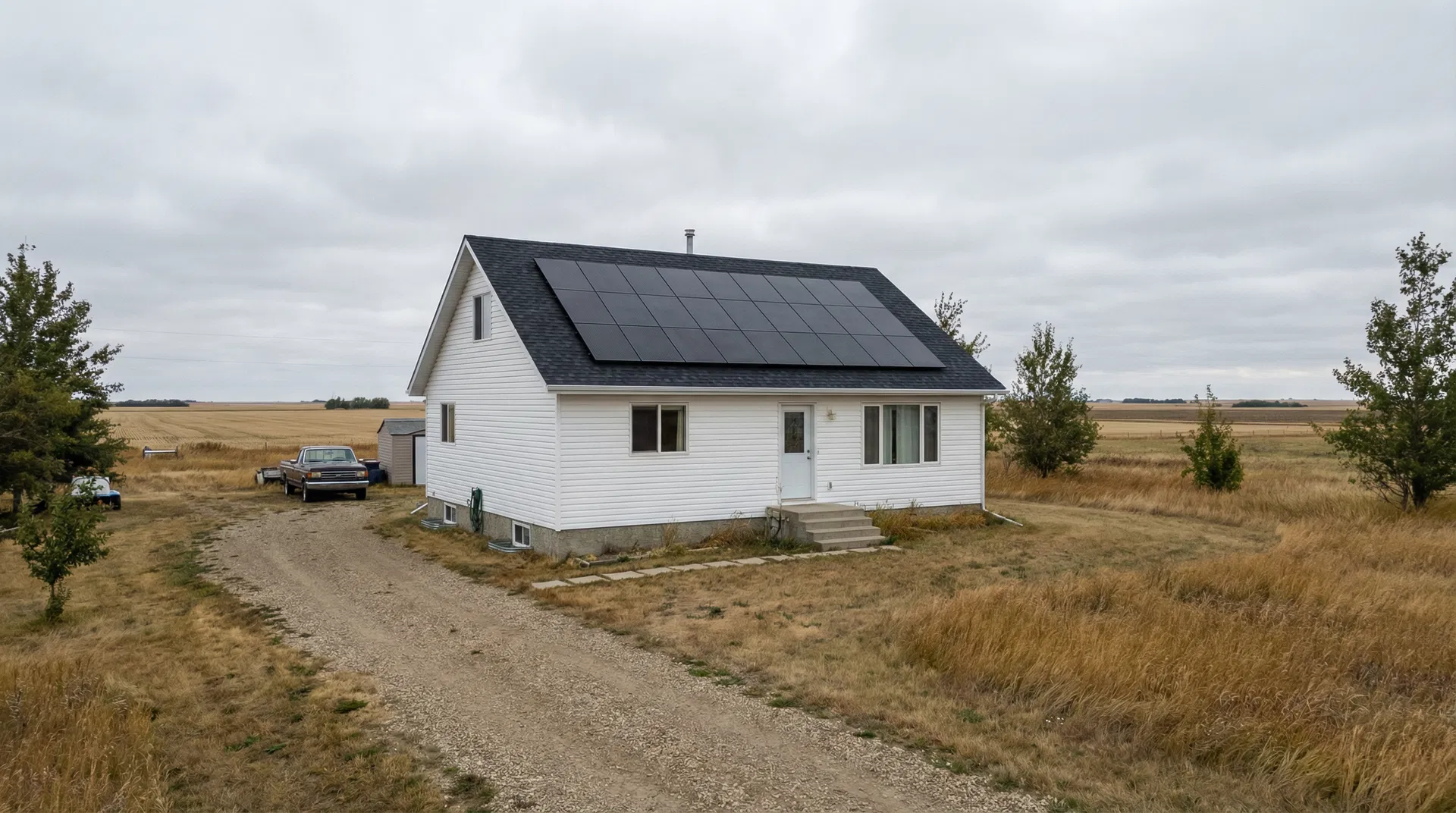
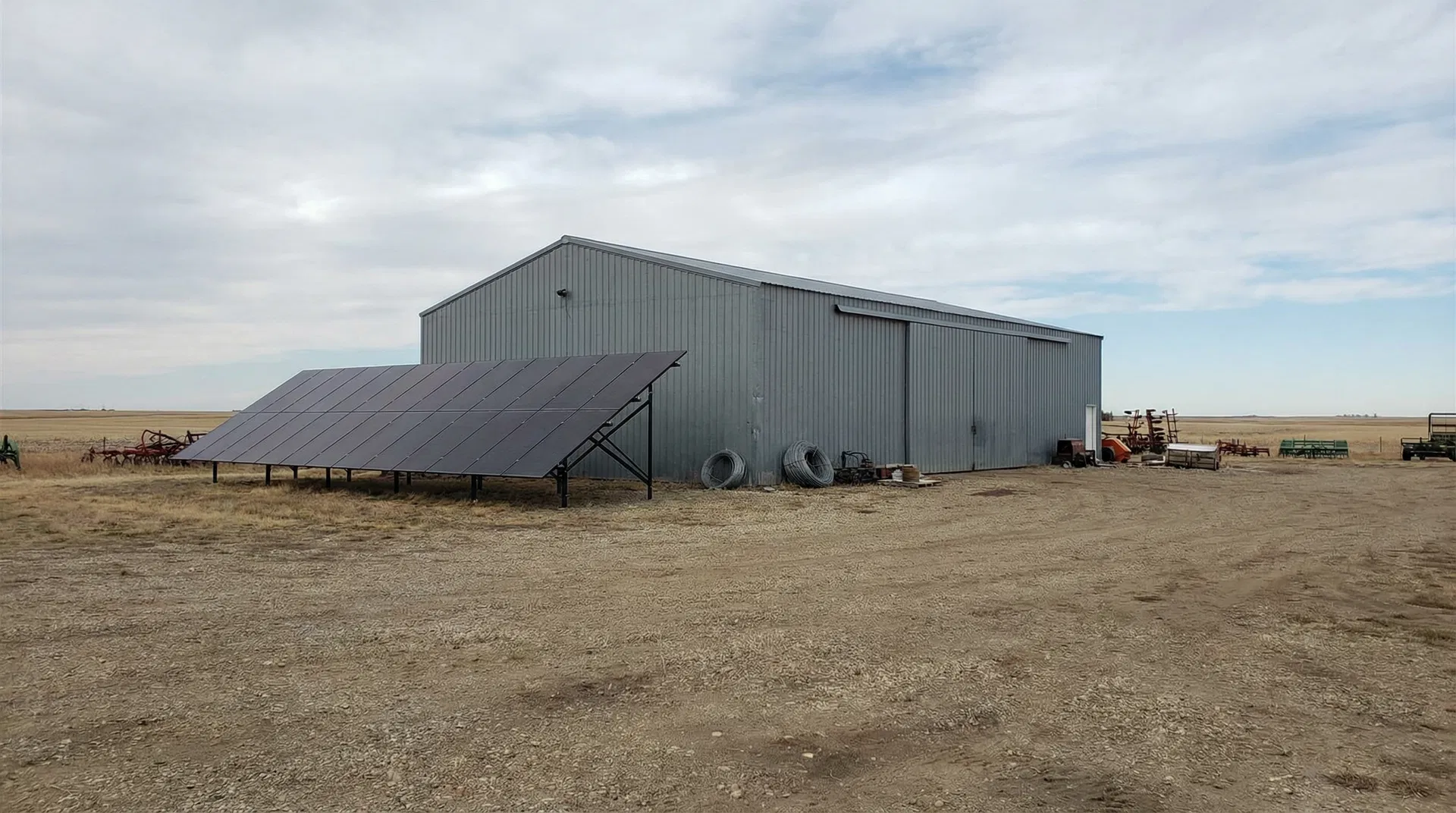
Acreage and rural properties often run multiple loads on the same meter: the house, a heated shop, a detached garage, and sometimes irrigation or grain-handling equipment. A home-only system sized for 8 kW might cover the house comfortably but leave the shop on full grid power. We size the system for the total load the bill reflects, not just the house footprint. The roof vs. ground-mount decision comes down to the site. If your roof is well-oriented and unshaded, a rooftop array is usually the simpler and more cost-effective option. If there's shading from mature trees, a complex roofline with dormers, or you've got open land that suits an array footprint better than the roof does, ground mount is the right call. We don't push one over the other; we recommend based on what the site actually supports. For sizing, we work from the 12-month usage graph on your most recent power bill. That graph shows how your consumption shifts month by month, including your highest-use winter months and the shoulder seasons. We're not guessing based on a regional average; we're designing from your actual usage pattern. Systems in the 8 to 15 kW range cover most residential and light commercial scenarios. Larger farm or multi-building properties often need a separate conversation about load priorities and whether a phased installation makes more sense.
Typical Load Profiles We Design For Near Red Deer
Home Plus Heated Shop
A heated shop on the same meter as the house significantly increases winter consumption, often pushing total usage to 2,500 to 4,500 kWh per month depending on heating method and shop size. A system in the 12 to 15 kW range is a common starting point for this combined load, though the 12-month usage graph on your most recent power bill is what actually sets the target. APsystems microinverters work well here because the house and shop may have different roof orientations, and panel-level independence keeps the array efficient.
Single-Family Home
A single-family home without major secondary loads typically runs 700 to 1,400 kWh per month, putting it in the 8 to 11 kW system range. We confirm the fit by reviewing the consumption history on your most recent power bill, then adjust for roof orientation and any shading from trees or adjacent structures. LONGi panels give you strong output per square metre, which matters if roof space is limited.
Acreage with Multiple Buildings
Acreages with a house, detached garage, and one or more outbuildings connected to the same meter can have variable monthly loads that are difficult to size without reviewing the consumption history. The 12-month usage graph on your most recent power bill captures the seasonal swings and peak months, which is what we use to confirm the right system capacity. Properties in this category often end up in the 12 to 15 kW range, and ground-mount arrays are worth discussing where running conduit across multiple separate structures gets complicated.
City of Red Deer Interconnection
Grid-tied solar in the area connects through the City of Red Deer's municipal utility. That's a different application process than FortisAlberta or a rural co-op, and the interconnection documentation requirements reflect that distinction. Range Road Solar prepares and submits the interconnection application on your behalf. We handle the design documentation, the single-line diagram, and the communication with the utility through the approval process. You don't need to manage any of that paperwork. What we need from you is your most recent power bill. That's it. It includes your account number, service address, and the 12-month usage data we use to size the system. Once you've approved the design and proposal, we manage the utility application from start to finish. Municipal interconnection requirements differ from provincial rural utility processes. Our design package is built to meet those specifications, and we confirm the current requirements at the time of design, since utility processes do change.
Project Economics and Design Review
| System Size | Annual Production | Year 1 Savings | Payback Period |
|---|---|---|---|
| 8-15 kW range, 10 kW typical |
Production, savings, and payback estimates require a property-specific design review and your most recent power bill.
How We Work in Red Deer
Bill and Load Review
We review your power bill to understand your energy use in Red Deer and size the system to your actual consumption — not a generic estimate.
Site Assessment
We assess your roof or ground area, south-facing exposure, electrical service, and utility interconnection requirements specific to your property.
Design and Utility Application
We produce a system layout, production estimate, and cost summary, then submit your micro-generation application to your utility on your behalf.
Installation and Commissioning
Our crew installs racking, panels, inverter, and electrical connections. All work is performed by licensed electricians. We commission and test before handoff.
Current Program and Interconnection Review
Utility connection review
The local municipal utility reviews grid connection applications for solar installations and has its own documentation requirements for the design package. Range Road Solar prepares the design package and manages the application process on your behalf. We build the interconnection documentation to meet current requirements at the time of design.
Current program review
Commercial, farm, and residential solar installations may qualify for various programs depending on property type, system size, and the rules that apply when your project is filed. We review eligibility against what's current at the time of design, not what applied a year ago. Program terms change, so we confirm what applies to your specific situation during the design review.
Frequently Asked Questions
Get a Solar Assessment for Red Deer
Submit a recent power bill and we will review your consumption and provide an honest assessment for your Red Deer property. No obligation.
(587) 330-7502 Book a CallMore Solar Services in Red Deer