Red Deer County · Battery storage
Solar Battery Storage in Red Deer, Alberta
Backup power and higher self-consumption for Red Deer solar systems. We design storage solutions around your actual loads and your most recent power bill.
When someone searches solar battery storage Red Deer Alberta, they're usually trying to solve one of two problems: they want backup power when the grid goes down, or they want to use more of what their panels produce instead of sending it back at a lower credit rate. Both are legitimate goals, and a well-designed system can address both at once. We install hybrid inverter systems paired with lithium battery storage. A hybrid inverter handles both the solar input from your LONGi panels and the battery charging and discharging in a single unit, which keeps the system simpler and more reliable than stacking separate components. The battery bank is sized to match your priority loads, whether that's keeping the furnace, refrigerator, and lights running through an outage, or storing midday production for evening use. For Red Deer properties in the 8-20 kW range, a 12 kW system with storage is a common starting point for homes with higher-than-average loads or shop buildings attached to the meter. Larger systems make sense when ground-mount arrays feed multiple buildings or when a property has consistent overnight loads that storage can meaningfully offset. Battery storage isn't the right fit for every property. If your usage pattern doesn't lend itself to self-consumption gains and you're not concerned about outage backup, a straight grid-tied system may be the better call. We'll tell you which direction makes sense after we've seen your power bill and done the site assessment. No pressure either way.
Solar Planning for Red Deer Properties
Red Deer sits in the middle of Alberta's power corridor, and properties here run the full spectrum: residential homes, light commercial buildings, heated shops, and mixed-use acreages on the urban fringe. That variety matters when you're sizing a solar and storage system, because a modest bungalow and a property with a heated shop and irrigation draw have completely different load profiles. One size doesn't fit either of them. Storage changes the equation. Without a battery, your panels produce power and what you don't use immediately goes back to the grid. With a battery, you capture that production for use later. Whether that's running overnight loads, bridging a grid outage, or reducing what you draw during higher-demand windows, the value of storage depends entirely on how your property uses electricity. We don't quote systems from square footage estimates or rule-of-thumb numbers. We start with your most recent power bill, which includes a 12-month usage graph, and build a site design from there. That's the only way to know what size actually fits and whether storage makes sense for your specific situation. Our design reviews are free, and we'll tell you straight if storage isn't the right call for your property.
Electrical Site Review for Red Deer Properties
Voltage Rise
Voltage rise happens when a solar system pushes power back toward the grid and the local distribution conditions cause the voltage at the service entrance to climb above acceptable limits. If voltage rise is too high, the inverter will clip output to bring voltage back into range, which reduces system production below what the design predicted. We assess voltage rise conditions as part of the site design so the system is sized and configured to stay within limits.
Single-Phase vs Three-Phase
Properties in and around Red Deer may be served by single-phase or three-phase electrical service depending on the building type and what the City of Red Deer has run to that meter. Phase configuration affects which inverters are compatible and how much capacity the system can carry. We confirm the phase service at your site before specifying equipment, because the wrong inverter for the service type creates problems at the interconnection review stage.
Panel Infrastructure
Older electrical panels sometimes don't have the breaker capacity to support a solar or storage system without an upgrade. We check the panel age, current breaker loading, and available space for a solar interconnection breaker during the site assessment. If the panel can't support the system safely, we'll identify what an upgrade involves and factor that into the project scope before you commit to anything.
Service Entrance Review
The meter base and service entrance condition are reviewed as part of the interconnection package for City of Red Deer applications. If the meter base isn't compatible with the bi-directional metering the City requires for a micro-generation setup, it needs to be upgraded before the application can be approved. We identify this early so there are no surprises after equipment has been ordered.
Right-Sizing Solar for Red Deer Properties
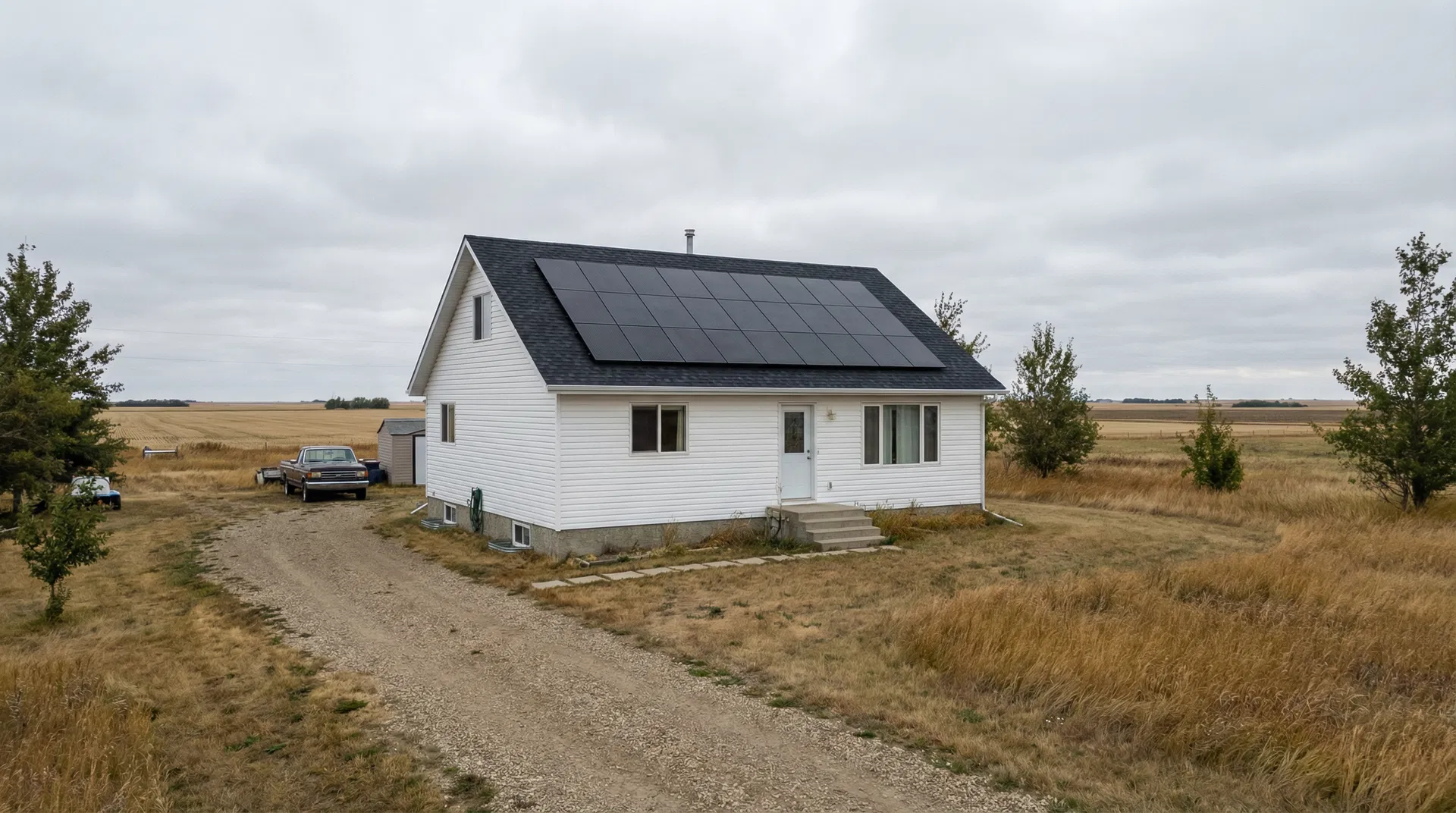
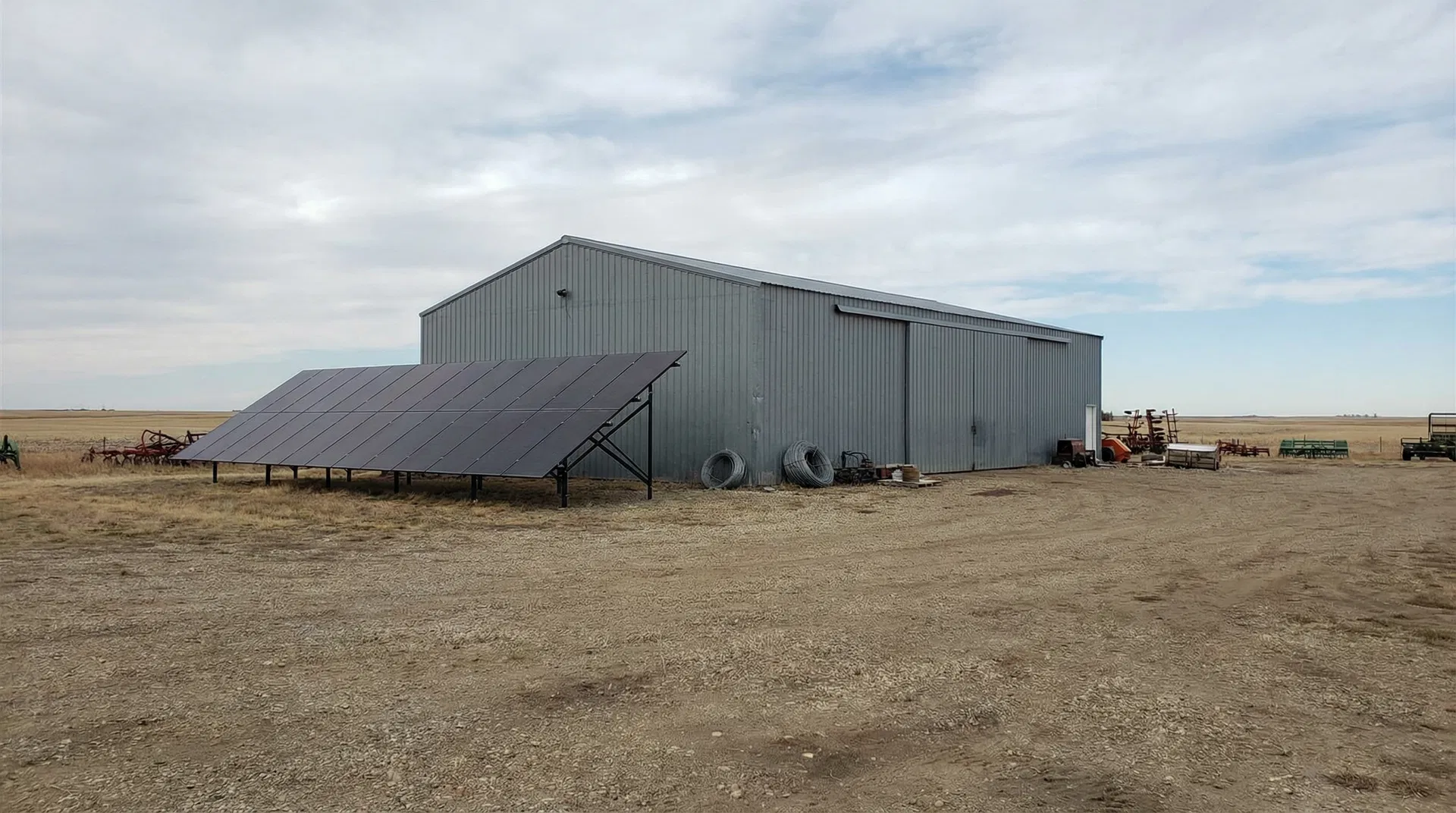
Properties in and around Red Deer don't always look like a single-family home with one meter. A lot of the properties we work with have a house, a heated shop or garage, maybe a secondary suite, and occasionally a small outbuilding or irrigation setup all running off the same account. When you're sizing a solar and storage system for that kind of load mix, you need to account for all of it, not just the house. That's why we don't use rule-of-thumb numbers. We start with the 12-month usage graph on your most recent power bill. That graph shows us your seasonal peaks, your baseline consumption, and the months where usage spikes. A property that heats a 2,400-square-foot shop through January looks very different on that graph than one that only heats a house. The system size that makes sense for one of them won't make sense for the other. Roof versus ground mount is another early decision. A lot of Red Deer area properties have adequate roof space, but if there's significant shading from trees or adjacent buildings, a poor pitch, or if the roof doesn't face the right direction, a ground mount on the yard is often the cleaner call. Ground mounts also let us scale up more easily when the system is serving multiple loads. We evaluate both options at the site assessment and recommend whichever one the data supports. You don't have to guess and we won't push you toward the more expensive option if it isn't warranted.
Typical Load Profiles We Design For Near Red Deer
Home with Heated Attached Garage
A house with a heated double or triple garage adds a significant electrical load, especially through Alberta winters when that space is running a dedicated heater and possibly a compressor or welder. We size the solar array and battery bank to cover both the home's baseload and the periodic spikes from shop equipment. Your most recent power bill and a site walkthrough tell us what that combination actually draws month to month.
Light Commercial or Mixed-Use Building
Some Red Deer area properties run a small business from the same meter as the residence, whether that's a trades operation, a home office with server equipment, or a retail-adjacent space. Storage is particularly useful here because it lets the system hold production from daytime hours and apply it to loads that run into the evening. We design these systems from the commercial meter's 12-month usage data, not from a residential benchmark.
Acreage with Multiple Outbuildings
Properties on the urban fringe of Red Deer sometimes include a house, a detached shop, a barn or storage building, and outdoor lighting or security systems all on one meter. That spread of loads benefits from a larger array in the 14-20 kW range and a battery sized to cover the most critical loads through an outage. We map each outbuilding's contribution to total usage and design the system so the battery prioritizes correctly when the grid goes down.
City of Red Deer Interconnection for Battery Storage
The City of Red Deer is the wire service for properties within Red Deer. If you're connecting a solar and storage system to the grid here, your micro-generation application goes through the City of Red Deer, not one of the rural wire services that cover the surrounding area. That distinction matters because interconnection requirements, application packages, and metering setups vary by wire service. What works for a FortisAlberta rural application doesn't automatically translate to a City of Red Deer submission. We've worked through this process and we handle the technical design package and application coordination on your behalf. What that means in practice: you don't need to navigate the application yourself. We prepare the single-line diagram, equipment specifications, and supporting documentation the City requires. We submit it and track the status. If the City has questions or requests revisions, we handle that communication. Your job is to get us your most recent power bill so we can size the system correctly before anything gets submitted. We don't guess at system size and we don't submit applications for systems that haven't been properly designed first.
Project Economics and Design Review
| System Size | Annual Production | Year 1 Savings | Payback Period |
|---|---|---|---|
| 8-20 kW range, 12 kW typical |
Production, savings, and payback estimates require a property-specific design review and your most recent power bill before any figures can be confirmed.
How We Work in Red Deer
Bill and Load Review
We review your power bill to understand your energy use in Red Deer and size the system to your actual consumption — not a generic estimate.
Site Assessment
We assess your roof or ground area, south-facing exposure, electrical service, and utility interconnection requirements specific to your property.
Design and Utility Application
We produce a system layout, production estimate, and cost summary, then submit your micro-generation application to your utility on your behalf.
Installation and Commissioning
Our crew installs racking, panels, inverter, and electrical connections. All work is performed by licensed electricians. We commission and test before handoff.
Current Program and Interconnection Review
Utility connection review
The City of Red Deer reviews grid connection applications for properties within its service area. Range Road Solar prepares the full design package required for the micro-generation application, including single-line diagrams and equipment specifications. We submit and track the application on your behalf so you don't need to navigate that process yourself.
Current program review
Residential, commercial, and farm properties may have access to programs or credits that affect the economics of a solar and storage installation. Eligibility and program rules change, so we review what's currently available at the time of your design. We don't quote based on programs that may no longer be active or that your property may not qualify for.
Frequently Asked Questions
Get a Solar Assessment for Red Deer
Submit a recent power bill and we will review your consumption and provide an honest assessment for your Red Deer property. No obligation.
(587) 330-7502 Book a CallMore Solar Services in Red Deer