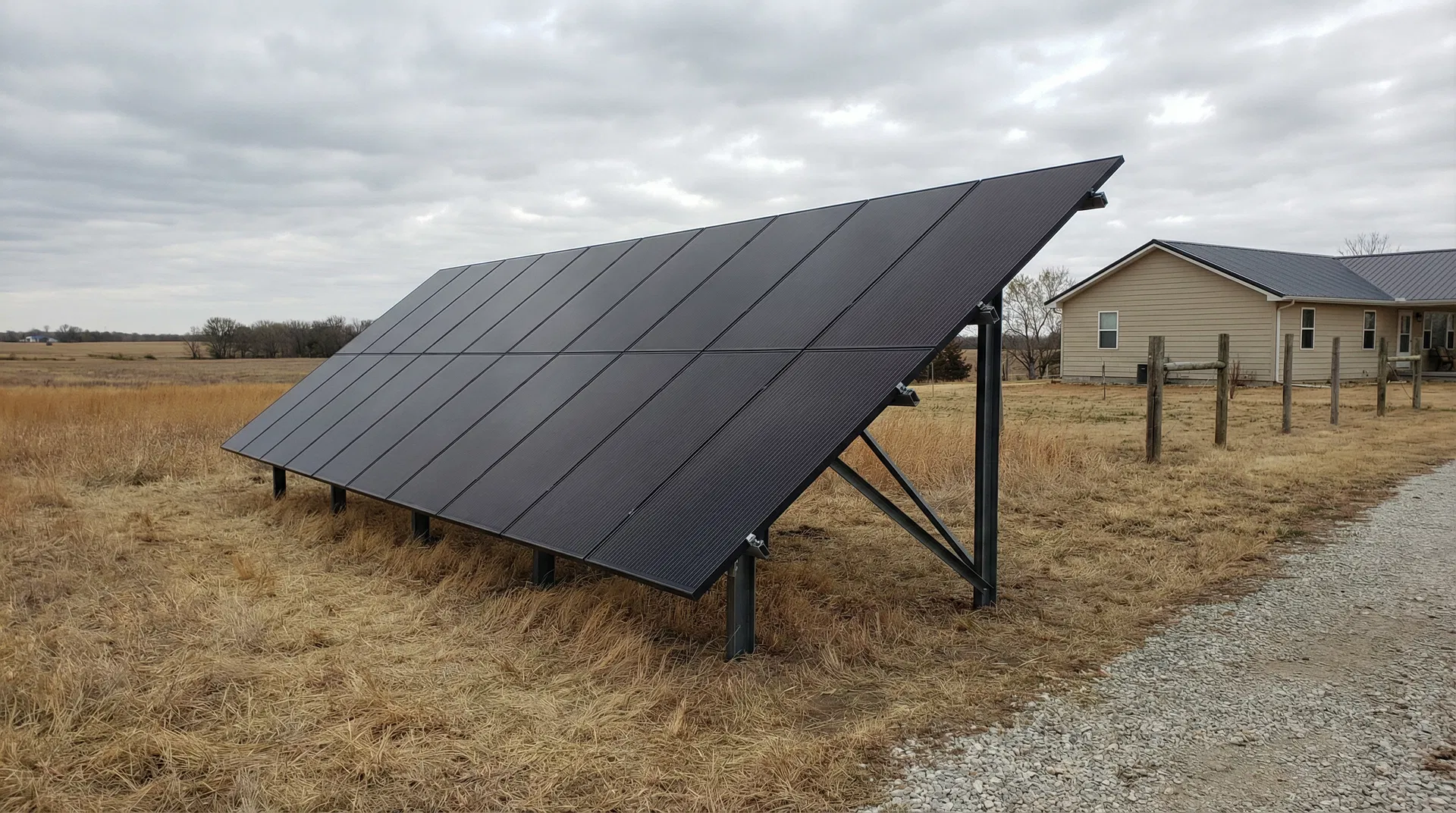
Solar battery storage in Penhold, Alberta starts with understanding why you want storage in the first place. For some property owners, it's backup power during outages. For others, it's maximizing self-consumption by storing midday solar production and drawing on it in the evening. Most systems we design address both. We install hybrid inverter systems paired with lithium battery storage. The hybrid inverter replaces a standard string inverter and handles the handoff between your panels, your battery bank, your home loads, and the grid. When the sun's producing more than you're using, excess goes to the battery first, then to the grid. When production drops off in the evening, the battery covers the gap before the grid kicks in. LONGi solar panels are our default panel for all installations, including battery-backed systems. They're a reliable, well-supported product line and they hold up on Alberta properties. We size the battery bank based on which loads you need backed up and for how long. A property that just wants the lights and fridge on during an outage needs a very different battery than one that also needs to run a well pump or heated shop. We walk through that with you during the design review. Systems we install in this area typically fall in the 8 to 20 kW range, with 12 kW being common for a home plus shop setup. Your property's actual requirements are confirmed through site design and your most recent power bill.
Solar Planning for Penhold Properties
Properties in and around Penhold often carry loads that urban lots don't. A heated shop, outbuildings, or a well pump change how a solar system needs to be designed, and they change how a battery fits into that design. Adding storage isn't just about backup power during an outage. It's about keeping more of what your panels produce on-site instead of sending it back to the grid at whatever the current settlement rate happens to be. That calculus depends entirely on your specific load profile, your FortisAlberta billing history, and how your property is laid out. We don't size systems from a rule of thumb. We start with the 12-month usage graph on your most recent power bill, map it against your actual loads, and build a system around what the property actually needs. For some properties, that means a grid-tied solar system with a small backup bank. For others, it means a full hybrid inverter setup sized to cover the loads that matter most when the grid goes down. We confirm which approach fits your situation through the design review, not before it.
Electrical Site Review for Penhold Properties
Voltage Rise
Voltage rise happens when a solar system pushes power back onto the distribution line and raises the local voltage above acceptable limits. On longer rural distribution runs, the line impedance is higher, which means the voltage rise from a given system size is greater than it would be on a short urban feeder. If voltage rise is excessive, the inverter clips output or shuts down to protect the grid, which affects how much usable energy your system actually delivers. We assess voltage rise during design so the system is sized to operate within FortisAlberta's limits at your specific connection point.
Single-Phase vs Three-Phase
Rural properties in Alberta can have either single-phase or three-phase electrical service depending on what was installed when the property was developed and what loads it was originally built to serve. Single-phase service is standard for most residences, but properties with larger shop equipment, grain handling, or irrigation may have three-phase. The phase configuration determines which inverter products are compatible and affects the maximum capacity a system can be designed to without additional infrastructure work. We confirm your service type during the site review before finalizing equipment selection.
Panel Infrastructure
Older electrical panels on rural properties sometimes don't have the breaker capacity to support a solar or battery storage system without an upgrade. We assess the panel's amperage rating, available breaker slots, and overall condition as part of the site review. If the existing panel can't safely accommodate the system, we include a panel upgrade in the project scope so the installation meets current electrical code and doesn't create a safety issue down the road.
Service Entrance Review
The meter base and service entrance are reviewed as part of every interconnection application submitted to FortisAlberta. The meter base needs to be in acceptable condition and compatible with FortisAlberta's metering requirements for micro-generation. If the meter base is outdated or damaged, FortisAlberta may require an upgrade before the application can be approved. We identify any meter base issues during the design review so there are no surprises after the application is submitted.
Right-Sizing Solar for Penhold Properties
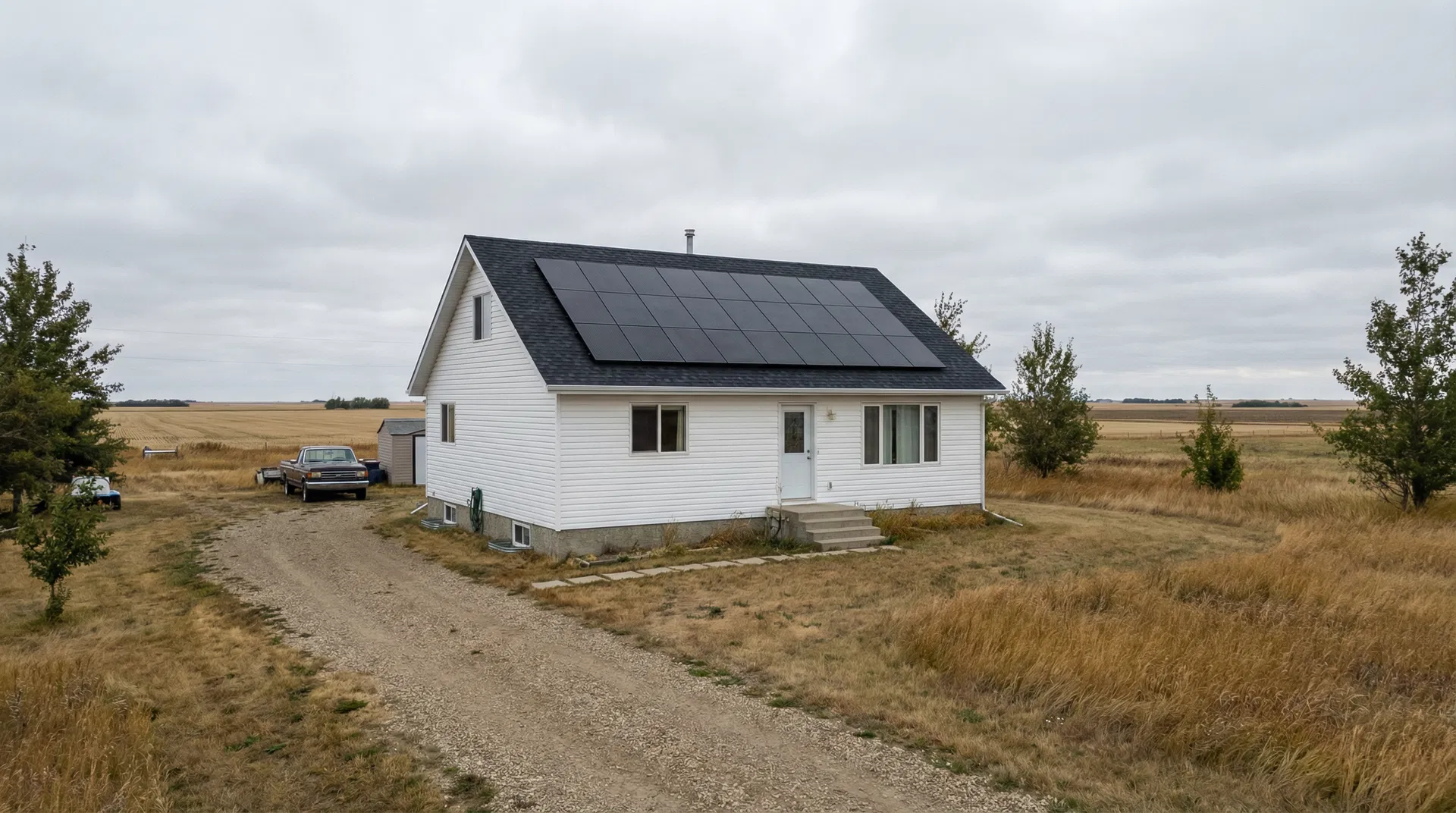
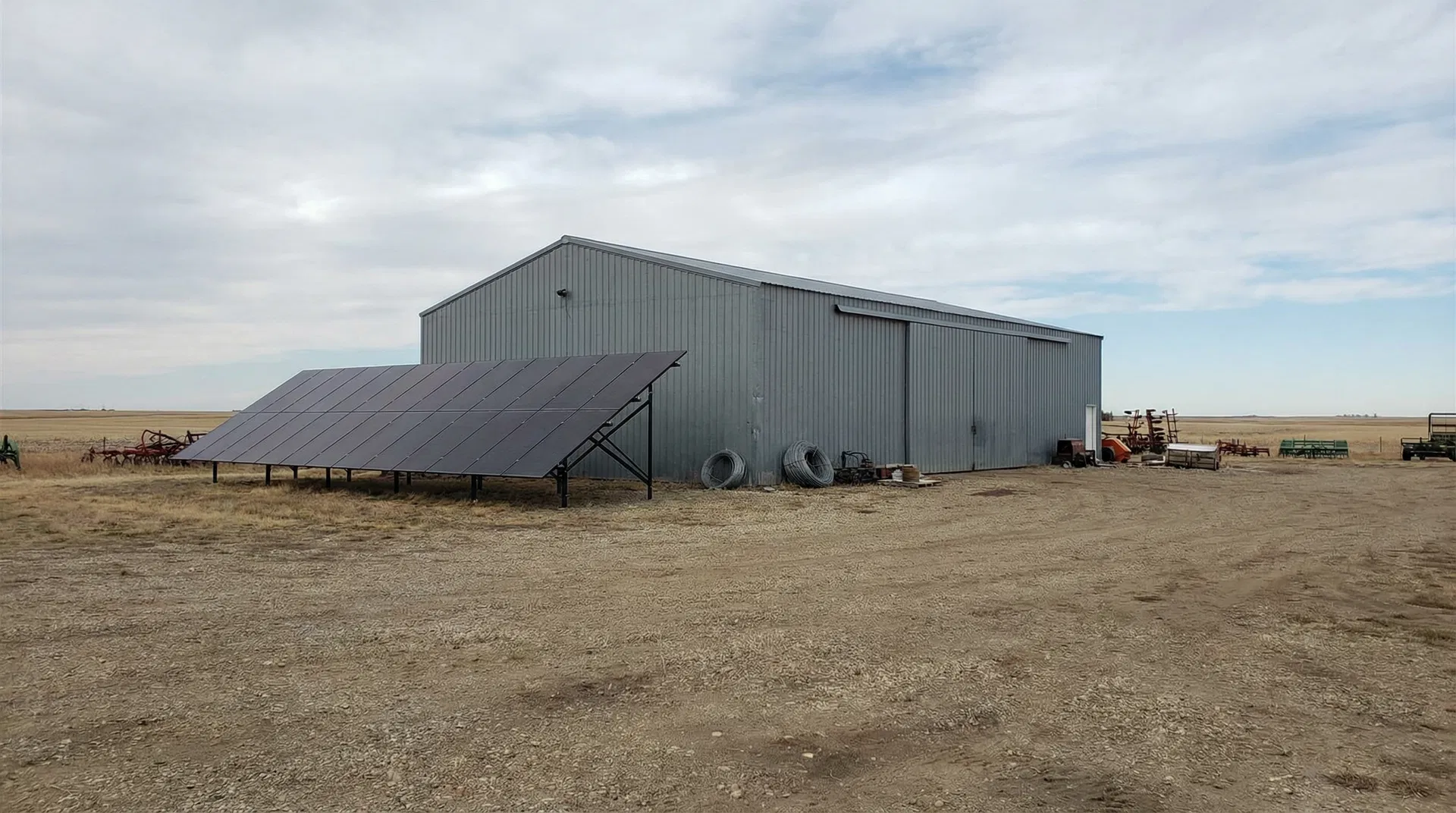
Properties near Penhold often carry more electrical load than a standard urban home, and that changes how a solar and battery system gets sized. A home on its own is one thing. Add a heated shop, a well pump, yard lighting, and maybe a grain auger or irrigation setup, and the annual consumption picture looks very different. Each of those loads has its own usage pattern, and a properly sized system accounts for all of them, not just the house meter. Roof mount works well when the roof has decent orientation, minimal shading, and enough structural capacity for the panel weight. But on acreages and farm properties, the roof isn't always the right answer. Outbuildings may shade the house roof for part of the day. The main shop might have a north-facing slope, or the roof pitch might not suit the optimal panel angle. In those situations, a ground mount in an open area of the yard is often the better call. It lets us set the angle and orientation precisely, and it's easier to expand later if loads increase. We don't size systems from average consumption numbers or regional rules of thumb. Sizing starts with the 12-month usage graph on your most recent power bill. That graph shows how your usage changes across seasons, which is the only reliable way to size a system that actually matches your property. We combine that usage data with a site design, shading analysis, and load review to land on a system that fits your actual situation.
Typical Load Profiles We Design For Near Penhold
Home Plus Heated Shop
A residence paired with a heated shop is one of the most common setups we see in this area. The shop's electric heat, compressors, and lighting can easily double the property's total consumption compared to the house alone. We size the solar and battery system against the combined usage from your most recent power bill, so the array covers the shop loads as well as the home, and the battery bank is sized to back up the critical circuits you identify during the design review.
Acreage with Well Pump and Outbuildings
Properties with a well pump, multiple outbuildings, and year-round occupancy have a load profile that changes significantly by season. The pump cycles more in summer, outbuilding heating runs hard in winter, and the house load stays relatively steady year-round. We use the 12-month usage graph on your most recent power bill to capture that seasonal variation and design a system that doesn't underperform in high-demand months. Battery storage on this type of property is often sized to cover the well pump and critical home loads through a multi-hour outage.
Small Farm Operation
A small farm property with grain handling equipment, a shop, and a residence can have peak loads that only run for part of the year but drive the overall system size when they do run. We look at those seasonal spikes in the usage data and design the solar array to offset as much of the annual consumption as the site allows, with battery storage configured to handle daily evening load rather than trying to back up every piece of farm equipment. Equipment backup scope is something we confirm with you during the design review, not something we assume.
FortisAlberta Interconnection in Penhold
Penhold is served by FortisAlberta for wire service. Any solar or battery storage system that connects to the grid requires a micro-generation application reviewed by FortisAlberta. That application needs to include a design package, equipment specifications, and a single-line electrical diagram that meets FortisAlberta's interconnection requirements. We handle all of that. You don't need to deal with FortisAlberta directly. Once the application is submitted, FortisAlberta reviews it and determines whether any grid-side upgrades are required before your system can be energized. We prepare the design package to FortisAlberta's current standards so the application doesn't come back for revisions. For battery storage systems, the interconnection process is similar to a grid-tied solar application. The hybrid inverter configuration needs to be documented clearly, and we make sure the submission reflects the actual installed equipment. We don't claim a specific timeline for FortisAlberta's review process, because approval timing depends on their current queue and any site-specific requirements they identify.
Project Economics and Design Review
| System Size | Annual Production | Year 1 Savings | Payback Period |
|---|---|---|---|
| 8-20 kW range, 12 kW typical |
Production, savings, and payback estimates require a property-specific design and the most recent power bill.
How We Work in Penhold
Bill and Load Review
We review your power bill to understand your energy use in Penhold and size the system to your actual consumption, not a generic estimate.
Site Assessment
We assess your roof or ground area, south-facing exposure, electrical service, and utility interconnection requirements specific to your property.
Design and Utility Application
We produce a system layout, production estimate, and cost summary, then submit your micro-generation application to your utility on your behalf.
Installation and Commissioning
Our crew installs racking, panels, inverter, and electrical connections. All work is performed by licensed electricians. We commission and test before handoff.
Current Program and Interconnection Review
Utility connection review
FortisAlberta reviews all micro-generation interconnection applications for properties in the Penhold area. Range Road Solar prepares the full design package, including single-line diagrams and equipment specifications, and submits it on your behalf. You don't need to manage the FortisAlberta application process yourself.
Current program review
Residential, acreage, and farm properties may qualify for provincial or federal programs depending on the system type and how the property is classified. Eligibility rules and program availability change, so we review what's current at the time of your design rather than making assumptions based on older program information. We confirm what applies to your property during the design review.
Frequently Asked Questions
Get a Solar Assessment for Penhold
Submit a recent power bill and we will review your consumption and provide an honest assessment for your Penhold property. No obligation.
(587) 330-7502 Book a CallMore Solar Services in Penhold