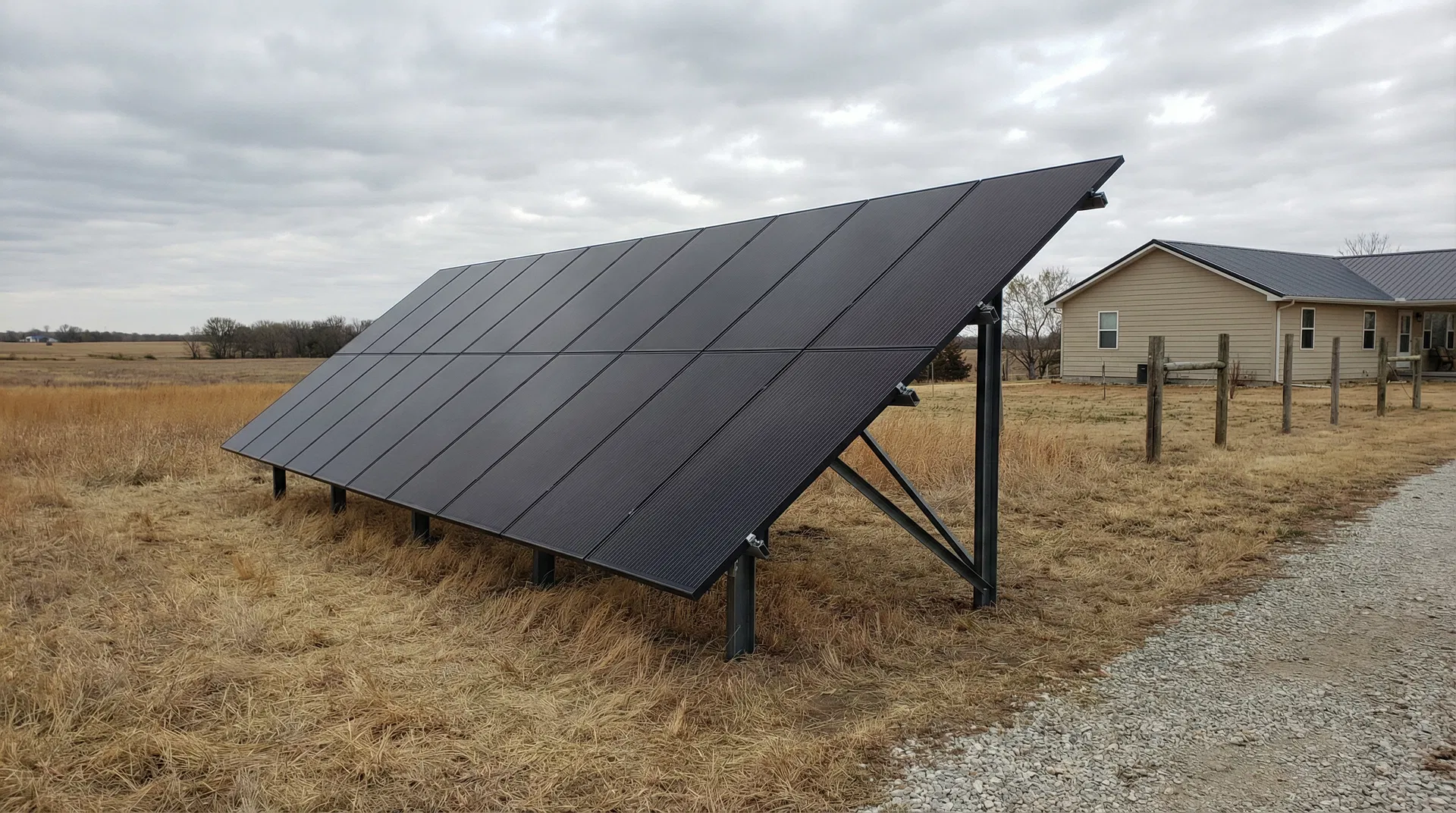
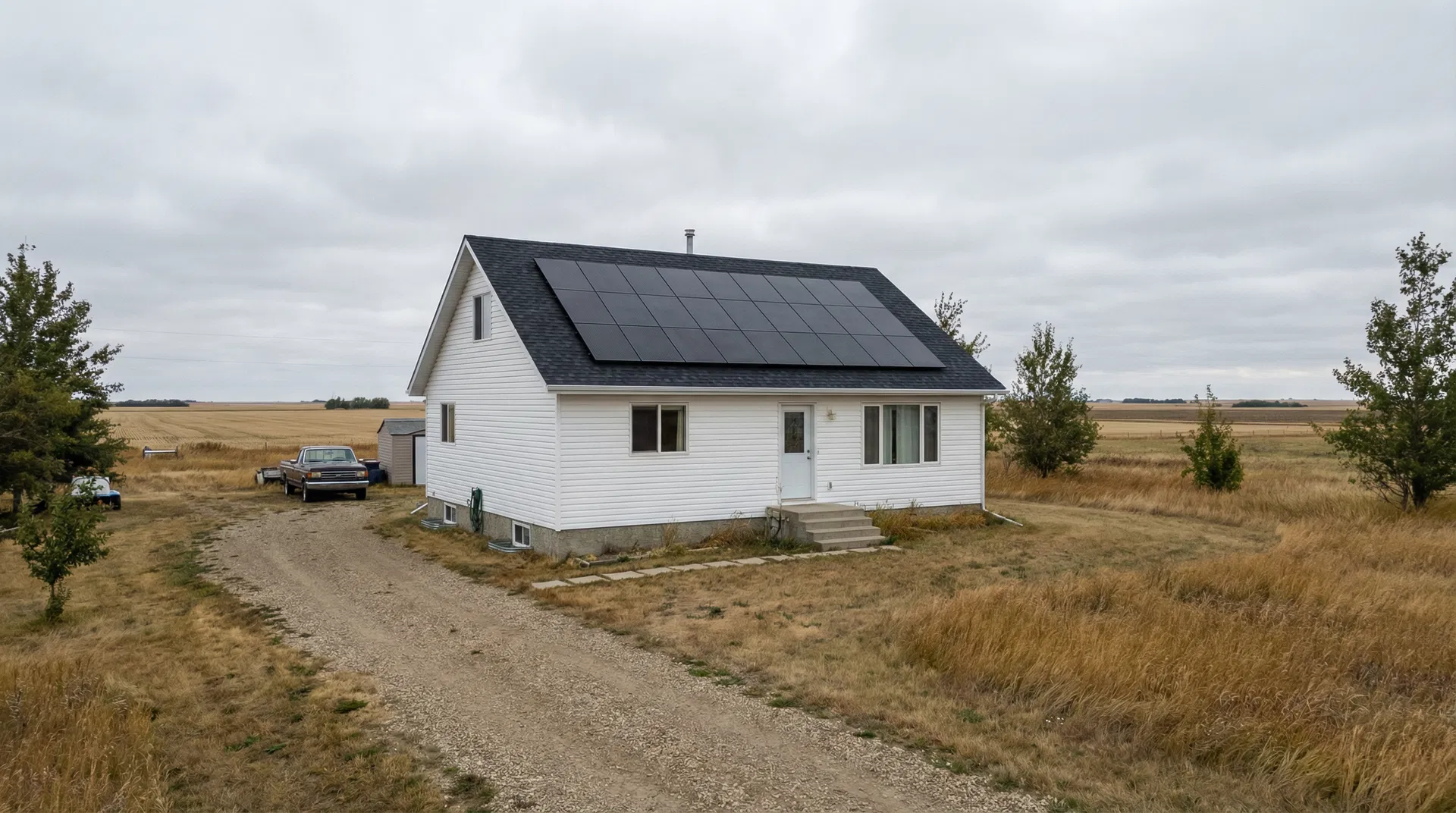
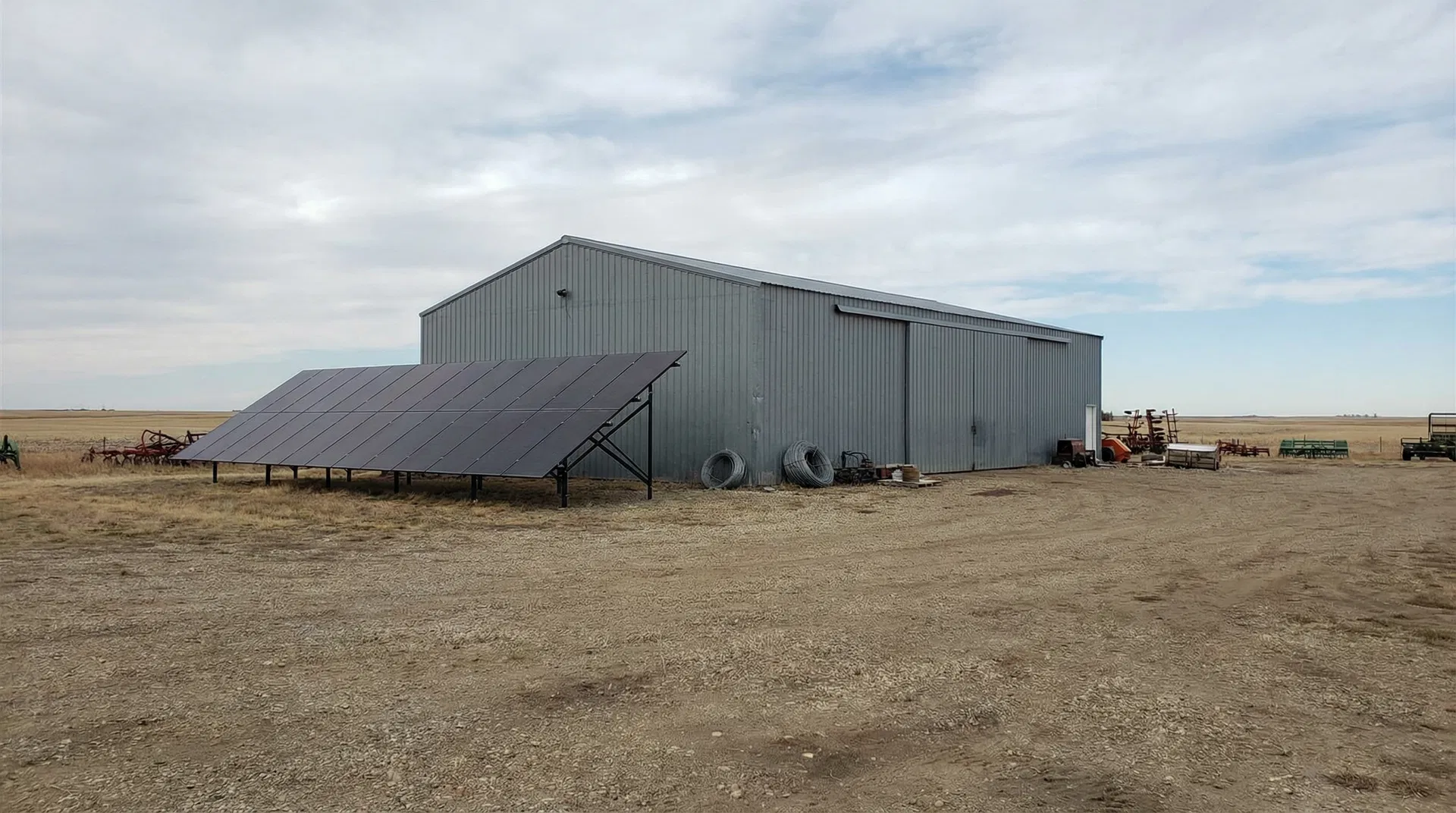
Farm solar Penhold projects typically fall in the 20-50 kW range, with 25 kW being a common starting point for operations that include a home, a heated shop, and one or two outbuildings. Larger grain-handling setups or properties with significant irrigation loads may push toward the upper end of that range or beyond. We use LONGi panels on every farm install. They're reliable, they perform consistently, and they hold up under the kind of physical exposure that rural Alberta delivers. For most farm-scale systems, we run APsystems microinverters. Microinverters work well when loads are spread across multiple buildings or when shading from bins, trees, or structures affects part of the array. They allow each panel to operate independently, so one shaded panel doesn't drag down the rest of the system. Ground-mount is our preferred approach for larger farm systems. Rooftops on older machine sheds often aren't built to carry the load, the pitch may not be ideal, and re-roofing a building with panels attached is a significant disruption. A ground-mount array on a flat, open section of yard solves all of that. It's also easier to orient precisely for maximum output and simpler to service. We handle everything from the initial site walk to the FortisAlberta interconnection application to the final commissioning. If your service entrance or electrical panel needs upgrading to support the system, we identify that early, before it becomes a surprise on installation day.
Solar Planning for Penhold Properties
Farm properties near Penhold carry electrical loads that residential systems aren't built for. A heated shop running through a central Alberta winter, grain handling equipment cycling on and off, yard lighting, and the farmhouse itself can all draw from the same meter. That stacks up fast. A solar system designed around those combined loads looks very different from a rooftop setup on a subdivision house. Penhold properties are served by FortisAlberta, which means any grid-tied solar system needs to go through FortisAlberta's micro-generation interconnection process before it can export power. The application requires a proper engineering design package, not just a panel count. We handle that paperwork on your behalf. We don't size systems by guessing. Every design starts with your most recent power bill, which includes a 12-month usage graph showing exactly how your consumption shifts across seasons. That's what we build from. If the property has outbuildings with their own service, we account for those too. The result is a system that fits your actual operation, not a generic farm template.
Electrical Site Review for Penhold Properties
Voltage Rise
Voltage rise happens when a solar system exports power back through a line that wasn't designed to carry reverse current. On rural distribution lines, where a single line may serve several properties across a long stretch, this effect can be more pronounced than in urban subdivisions. If voltage rise exceeds the limits FortisAlberta allows, inverters will clip or shut down, which reduces actual system output. We account for local distribution conditions during system sizing so the design stays within acceptable voltage limits.
Single-Phase vs Three-Phase
Rural properties near Penhold may have single-phase or three-phase electrical service depending on the load history of the property and how the distribution line was built out. This matters because it affects which inverters we can use and how large a system can be effectively connected. Three-phase service generally supports larger farm systems with fewer constraints, while single-phase installations require more careful balancing to stay within FortisAlberta's interconnection limits.
Panel Infrastructure
Older farmstead electrical panels weren't built with solar integration in mind. We assess breaker capacity and panel age on every site visit, looking for panels that are undersized, have limited breaker slots, or use older breaker technologies that aren't compatible with a solar backfeed connection. If the existing panel can't safely support the system, we include a panel upgrade in the project scope so it's planned for and priced upfront, not discovered partway through installation.
Service Entrance Review
The meter base and service entrance are the connection point between the property and FortisAlberta's grid, and their condition directly affects the micro-generation application. We inspect the meter base for corrosion, capacity limitations, and compatibility with the bi-directional metering FortisAlberta requires for grid-tied solar. If the existing meter base needs to be upgraded to meet FortisAlberta's standards, we identify that early so it's factored into the project timeline and budget before any work begins.
Right-Sizing Solar for Penhold Properties
Farm properties carry more electrical demand than a house in town, and that gap shows up clearly in the sizing math. When you're running a heated shop that draws hard all winter, plus grain augers, aeration fans, a farmhouse, and yard lighting, you're not looking at the same system a suburban homeowner needs. These are separate loads, sometimes on separate panels, and they all need to be accounted for. That's why we don't use rule-of-thumb numbers. Every system design starts with your most recent power bill. Alberta utility bills include a 12-month usage graph that shows how consumption shifts across the year, and that's what drives the sizing decision. A property with heavy winter heating loads looks different from one that peaks in summer with irrigation or grain handling. We don't know which you are until we see that graph. The roof-versus-ground-mount decision matters too. Older machine sheds and quonsets often have structural limitations, questionable pitch, or roofing that won't last as long as the panels will. If the yard has open, unshaded land, a ground-mount array usually makes more sense. It's easier to orient precisely, simpler to service, and doesn't tie the panel warranty to the condition of a 40-year-old metal roof. When shading from bins, trees, or other buildings affects part of the array, we factor that into the layout. A poorly sited array on a farm property can underperform significantly compared to one that's been designed around the actual site. We do that work before anything gets installed.
Typical Load Profiles We Design For Near Penhold
Home + Heated Shop
This is one of the most common profiles we see on properties near Penhold: a farmhouse on the same meter as a heated machine shop that runs through winter. The shop heating load alone can dwarf the house consumption, especially if it's running a unit heater or in-floor heat. We pull the 12-month usage graph from your most recent power bill to identify how that seasonal swing shapes the system size, then design accordingly.
Grain Operation with Aeration and Handling
Properties with grain storage run heavy loads in short, concentrated windows: aeration fans cycling through harvest, augers during loading and unloading, and dryers if the operation includes them. A 25-35 kW system is a reasonable starting range for this type of operation, but the right size depends on how many bins are on site, what the handling equipment draws, and what the farmhouse adds on top. Your most recent power bill and a site walkthrough are where that number gets confirmed.
Acreage with Outbuildings and Irrigation
Larger acreage properties that include irrigation pumping alongside a shop and home can see summer loads that push well above winter baseline. A system sized only for winter heating will underperform in summer if irrigation demand spikes significantly. We design around the full annual load profile, not just one season, so the system works for the property year-round rather than optimizing for one peak and missing the other.
FortisAlberta Interconnection in Penhold
Penhold falls within FortisAlberta's service territory. Any grid-tied solar system installed here, whether rooftop or ground-mount, requires a micro-generation application submitted to FortisAlberta before the system can go live. The application requires an engineered design package that includes system specifications, a single-line diagram, equipment datasheets, and site information. It's not a short form. We prepare and submit the full application package on your behalf. You don't need to coordinate with FortisAlberta directly. FortisAlberta reviews the application and, once approved, the system can be commissioned and connected. If any service entrance upgrades are required to meet FortisAlberta's technical requirements, we flag those during the design phase so they're factored into the project plan from the start. We don't claim specific timelines for approval, because FortisAlberta's review process can vary. What we can tell you is that a complete, well-prepared application moves through the process more cleanly than an incomplete one.
Project Economics and Design Review
| System Size | Annual Production | Year 1 Savings | Payback Period |
|---|---|---|---|
| 20-50 kW range, 25 kW typical |
Production, savings, and payback estimates require a property-specific design and your most recent power bill, and will vary based on actual site conditions and current utility rules.
How We Work in Penhold
Bill and Load Review
We review your power bill to understand your energy use in Penhold and size the system to your actual consumption, not a generic estimate.
Site Assessment
We assess your roof or ground area, south-facing exposure, electrical service, and utility interconnection requirements specific to your property.
Design and Utility Application
We produce a system layout, production estimate, and cost summary, then submit your micro-generation application to your utility on your behalf.
Installation and Commissioning
Our crew installs racking, panels, inverter, and electrical connections. All work is performed by licensed electricians. We commission and test before handoff.
Current Program and Interconnection Review
Utility connection review
FortisAlberta reviews all micro-generation interconnection applications for properties in its service area, including Penhold. Range Road Solar prepares the full design and application package required for FortisAlberta's review. You don't need to manage that process yourself.
Current program review
Farm and commercial solar installations may be eligible for programs at the federal or provincial level, but eligibility rules and program availability change. We review current options against your specific property and system design at the time of the project, so you're working with current information rather than something that may have changed.
Frequently Asked Questions
Get a Solar Assessment for Penhold
Submit a recent power bill and we will review your consumption and provide an honest assessment for your Penhold property. No obligation.
(587) 330-7502 Book a CallRelated Resources
More Solar Services in Penhold