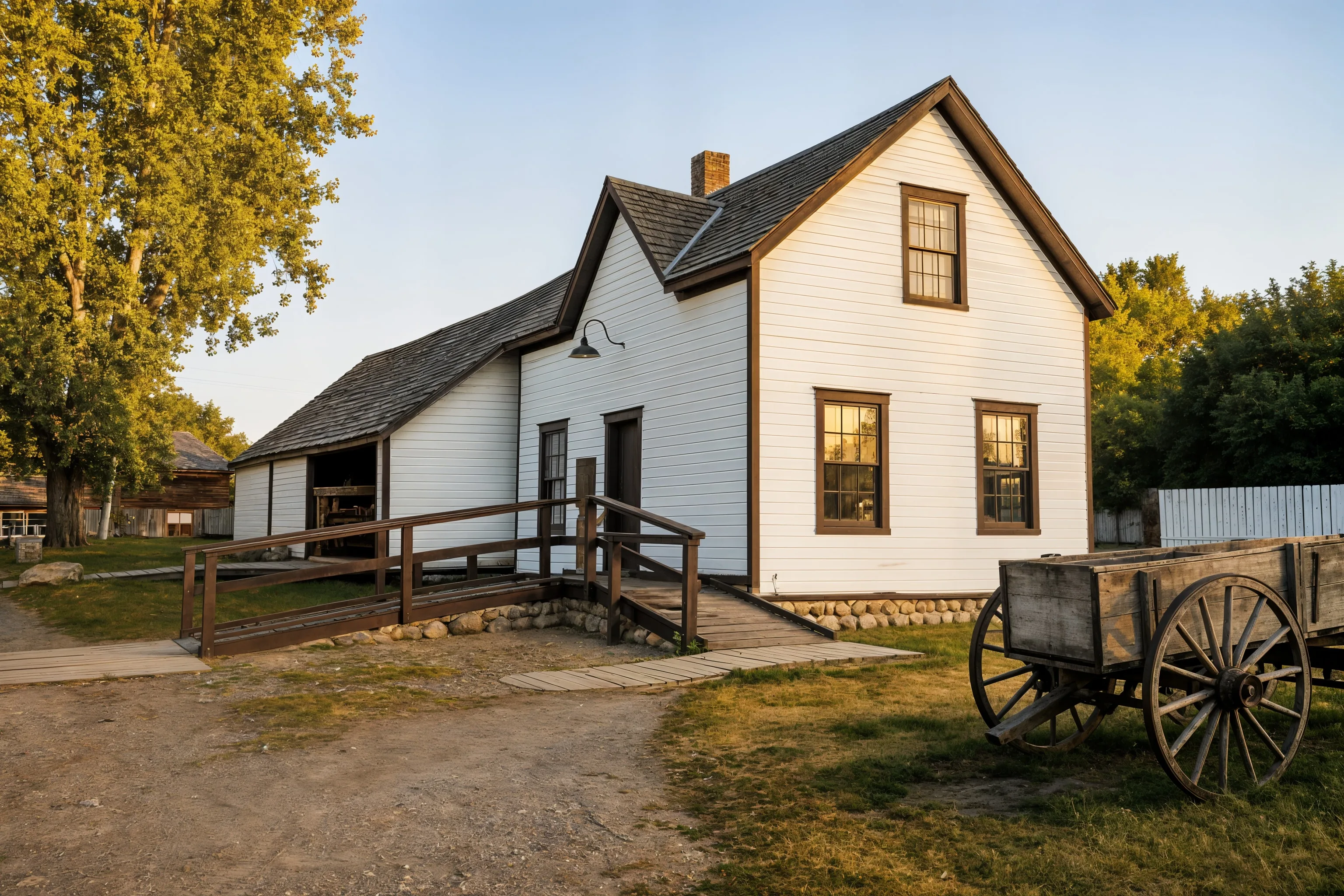
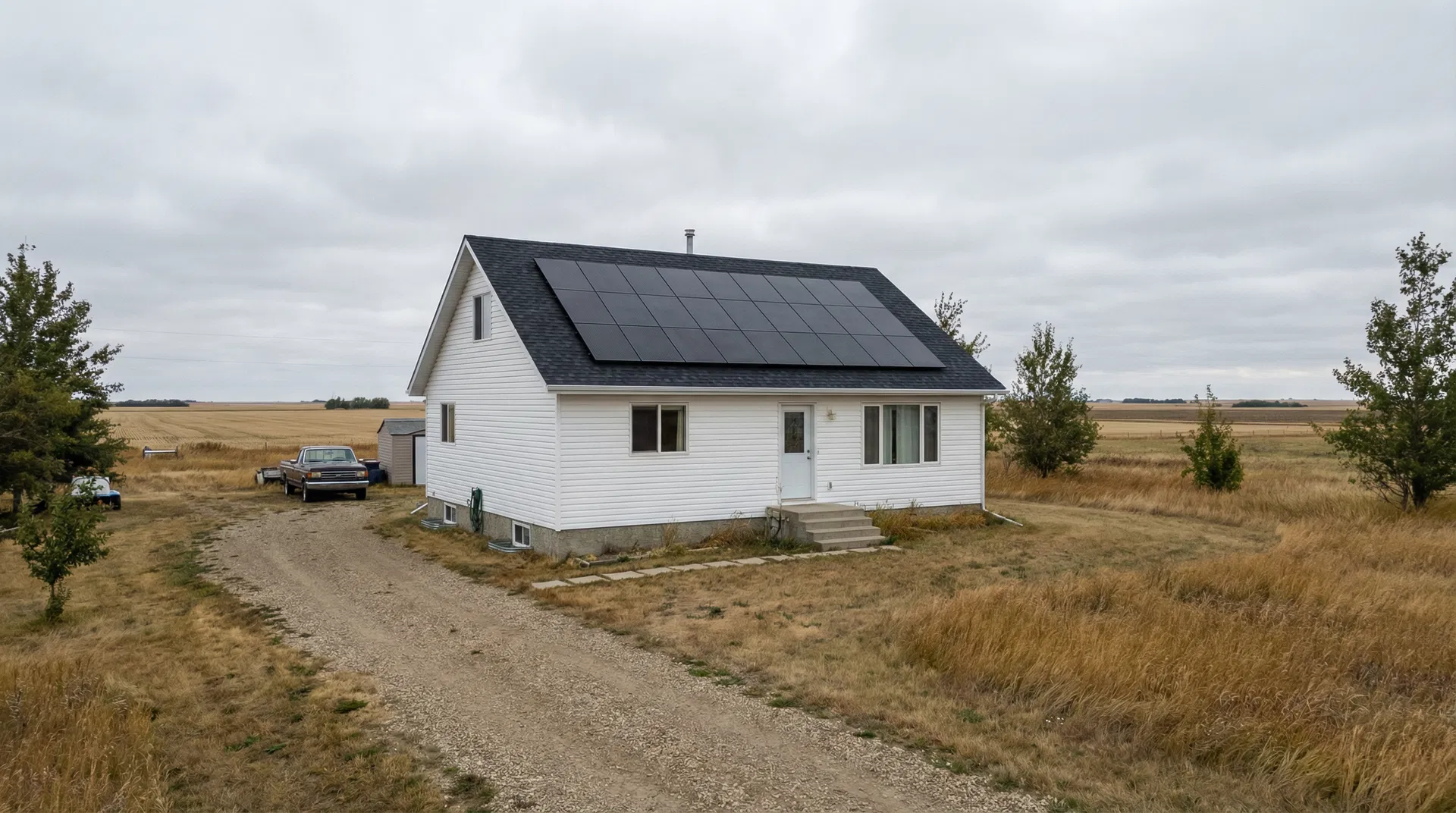
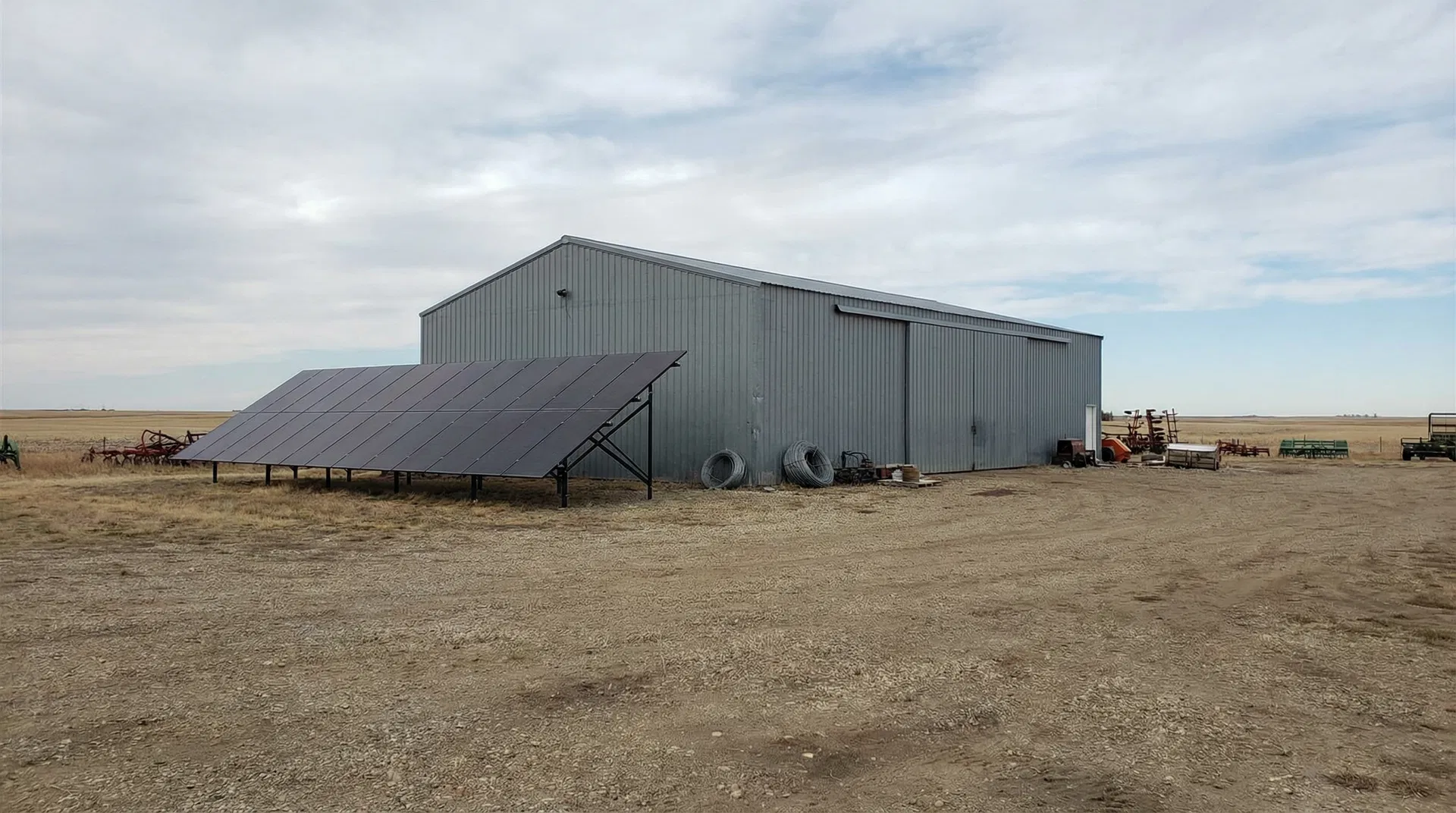
Farm solar in Red Deer County starts with the load, not the roof. A grain operation with a leg and dryer draws differently than a cow-calf operation running a heated shop and water bowls through winter, and a system built for one won't serve the other well. We design in the 20-50 kW range for most agricultural properties here, with 25 kW as the typical starting point once we've looked at your bill and your yard. Ground-mount is our default for larger farm systems: it keeps panels off an aging shop or barn roof, lets us orient the array without fighting existing roof pitch, and makes future service straightforward when you're already walking the yard for chores. Rooftop stays the right call on newer outbuildings with clean south or west exposure and no shading from bins or shelterbelts nearby. Every system we install uses LONGi panels, paired with APsystems microinverters. Microinverters matter more on farm properties than most installers explain: if one panel gets shaded by a passing grain truck, a shelterbelt, or a bin's shadow at low sun angles, the rest of the array keeps producing instead of the whole string dropping output. On a property with multiple structures and uneven shading patterns, that per-panel independence is often worth more than a marginal efficiency gain from a different panel brand. We walk every farm site in person before we design anything, because a satellite image doesn't show you where a bin yard shadow falls in October.
Solar Planning for Red Deer County Properties
This part of Alberta is a working landscape built on the agriculture, energy, and logistics sectors, and that mix shows up in the way farms and acreages here use power. Statistics Canada's most recent census count put the population at 19,933, up from 19,531 in the prior count, and much of that growth is happening on properties that run more than a house: a shop, a grain leg, an irrigation pivot, a barn. None of that changes with a sunshine chart. Environment Canada's climate normals list 2,208 hours of annual bright sunshine for the Red Deer area, and Natural Resources Canada's solar resource maps put the regional specific yield at roughly 1,265 kWh per kWp installed. Those are regional planning figures, not a promise for any one roof or field. What a system on your property will actually produce depends on orientation, shading from shelterbelts or outbuildings, and how your operation draws power through the day and the season. That's why we don't quote a number off a map. We size every system from a site visit and the 12-month usage graph on your most recent power bill, then confirm the design against FortisAlberta's interconnection requirements before we finalize anything. It's a slower first step than a generic online calculator, but it's the only way the number we give you actually holds up once the system is running.
Electrical Site Review for Red Deer County Properties
Voltage Rise
Voltage rise happens when a rural distribution line lengthens the electrical distance between the transformer and your service, which can push voltage higher than a system expects at full output. On properties farther out on a FortisAlberta feeder, that condition can trigger inverter clipping if a system isn't sized and configured with it in mind. We measure line conditions at your service during the site visit and factor voltage rise into system sizing and inverter settings before we finalize a design.
Single-Phase vs Three-Phase
Rural Alberta properties run on either single-phase or three-phase service depending on what FortisAlberta built out to that yard, and this area has both, often within a few miles of each other. The service type available at your property determines which inverter configuration and equipment capacity we can spec, since three-phase service generally supports higher system capacity than single-phase. We confirm your service type on site rather than assuming it from the property type or nearby farms.
Panel Infrastructure
Older farm properties often carry a main electrical panel installed decades before solar was a consideration, and breaker capacity and panel age both affect whether that panel can safely accept a solar backfeed. We check the panel's rated capacity, its age and condition, and whether it has room for the required breakers as part of every site assessment. If the existing panel can't support the system, an upgrade is scoped and priced as part of your design, not discovered mid-install.
Service Entrance Review
The service entrance and meter base are what FortisAlberta reviews closely as part of the micro-generation application, since that's where the utility's equipment meets yours. We check the meter base's condition, rating, and compatibility with a grid-tied system during the site visit, because a deteriorated or undersized meter base is one of the more common reasons an application gets sent back for correction. If an upgrade is required, we scope it up front so it's part of the project plan instead of a surprise partway through.
Right-Sizing Solar for Red Deer County Properties
A house in town and a working rural property aren't sized the same way, and treating them the same is where a lot of generic solar quotes go wrong. Rural systems often need to cover a home plus a heated shop, plus outbuildings, plus equipment like irrigation pumps or grain handling motors that draw hard for short bursts. That's a different load shape than a single-family house, and it's a big part of why we design in the 20-50 kW range for farm and agricultural properties instead of the smaller residential range. Roof or ground-mount is a real decision, not a default. Ground-mount tends to be the right call when a roof is shaded by trees or a shelterbelt, when the roof pitch or orientation isn't workable, or when the yard is spread out with land available and no shortage of room to place an array where it gets the cleanest exposure. A newer shop or outbuilding with clean southern exposure can flip that decision back toward rooftop. Either way, we don't size a system off a rule of thumb like watts per square foot or a generic per-acre estimate. We size from the 12-month usage graph on your most recent power bill, which shows us your actual monthly draw and seasonal swings, combined with what we see on site: shading, roof condition, available ground, and service capacity. That combination, not a formula, is what determines the system we recommend.
Typical Load Profiles We Design For Near Red Deer County
Home + Heated Shop
This is the most common profile we see on acreages here: a farmhouse plus a heated shop running space heat, block heaters, and shop tools through the winter. We read the combined draw off the 12-month usage graph on your most recent power bill, since a shop's winter heating load can outweigh the house itself. System size and panel placement get built around that graph, not a rule-of-thumb per-building estimate.
Grain Handling and Drying
Grain legs, augers, and dryers pull hard for short, seasonal windows rather than drawing steadily year-round, which makes them a different sizing problem than a steady residential load. We look at how those motors show up on your most recent power bill's usage graph and size the system and inverter configuration to handle that pattern, not just an annual average. Ground-mount is often the right fit here since it keeps panels clear of bin yard equipment and traffic.
Cattle Operation with Water and Barn Loads
A cow-calf or feedlot operation typically runs stock waterers, barn lighting, and ventilation fans on a load profile that stays fairly constant through the day but shifts seasonally with heating needs. We size these systems from your most recent power bill's usage graph and confirm placement against barn and yard layout during the site visit, since shading from barns or wind fencing can affect where an array performs best.
FortisAlberta Interconnection in Red Deer County
FortisAlberta is the wire service across the area, and any grid-tied solar system on your property connects through their micro-generation program. That application is a required step, not paperwork we skip past: it confirms your system's design against FortisAlberta's technical requirements before a single panel goes up. Range Road Solar prepares and submits that application package as part of every install, including the single-line diagrams and equipment specifications FortisAlberta asks for. We don't quote you an approval timeline, because we don't control FortisAlberta's review queue, and we'd rather tell you that plainly than guess. We also don't make claims here about credit carryover, payout structure, or how FortisAlberta settles excess generation, because those rules are set by FortisAlberta and your retailer, not by us, and they're worth confirming directly at design time rather than relying on a landing page. What we can tell you is that the interconnection process is a normal, expected part of farm solar here, and we've built our design and paperwork process around getting it right the first time.
Project Economics and Design Review
| System Size | Annual Production | Year 1 Savings | Payback Period |
|---|---|---|---|
| 20-50 kW range, 25 kW typical |
Actual production, savings, and payback depend on a property-specific design review and your most recent power bill, not figures on this page.
How We Work in Red Deer County
Bill and Load Review
We review your power bill to understand your energy use in Red Deer County and size the system to your actual consumption, not a generic estimate.
Site Assessment
We assess your roof or ground area, south-facing exposure, electrical service, and utility interconnection requirements specific to your property.
Design and Utility Application
We produce a system layout, production estimate, and cost summary, then submit your micro-generation application to your utility on your behalf.
Installation and Commissioning
Our crew installs racking, panels, inverter, and electrical connections. All work is performed by licensed electricians. We commission and test before handoff.
Current Program and Interconnection Review
Utility connection review
FortisAlberta reviews every grid-tied solar application against its micro-generation technical requirements before a system connects, and that review is a required part of every farm solar project in the area. Range Road Solar prepares the full design package, including single-line diagrams and equipment specifications, and submits it on your behalf. We don't speculate here about how credits are settled or paid out, since that's set by FortisAlberta and your electricity retailer.
Current program review
Commercial, farm, and residential solar in Alberta gets reviewed against whatever provincial and federal rules are active at the time your design is finalized, and those rules do change. Rather than list a program here that might be outdated by the time you read this, we check current eligibility for your specific property type and project size during the design review. That way you're working from what's actually available now, not a rule that changed months ago.
Frequently Asked Questions
Get a Solar Assessment for Red Deer County
Submit a recent power bill and we will review your consumption and provide an honest assessment for your Red Deer County property. No obligation.
(587) 330-7502 Book a CallRelated Resources