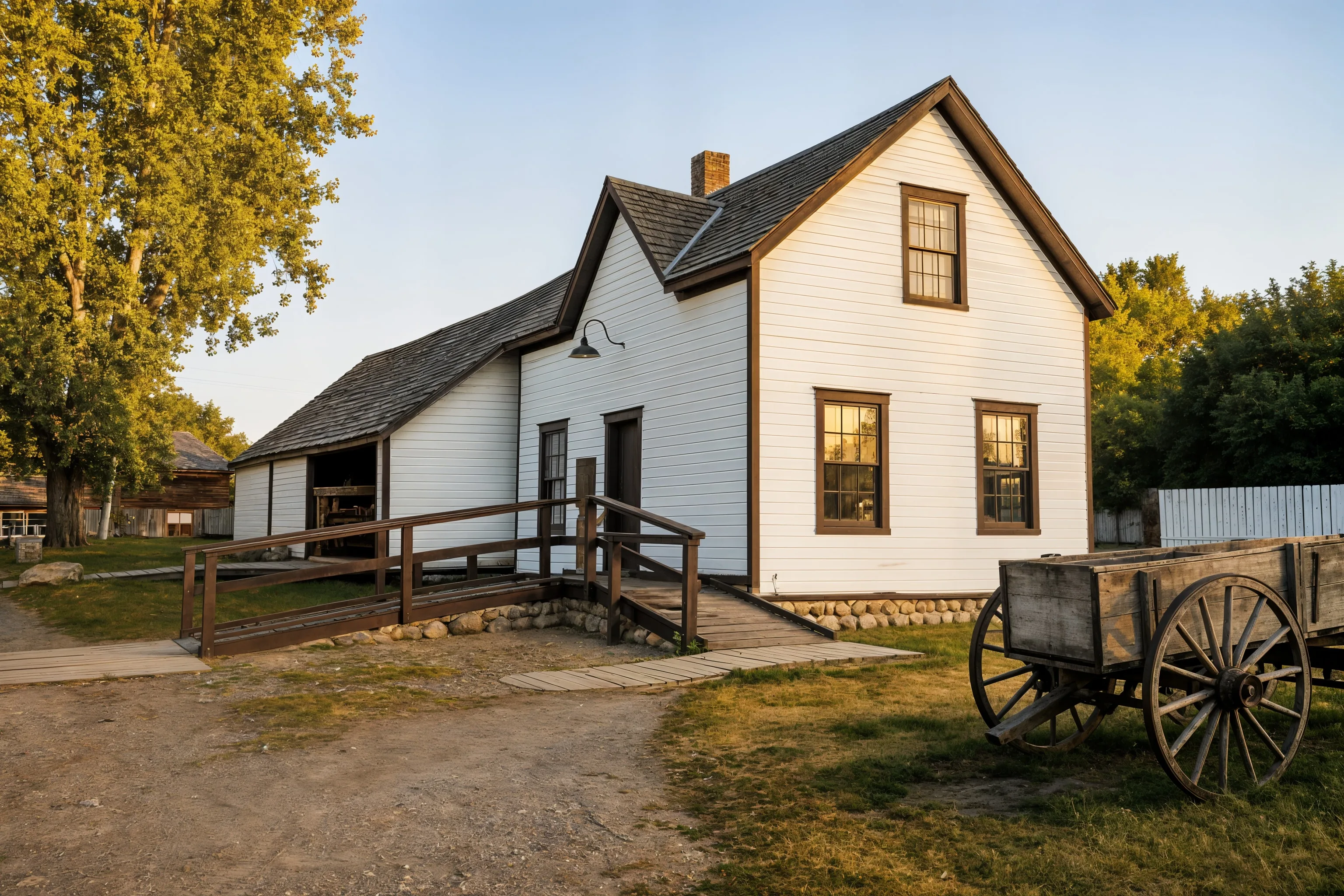
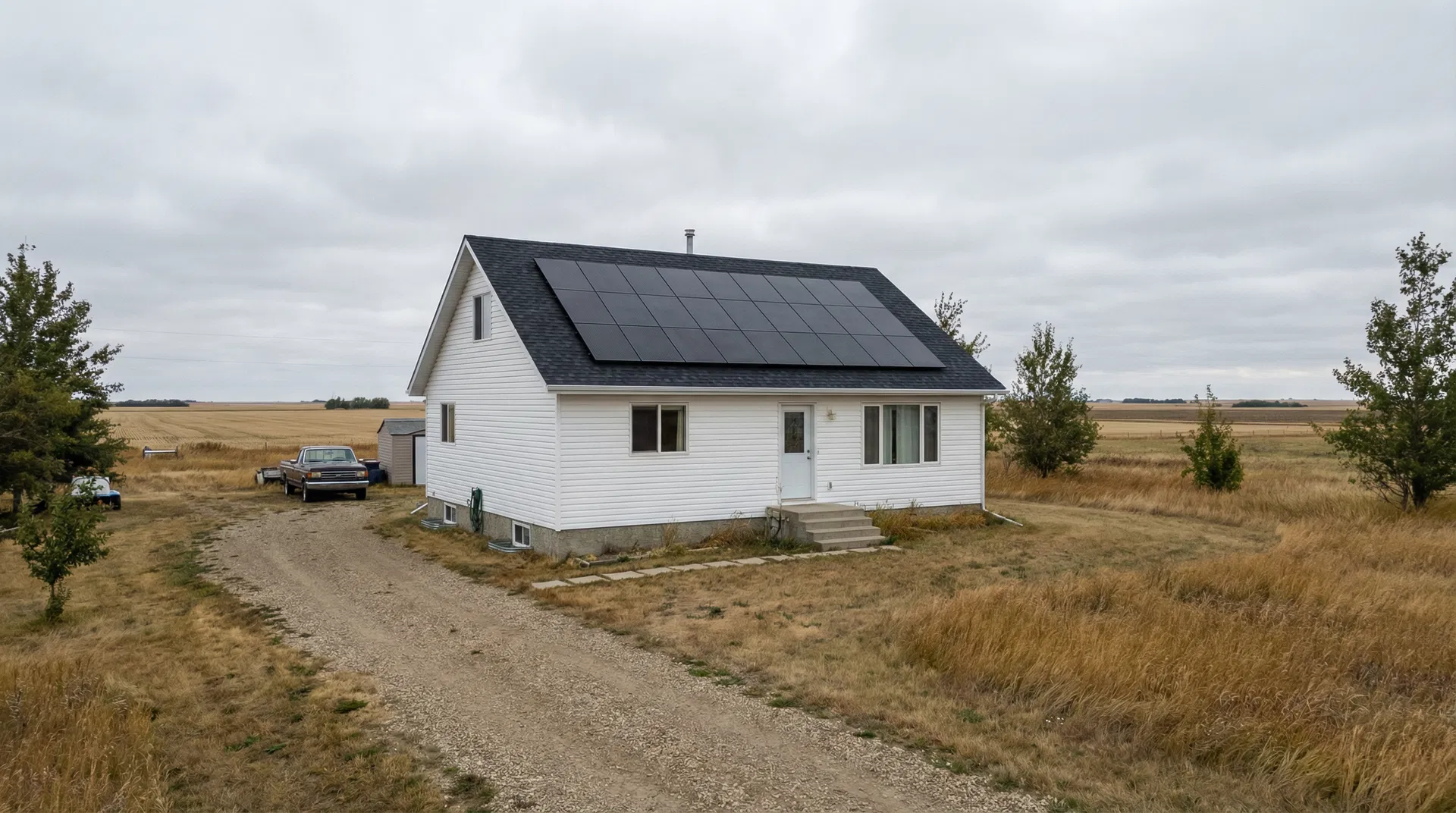
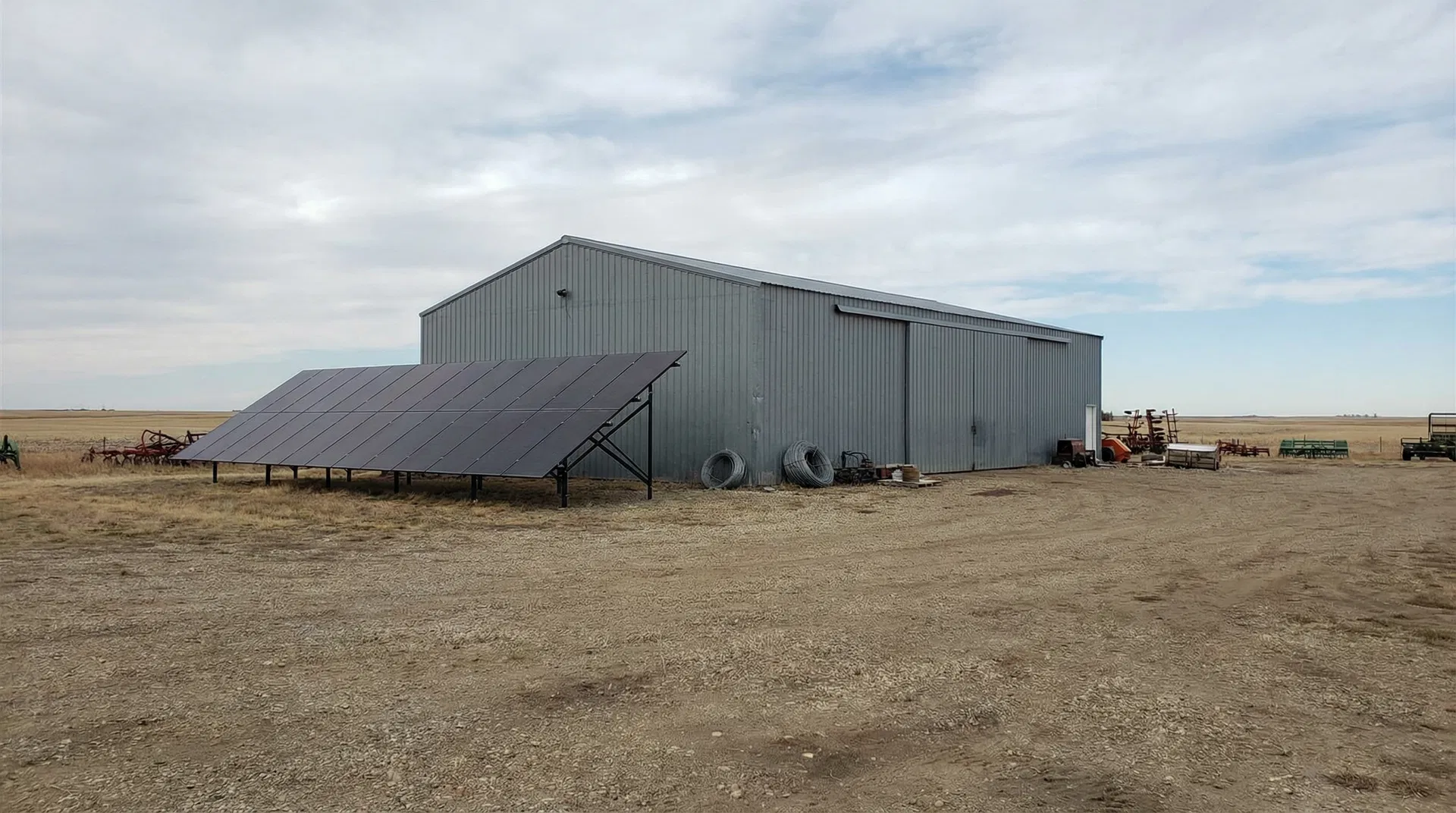
Acreage solar red deer county systems typically fall in the 12-18 kW range, well above a standard town lot, because most properties here run a home, a shop, and often more on one service. We default to LONGi panels for their output-to-price ratio and pair them with APsystems microinverters instead of a single string inverter, which matters when a roof has multiple faces, partial shading from a shelterbelt, or a mix of roof and ground-mount arrays feeding into one system. Microinverters let each panel operate independently, so one shaded module on the shop roof doesn't drag down the whole array's output. For roof-mount, we look at the house, the shop, and any outbuildings separately. A metal shop roof with clean south exposure is often the easiest mounting surface on the property, even if the house roof is shaded or oddly pitched. Where roof space is limited, angled wrong, or the buildings are spread too far apart to feed one inverter efficiently, we design a ground-mount array instead, usually on a pad near the service entrance to keep wire runs short. Every acreage system we install starts with a site-specific electrical review: service size, panel age, and whether the property runs single-phase or three-phase power. That review, combined with your most recent power bill, is what actually determines where in the 12-18 kW range your project lands. It's not a number we guess at from the address.
Solar Planning for Red Deer County Properties
Red Deer County was incorporated as the County of Red Deer No. 23 on January 1, 1963, and took its current name on July 1, 1999. Its population sits at 19,933, spread across acreages, farmsteads, and rural subdivisions built on agriculture, energy, and logistics, rather than concentrated in a single town core. That layout changes how a solar system gets planned. A property here might run a home, a heated shop, a barn, and maybe a well pump or grain-handling equipment off one service, and each of those loads has to be accounted for before we talk panel count. We don't quote a system off a postal code. We start with your most recent power bill, walk the property to check roof orientation, shading from trees or outbuildings, and how the service is wired, then size around what the site can actually support. Ground-mount often makes more sense than roof-mount here, simply because there's land to use and rooflines aren't always cooperative. Whether the goal is offsetting a home and shop or a larger operation tied to the area's agricultural and energy base, the design has to start from the property, not a generic template built for a subdivision.
Electrical Site Review for Red Deer County Properties
Voltage Rise
Voltage rise happens when power has to travel a long distance along a rural distribution line before it reaches your service, and it can push the voltage at your connection point higher than a typical in-town drop. That matters for solar because a microinverter has to stay within a set voltage window or it clips output to protect itself. We measure voltage on-site so the system is sized and configured around what your line is actually doing, not a textbook assumption.
Single-Phase vs Three-Phase
Properties in the area can be wired for single-phase or three-phase electrical service, and that split shows up more out here than it does in town. The phase configuration affects which APsystems microinverter model fits the job and how much capacity the service can support without an upgrade. We confirm which service you have during the site visit rather than assuming based on property type.
Panel Infrastructure
Older rural properties sometimes still run a panel and breaker capacity that hasn't been touched since the original build. We check the panel's age, its rated capacity, and whether there's room for a solar breaker before finalizing a design. If the panel can't support the added load, an upgrade to the panel or main breaker happens as part of the project plan, not as a surprise afterward.
Service Entrance Review
We also inspect the service entrance and meter base, since FortisAlberta reviews that condition as part of the micro-generation application. A worn, undersized, or outdated meter base can hold up an application even if the rest of the system design is solid. When an upgrade is needed, we scope it up front so it's part of the project plan, not a change order mid-install.
Right-Sizing Solar for Red Deer County Properties
A rural system almost always runs bigger than a comparable house in town, and it's not because the house itself uses more power. It's because one electrical service is often covering a home, a heated shop, a barn or outbuilding, and sometimes equipment like a well pump, irrigation, or grain-handling gear that a town property never has to account for. Each of those loads adds up on the meter even if they don't run at the same time. Deciding between roof-mount and ground-mount comes down to what the property actually offers. If the house or shop roof faces south with clean exposure, roof-mount keeps wire runs short and uses space you're not doing anything else with. If the roofline is shaded by mature trees or outbuildings, pitched wrong, or the buildings are scattered across a yard with room to spare, a ground-mount array on open land is usually the better call, and it's easier to expand later if the loads on the property grow. Either way, we size the system off the 12-month usage graph on your most recent power bill, not a rule-of-thumb multiplier based on square footage or building count. That graph shows us the actual pattern of what the property draws across the year, and combined with a site visit, it's what turns into a specific system size instead of a guess.
Typical Load Profiles We Design For Near Red Deer County
Home Plus Heated Shop
This is the most common acreage profile: a house plus a detached shop with heat, lighting, and often a welder or compressor. The shop's draw can rival or exceed the house depending on how it's used, so we look at both loads together rather than sizing for the house alone. Your most recent power bill and a walk-through of the shop's equipment tell us how much of that combined load solar can realistically offset.
Farmstead With Grain or Irrigation Equipment
Properties running grain-handling equipment, augers, or irrigation pumps see sharp seasonal spikes that a simple average bill doesn't capture. We look at the usage graph across the full year to see those spikes rather than sizing off a flat monthly number, and site design accounts for whether that equipment runs during daylight hours when solar production is highest.
Acreage With Detached Outbuildings
Some properties spread power across a house, a garage, and one or two additional outbuildings, each with its own sub-panel or feed. That layout affects whether one system can serve everything efficiently or whether it makes more sense to concentrate the array near the highest-draw building. We map out the property's wiring during the site visit before landing on a final configuration.
FortisAlberta Interconnection in Red Deer County
FortisAlberta is the wire service for properties in Red Deer County, and any grid-tied solar system here goes through their micro-generation interconnection process before it's turned on. Range Road Solar handles that application on your behalf: the single-line diagram, equipment specifications for the LONGi panels and APsystems microinverters, and the paperwork FortisAlberta requires to review a new connection. Rural properties add a layer FortisAlberta looks at closely: whether the service is single-phase or three-phase, how far the property sits from the nearest transformer, and what else is already drawing power on that line. We check those details during the site visit so the application we submit reflects the property as it actually is, not a generic residential assumption. We don't promise a specific approval timeline or make claims about how credits or payouts work under current rules. FortisAlberta reviews each application on its own, and we'll walk you through what applies to your project once we're at that stage.
Project Economics and Design Review
| System Size | Annual Production | Year 1 Savings | Payback Period |
|---|---|---|---|
| 12-18 kW range, 15 kW typical |
Production, savings, and payback figures are only meaningful once we've completed a property-specific design review using your most recent power bill.
How We Work in Red Deer County
Bill and Load Review
We review your power bill to understand your energy use in Red Deer County and size the system to your actual consumption, not a generic estimate.
Site Assessment
We assess your roof or ground area, south-facing exposure, electrical service, and utility interconnection requirements specific to your property.
Design and Utility Application
We produce a system layout, production estimate, and cost summary, then submit your micro-generation application to your utility on your behalf.
Installation and Commissioning
Our crew installs racking, panels, inverter, and electrical connections. All work is performed by licensed electricians. We commission and test before handoff.
Current Program and Interconnection Review
Utility connection review
FortisAlberta reviews every micro-generation application before a system can be turned on, covering equipment specs, the single-line diagram, and how the system ties into their distribution network. Range Road Solar prepares and submits that design package on your behalf so the application reflects your property accurately.
Current program review
Eligibility for residential, farm, and commercial solar can shift year to year, so we check current rules against your project type, whether it's a home, a farm operation, or a mixed-use property, at the time we design your system. We won't name a program that isn't active or guaranteed at the moment we quote your project.
Frequently Asked Questions
Get a Solar Assessment for Red Deer County
Submit a recent power bill and we will review your consumption and provide an honest assessment for your Red Deer County property. No obligation.
(587) 330-7502 Book a CallRelated Resources