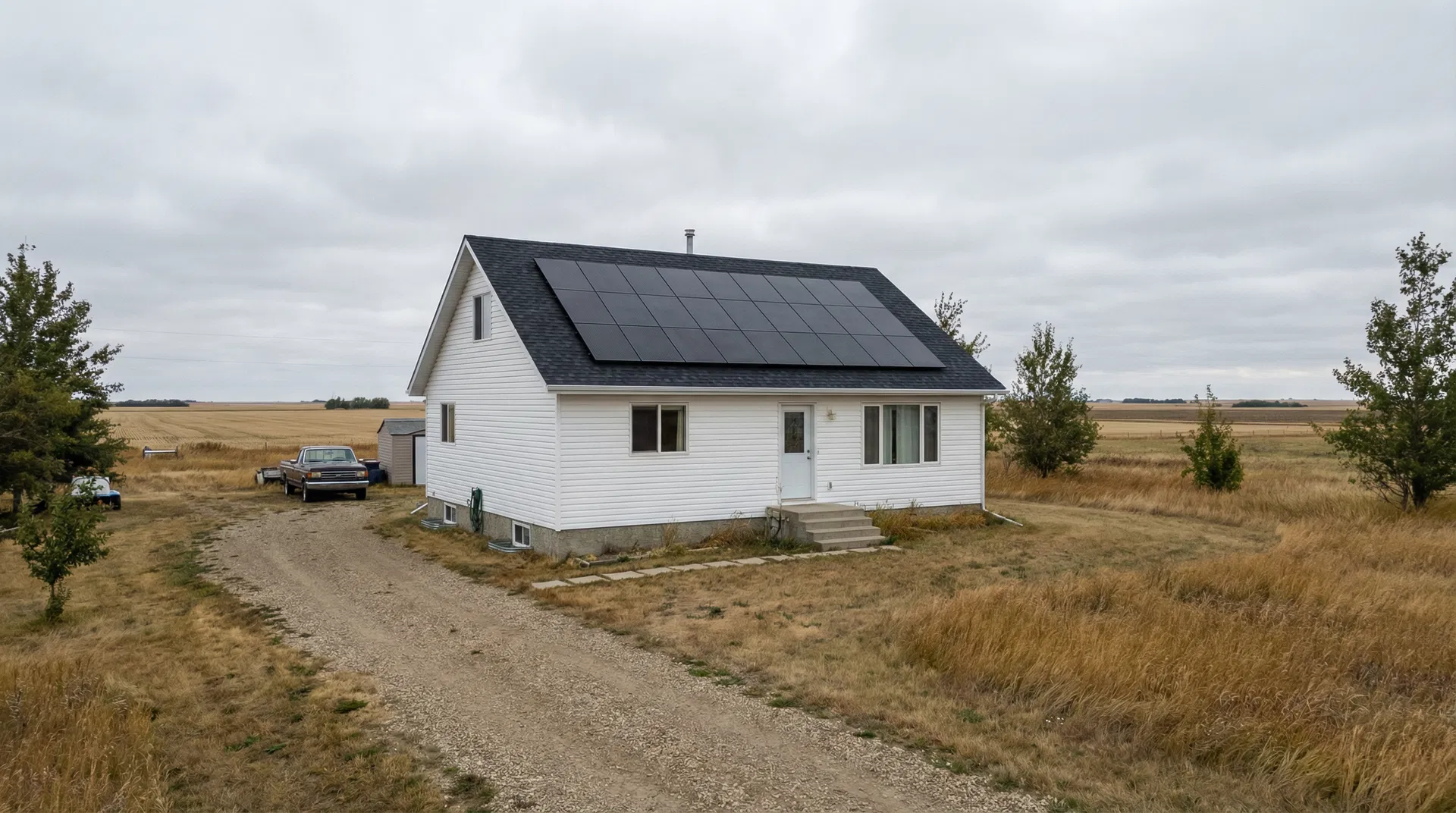
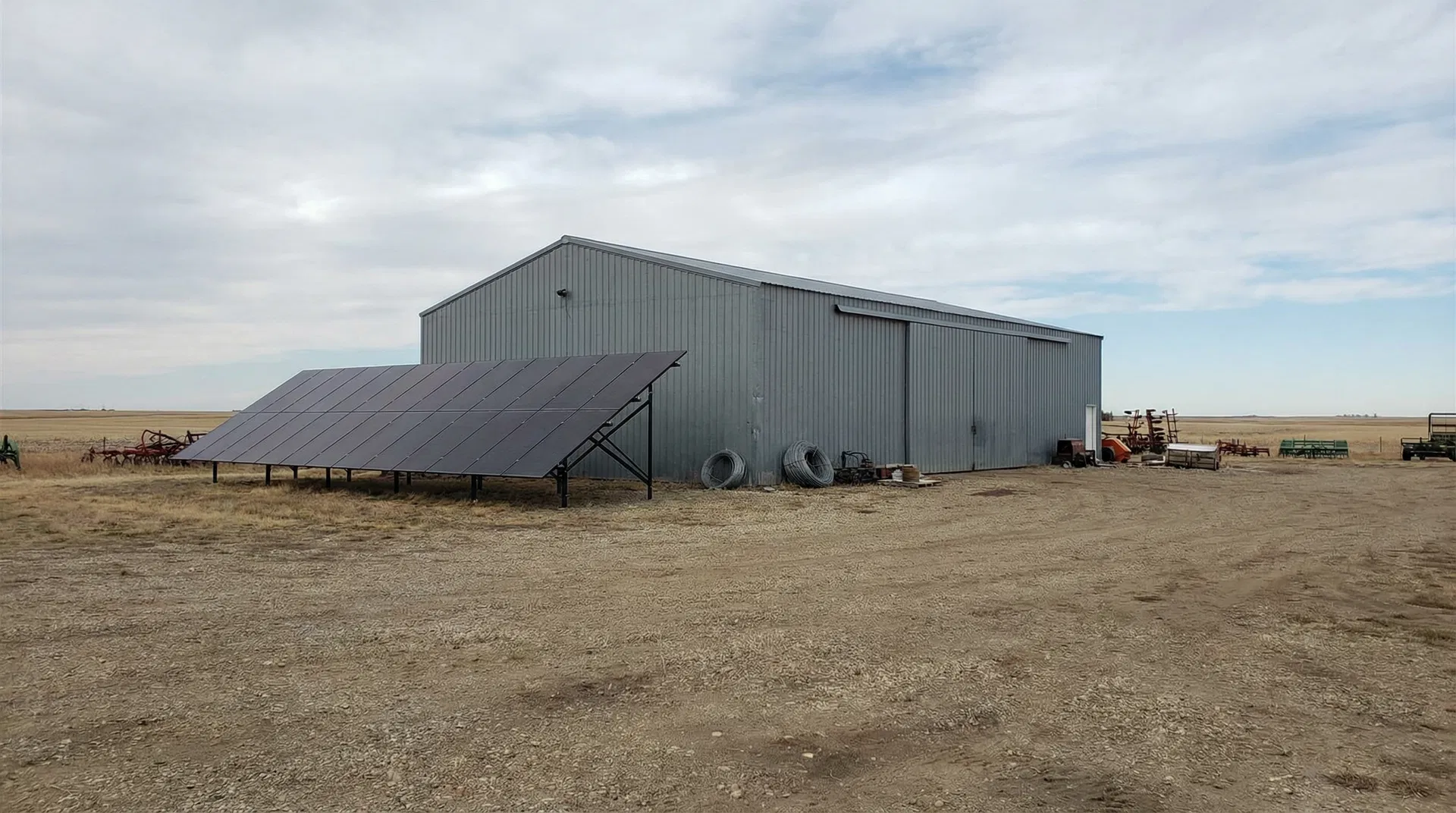
Solar for Red Deer County shops and outbuildings starts with the building itself: a pole shed, a heated shop, a Quonset, or a grain-handling building, each with its own roof angle, wall height, and available ground space. We install LONGi panels paired with APsystems microinverters on most shop and outbuilding projects, whether the array goes on a steel roof, a wood-frame gable, or a ground-mount frame next to the building. Ground mounts make sense when a shop roof is the wrong pitch, shaded by trees or a neighboring structure, or when the yard has open space and the roof alone can't carry the array a shop's draw calls for. Rooftop arrays work well on south- or west-facing steel roofing with a clear run to the panel, which is common on newer pole sheds and machine shops. Microinverters from APsystems let us build a system panel by panel, which matters on outbuildings with partial shading from a nearby grain bin, tree line, or the house itself: one shaded panel doesn't drag down the whole string. That modularity also makes it easier to add panels later if a shop gets a second bay or an irrigation pump gets added to the property's load. Standalone systems are an option for outbuildings that don't need a grid-tied connection, and grid-tied systems are the more common request for shops that already run off the yard's main service. Either way, we size the array to the equipment actually running in the building, not a flat per-square-foot estimate.
Solar Planning for Red Deer County Properties
This area was incorporated as the County of Red Deer No. 23 on January 1, 1963, and took its current name, Red Deer County, on July 1, 1999. It's grown since then: the most recent census counted 19,933 residents, up from 19,531 in the prior count. That growth sits on a base of agriculture, energy, and logistics, the same sectors that put shops, barns, and machine sheds on nearly every property out here. Properties here typically run on FortisAlberta service, and that's the utility our design team works with when we put together an interconnection application for a shop or outbuilding system. Whether the property is a working farm near Markerville, close to the Historic Markerville Provincial Historic Site, or a commercial yard closer to the highway, the starting point is the same: we look at what's actually drawing power, from a welder and air compressor in the shop to a grain dryer or irrigation pump, before we size anything. We don't hand out generic numbers for annual production or payback. Every property here has a different roof, a different panel, and a different load. We confirm what a system will actually do through a site visit and your most recent power bill, not a brochure average.
Electrical Site Review for Red Deer County Properties
Voltage Rise
Voltage rise happens when a solar inverter pushes power back onto a long or lightly loaded distribution line, and rural feeders out here often run longer than in-town service. That rise affects how close an inverter runs to its upper voltage limit, which can trigger clipping or shutdowns if the array is sized without checking line conditions first. We account for distribution distance and existing voltage headroom when we size an inverter for a shop or outbuilding.
Single-Phase vs Three-Phase
Rural properties carry either single-phase or three-phase electrical service, and shops with larger motors, well pumps, or grain-handling equipment are more likely to run three-phase. The service type on a property limits which inverters and how much system capacity we can connect, since single-phase service caps inverter capacity differently than three-phase does. We confirm which service a property has before specifying equipment, not after.
Panel Infrastructure
Older rural properties sometimes have a main panel with limited breaker capacity, installed decades before a shop or outbuilding solar system was ever part of the plan. We check the panel's age, amperage, and available breaker space during the site visit, since an undersized or outdated panel can't safely accept the backfeed from a new solar system. If the existing panel can't support the array, an upgrade to the panel or a dedicated subpanel becomes part of the project scope.
Service Entrance Review
We inspect the service entrance and meter base as part of every shop and outbuilding design, checking the condition of the conductors, the meter socket, and the connection point itself. A meter base in poor condition, or one that doesn't match what FortisAlberta expects for a micro-generation application, can delay or complicate the interconnection request. When an upgrade is needed, we fold the meter base work into the project instead of treating it as a separate surprise.
Right-Sizing Solar for Red Deer County Properties
A rural property rarely runs on one load. A house, a heated shop, a grain bin, and an irrigation pump can each pull power at different times of day, which is why systems out here tend to run larger than a typical in-town rooftop array. We size for the combined draw, not just the house. Roof or ground mount comes down to what the property actually offers. A shop roof with a clean south or west face and no shade is often the simplest option. But when a roof is shaded by trees or a neighboring building, has a pitch that doesn't suit panel placement, or the yard has open ground that's easier to work with than a steel roof twenty feet up, a ground-mount array next to the shop is usually the better call. Spread-out yards with room to spare make ground mounts a practical option more often than they would be on a smaller in-town lot. Either way, we don't size off a rule of thumb. We pull the 12-month usage graph from your most recent power bill and look at how usage moves across the year: winter heating load in the shop, summer irrigation draw, a grain dryer running hard for a few weeks. That graph, combined with the site visit, is what sets the system size, not a flat per-square-foot guess.
Typical Load Profiles We Design For Near Red Deer County
Home + Heated Shop
This is the most common setup: a house plus an insulated shop with a furnace, lighting, and power tools running through the winter. We size the array around both the house's baseline draw and the shop's heating season spike, using the usage graph on your most recent power bill to see how those two loads overlap across the year.
Shop with Grain Handling
Grain dryers, augers, and aeration fans add a sharp seasonal spike on top of the everyday shop and house load, concentrated in a few weeks at harvest. We design for that spike specifically, since sizing for average monthly use alone would undersize the system for the weeks that matter most.
Outbuilding with Irrigation or Well Pump
Irrigation pumps and well pumps draw differently than a shop does: shorter bursts of higher current rather than a steady load. We look at how that pump's draw shows up on the power bill's usage graph alongside the shop and house, then size the array and inverter configuration to handle that pattern without oversizing for the rest of the year.
FortisAlberta Interconnection in Red Deer County
FortisAlberta is the wire service across this part of Alberta, and that's the utility we file with for any grid-tied shop or outbuilding system here. Our design team prepares the micro-generation application package, including the single-line diagram and equipment specifications for the LONGi panels and APsystems microinverters, and submits it to FortisAlberta on your behalf. Because the application has to match what's actually on the property, we confirm the service entrance, panel capacity, and phase configuration (single-phase or three-phase) before we finalize a design. That review happens on-site, not from a satellite photo, since a shop's existing electrical setup often differs from what's shown on a utility map. We don't quote approval timelines, credit terms, or payout rules here. Those are set by FortisAlberta's current tariff and process, and we walk through what applies to a specific property once we have your most recent power bill and the site details in hand.
Project Economics and Design Review
| System Size | Annual Production | Year 1 Savings | Payback Period |
|---|---|---|---|
| 8-20 kW range, 12 kW typical |
Production, savings, and payback figures are provided only after a property-specific design review using your most recent power bill.
How We Work in Red Deer County
Bill and Load Review
We review your power bill to understand your energy use in Red Deer County and size the system to your actual consumption, not a generic estimate.
Site Assessment
We assess your roof or ground area, south-facing exposure, electrical service, and utility interconnection requirements specific to your property.
Design and Utility Application
We produce a system layout, production estimate, and cost summary, then submit your micro-generation application to your utility on your behalf.
Installation and Commissioning
Our crew installs racking, panels, inverter, and electrical connections. All work is performed by licensed electricians. We commission and test before handoff.
Current Program and Interconnection Review
Utility connection review
FortisAlberta reviews every grid-tied micro-generation application against its current interconnection rules before a system can be connected. Range Road Solar prepares the full design package, including equipment specifications for the LONGi panels and APsystems microinverters, and manages the submission on your behalf.
Current program review
Eligibility for commercial, farm, and residential solar programs changes, so we check what currently applies to a shop or outbuilding project at the time we design it rather than relying on outdated information. That review covers how the building is classified and used, since a farm outbuilding and a home workshop aren't always treated the same way.
Frequently Asked Questions
Get a Solar Assessment for Red Deer County
Submit a recent power bill and we will review your consumption and provide an honest assessment for your Red Deer County property. No obligation.
(587) 330-7502 Book a CallRelated Resources