Red Deer County · Farm and agricultural solar
Farm Solar in Red Deer, Alberta
Agricultural solar systems sized for real farm loads. We design ground-mount and rooftop installations for properties in and around Red Deer, Alberta, from 20 kW up to 50 kW.
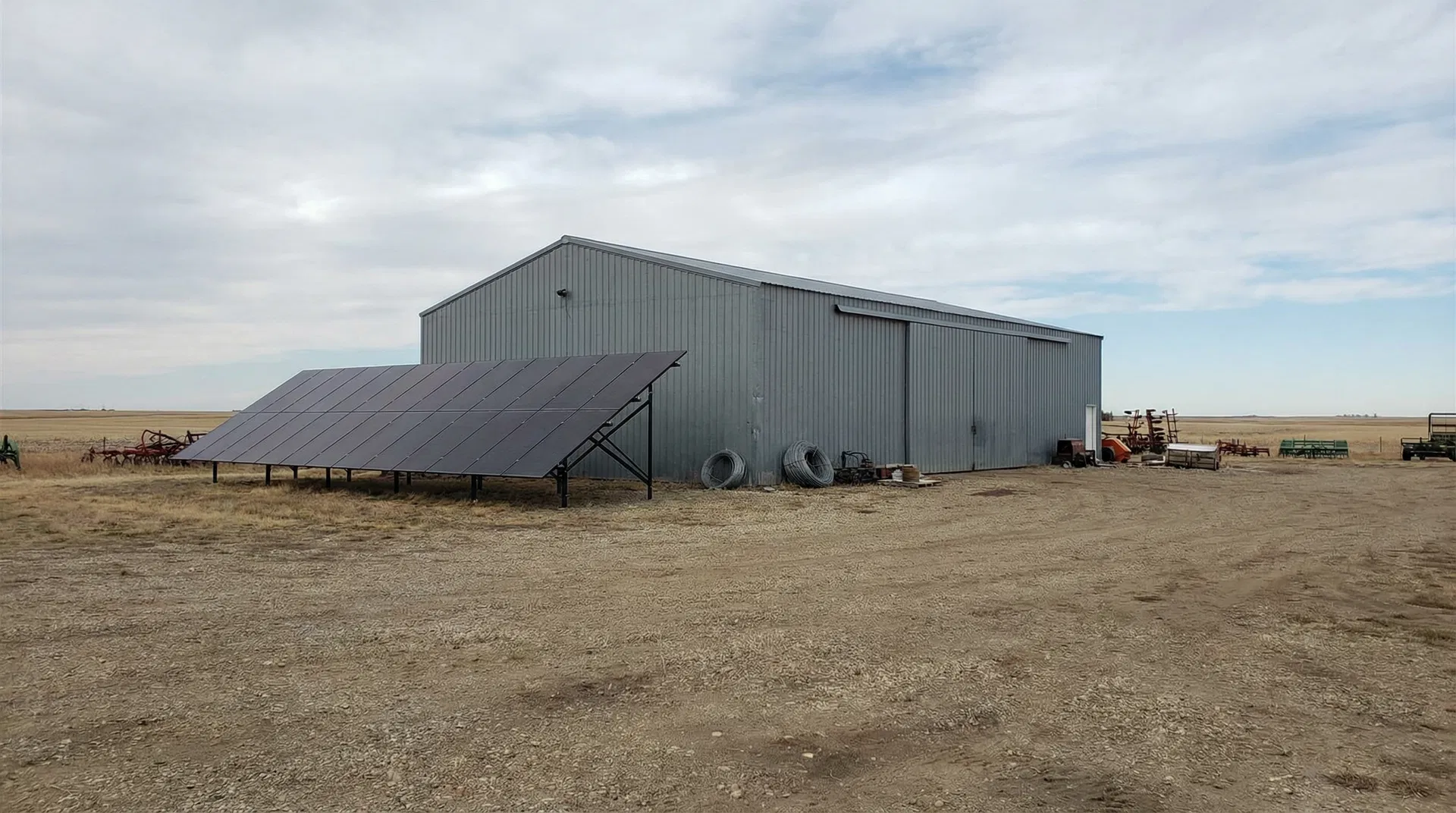
When we talk about solar farm solar in Red Deer, Alberta, we're talking about systems that are built around agricultural load profiles, not retrofitted residential designs scaled up. There's a real difference. We install LONGi panels across our farm systems. They're reliable, widely supported, and hold up under the mechanical stress of a ground-mount racking system in central Alberta conditions. For inverter configuration, we use APsystems microinverters on most installations. Microinverters handle partial shading and uneven string lengths better than string inverters, which matters when you're dealing with a ground array that might have a grain bin or mature tree throwing a shadow across part of the field at certain times of day. Ground-mount is our default recommendation for farm properties in this area. You get full control over tilt angle and orientation, you're not adding dead weight to a metal roof that may be aging, and future panel access for maintenance is straightforward. That said, we do install rooftop systems on shops and barns when the structure is solid, the pitch is right, and the roof orientation delivers strong production numbers. Systems in the 20 to 50 kW range typically involve a dedicated combiner or subpanel on the farm electrical system. We handle the full installation from racking and wiring through to the City of Red Deer interconnection application. You don't need to manage the paperwork side of it.
Solar Planning for Red Deer Properties
Farm operations run electrical loads that residential solar just isn't sized to handle. Heated shops, grain augers, irrigation pumps, yard lights, and a farmhouse on the same meter can push monthly consumption well beyond what a standard 10 kW rooftop system touches. That's why agricultural solar in this area typically starts at 20 kW and often lands in the 25 to 50 kW range, depending on what you're running. Red Deer sits in central Alberta with a strong year-round solar resource, and properties here tend to have exactly the kind of open yard space that makes ground-mount installations practical. No roof pitch limitations, no shading from adjacent buildings, and no structural engineering fees to worry about when the roof can't carry the load. We don't apply a one-size number to farm systems. Every design starts with your most recent power bill, which includes a 12-month usage graph, and a site walkthrough to confirm orientation, ground conditions, and your existing electrical infrastructure. The result is a system sized for what you actually use, not an average pulled from a spreadsheet.
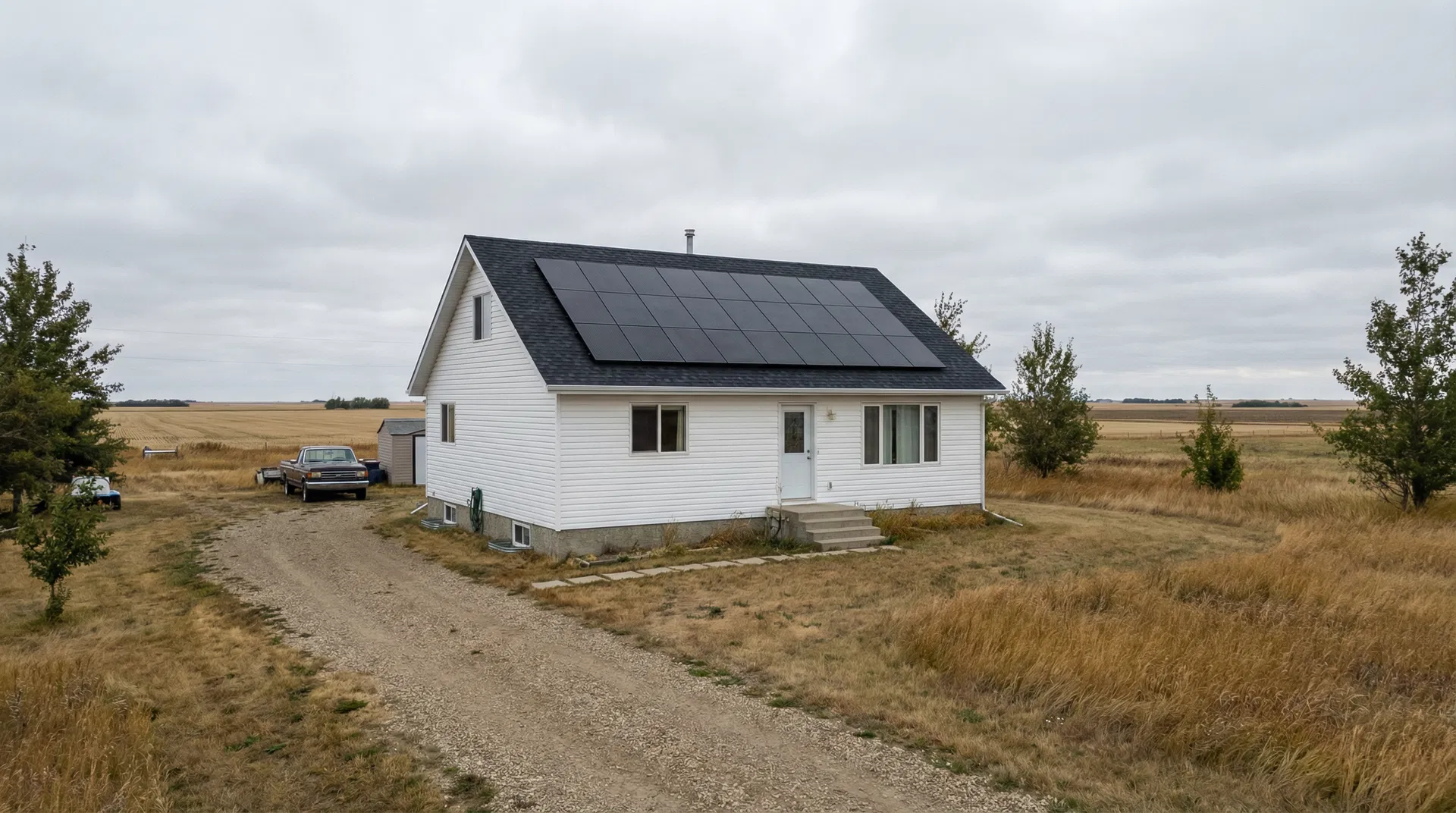
Electrical Site Review for Red Deer Properties
Voltage Rise
Voltage rise occurs when a solar system pushes power back toward the grid and the local distribution line has limited capacity to absorb that flow, causing voltage at the point of interconnection to climb above acceptable limits. On farm properties served by longer distribution runs, this effect can be more pronounced. If voltage rise is a concern, it affects inverter clipping decisions and may require us to adjust array size or inverter configuration to keep the system within the City of Red Deer's interconnection limits.
Single-Phase vs Three-Phase
Rural and agricultural properties in Alberta can be served by either single-phase or three-phase electrical service, and that distinction directly affects inverter selection and how much capacity a system can deliver. Three-phase service is common on properties running large motors like grain augers, irrigation pumps, or commercial refrigeration, and it allows for larger inverter configurations. We confirm your service type during the site review so the inverter design matches what your panel can actually accept.
Panel Infrastructure
Older panels on farm properties sometimes don't have enough breaker capacity to support a 20 to 50 kW solar addition without an upgrade. We assess breaker capacity, panel age, and available bus space during every site review. If the existing panel can't safely support the system, we'll scope an upgrade as part of the installation, so there are no surprises after the design is locked in.
Service Entrance Review
The service entrance and meter base condition matters because the City of Red Deer's interconnection process includes a review of the metering infrastructure. We check the meter base, service entrance conductors, and main disconnect condition as part of the design package. If the meter base needs an upgrade to meet current requirements, we identify that early so it can be included in the project scope before the application is submitted.
Right-Sizing Solar for Red Deer Properties
Farm and agricultural properties typically run several distinct electrical loads at the same time: a farmhouse, a heated shop, a grain handling setup, yard lighting, and sometimes irrigation equipment all on the same account. That combination pushes consumption well beyond what a residential rooftop system is designed to offset, which is why we size farm systems from 20 kW upward rather than starting at 10 kW and scaling up by gut feel. The roof-versus-ground-mount decision comes down to site conditions. If the shop roof is in good shape, south-facing, and clear of tree or bin shading, it's a viable option. But if the roof has an awkward pitch, faces the wrong direction, or sits in the shadow of a neighbouring building for part of the day, a ground-mount array on an open section of the yard is usually a cleaner answer. Ground-mount also lets us dial in the tilt angle precisely, which matters when you're trying to maximize output across a full calendar year. We don't size systems from rule-of-thumb numbers. The starting point is the 12-month usage graph on your most recent power bill. That graph shows us seasonal variation, peak consumption months, and the overall annual load we're designing against. Combined with a site walkthrough to assess shading, orientation, and electrical infrastructure, it gives us what we need to build a design that actually fits the property instead of one that looks good on paper.
Typical Load Profiles We Design For Near Red Deer
Home + Heated Shop
A farmhouse combined with a heated shop running a natural gas-fired unit heater, LED lighting, compressors, and power tools is one of the most common load profiles we see in this area. The shop typically adds substantial daytime load during winter months when heating systems run fans continuously. We size these systems from the combined 12-month usage graph on the power bill to capture both the seasonal heating contribution and the year-round baseline draw.
Grain Operation with Drying Equipment
Properties running grain drying equipment, aeration fans, and auger motors during harvest season have highly concentrated load periods that a generic sizing formula won't capture accurately. A 30 to 50 kW system is often appropriate here, but the right number depends on how many hours per day the dryer runs and whether the property has three-phase service for the larger motors. We pull the actual consumption peaks from the 12-month usage graph before recommending a system size.
Acreage with Irrigation Pump
Properties using submersible or surface irrigation pumps have a strong summer daytime load that aligns well with solar production. A system in the 20 to 30 kW range often fits these sites, but pump size, operating hours, and whether there are additional outbuilding loads all factor into the final design. The site review and power bill together give us the complete picture before we commit to a layout.
City of Red Deer Interconnection
Red Deer's wire service is the City of Red Deer. For properties within that service territory, the micro-generation interconnection application goes through the city's utility, not FortisAlberta or ATCO Electric. City of Red Deer reviews the technical design package before approving grid connection for a micro-generation system. That package includes the single-line electrical diagram, inverter specifications, and a site plan showing the array layout relative to the meter and main panel. Range Road Solar prepares and submits that full application package on your behalf. We don't hand you a stack of forms and leave you to figure out the process. We build the documentation, submit it to the City of Red Deer, and stay on top of the review. What you need to provide is your most recent power bill. We confirm the technical requirements and handle the rest. If your property is adjacent to Red Deer but served by a different wire service, we'll confirm the correct utility at the design review stage before any work begins.
Project Economics and Design Review
| System Size | Annual Production | Year 1 Savings | Payback Period |
|---|---|---|---|
| 20-50 kW range, 25 kW typical |
Production, savings, and payback estimates require a property-specific design review and your most recent power bill.
How We Work in Red Deer
Bill and Load Review
We review your power bill to understand your energy use in Red Deer and size the system to your actual consumption — not a generic estimate.
Site Assessment
We assess your roof or ground area, south-facing exposure, electrical service, and utility interconnection requirements specific to your property.
Design and Utility Application
We produce a system layout, production estimate, and cost summary, then submit your micro-generation application to your utility on your behalf.
Installation and Commissioning
Our crew installs racking, panels, inverter, and electrical connections. All work is performed by licensed electricians. We commission and test before handoff.
Current Program and Interconnection Review
Utility connection review
The City of Red Deer reviews grid connection applications for micro-generation systems within its service territory. Range Road Solar prepares the full technical design package required for that application, including the single-line diagram and inverter documentation, and submits it on your behalf. You don't need to interact directly with the utility to get the interconnection approved.
Current program review
Commercial and agricultural solar installations may be eligible for federal or provincial programs depending on ownership structure, system size, and how the property is classified. Eligibility rules and program availability change over time, so we review what's current against your specific situation at the design stage rather than advertising program details that may no longer apply.
Frequently Asked Questions
Get a Solar Assessment for Red Deer
Submit a recent power bill and we will review your consumption and provide an honest assessment for your Red Deer property. No obligation.
(587) 330-7502 Book a CallRelated Resources
More Solar Services in Red Deer