Red Deer County · Solar repair and maintenance
Solar Repair and Maintenance in Red Deer, AB
Inverter faults, underperforming panels, and full system audits for existing installations across central Alberta. We service all brands.
We handle solar solar-repair in Red Deer, Alberta for all makes and sizes of grid-tied systems, regardless of who did the original install. Inverter issues are the most common call we get. String inverters, microinverters, and hybrid units all fail in different ways, and the fix depends on the specific fault code, the age of the unit, and whether it's still under manufacturer warranty. We pull logs, run diagnostics, and give you a straight answer on whether a repair or a replacement makes more sense. Panel issues come next. Hail damage, delamination, shading from new tree growth, and cracked cells all show up in monitoring data as underperforming strings or individual unit drops. If you're running APsystems microinverters, each panel reports independently, which makes faults easy to isolate. On older string systems without module-level monitoring, we use a clamp meter and IV curve tracer to find the culprit. We also handle full system audits: checking wiring connections, confirming DC and AC breaker ratings, reviewing the original design against what was actually installed, and making sure the local utility's interconnection paperwork reflects the current system configuration. If your system was installed years ago and you've never had it reviewed, an audit is a reasonable place to start.
Solar System Support for Red Deer Properties
An existing solar system that isn't performing the way it should costs you every month it sits idle or underproduces. Whether it's an inverter fault flagged by your monitoring app, a panel that took hail damage, or a system that was installed by someone else and never properly commissioned, Range Road Solar can assess it and get it running correctly. We work on systems of all brands and sizes, from smaller residential setups to larger commercial arrays. This part of Alberta has seen the full range of installation quality that's been put in over the last decade. Some systems were installed well. Others weren't. If your system isn't exporting when it should be, or your monitoring data shows gaps or unexplained drops, that's worth investigating. We start with a system audit, pull the inverter logs and wiring diagrams, test production against the original design spec, and tell you exactly what's wrong and what it'll take to fix it.
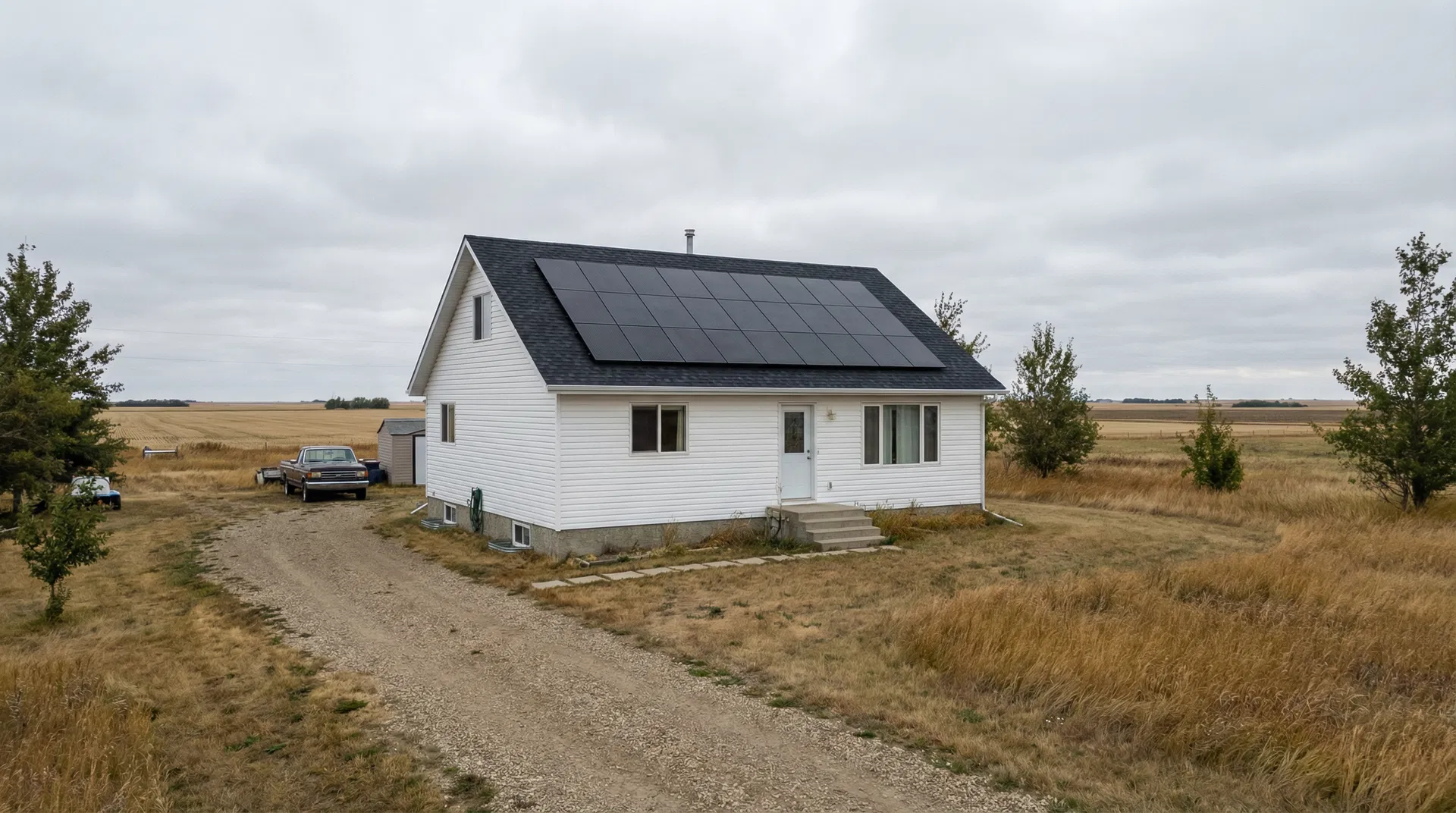
Electrical Site Review for Red Deer Properties
Voltage Rise
Voltage rise occurs when solar export pushes voltage at the point of connection above the utility's permitted threshold, causing the inverter to throttle or trip offline. Distribution line length and load density on the local grid both affect how much rise a system sees at different times of day. Voltage rise is one of the first things we check on an underperforming system, because it's often misdiagnosed as an inverter fault when the inverter is actually behaving exactly as designed.
Single-Phase vs Three-Phase
Residential and light commercial properties in Alberta can have either single-phase or three-phase service, and it's not always obvious which one you have until someone checks the meter base. This matters for solar repair because inverter selection and system capacity limits differ depending on phase configuration. A replacement inverter spec'd for single-phase won't work correctly on a three-phase service, so we confirm the service type before recommending any inverter swap.
Panel Infrastructure
Older electrical panels sometimes don't have the breaker capacity to support a solar system, particularly if loads have grown since the original install. When we audit an existing installation, we check the breaker sizing against the solar array and any added loads like EV chargers or shop equipment. If the panel is at capacity or uses obsolete breaker technology, we'll flag it and explain what an upgrade would involve before the repair work proceeds.
Service Entrance Review
The meter base and service entrance are what connect your property to the City of Red Deer distribution grid, and their condition matters when submitting or updating a micro-generation application. We inspect the meter base for corrosion, correct sealing, and compatibility with bi-directional metering. If the service entrance needs work before the interconnection file can be updated, we'll include that in the repair scope so there's no surprise during utility review.
Right-Sizing Solar for Central Alberta Properties
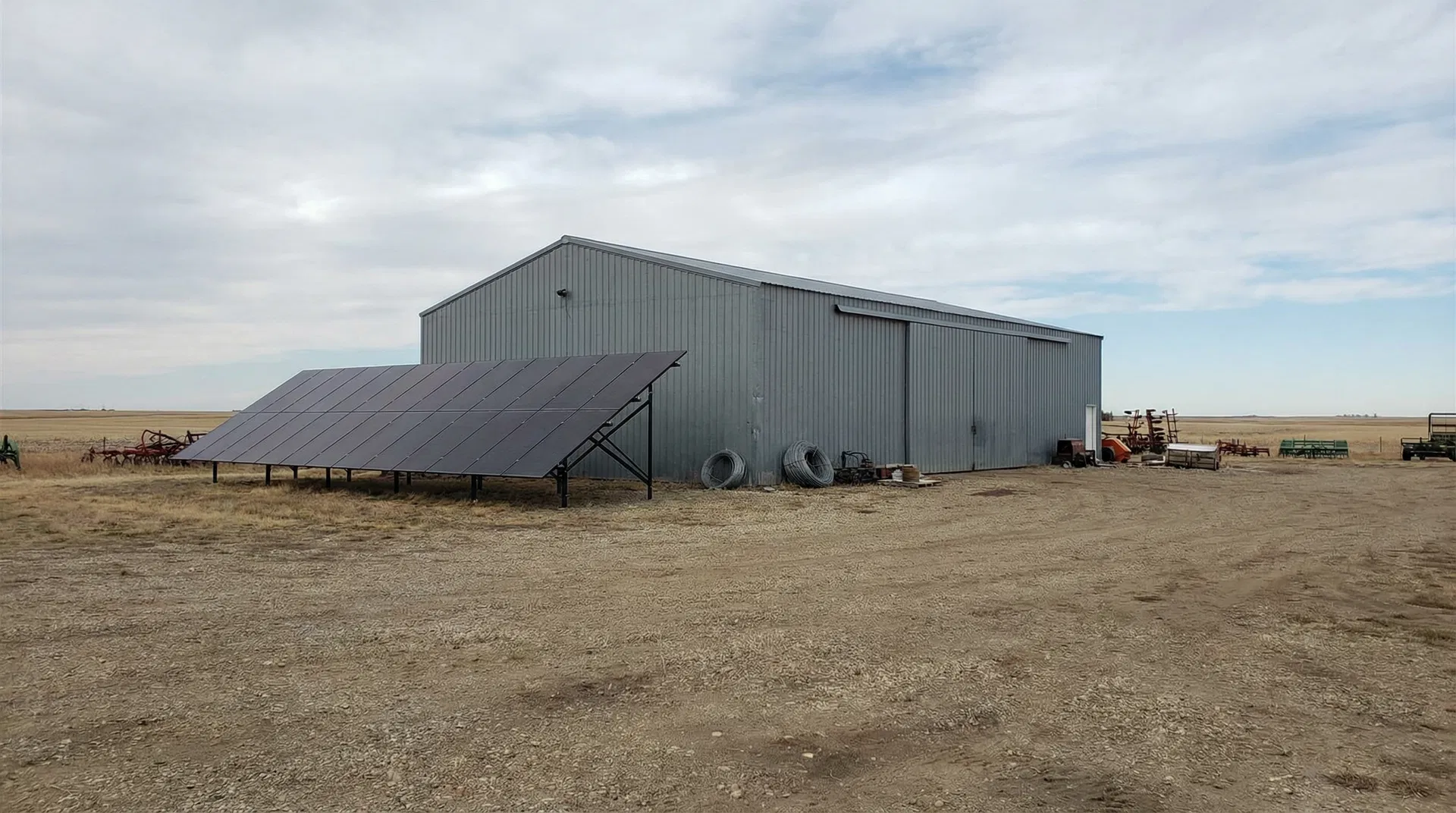
Rural and semi-rural properties in this part of Alberta often carry loads that urban installs don't account for: a heated shop, an irrigation pump, grain handling equipment, or a secondary suite. That's why an 8 kW residential system in a subdivision isn't the right starting point for an acreage or a working property. We size from the actual 12-month usage graph on your most recent power bill, not a rule-of-thumb multiplier. For repair work, sizing comes into play when we're recommending inverter replacements or system expansions as part of the repair scope. If the original system was undersized for your current loads, a repair visit is a practical time to revisit the design and correct it while the electrical work is already open. Roof mount works well when the pitch, orientation, and shading are right. If trees, a shop roofline, or a flat commercial roof are limiting the array, ground mount gives us more flexibility on tilt and orientation. For agricultural properties with available land away from tree lines, ground mount often outperforms roof mount over the life of the system. We look at both options during the site visit and recommend whichever one makes more sense for your property layout and load distribution. We provide honest production estimates based on your actual power bills and site conditions, not inflated projections.
Typical Load Profiles We Service Near Red Deer
Home Plus Heated Shop
A house combined with a heated detached shop typically justifies a 12-16 kW system, depending on shop size and heating type. When we audit an existing system on this kind of property, we check whether the original design accounted for the shop load or just the house. Systems sized only for the home often show consistent shortfalls in winter monitoring data when the shop heating load kicks in.
Commercial or Light Industrial Property
Small commercial properties in the area, including light manufacturing, trades businesses, and retail with attached warehouse space, often run 15-20 kW systems. Faults on larger commercial arrays cost more per day in lost output than a residential system, so the urgency of a repair audit is higher. We prioritize rapid diagnosis on commercial calls and carry common inverter replacement parts for the most frequently installed brands.
Acreage With Secondary Load
An acreage with a home, a small shop, and a secondary suite or rental cabin has three distinct load centres that ideally should all be factored into the solar design. When we audit these systems, we sometimes find the secondary loads were never properly metered or included in the original design spec. Correcting that oversight during a repair visit can change the system's performance picture significantly.
City of Red Deer Interconnection and Repair Documentation
Solar systems connected to the City of Red Deer distribution grid operate under the utility's micro-generation rules. When a repair involves replacing an inverter or modifying the system configuration, the interconnection file may need to be updated. Range Road Solar handles the paperwork. If your repair changes the inverter make or model, the rated capacity, or the physical layout of the system, we'll prepare and submit the updated interconnection package to the utility on your behalf. Some repairs don't trigger a filing requirement, and we'll tell you upfront which category your situation falls into. Don't assume a repair is documentation-free just because it feels minor. An inverter swap on a grid-tied system is a change to a utility-connected device, and handling it correctly from a paperwork standpoint protects you if there's ever a grid event or a future sale of the property.
Project Economics and Design Review
| System Size | Annual Production | Year 1 Savings | Payback Period |
|---|---|---|---|
| 8-20 kW range, 10 kW typical |
Production, savings, and payback estimates require a property-specific design review and your most recent power bill.
How We Work in Red Deer
Bill and Load Review
We review your power bill to understand your energy use in Red Deer and size the system to your actual consumption — not a generic estimate.
Site Assessment
We assess your roof or ground area, south-facing exposure, electrical service, and utility interconnection requirements specific to your property.
Design and Utility Application
We produce a system layout, production estimate, and cost summary, then submit your micro-generation application to your utility on your behalf.
Installation and Commissioning
Our crew installs racking, panels, inverter, and electrical connections. All work is performed by licensed electricians. We commission and test before handoff.
Current Program and Interconnection Review
Utility connection review
The City of Red Deer reviews grid connection applications for solar systems within its service area. Range Road Solar prepares the design and documentation package and handles the submission. For repair work that modifies the original interconnection configuration, we determine what documentation is required and file it on your behalf.
Current program review
Commercial, farm, and residential properties may be eligible for various federal or provincial programs depending on property type and ownership structure. We review current eligibility against the rules in effect at the time of the design review. Program rules change, and what applied a few years ago may not apply today.
Frequently Asked Questions
Get a Solar Assessment for Red Deer
Submit a recent power bill and we will review your consumption and provide an honest assessment for your Red Deer property. No obligation.
(587) 330-7502 Book a CallRelated Resources
More Solar Services in Red Deer