Red Deer County · Solar rebates and incentives
Solar Rebates in Red Deer, Alberta
Current incentive programs, micro-generation credits, and the federal Clean Technology ITC reviewed at design time for Red Deer residential, commercial, and farm properties.
When someone searches solar rebates Red Deer Alberta, they're usually asking one of two things: what programs exist right now, and how do those programs actually affect the numbers on a specific property. The answer to both depends on property type, system size, and the current rules at the time of design. We don't publish a fixed list because programs change, eligibility thresholds shift, and what applies to a 10 kW residential system isn't necessarily what applies to a 15 kW commercial roof. For residential and acreage properties, the primary financial mechanism is micro-generation. The City of Red Deer, as the wire service for this area, governs how surplus credits are settled on your account. We handle the interconnection application and the design package, so you don't have to navigate that paperwork yourself. For farms and businesses in and around Red Deer, the federal Clean Technology Investment Tax Credit is the most significant program available right now. It applies to eligible solar equipment at a meaningful rate, but the eligibility rules, filing requirements, and interaction with other programs need to be reviewed against your specific tax situation. We flag it at design time and recommend you confirm it with your accountant. We install LONGi panels and APsystems microinverters on every residential and commercial project. Microinverters simplify the micro-generation application because each panel operates independently, and they make it straightforward to add capacity later if your loads grow. System sizes for properties in this area typically fall in the 8 to 15 kW range, with 10 kW being a common residential starting point, though your actual bill and site conditions drive that number.
Solar Planning for Red Deer Properties
Red Deer sits in a deregulated electricity market. That means your retail electricity rate floats with whatever contract or default rate your retailer is charging, and that number has moved around considerably over the last few years. A grid-tied solar system offsets consumption directly, so the value of every kilowatt-hour you produce tracks your retail rate rather than a fixed number. That connection matters when you're trying to model whether a system makes financial sense. Properties here range from newer residential subdivisions with good south-facing roof exposure to older acreages with steel shops, heated outbuildings, and electrical infrastructure that may need review before a system goes on. Both scenarios are ones we work through regularly. Before we talk rebates or system size, we look at the 12-month usage graph on your most recent power bill, your roof or ground-mount conditions, and what the City of Red Deer's interconnection requirements look like for your service address. The design review is free. We don't quote a system size before we've seen your actual usage data, and we don't promise program eligibility until we've confirmed the current rules apply to your property.
Electrical Site Review for Red Deer Properties
Voltage Rise
Voltage rise happens when a solar system pushes current back toward the grid and the voltage at the service entrance climbs above the acceptable operating band. Distribution line conditions, transformer sizing, and the distance from your panel to the nearest transformer all affect how much rise occurs. If voltage rise exceeds the wire service's limits, the inverter will clip or disconnect to protect the grid, which reduces effective system output and needs to be accounted for in the design.
Single-Phase vs Three-Phase
Properties in and around Red Deer can have either single-phase or three-phase electrical service, and the distinction matters when selecting inverters and sizing the system. APsystems microinverters are configured to match the phase service at the property, and a mismatch between the inverter configuration and the service type causes application and safety problems. We confirm service type during the site review before finalizing the design package.
Panel Infrastructure
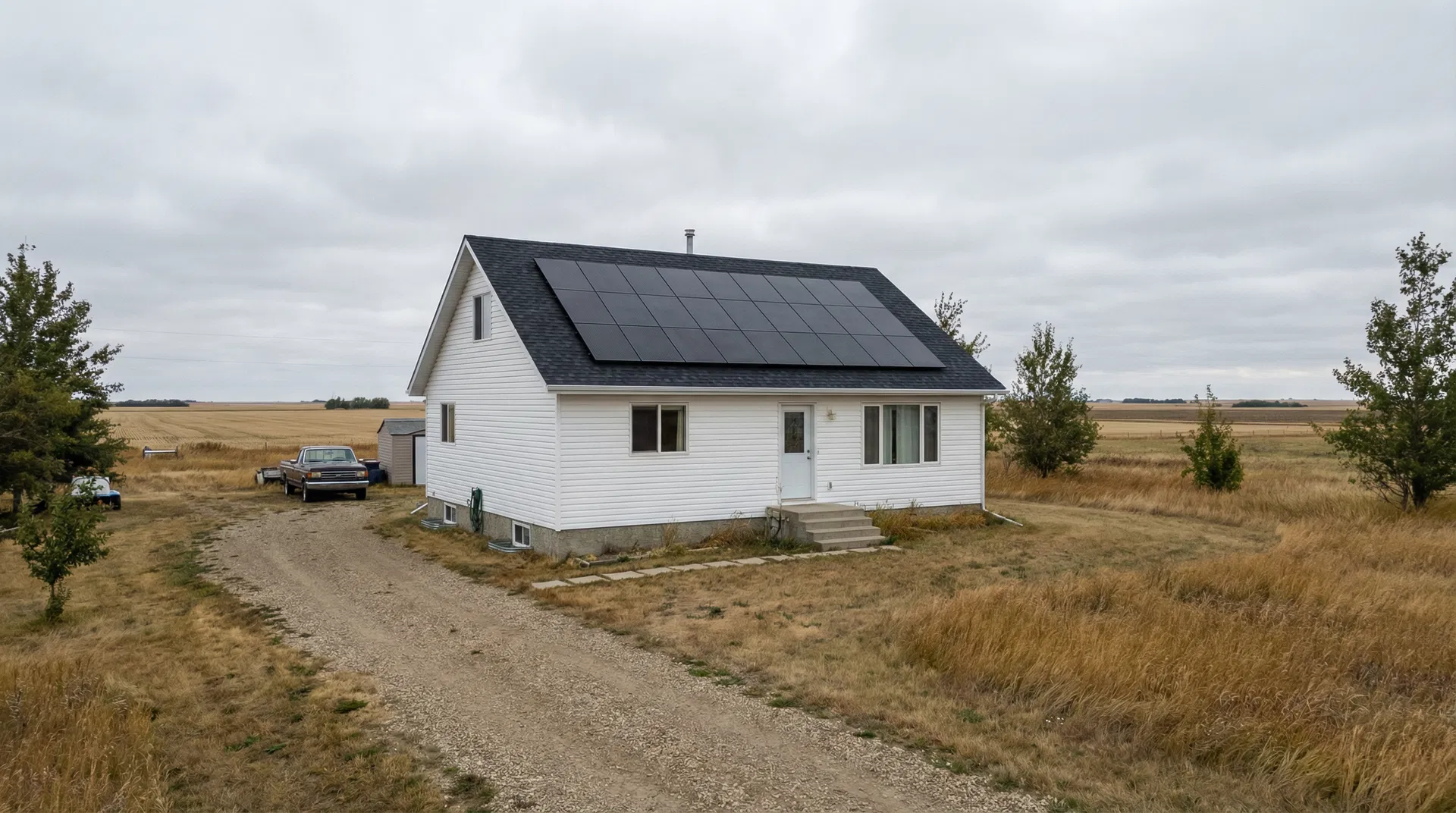
Older electrical panels on residential and acreage properties sometimes don't have the breaker capacity to support a solar backfeed connection at the system sizes we're installing. We assess panel age, available breaker slots, and bus bar rating during the site review to confirm whether the existing panel can support the proposed system. If it can't, a panel upgrade is included in the project scope before we submit the interconnection application.
Service Entrance Review
The meter base and service entrance condition are reviewed before we submit the micro-generation application to the City of Red Deer because the City's technical requirements include standards for metering infrastructure. A meter base that doesn't meet current standards needs to be upgraded as part of the project, and catching that before submission avoids a rejection or revision request mid-process. We include the service entrance check in every pre-design site visit.
Right-Sizing Solar for Red Deer Properties
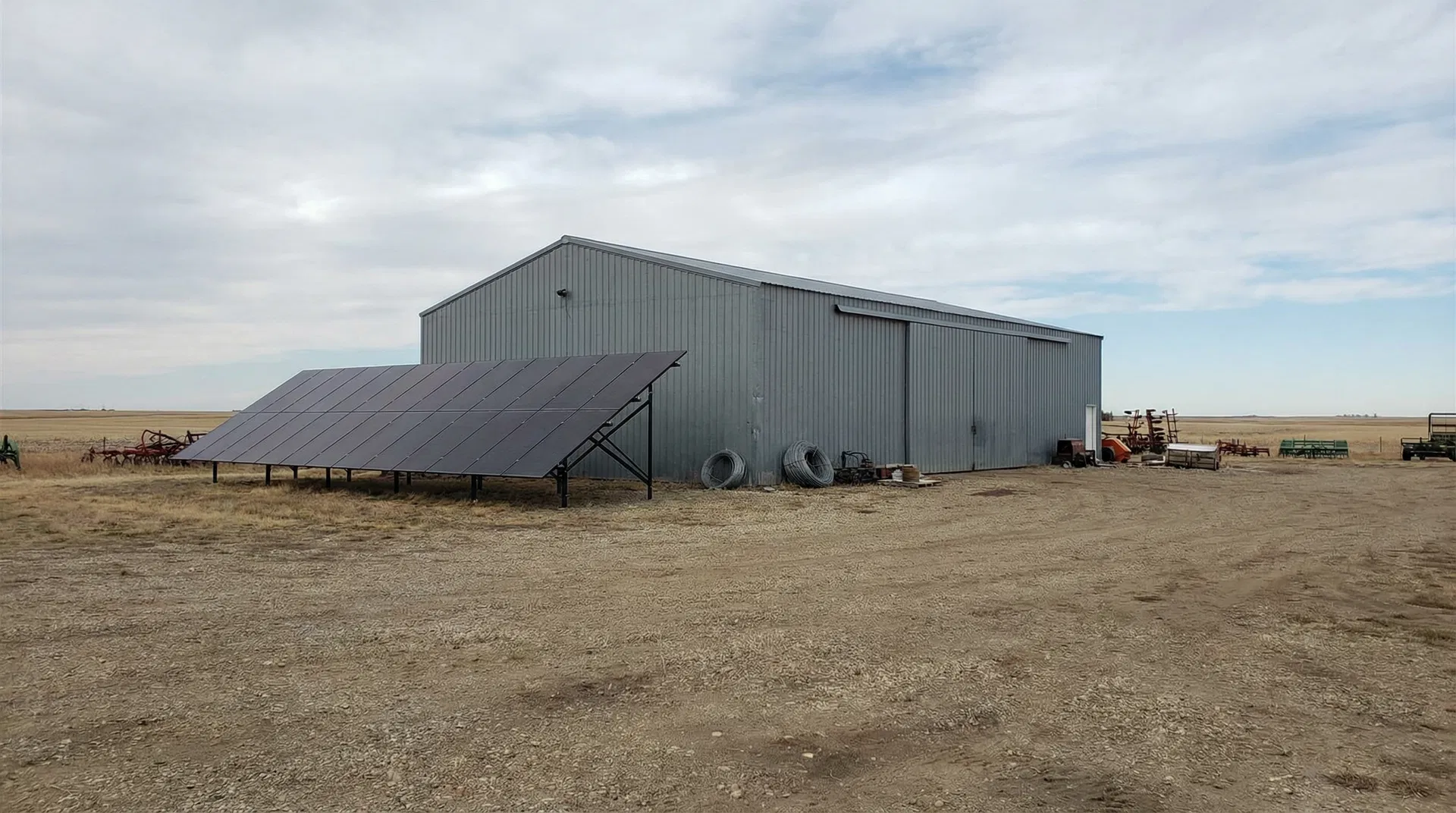
Urban residential systems are often sized to a single load on a single meter. Properties in and around Red Deer frequently aren't. A house with a heated shop, a second outbuilding on a separate sub-panel, or an irrigation setup has a load profile that's meaningfully larger than what a basic roof survey would suggest. Getting the system size right means accounting for all of those loads, not just what the main house draws in December. Roof mount works well when the primary structure has good south or southwest exposure, a pitch that sheds snow without stacking, and no major shading from trees or adjacent buildings. When those conditions don't exist, or when there's available ground with good solar access in the yard, a ground mount is often the cleaner answer. Ground mounts also let us set the tilt angle precisely for the latitude rather than accepting whatever the roof gives us. We don't size systems from rules of thumb. We work from the 12-month usage graph on your most recent power bill, which shows the seasonal variation in your consumption across a full year. A property that runs heavy loads in winter needs a different design than one that peaks in summer, and that pattern is right there on the bill. We'd rather spend 20 minutes reviewing your actual data than quote you a system that's undersized in November or oversized in July. The design review is free, and it starts with that bill.
Typical Load Profiles We Design For Near Red Deer
Home Plus Heated Shop
A residential property with a detached heated shop typically runs two separate loads through the same meter or across multiple panels, with the shop adding significant electrical demand through the heating season. We look at the full 12-month usage curve on the power bill to understand how those loads interact across seasons before selecting a system size. A 10 to 13 kW system is a common starting point for this setup, but the bill and site conditions confirm it.
Commercial or Light Industrial Roof
Flat or low-slope commercial rooftops in Red Deer are well suited to ballasted racking, which avoids roof penetrations and keeps installation straightforward on membrane and metal roofing. A commercial property with consistent daytime electrical demand, such as a shop, office, or light manufacturing space running 8 to 12 hours a day, can self-consume a significant share of production without relying heavily on micro-generation credits. We review the meter data and occupancy schedule to match system output to the consumption window.
Acreage with Multiple Outbuildings
Acreage properties with a house, shop, and one or more outbuildings, each with their own electrical draws, often land in the 12 to 15 kW range once all loads are accounted for. We confirm whether the loads share a single service entrance or run on separate meters before designing the system, because that affects how micro-generation credits are applied and how the interconnection application is structured. Your most recent power bill is the starting point, but the site layout is equally important on these properties.
City of Red Deer Interconnection
The City of Red Deer is the wire service for Red Deer. That means any grid-tied solar system installed at a Red Deer address connects to the municipal distribution network, and the interconnection application goes to the City rather than to FortisAlberta or ATCO. The City of Red Deer has its own micro-generation application process, technical requirements, and review procedures. Because this is a municipal utility rather than a provincial wire service, the specific forms, design standards, and approval process differ from what applies in surrounding rural areas. Range Road Solar handles the full interconnection package for Red Deer installations. We prepare the single-line diagram, the equipment specifications, and the application documentation to the City's requirements. You don't need to manage the utility submission yourself. What we do need from you is your most recent power bill and access to the site for a service entrance and electrical review before we submit anything. Getting the application right the first time avoids delays, and that starts with an accurate design package.
Project Economics and Design Review
| System Size | Annual Production | Year 1 Savings | Payback Period |
|---|---|---|---|
| 8-15 kW range, 10 kW typical |
Production, savings, and payback estimates require a property-specific design and your most recent power bill before any numbers can be confirmed.
How We Work in Red Deer
Bill and Load Review
We review your power bill to understand your energy use in Red Deer and size the system to your actual consumption — not a generic estimate.
Site Assessment
We assess your roof or ground area, south-facing exposure, electrical service, and utility interconnection requirements specific to your property.
Design and Utility Application
We produce a system layout, production estimate, and cost summary, then submit your micro-generation application to your utility on your behalf.
Installation and Commissioning
Our crew installs racking, panels, inverter, and electrical connections. All work is performed by licensed electricians. We commission and test before handoff.
Current Program and Interconnection Review
Utility connection review
The City of Red Deer reviews grid connection applications for solar installations within its service area. Range Road Solar prepares the full design package, including the single-line diagram and equipment documentation, to the City's specifications and submits the application on your behalf. We handle the back-and-forth with the utility so the interconnection process doesn't stall your project.
Current program review
Commercial, farm, and residential eligibility for available solar programs is reviewed against the current rules at the time of your design. Incentive structures and thresholds change, and what applied to a system installed two years ago may not apply today. We confirm which programs are active and relevant for your property type before we finalize any project scope.
Frequently Asked Questions
Get a Solar Assessment for Red Deer
Submit a recent power bill and we will review your consumption and provide an honest assessment for your Red Deer property. No obligation.
(587) 330-7502 Book a CallRelated Resources
More Solar Services in Red Deer