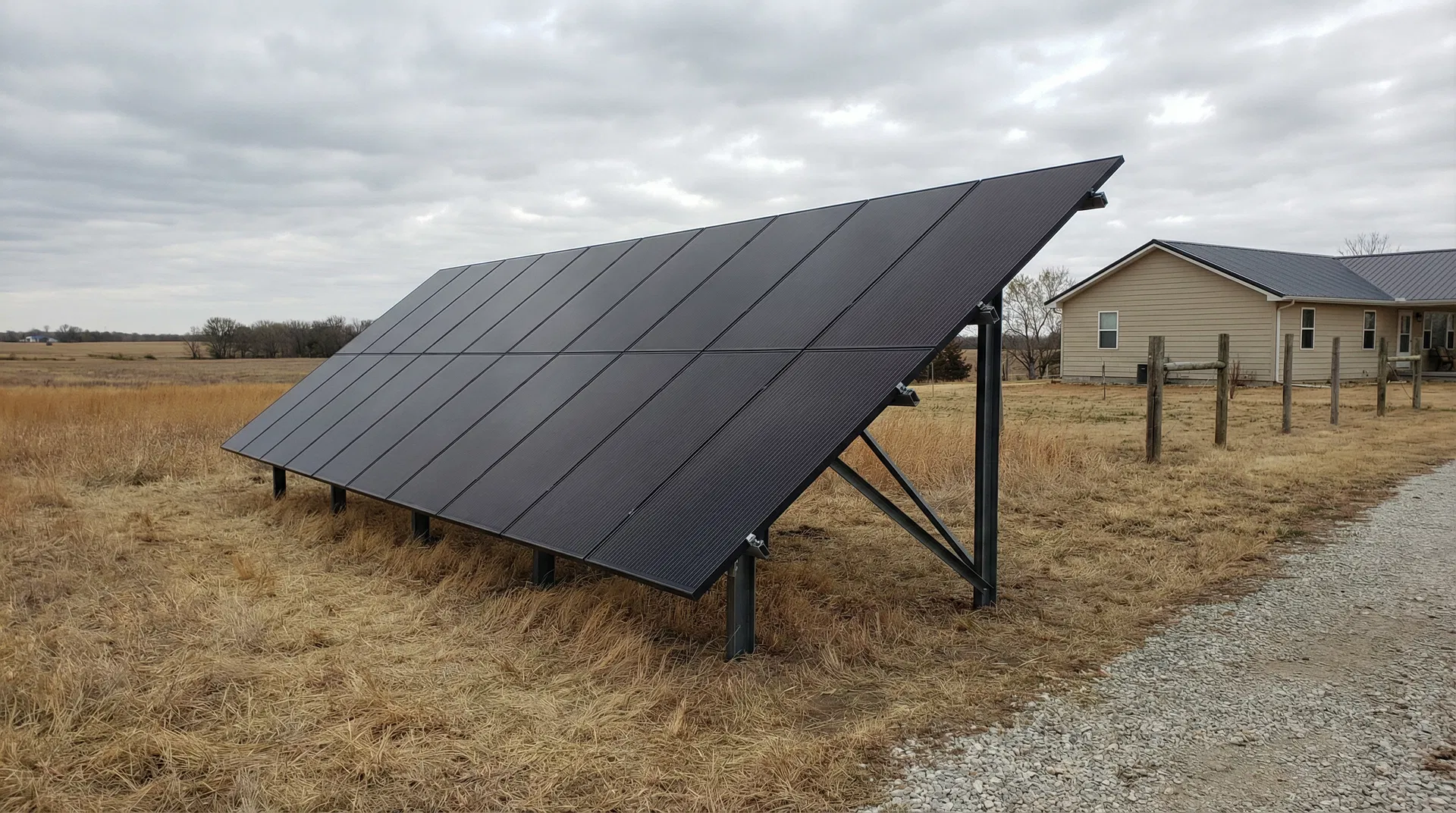
Solar financing in Penhold, Alberta is the service we're most often asked about when a homeowner or acreage owner has seen their power bill climb and wants a payment structure that doesn't require a lump-sum outlay. The idea is straightforward: the monthly payment on a financed system should sit below, or close to, what you were paying the utility before the system went in. We install LONGi panels and APsystems microinverters on every system we design. LONGi panels are a proven, durable module choice with a strong output warranty. APsystems microinverters work at the individual panel level, which means one shaded panel doesn't drag down the output of the entire array. That matters on properties where a roofline, tree, or shop building creates partial shading at certain times of day. For Penhold properties, we typically work in the 8-15 kW range, with 10 kW being a common starting point for a home with moderate electrical load. Properties that include a heated shop, multiple outbuildings, or year-round mechanical loads often land closer to the upper end of that range. System size is always confirmed from your most recent power bill, not a room-count estimate or a square footage rule of thumb. Financing structures vary. Some customers prefer a fixed-term loan that's paid off before the panels hit their midlife mark. Others use a longer amortization to maximize monthly cash flow from day one. We walk through the options during the design review so you can choose what fits your situation, not ours.
Solar Planning for Penhold Properties
Penhold properties vary a lot. Some are newer residential builds on smaller lots. Others sit on larger parcels with a shop, secondary outbuilding, or an acreage setup that pulls considerably more electricity than a standard house. That mix matters when it comes to financing, because the right payment structure depends entirely on what the system actually offsets. We don't quote a dollar figure and call it a day. We look at your most recent power bill, which includes a 12-month usage graph, and we map a system to what the property actually consumes. From there, we can size the system properly and structure financing so the monthly payment is anchored to real consumption data, not a best-case estimate. Financing solar in Penhold also means accounting for FortisAlberta's micro-generation process, since that interconnection determines how your credits are calculated and when the system can legally operate. We handle the application on your behalf. You don't need to navigate the utility paperwork yourself. Once the design is confirmed and interconnection is approved, the system runs and the offset begins. That's the point where financing terms start making sense against your actual bill.
Electrical Site Review for Penhold Properties
Voltage Rise
Voltage rise occurs when a solar system pushes power back toward the grid and the voltage at the connection point climbs above acceptable limits. In areas where distribution infrastructure is older or the line to a property is long, voltage rise can be more pronounced. If voltage rise exceeds FortisAlberta's allowable threshold, the inverter clips output or shuts down to protect the grid, which affects how the system performs and how we size it.
Single-Phase vs Three-Phase
Properties in and around Penhold may be served by either single-phase or three-phase electrical service depending on the vintage and type of the property. Single-phase is standard for most residential builds, while larger acreage and farm properties sometimes have three-phase service to support motors, grain handling, or irrigation equipment. The service type affects which inverter configuration we use and what the system's maximum output capacity can be within FortisAlberta's interconnection rules.
Panel Infrastructure
Older electrical panels on rural and acreage properties sometimes don't have the breaker capacity to support a new solar system without modifications. During our site review, we assess the panel's age, available breaker slots, and bus bar rating to confirm the system can be connected safely. If the panel needs an upgrade, we include that scope in the project quote so there are no surprises once work begins.
Service Entrance Review
The service entrance and meter base are inspected as part of our site assessment because FortisAlberta requires the meter base to be in acceptable condition before a micro-generation application can proceed. We check for compliance with current utility standards and flag any issues before submitting the interconnection package. If the meter base requires an upgrade, we coordinate that work so it doesn't stall the application or delay the install schedule.
Right-Sizing Solar for Penhold Properties
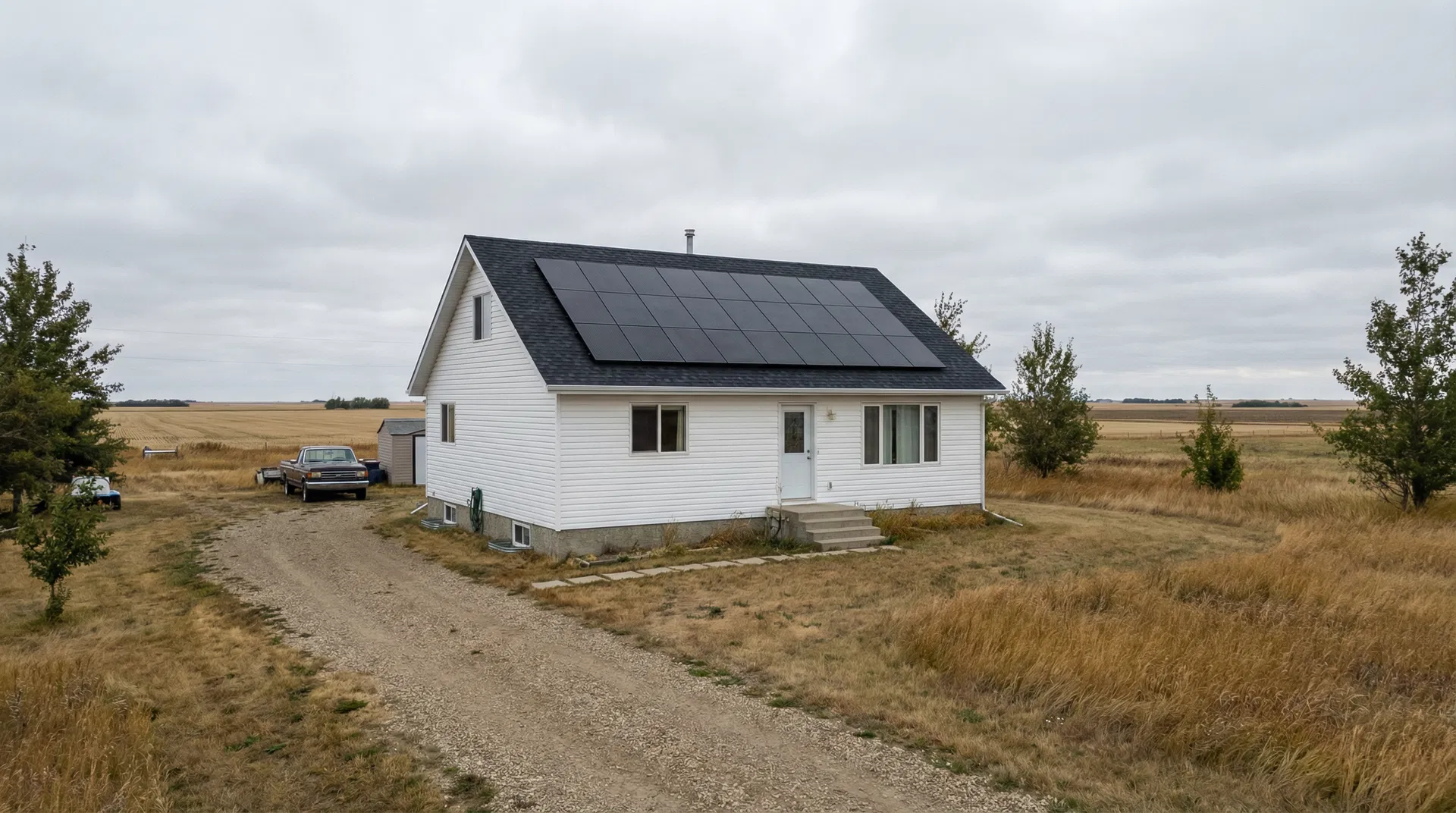
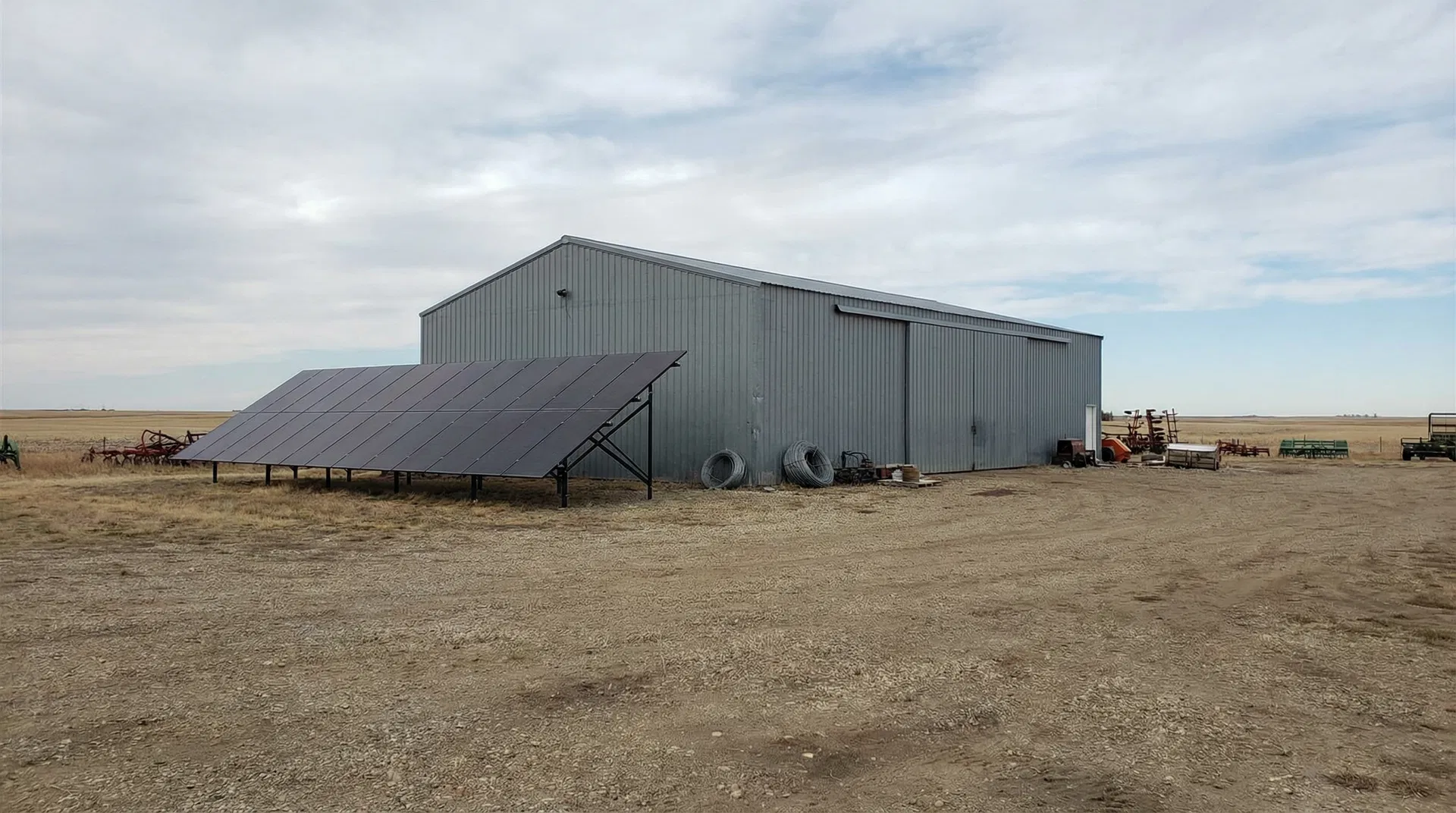
Rural Alberta properties almost always carry more electrical load than a standard urban home, and that's a fact that shows up clearly on the power bill. A house combined with a heated shop, a garage with year-round power tools, well pumps, outbuildings on separate circuits, or grain handling equipment will have a usage profile that looks nothing like a 1,500-square-foot bungalow in the city. When we size a system for a Penhold property, we're designing for the actual load, not a simplified average. Roof mount works well when the roof pitch is reasonable, the orientation faces within a usable range of south, and there's minimal shading from trees, dormers, or adjacent buildings. Ground mount becomes the better call when the roof doesn't cooperate. If a shop roof faces the wrong direction, a house has too many angles, or there's simply more usable yard than useful roofline, a ground-mounted array lets us orient the panels exactly where production is maximized. Sizing starts with the 12-month usage graph on your most recent power bill. That graph shows us the actual monthly consumption pattern across the full year, including the high-draw winter months and the lighter summer period. We don't use a rule of thumb based on bedrooms or square footage. We use your real consumption data and combine it with a shading analysis and orientation review to build a system that offsets what you're actually using, not what a generic calculator assumes you use.
Typical Load Profiles We Design For Near Penhold
Home with Heated Shop
A residential home paired with a heated shop is one of the most common load profiles we see in this part of Alberta. The shop adds electric heat, lighting, compressors, and power tools to the base home consumption, often pushing monthly usage well above what a house-only system would cover. We size from the combined 12-month usage on the most recent power bill, and a ground-mounted array is often the right call when the shop roof faces an off-angle direction.
Acreage with Well Pump and Multiple Outbuildings
Acreages running a well pump, deep freezers, secondary outbuildings, and year-round mechanical loads carry a load profile that's higher and more consistent across all 12 months than a typical residential account. A 12-15 kW system is a common fit for this scenario, though the confirmed size always comes from the actual usage data. Ground mount is frequently preferred here because acreage layouts often have open land with better solar access than the house or outbuilding roofs.
Residential Home Only
A single-family home without significant auxiliary loads is the simplest profile we design for, and it's often where an 8-10 kW system lands when the consumption data supports it. The roof orientation and available panel surface tend to work well on newer builds in the area, though we still run a shading check before finalizing the design. Financing on a home-only system is usually the most straightforward structure because the load is predictable and consistent through the year.
FortisAlberta Interconnection in Penhold
FortisAlberta is the wire service for Penhold. That means any solar system installed here needs to go through FortisAlberta's micro-generation application process before it can operate and send power back to the grid. We handle that application on your behalf. The process involves submitting a design package that FortisAlberta reviews for technical compliance, including inverter specs, single-line diagrams, and service entrance details. We prepare all of that as part of the install process. What you don't need to do is chase the utility yourself, learn the technical submission requirements, or guess at which documents are needed. That's our job. We've done this process with FortisAlberta properties across central Alberta, and we know what the application package needs to include to move through review without unnecessary back-and-forth. Once FortisAlberta approves the interconnection, the system can be commissioned. We won't claim a specific timeline because review times can vary depending on application volume and site-specific requirements. What we can tell you is that we submit a complete, accurate package the first time, which avoids delays caused by missing or incorrect documentation.
Project Economics and Design Review
| System Size | Annual Production | Year 1 Savings | Payback Period |
|---|---|---|---|
| 8-15 kW range, 10 kW typical |
Production, savings, and payback figures require a property-specific design and your most recent power bill before any estimate can be confirmed.
How We Work in Penhold
Bill and Load Review
We review your power bill to understand your energy use in Penhold and size the system to your actual consumption, not a generic estimate.
Site Assessment
We assess your roof or ground area, south-facing exposure, electrical service, and utility interconnection requirements specific to your property.
Design and Utility Application
We produce a system layout, production estimate, and cost summary, then submit your micro-generation application to your utility on your behalf.
Installation and Commissioning
Our crew installs racking, panels, inverter, and electrical connections. All work is performed by licensed electricians. We commission and test before handoff.
Current Program and Interconnection Review
Utility connection review
FortisAlberta reviews grid connection applications for all micro-generation systems installed in its service territory, including Penhold. Range Road Solar prepares the full design package required for that review and submits it on your behalf. You don't need to deal directly with the utility during the application process.
Current program review
Commercial, farm, and residential properties may have access to different programs depending on system size, ownership structure, and current government rules. We review eligibility against the programs in effect at the time of your design review, since availability and terms change. We don't describe programs we can't confirm are currently active.
Frequently Asked Questions
Get a Solar Assessment for Penhold
Submit a recent power bill and we will review your consumption and provide an honest assessment for your Penhold property. No obligation.
(587) 330-7502 Book a CallMore Solar Services in Penhold