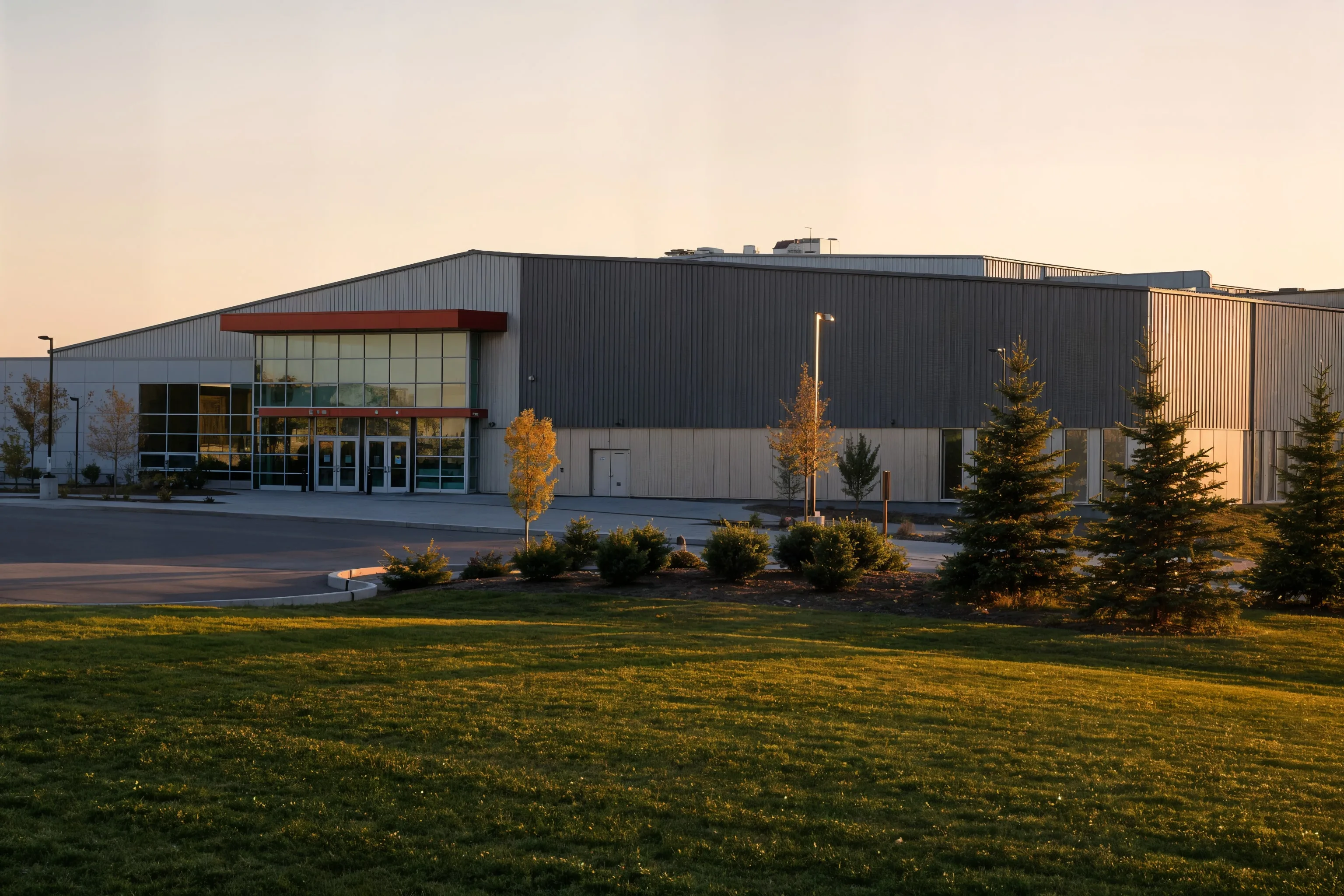
When you're comparing solar quotes in Penhold, Alberta, the first thing we ask for is your most recent power bill, not a satellite image of your roof. A quote that starts from a guess at your usage isn't a real quote, it's a sales number. We request the bill because Alberta utility bills show a 12-month usage graph, and that graph tells us more about what size system actually makes sense than any online calculator. For most properties in the area, that works out to a system somewhere in the 8 to 15 kW range, depending on whether we're designing for an in-town bungalow, a property with a heated shop, or an acreage running irrigation or grain-handling equipment. Every quote we prepare uses LONGi panels and APsystems microinverters as the default equipment, chosen because the microinverter architecture lets us size around partial roof shading, multiple roof planes, or outbuildings without derating the whole array when one section sees shade. The quote itself comes with a layout, not just a price: panel count, roof or ground-mount placement, inverter configuration, and the FortisAlberta interconnection paperwork we'd file on your behalf. If the property has a mix of structures, like a house and a detached shop, we'll show you whether one combined system or a split design makes more sense before you commit to anything. Nothing in the quote is rounded up from a template. It's built from your bill and your site.
Solar Planning for Penhold Properties
Penhold, Alberta has grown from 3,287 residents to 3,484 in the most recent census, and that growth means more rooftops, more shops, and more acreages asking the same question: what would solar actually cost here, and what would it actually produce? We don't answer that with a generic online calculator. Every quote we build for a property here starts with your most recent power bill and a site-specific design, because a bungalow near the Penhold Regional Multiplex has different shading and a different roof than an acreage out toward Red Deer County. The town's been incorporated since it became a Village on May 4, 1904, and a Town on September 1, 1981, long enough that most properties here have been through at least one electrical upgrade already. That history matters when we're sizing a system: older service panels and older roofs change what's possible. Environment Canada's annual bright sunshine normals put the nearby Lacombe CDA station at 2,156.2 hours a year, which is one input among several we weigh, alongside your roof orientation, shading, and usage pattern, when we build a design instead of a guess. Whether a property sits closer to the Penhold Museum or further out on an acreage, the process starts the same way: your power bill, your roof, our design review.
Electrical Site Review for Penhold Properties
Voltage Rise
Voltage rise happens when power has to travel further along a distribution line, and rural feeders can see more of it than short urban runs. On a property with higher voltage rise, a solar inverter can clip output earlier than expected, which is one of the things we check before finalizing how many kW we recommend. We review this during the site visit so the system we quote actually performs the way the design says it will.
Single-Phase vs Three-Phase
Rural Alberta properties can have single-phase or three-phase electrical service, and that split shows up in properties here too. The phase configuration affects which inverters we can use and how much capacity we can safely connect, since three-phase service generally opens up more headroom than single-phase. We confirm which service type a property has early in the design process, before we lock in equipment selections.
Panel Infrastructure
Older rural properties sometimes have electrical panels that predate the breaker capacity a modern solar system needs. We check the panel's rated amperage, age, and available breaker space as part of every site review, because a panel that's maxed out can't safely add a solar breaker. If the existing panel can't support the system, an upgrade gets scoped into the project before installation, not discovered after.
Service Entrance Review
We also review the service entrance and meter base, since that's where the physical connection to FortisAlberta's grid happens. The meter base condition matters because FortisAlberta's micro-generation application requires it to meet current standards before a system can be connected. If the service entrance needs upgrading, we identify that during the site review and fold it into the project scope rather than as a surprise mid-install.
Right-Sizing Solar for Penhold Properties
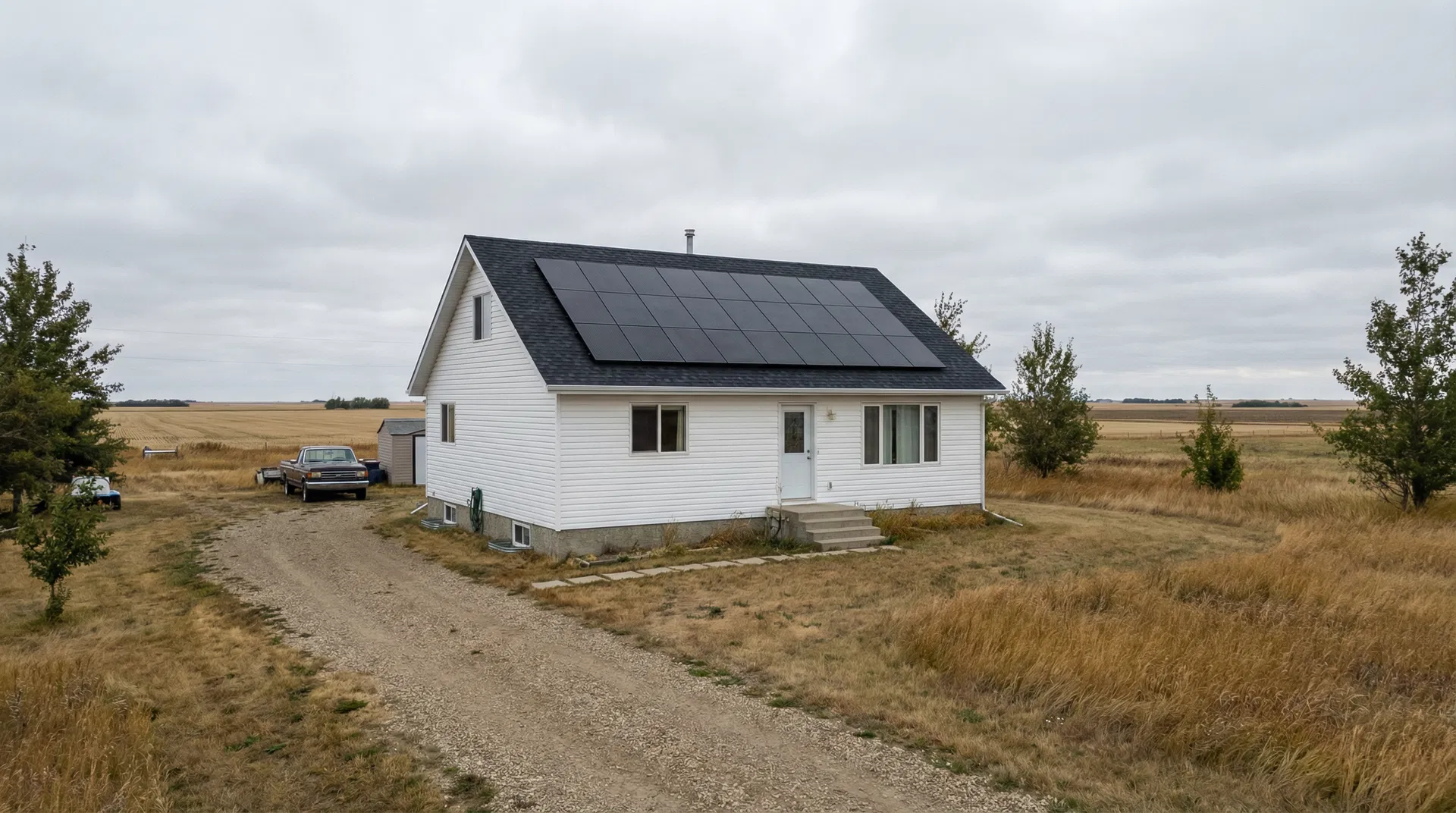
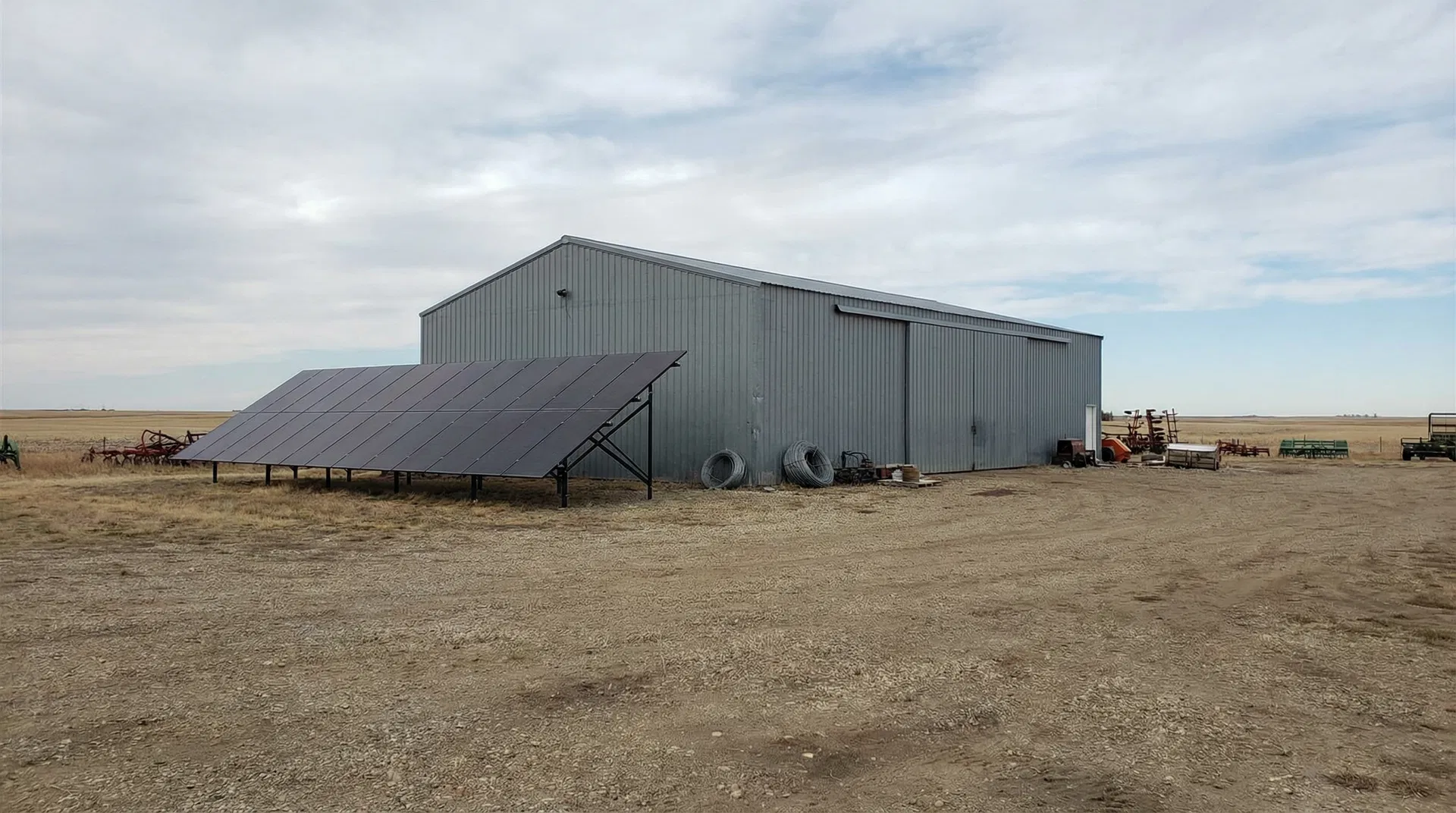
Rural Alberta properties typically need bigger solar systems than a comparable house in a subdivision, and that's rarely about the house alone. A property out here might be running a home plus a heated shop, plus a well pump or irrigation, plus grain-handling equipment at harvest. Each of those loads adds to the number we're designing around, which is part of why the systems we quote in this area land in the 8 to 15 kW range rather than a smaller urban-sized default. Roof mount isn't always the right call either. If a roof has heavy shading from trees or nearby buildings, a poor pitch or orientation for solar, or if the yard has open, unshaded space that's easier to access for maintenance, ground mount can make more sense than fighting a bad roof. We walk that decision with you rather than defaulting to whatever's easiest to install. None of this gets sized off a rule of thumb. We size every system from the 12-month usage graph on your most recent power bill, because that graph shows your actual seasonal pattern, not an assumption about what a property like yours probably uses. Combine that bill with a site visit or a detailed site design, and we've got the two inputs that actually determine system size: what you use, and what your property can physically support.
Typical Load Profiles We Design For Near Penhold
Home Plus Heated Shop
This is one of the most common profiles we see on properties we quote: a house plus a heated detached shop that runs power tools, block heaters, or a secondary furnace through the colder months. We pull the usage graph off your most recent power bill to see how much that shop adds on top of household use, and size the array and inverter configuration from there rather than estimating the shop load separately.
Acreage With Irrigation or Well Pump
Acreages running an irrigation system or a well pump have usage spikes that a single monthly bill total won't show, which is exactly why we look at the 12-month graph instead of one number. Those spikes factor into whether we recommend a system toward the upper end of the 8 to 15 kW range and how we configure the microinverters to handle variable load.
In-Town Residential With Future EV or Shop Plans
Some homeowners are sizing for what they have now, but planning for an EV charger or a future shop. We design the array and electrical capacity with that in mind when it's part of the conversation, so the system doesn't need a redesign in two years. That forward planning comes out of the design review, not a standard package.
FortisAlberta Interconnection in Penhold
Properties here are served by FortisAlberta for electricity distribution, which means any solar system we design in the area goes through FortisAlberta's micro-generation interconnection process before it's turned on. Range Road Solar prepares and files that application as part of your project, including the single-line diagrams and equipment specifications FortisAlberta requires to review a grid-tied system. We don't guess at what FortisAlberta will or won't approve. We build the application from the equipment we're actually proposing, LONGi panels and APsystems microinverters, matched to your service size and panel capacity, and we handle the back-and-forth if FortisAlberta asks for more information. You're not left filing paperwork or chasing an interconnection department on your own. We treat the FortisAlberta application as part of the build, not an afterthought, because a quote that doesn't account for interconnection requirements isn't a quote you can actually act on.
Project Economics and Design Review
| System Size | Annual Production | Year 1 Savings | Payback Period |
|---|---|---|---|
| 8-15 kW range, 10 kW typical |
Production, savings, and payback figures are only provided after a property-specific design review using your most recent power bill.
How We Work in Penhold
Bill and Load Review
We review your power bill to understand your energy use in Penhold and size the system to your actual consumption, not a generic estimate.
Site Assessment
We assess your roof or ground area, south-facing exposure, electrical service, and utility interconnection requirements specific to your property.
Design and Utility Application
We produce a system layout, production estimate, and cost summary, then submit your micro-generation application to your utility on your behalf.
Installation and Commissioning
Our crew installs racking, panels, inverter, and electrical connections. All work is performed by licensed electricians. We commission and test before handoff.
Current Program and Interconnection Review
Utility connection review
FortisAlberta reviews every micro-generation interconnection application before a solar system here gets connected to the grid. Range Road Solar prepares that application, including the equipment specifications and single-line diagram, as part of your design package.
Current program review
Eligibility for commercial, farm, and residential solar varies by property type and changes with current program rules. We review what applies to your specific property against the rules in place at the time of your design, rather than assuming last year's terms still apply.
Frequently Asked Questions
Get a Solar Assessment for Penhold
Submit a recent power bill and we will review your consumption and provide an honest assessment for your Penhold property. No obligation.
(587) 330-7502 Book a CallMore Solar Services in Penhold