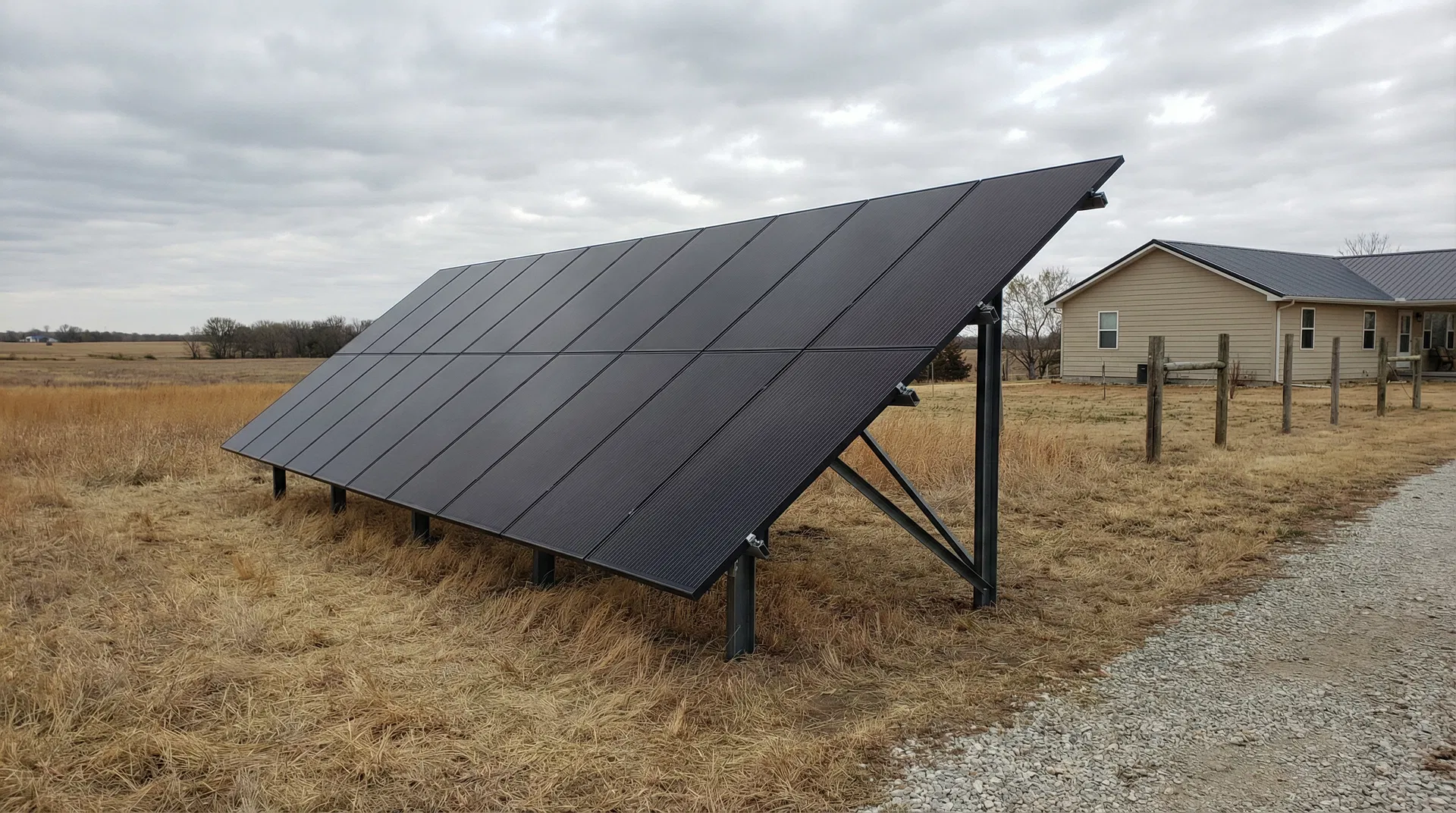
Solar battery storage in Blackfalds, Alberta is a practical solution for properties where grid reliability matters and where there's real value in using more of what your panels produce rather than exporting it. We install hybrid inverter systems paired with lithium battery storage and LONGi solar panels. A hybrid inverter is the core of a storage-integrated system. Unlike a standard grid-tied inverter, a hybrid unit manages the relationship between your panels, your batteries, and the grid simultaneously. When your panels are producing more than you're using, the excess charges the batteries first. When production drops or you have a high-demand period, the batteries discharge to cover the gap before the grid fills in. During an outage, a properly configured system transitions to backup mode and keeps your priority loads running. What counts as a priority load depends on the property. For a home, that might be the fridge, furnace, and a few circuits. For a shop, it might include compressors or heating. We size the battery capacity around what actually needs to stay on, not around a default package. LONGi panels are what we put on the roof or the ground-mount racking. They're a reliable, well-documented panel from a major manufacturer, and they integrate cleanly with hybrid inverter systems. The pairing of good panels with a properly specified hybrid inverter and lithium storage is what makes the system work as a unit, not just as parts bolted together. System sizes for storage-integrated installs in this area run from 8 to 20 kW. A 12 kW system is a common outcome for a home with moderate year-round loads, but that number gets confirmed through design, not assumed upfront.
Solar Planning for Blackfalds Properties
Properties in and around Blackfalds vary a lot. You'll find newer residential builds, acreages with heated shops, and farm operations that run continuous loads through the growing season and winter. That spread matters when you're sizing a solar system with storage, because the equipment needs to match what's actually on the property, not a generic template. FortisAlberta is the wire service for this area, and the interconnection process runs through them. We prepare the design package and submit the application on your behalf, so you're not left navigating utility paperwork on your own. Battery storage adds a layer to the design. You're not just sizing for grid export anymore. You're deciding which loads to back up, how much capacity covers your critical usage window, and whether the system is optimized for self-consumption, backup, or both. Those decisions get made from your most recent power bill and a site assessment, not from assumptions about what a property this size usually uses. We work across a range of system sizes, from 8 kW for a straightforward residential setup to 20 kW for properties with multiple structures and larger seasonal loads. The right size depends on your property, not a rule of thumb.
Electrical Site Review for Blackfalds Properties
Voltage Rise
Voltage rise occurs when a solar system pushes power back onto the distribution line and the local voltage climbs above the acceptable threshold. On rural distribution lines that serve a small number of properties, the line impedance can be higher, which makes voltage rise more likely. When voltage rises too far, the inverter clips output or shuts down to protect the grid, which affects how much energy the system actually delivers.
Single-Phase vs Three-Phase
Properties in rural Alberta can be served by either single-phase or three-phase electrical service, and it's not always obvious which one you have until we check. Single-phase is common for most residential connections, while larger farm or commercial operations often have three-phase service to support motors and equipment. The phase configuration affects which inverters are compatible, how the system is wired, and what the upper limit on capacity looks like for that service.
Panel Infrastructure
Older electrical panels can be a limiting factor when adding a solar system with storage. We check breaker capacity, panel age, and available slots during the site assessment, because a hybrid inverter and battery system require dedicated breaker space and a panel that can handle the added load safely. If the panel can't support the system as designed, we'll identify what an upgrade involves before any equipment is ordered.
Service Entrance Review
The meter base and service entrance are reviewed as part of every FortisAlberta micro-generation application. FortisAlberta requires that the meter base meet current standards before a solar system can be connected, and an outdated or damaged meter base will need to be upgraded as part of the project. We identify meter base issues during the site assessment so there are no surprises when the application is submitted.
Right-Sizing Solar for Blackfalds Properties
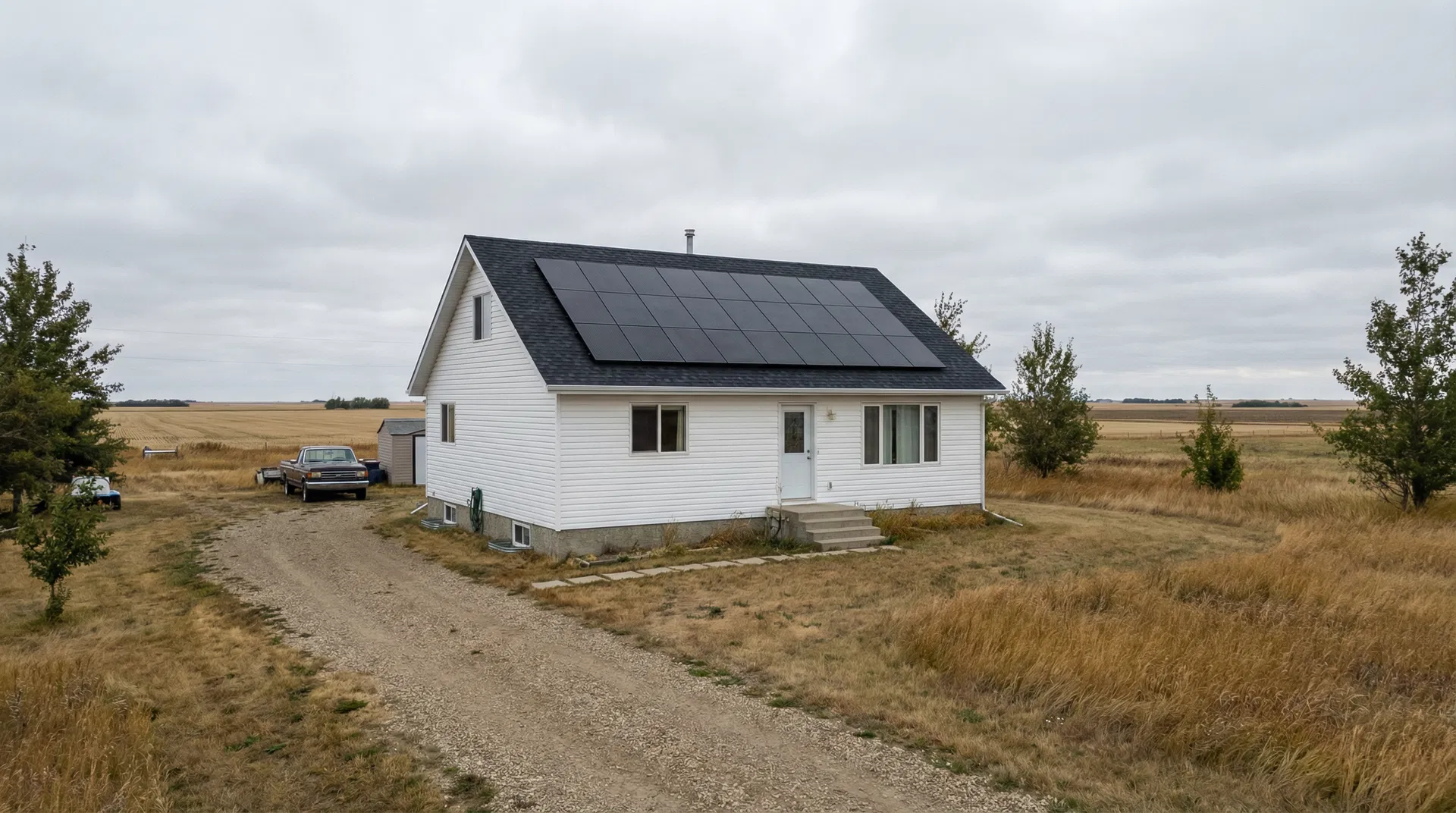
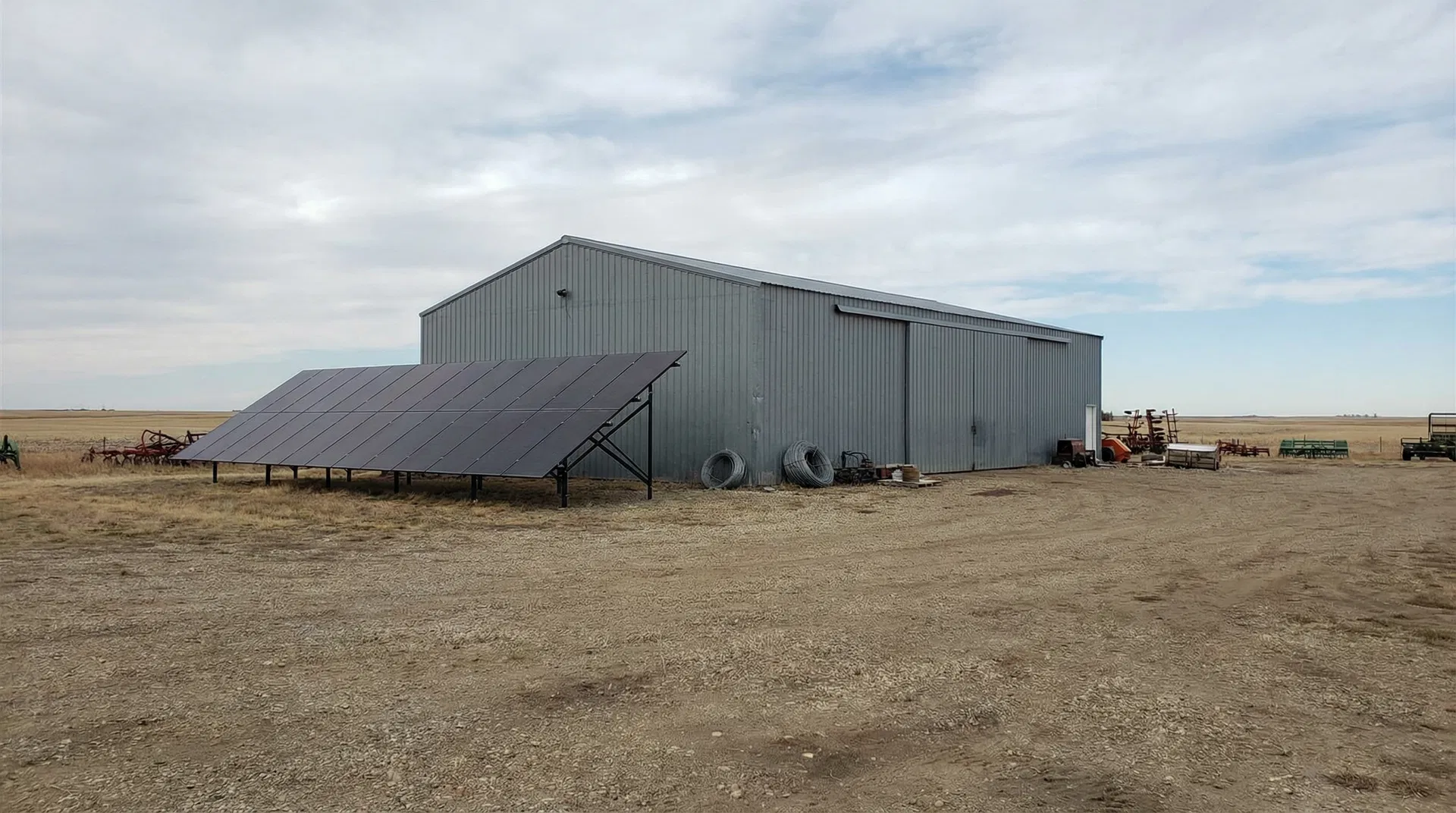
Properties around Blackfalds often carry more electrical load than a standard urban home, and that changes how a solar system gets sized. A home with a heated shop, a well pump, an outbuilding, and seasonal irrigation or grain-handling equipment doesn't size the same way as a single-family house in the city. Each of those loads shows up on the power bill, and the 12-month usage graph on your most recent power bill is where the sizing conversation starts. That graph shows us how your consumption moves through the year. If usage spikes in winter because of electric heat in the shop, the system needs to account for that. If summer loads are high because of irrigation or cooling, that shapes the design differently. We're sizing from your actual pattern, not from what a property like yours typically uses. Roof versus ground mount is a real decision for rural layouts. A single-pitch roof that faces the wrong direction, or one with shading from a grain bin or mature trees, might not be the right place for panels even if there's plenty of surface area. Acreage and farm yards often have open ground with the right orientation, and a ground-mounted array can be positioned and angled for better output than a compromised roof. We work through that during the site assessment. The 8 to 20 kW range we work in reflects how different these properties can be. A straightforward residential system with modest loads might land at 8 or 10 kW. A property with a shop, outbuildings, and year-round mechanical loads will need more. That number comes from design, not from a default assumption.
Typical Load Profiles We Design For Near Blackfalds
Home with Heated Shop
A residence paired with a heated detached shop is one of the most common setups we see in this area. The shop typically adds electric heat, lighting, compressor loads, and sometimes a welder circuit, all of which push annual consumption well beyond a house-only figure. We size the system and storage capacity from the combined load shown on your most recent power bill, not from a residential benchmark.
Acreage with Well and Outbuildings
Acreages running a well pump, a secondary outbuilding, and year-round domestic loads have a different consumption profile than a serviced lot. The well pump is often a high-draw intermittent load that affects how storage capacity is specified for backup purposes. Battery sizing for this profile focuses on keeping the pump and household essentials running through an outage without oversizing the system for loads that only run occasionally.
Small Farm Operation
Smaller farm operations with grain handling, bin aeration fans, or livestock watering systems carry loads that run hard during specific seasons and drop off during others. That seasonal pattern shows clearly on the 12-month usage graph, and it shapes both the solar array size and how the battery is configured to handle peak demand periods. A 15 to 20 kW system with storage is often the right range for this profile, but the site design confirms it.
FortisAlberta Interconnection in Blackfalds
FortisAlberta is the wire service for Blackfalds. Any solar system connected to the grid here, whether storage-integrated or grid-tied only, goes through FortisAlberta's micro-generation application process. The application requires a complete design package: system specs, single-line diagrams, equipment documentation, and a site plan that meets FortisAlberta's submission standards. We prepare all of that. You don't need to source documentation or deal with the utility directly. We handle the application from design to submission. For systems with battery storage, the inverter type and configuration are part of what FortisAlberta reviews. A hybrid inverter operates differently from a standard grid-tied unit, and the application package reflects that. We're familiar with what FortisAlberta requires for storage-integrated systems and build the design to meet their technical standards from the start. We won't make claims about approval timelines or the specific terms of your micro-generation agreement, because those details are set by FortisAlberta and can change. What we can confirm is that we manage the process and keep you informed at each stage.
Project Economics and Design Review
| System Size | Annual Production | Year 1 Savings | Payback Period |
|---|---|---|---|
| 8-20 kW range, 12 kW typical |
Production, savings, and payback figures require a property-specific design and your most recent power bill before any number can be confirmed.
How We Work in Blackfalds
Bill and Load Review
We review your power bill to understand your energy use in Blackfalds and size the system to your actual consumption, not a generic estimate.
Site Assessment
We assess your roof or ground area, south-facing exposure, electrical service, and utility interconnection requirements specific to your property.
Design and Utility Application
We produce a system layout, production estimate, and cost summary, then submit your micro-generation application to your utility on your behalf.
Installation and Commissioning
Our crew installs racking, panels, inverter, and electrical connections. All work is performed by licensed electricians. We commission and test before handoff.
Current Program and Interconnection Review
Utility connection review
FortisAlberta reviews all micro-generation applications for properties in this service area. Range Road Solar prepares the complete design package required for submission, including system specifications and site documentation. We handle that process on your behalf so the application meets FortisAlberta's technical standards from the first submission.
Current program review
Residential, acreage, and farm properties may be eligible for programs or incentives depending on system type and current rules. We review what applies to your property and system configuration at the time of design, not against outdated program information. Eligibility is confirmed during the design review, not assumed in advance.
Frequently Asked Questions
Get a Solar Assessment for Blackfalds
Submit a recent power bill and we will review your consumption and provide an honest assessment for your Blackfalds property. No obligation.
(587) 330-7502 Book a CallMore Solar Services in Blackfalds