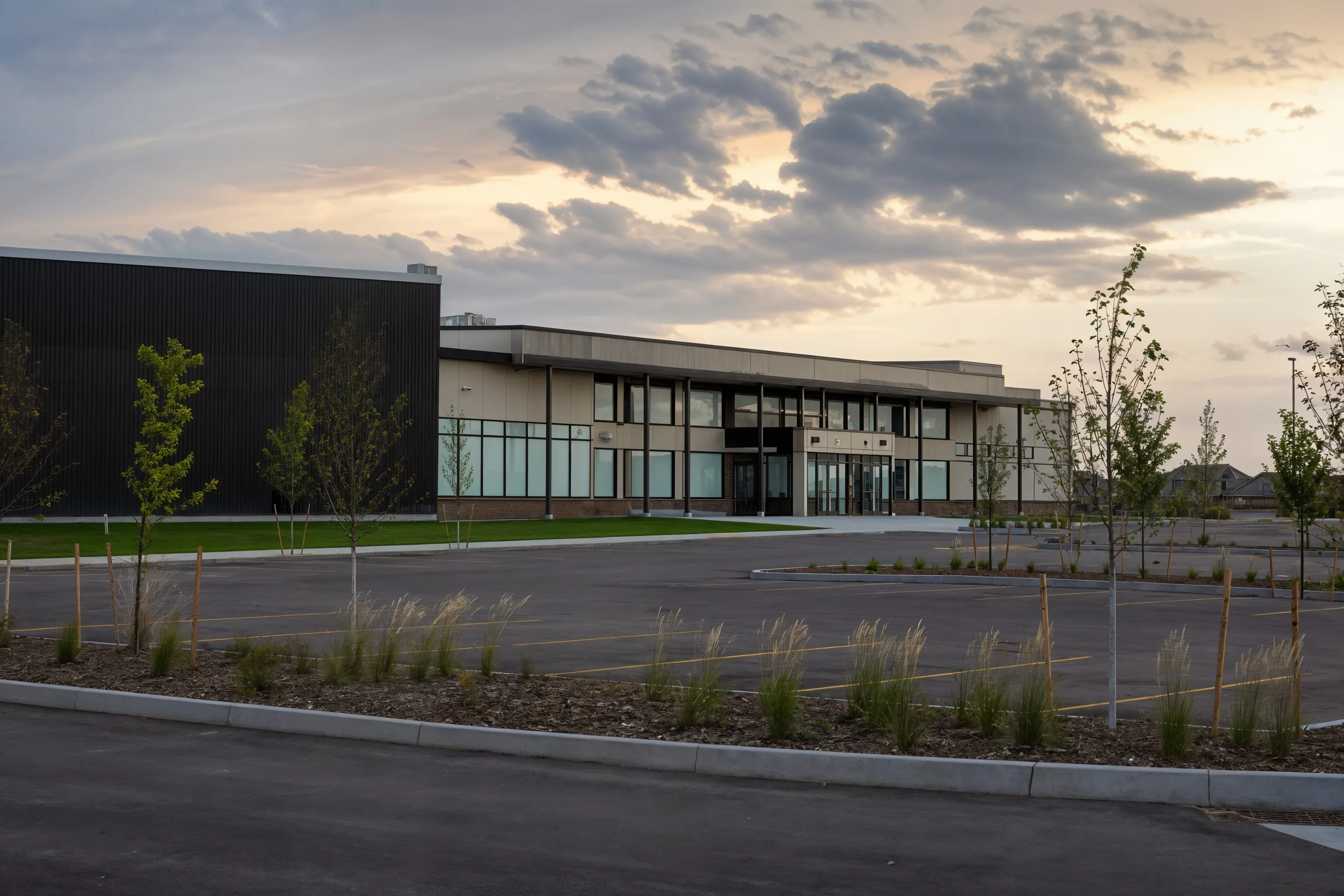
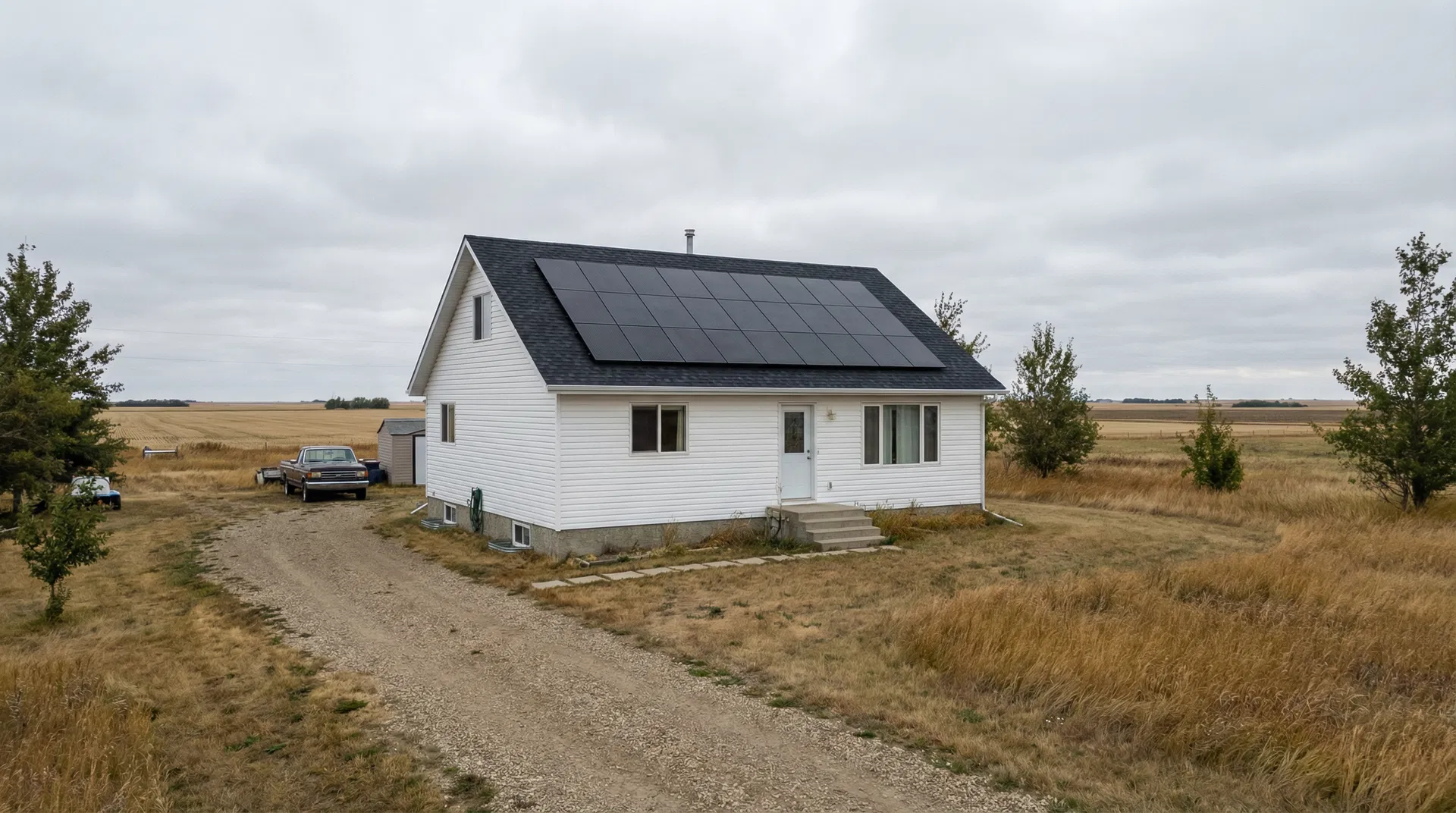
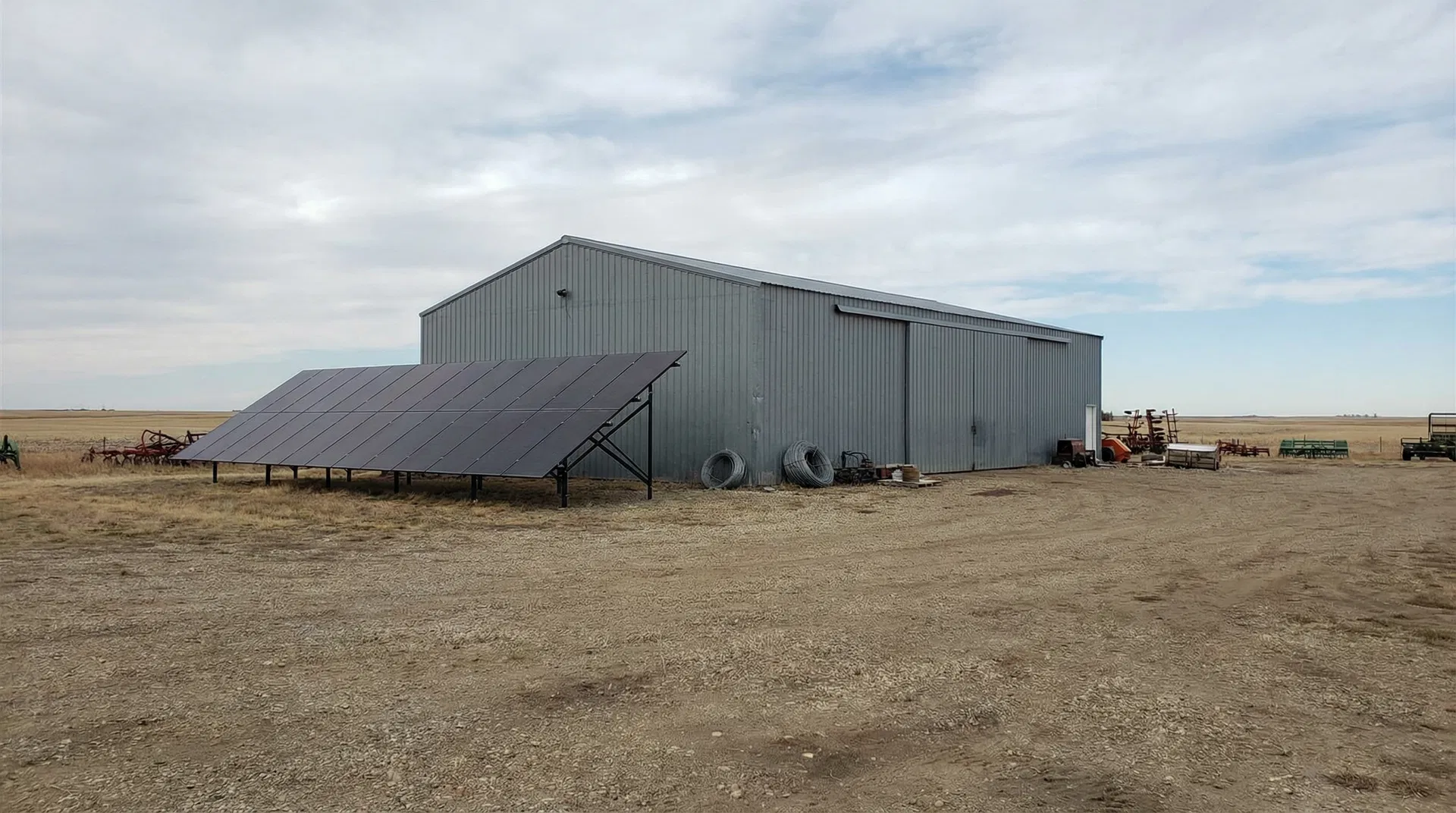
Acreage solar in Blackfalds starts with the loads scattered across the yard: the house, the shop, the well pump, not just the roof line. We install both rooftop and ground-mount systems, and which one makes sense depends on the property, not a default preference. A farmhouse roof with a clean south or west exposure and enough structural capacity is often the simpler and cheaper build. A yard with mature trees, an odd roof pitch, or a house tucked behind a shop and grain bins usually points to a ground mount instead, where we can orient the array for full sun exposure and expand it later if a new outbuilding adds load. Every system we design uses LONGi panels paired with APsystems microinverters. The microinverter architecture matters on acreage properties specifically: if one panel is shaded by a grain leg, a shelterbelt, or a shop roofline for part of the day, that panel's output drops on its own instead of dragging down an entire string. That's a real consideration on properties with mixed structures and tree lines, which describes most acreages around Blackfalds. Systems in this service band run 12-18 kW, with 15 kW being the typical size once we've reviewed a property's usage pattern, though the final number always comes from the site visit and your most recent power bill, not a standard package. We handle the racking, wiring, and system design as one package, whether the array ends up on the barn roof, the house, or a ground-mount frame near the shop.
Solar Planning for Blackfalds Properties
Blackfalds incorporated as a village on June 17, 1904, and became a town on April 1, 1980, and it's grown fast since: the 2021 census put the population at 10,470, up from 9,328 in 2016. That growth has pushed acreage development out along the edges of the Town of Blackfalds, where properties run on FortisAlberta-served lines and carry loads a downtown lot never sees: shops, wells, and outbuildings alongside the house. We size systems around what's actually on the property, not a generic per-square-foot number. A place near the Abbey Centre with municipal-adjacent services looks different on paper from a quarter section out past the edge of town with its own well and a heated shop. Range Road Solar walks the site, reviews your most recent power bill, and builds the system spec from what we find: roof pitch and orientation if it's rooftop, available clear ground if it's a ground mount, and the panel and service capacity already in place. That's how we land in the 12-18 kW range that fits most Blackfalds-area acreages instead of guessing high or low.
Electrical Site Review for Blackfalds Properties
Voltage Rise
Voltage rise happens when the distance and wire gauge between your service point and the inverter cause local voltage to climb as the system feeds power back onto the line, and rural distribution runs are often longer than in-town circuits. If the rise pushes voltage too high, the inverter can clip output or shut down to protect itself instead of delivering full capacity. We measure this during the site visit so system size and inverter placement account for it up front, instead of discovering the limit after installation.
Single-Phase vs Three-Phase
Some Blackfalds-area acreages run single-phase service, while others, especially properties with larger shop or barn loads, have three-phase power. The type of service on site determines which inverter configuration and maximum system capacity are available to us, since not every inverter is rated for both. We confirm which service type is present before finalizing the system design, not after.
Panel Infrastructure
Older rural properties sometimes carry an electrical panel with breaker capacity that hasn't kept pace with added loads like a shop, a well pump, or a grain dryer circuit, let alone a solar system on top of that. We check panel age, amperage rating, and available breaker space as part of the site review. If the existing panel can't support the added interconnection, a panel or subpanel upgrade becomes part of the project scope before installation proceeds.
Service Entrance Review
We inspect the meter base and service entrance conductors during every site visit, since their condition affects what FortisAlberta will approve in the micro-generation application. A meter base that's undersized, corroded, or not rated for two-way power flow needs to be flagged before we submit paperwork, not after. When an upgrade is required, we scope it as part of the interconnection work so the application and the physical installation match.
Right-Sizing Solar for Blackfalds Properties
Acreage systems run bigger than a typical in-town rooftop because acreage properties carry more load: the house, plus a heated shop, plus a well pump, plus sometimes a grain dryer or irrigation pump, all pulling from the same service. A system sized like a standard town home misses most of that draw. The first decision is roof versus ground mount. A roof with clean orientation, enough structural capacity, and minimal shading is usually the more economical build. But a lot of acreage layouts don't offer that: mature shelterbelts and trees shade one side of the house, the roof pitch is wrong for the array, or the buildings are spread out enough that a ground mount on open land makes more sense than squeezing panels onto three different rooflines. A spread-out yard with available clear ground often makes a ground-mount system the simpler build to wire and maintain. Either way, we don't size off a rule-of-thumb number per square foot or per building. We pull the 12-month usage graph off your most recent power bill, which shows the actual monthly draw across the year, including shoulder-season spikes from a block heater or grain-drying run, and design the system against that real pattern. Combined with the site visit, that's what puts most Blackfalds-area acreages in the 12-18 kW range, with the specific number depending on what your bill and your property actually show.
Typical Load Profiles We Design For Near Blackfalds
Home + Heated Shop
This is the most common acreage profile around Blackfalds: a house plus a detached shop with heat, lighting, and often a compressor or welder circuit. The shop's draw usually spikes seasonally, heaviest through the colder months when the heater runs longest. We pull that pattern straight off the 12-month usage graph on your most recent power bill so the system is sized for the shop's real draw, not an estimate.
Home + Well Pump + Livestock Operation
Properties running livestock add a well pump and sometimes heated waterers or barn lighting on top of the house load, and that draw runs steady through the year rather than spiking seasonally like a shop does. We look at the baseline draw on your power bill alongside any seasonal bumps to size a system that covers the property's actual year-round pattern instead of just the house.
Home + Grain Handling / Dryer Load
A grain dryer or auger setup pulls a large, short-window load concentrated in harvest season, which shows up as a sharp spike on the usage graph rather than a steady draw. We size around that peak specifically, since undersizing for a harvest-season spike defeats the purpose of the system for the months it matters most. This is one of the clearest examples of why we design from your actual bill instead of a standard package.
FortisAlberta Interconnection in Blackfalds
Properties in the Blackfalds area are served by FortisAlberta, the same wire service named in the Town of Blackfalds' electric distribution franchise agreement. Any grid-connected solar system here needs a micro-generation application filed with FortisAlberta before it can be energized, and that paperwork is part of what we handle as your installer, not something we hand back to you halfway through. We prepare the interconnection application alongside the electrical design package: single-line diagrams, equipment specifications for the LONGi panels and APsystems microinverters, and the site details FortisAlberta needs to review the connection. We don't make claims here about how long that review takes or what happens with exported power. Those are questions for FortisAlberta's current published rules, and we walk you through what applies to your specific system once the design is set. What we can commit to is managing the application itself so it's complete and accurate the first time it's submitted.
Project Economics and Design Review
| System Size | Annual Production | Year 1 Savings | Payback Period |
|---|---|---|---|
| 12-18 kW range, 15 kW typical |
Production, savings, and payback numbers come from a property-specific design review using your most recent power bill, not from this page.
How We Work in Blackfalds
Bill and Load Review
We review your power bill to understand your energy use in Blackfalds and size the system to your actual consumption, not a generic estimate.
Site Assessment
We assess your roof or ground area, south-facing exposure, electrical service, and utility interconnection requirements specific to your property.
Design and Utility Application
We produce a system layout, production estimate, and cost summary, then submit your micro-generation application to your utility on your behalf.
Installation and Commissioning
Our crew installs racking, panels, inverter, and electrical connections. All work is performed by licensed electricians. We commission and test before handoff.
Current Program and Interconnection Review
Utility connection review
FortisAlberta reviews every grid-connected micro-generation application before a system can be energized, and Range Road Solar prepares that application as part of your design package: single-line diagrams, equipment specs, and site details. We manage that submission so it's complete the first time it goes in, rather than leaving it for you to navigate separately.
Current program review
Eligibility for residential, farm, and commercial solar projects is shaped by current federal, provincial, and utility rules that change over time, so we check what applies to your specific property against those current rules at design time rather than relying on what applied last year. That review happens as part of the design process, before we finalize your system spec.
Frequently Asked Questions
Get a Solar Assessment for Blackfalds
Submit a recent power bill and we will review your consumption and provide an honest assessment for your Blackfalds property. No obligation.
(587) 330-7502 Book a CallMore Solar Services in Blackfalds