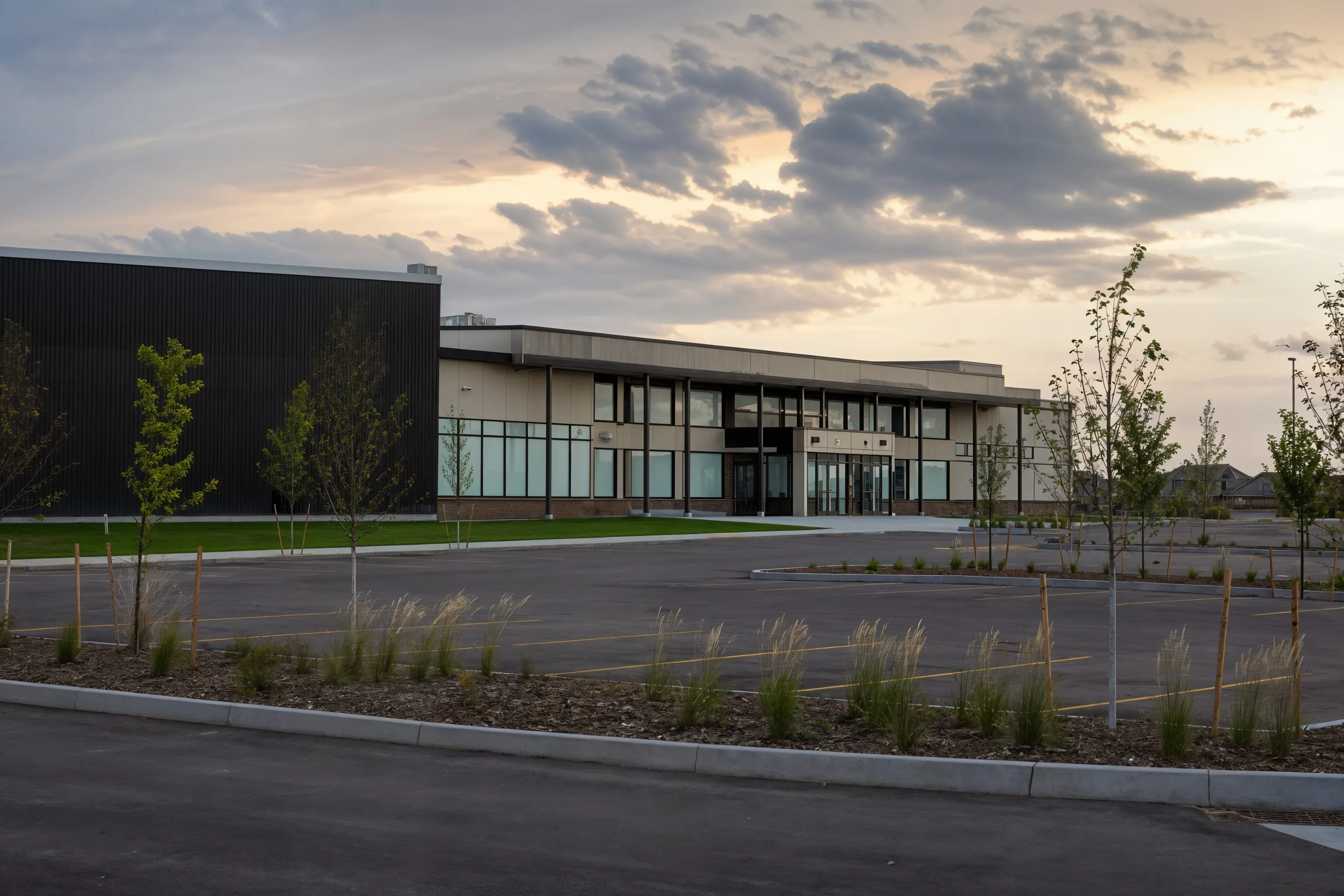
Off-Grid Solar in Blackfalds, Alberta means building a complete power system that doesn't depend on FortisAlberta lines at all, sized around what the property actually needs to run day to day. We use LONGi panels paired with a hybrid inverter and lithium battery storage, in the 5 to 15 kW system range, with 8 kW being a common starting point for a cabin or acreage with moderate loads. The hybrid inverter manages the relationship between the panels, the batteries, and any backup generator on site, so the system keeps running through stretches of low production without anyone having to manually swap anything over. Lithium battery banks give a remote property the depth of discharge and cycle life it needs, since there's no grid connection backing things up when the weather turns. For acreages and rural lots in this area, we design around the actual outbuildings on site: a shop with welding or compressor loads, a well pump, a bunkhouse, whatever's really drawing power. That's different from grid-tied work, where APsystems microinverters are often the better fit for panel-level monitoring on a home roof; off-grid systems need the centralized control a hybrid inverter provides to manage battery charge state properly. Before we spec anything, we walk the site to check roof or ground-mount orientation, existing shading from trees or buildings, and how much room is available for a battery bank and generator pad. The goal on every off-grid build is a system sized to the real load profile on that property, not a generic package, because running short on stored power on a January night isn't the kind of problem anyone wants to discover the hard way.
Solar Planning for Blackfalds Properties
This part of Alberta has grown from 9,328 residents to 10,470 at the last census, and a lot of that growth has pushed new acreages and yard sites out past where a utility hookup is the obvious choice. Incorporated as a village on June 17, 1904, and later as a town on April 1, 1980, the area has a long history of settlement spread out past its core, and plenty of that land still sits beyond FortisAlberta's cost-effective service radius. For a cabin, shop, or remote yard site out that far, running new poles and a transformer can cost more than a properly sized off-grid system. Environment Canada's climate normals for the nearest long-term station, Red Deer A, log 2,125.0 hours of bright sunshine a year, and Natural Resources Canada's solar resource maps put the specific yield for this part of Alberta at 1,262 kWh per kWp installed. Those are regional planning figures, not a promise of what any one property will produce. Every off-grid design starts with a site visit: shading, roof or ground orientation, and how you actually use power day to day, including offseason draws like block heaters or a well pump. Families who use the Abbey Centre know this area has grown up around a spread-out population, and we bring that same site-specific approach to properties where the grid doesn't reach at all.

Electrical Site Review for Blackfalds Properties
Voltage Rise
Voltage rise happens when power travels a long distance down a rural line before it reaches a property, and the farther that distance, the more the voltage can drift from where it should sit. On an off-grid system this matters less for the grid connection itself, but it still affects how we size the hybrid inverter and battery charging stage, since inverters operate cleanly within a specific voltage window. We measure actual voltage conditions on site rather than assuming a textbook number, and that reading affects how we size the array and inverter to avoid clipping.
Single-Phase vs Three-Phase
Rural Alberta properties can have either single-phase or three-phase electrical service, and for an off-grid system, that comes down to what's already installed on site and what the major loads require, like a three-phase shop motor or irrigation pump. Single-phase is the more common setup for a cabin or residential yard site, while three-phase shows up more on properties running heavier equipment. We confirm which service type the loads need before selecting the inverter, since that decision shapes the whole system design.
Panel Infrastructure
A lot of rural properties are running older electrical panels that were never sized with a full off-grid power system in mind. We check the age and breaker capacity of the existing panel before designing anything, looking for available breaker slots, panel age, and whether the busbar can handle the added capacity. If the panel can't support the new system, an upgrade means a new panel sized to handle both the existing loads and the off-grid power source, done to current code.
Service Entrance Review
For a hybrid off-grid system with a FortisAlberta backup connection, we review the service entrance and meter base condition as part of the site visit, since FortisAlberta's micro-generation application requires that equipment to meet current standards. We check the meter base for age, corrosion, and proper grounding, along with the condition of the service entrance conductors. If the meter base needs an upgrade before the application can go in, we scope that work as part of the project so there's no surprise partway through.
Right-Sizing Off-Grid Solar for Blackfalds Properties
Rural properties need more capacity than a typical in-town home, and that's true even before solar enters the picture. A property out here might be running a house, a heated shop, a well pump, and a grain bin or two off the same electrical service, and an off-grid system has to cover all of it without a grid connection to lean on during a heavy draw. That's why we size these systems from the 12-month usage graph on your most recent power bill instead of a rule-of-thumb number per square foot; your actual load history tells us what the batteries and inverter need to handle through every season, not just the sunny months. Roof mount makes sense when the roof has clean southern exposure and enough usable area for the array size needed. Ground mount becomes the better call when trees or outbuildings shade the roof, when the roof pitch or orientation isn't cooperating, or when the yard is spread out enough that there's open land to work with and running conduit to a ground array is simpler than penetrating a roof. Acreages and farm properties in this area often lean ground-mount for exactly that reason: more available space, easier access for maintenance, and no shading fight with a shelterbelt. Either way, the final system size comes out of the usage graph and a site design, not a generic package.
Typical Off-Grid Load Profiles We Design For Near Blackfalds
Cabin or Seasonal Recreation Property
A cabin or seasonal place out here usually needs a smaller off-grid system built for weekend or seasonal use rather than year-round, full-time draw. We size these off the reported usage pattern and what you run while you're there, lights, a fridge, maybe a well pump, rather than assuming full-time occupancy. Battery capacity gets sized so the system can ride out cloudy stretches when nobody's checking on it.
Home + Heated Shop
A full-time residence with a heated shop is a common load profile on acreages in this area, and the shop can end up drawing more power than the house does, especially with welding equipment or block heaters running through winter. We pull the usage graph from your most recent power bill to see how that combined load behaves across the year, then size the array and battery bank to cover both buildings, not just the house.
Remote Yard Site with Well Pump and Outbuildings
Some properties we design for sit further out still: a yard site with a well pump, a bunkhouse or secondary building, and no cost-effective path to a FortisAlberta connection at all. These systems need to be self-sufficient with no backup grid to lean on, so we build in more battery reserve and size the array with a wider margin than a grid-connected system would need. Every load on the property gets accounted for individually before the design is finalized.
FortisAlberta Interconnection in Blackfalds
FortisAlberta is the wire service across this area, and that matters even for an off-grid system. Most off-grid builds we install are fully standalone with no grid tie at all, which is often the whole point when a property sits far enough from the lines that a new service drop isn't worth the cost. But some properties out this way end up with a hybrid setup instead: a battery-based system that can still interconnect with FortisAlberta as a backup or supplement rather than running purely on solar and batteries. When that's the right call for your site, Range Road Solar prepares and submits the full interconnection application package to FortisAlberta on your behalf, including the electrical drawings and equipment specifications they require. We don't set expectations around how long that review takes or what happens with any credits, since that's between you and FortisAlberta and depends on the specifics of your application. What we control is building a clean, code-compliant package the first time, so the process moves as smoothly as it can.
Project Economics and Design Review
| System Size | Annual Production | Year 1 Savings | Payback Period |
|---|---|---|---|
| 5-15 kW range, 8 kW typical |
Actual production, savings, and payback figures require a property-specific design review using your most recent power bill and site conditions.
How We Work in Blackfalds
Bill and Load Review
We review your power bill to understand your energy use in Blackfalds and size the system to your actual consumption, not a generic estimate.
Site Assessment
We assess your roof or ground area, south-facing exposure, electrical service, and utility interconnection requirements specific to your property.
Design and Utility Application
We produce a system layout, production estimate, and cost summary, then submit your micro-generation application to your utility on your behalf.
Installation and Commissioning
Our crew installs racking, panels, inverter, and electrical connections. All work is performed by licensed electricians. We commission and test before handoff.
Current Program and Interconnection Review
Utility connection review
FortisAlberta reviews grid connection applications for any system that interconnects with their lines, including a hybrid off-grid system with backup grid capability. Range Road Solar prepares the full design package, electrical drawings, and equipment specifications, and submits the application on your behalf. We don't set expectations around approval timelines or credit handling, since those are set by FortisAlberta and depend on your specific application.
Current program review
Eligibility for any current incentive or program, whether your project is residential, farm, or commercial, gets checked against the rules in effect at the time we design your system, not assumed in advance. Programs and eligibility criteria change, so we verify what actually applies to your property during the design review rather than quoting rules that might be out of date.

Frequently Asked Questions
Get a Solar Assessment for Blackfalds
Submit a recent power bill and we will review your consumption and provide an honest assessment for your Blackfalds property. No obligation.
(587) 330-7502 Book a CallMore Solar Services in Blackfalds